

Alonso data exposes the true scale of Aston Martin’s Honda problem
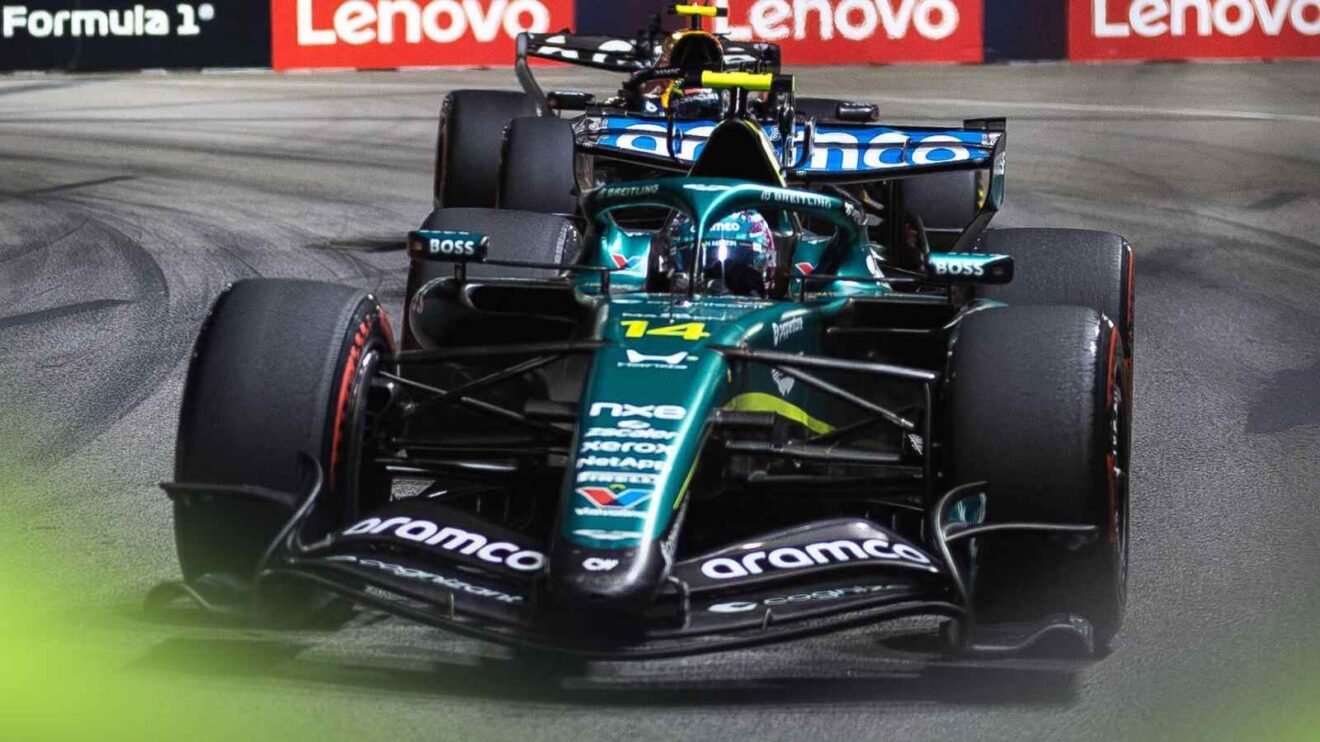
Fernando Alonso bemoaned his power unit, and data has uncovered more.
Singapore was supposed to be the track where Aston Martin could hide the weaknesses of the Honda power unit. Instead, it exposed them more brutally than ever.
With few long straights and a calendar-high share of slow corners, the Marina Bay Circuit should have offered a lifeline, but telemetry data reveals the true scale of the deficit.
How much time ire Aston Martin losing solely to power unit deficits?
While Aston Martin’s drivers’ frustrations over engine power and overall track performance are virtually constant during every GP weekend, a venue like Singapore should makes those shortcomings less glaring.
On paper, Singapore is a circuit that minimises the impact of raw engine output. It lacks excessively long straights and is dominated by medium and slow-speed corners, giving teams with fewer horsepower a chance to punch above their weight. Aston Martin fall squarely into that category, yet better results failed to materialise.
The issues for the Silverstone-based squad were evident as early as the Sprint race. Fernando Alonso complained of weak power deployment on corner exit, leaving him unable to keep pace with the cars ahead. Mid-race, he even suggested to his pit wall that they retire the car early, simply to allow enough time to swap out the power unit before main qualifying.
That request was denied, and the engine troubles spilled over into qualifying. The graph below compares Alonso’s telemetry against Alexander Albon, who set a comparable lap time in Q1 while running a Mercedes engine in his Williams.
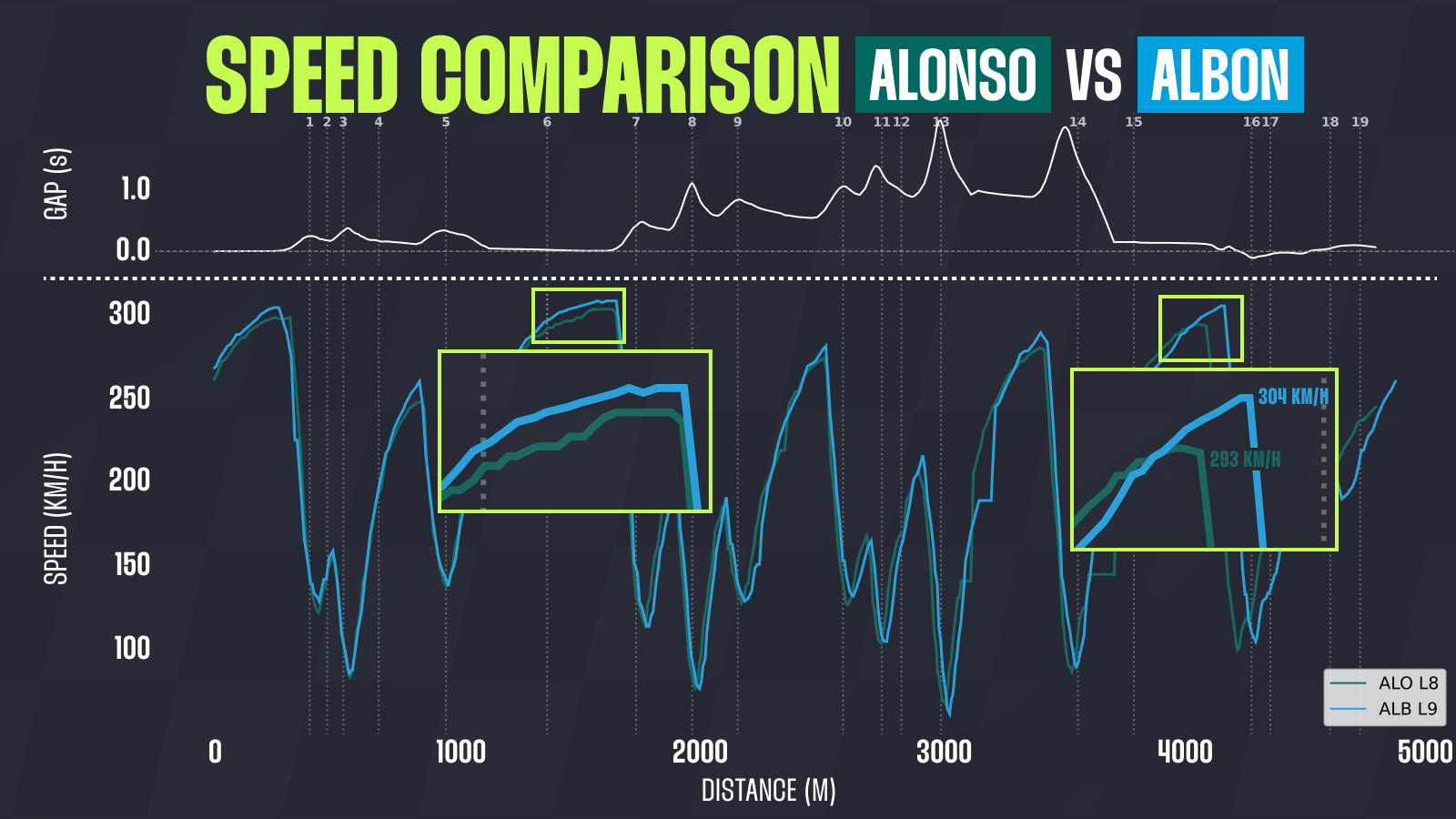
The straight-line speed delta is unmistakable. Down every full-throttle section, regardless of length, the Aston Martin suffers from a noticeable speed deficit. For example, between Turn 5 and Turn 7 alone, Alonso surrenders roughly 0.16 seconds compared to Williams driver.
It is also interesting to see how this impacts his entry speed into Turn 16 following a longer straight, where he is forced to alter his approach through the chicane to compensate for his car’s inherent deficit.
A virtually identical picture emerges when examining race pace. Comparing Alonso and Sainz during their opening stint when they were in clear air shows remarkably similar lap times, yet the deficit in top speed for the Spaniard remains massive.
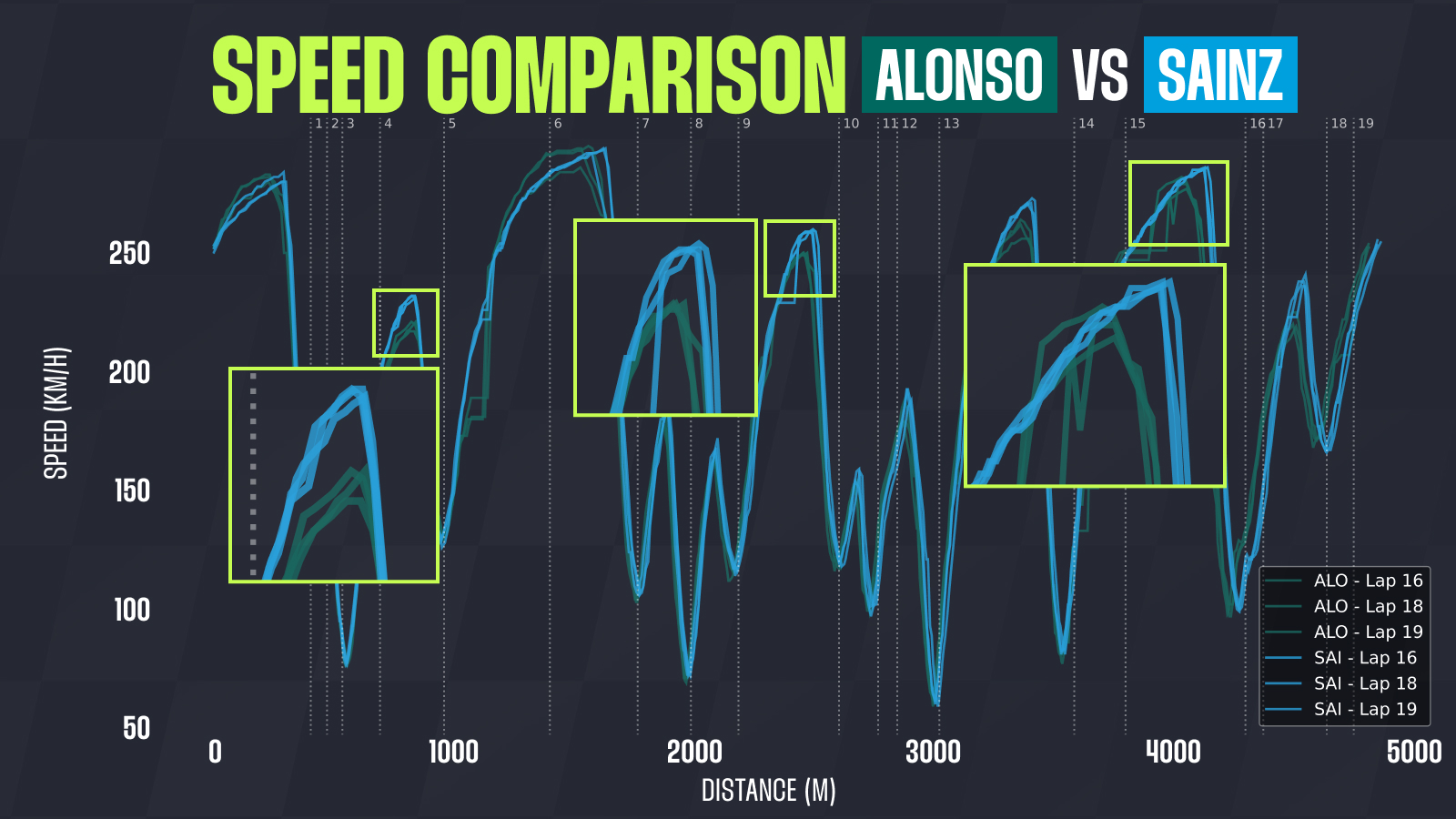
Crucially, losing speed along the straights creates a secondary issue: Alonso harvests less energy under braking because it takes less energy to slow down a slower car. Entering the next straight with a less battery leaves him unable to deploy sufficient electrical power, exacerbating an already existing problem. The 2026 generation of cars is simply engineered in a way that any lack of horsepower gets ruthlessly exposed on track.
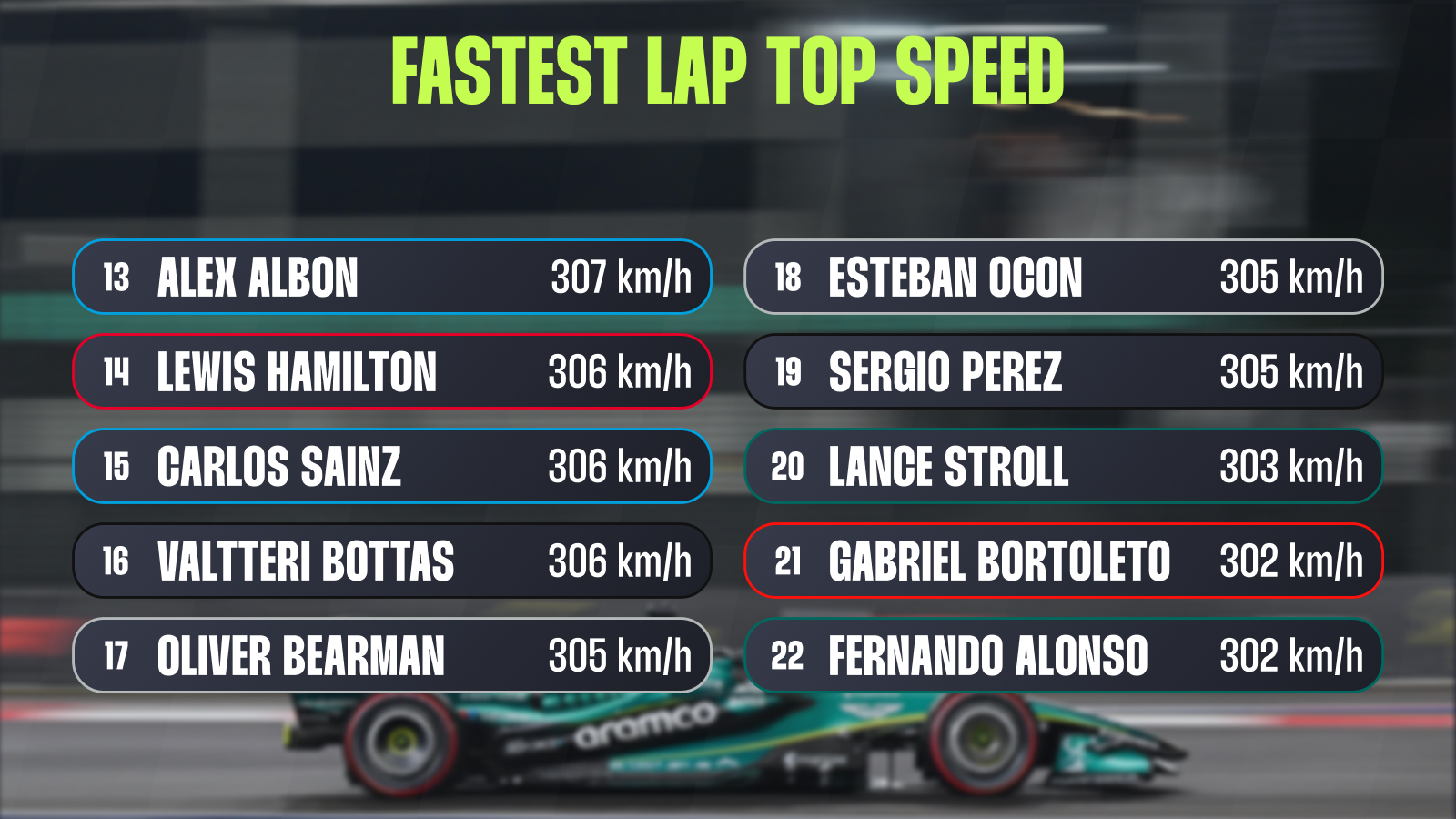
The graph below shows the lower end of the top-speed charts during qualifying at the Marina Bay Circuit, confirming once again that Aston Martin sit dead last in this metric. Placed right alongside them are Cadillac and Haas, both running Ferrari power units.
But to get a broader picture that incorporates overall lap times – or mean lap speed – the graph below offers a clearer perspective.
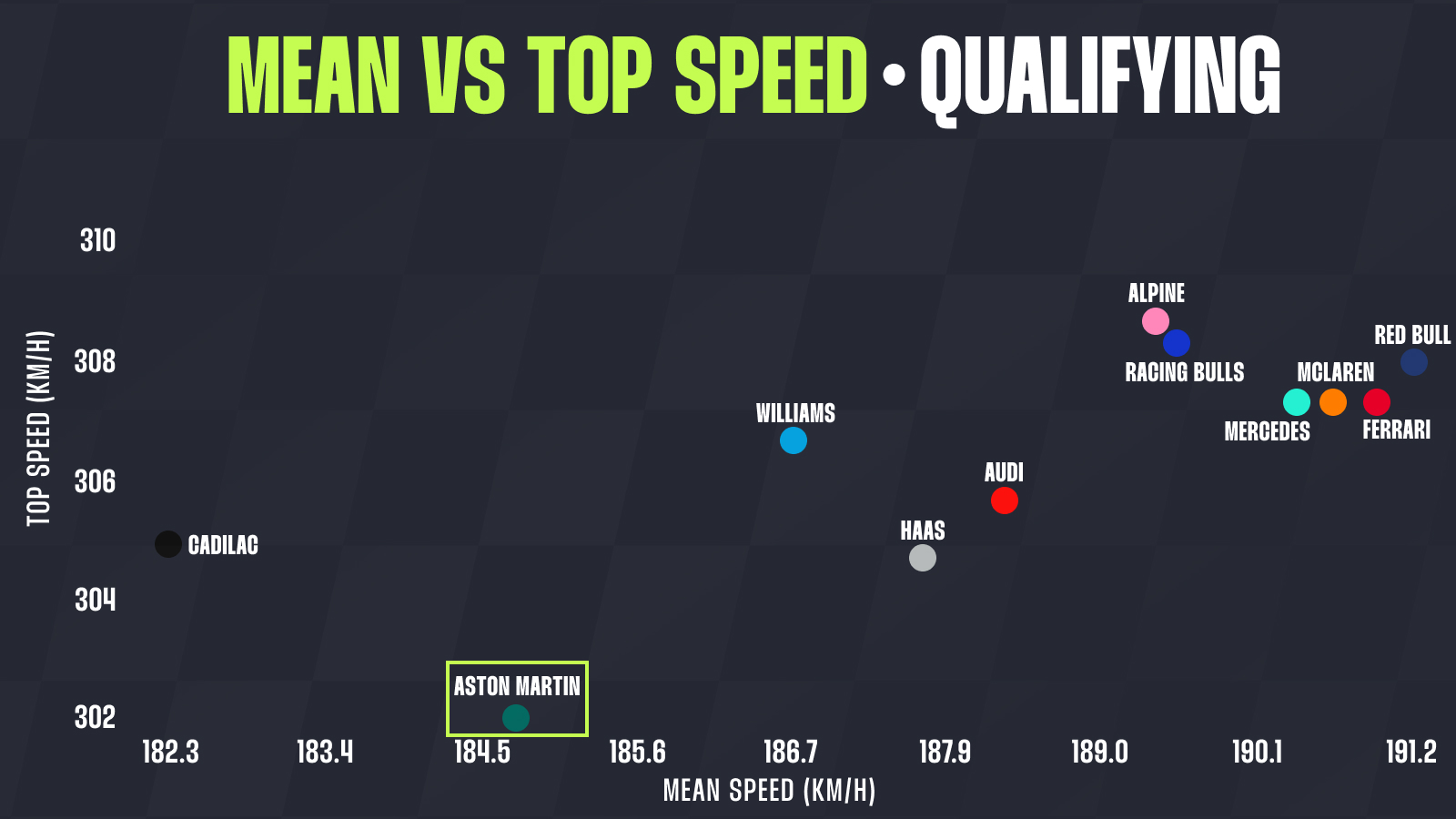
The higher a team sits on the graph, the better its top speed; the further to the right it sits, the faster its overall lap time. As we can see, maximum straight-line speed doesn’t automatically guarantee better lap times – Red Bull were fastest overall in Singapore qualifying, yet Alpine registered the highest top speed.
Where do Aston Martin feature? Right at the bottom. The British team currently finds itself stranded in no man’s land – well adrift of Williams, Haas, and Audi, yet comfortably ahead of Cadillac, who remain completely out of contention.
Further analysis from the Singapore GP
Lewis Hamilton Singapore GP gamble traced to crucial Ferrari mistake
UPDATED: When can Kimi Antonelli win the F1 2026 World Championship?
Nevertheless, in terms of top speed, Aston Martin remain comfortably the worst team on the grid, and Honda is directly responsible for that shortfall.
Quantifying the exact lap time penalty caused by this power deficit is nearly impossible due to the sheer complexity of the current regulations, where the Power Unit influences a vast array of vehicle dynamics.
What is certain is that the team will remain stuck at this performance level for the remainder of the season. True progress won’t be seen until next year, when both Honda and Aston Martin get the opportunity to fix a situation that could hardly be much worse than it is today.
Want to be the first to know exclusive information from the F1 paddock? Join our broadcast channel on WhatsApp to get the scoop on the latest developments from our team of accredited journalists.
You can also subscribe to the PlanetF1 YouTube channel for exclusive features, hear from our paddock journalists with stories from the heart of Formula 1 and much more!
Read next: Ferrari boss hits back after Lewis Hamilton Singapore GP blunder