
The crucial factor that could decide the Azerbaijan Grand Prix


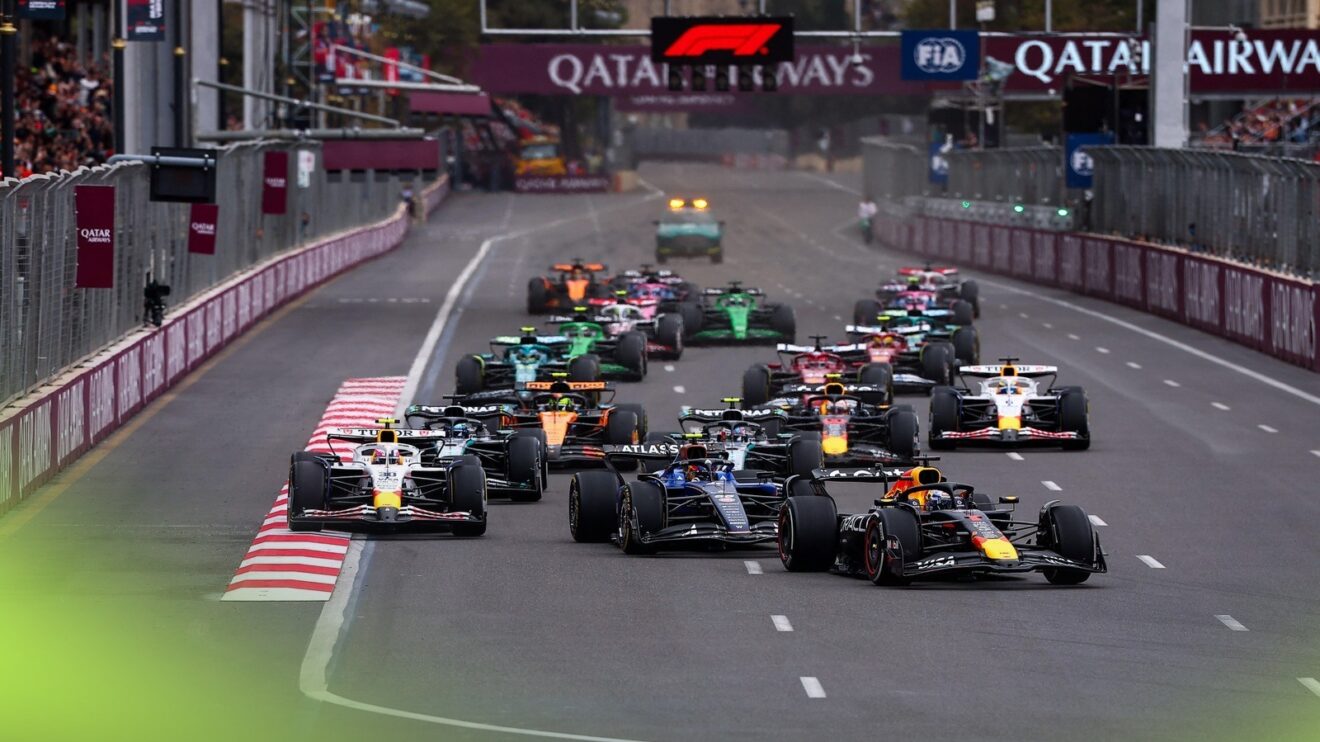
There's a critical element that could decide the Azerbaijan GP.
BAKU – The street circuit in Azerbaijan conceals plenty of unknowns, so let’s dive into the telemetry data to uncover who has the potential to win the Grand Prix.
That’s, of course, if an invisible enemy doesn’t drastically alter the course.
Who looks best prepared for the Azerbaijan Grand Prix?
A number of factors will determine who boasts the strongest race pace during the Grand Prix in Baku, with two standing out as particularly intriguing to analyse: tyre degradation and wind.
Indeed, as improbable as it may sound, wind plays a critical role in this race, as we shall explore shortly.
To start, let’s focus on what transpired during free practice and who showed superior pace and was the kindest to their tyres.
For this year’s event in Baku, Pirelli selected the softest range of compounds in their matrix – C3 as the hard, C4 as the medium, and C5 as the soft – which is one step harder than last year’s allocation.
More from the Azerbaijan Grand Prix
Lawson reveals drivers ‘respected’ rules after ‘dangerous’ Hamilton near-miss
How Russell destroyed the competition in Azerbaijan GP qualifying
Last year saw the introduction of the C6 compound, an ultra-soft tyre seen at only a handful of venues; however, nobody ran it during the race, reducing strategy to the medium and hard compounds of the time (the C5 and C4).
It was precisely these two compounds (even though this year’s tyres feature different dimensions compared to last year) that the front-running teams evaluated during their long-run simulations in FP2.
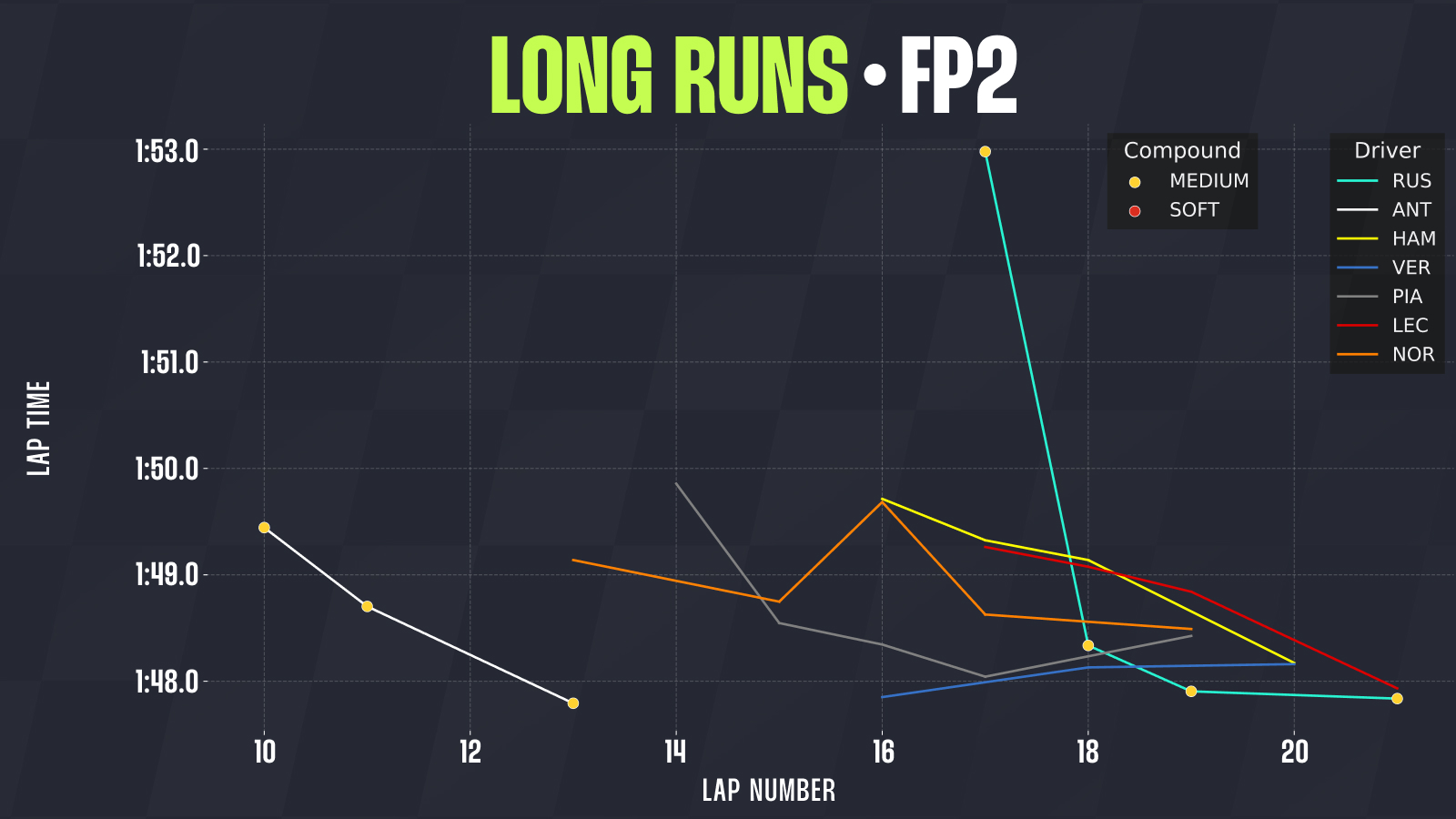
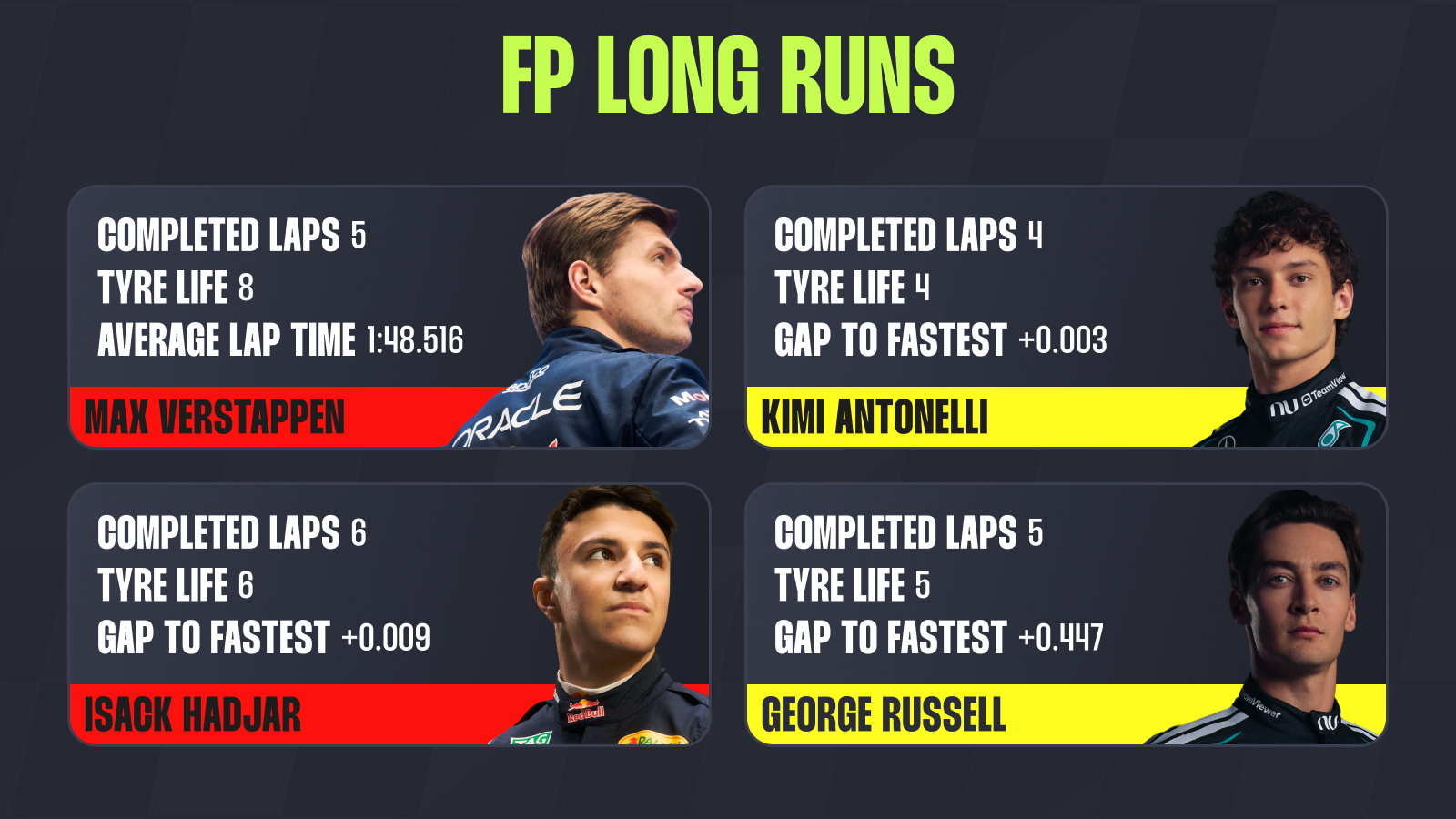
Unsurprisingly, Mercedes, and specifically George Russell, looked in fine fettle on track. Barring an initial slower lap, the Briton exhibited remarkable consistency; excluding that opening out-lap, he posted an average lap time of 1:47.96s across a 4-lap stint on the medium compound.
This initial slow lap was a phenomenon observed among multiple drivers and teams. It appears a full warm-up lap is required to build optimal bulk temperature in the tyres before they can deliver peak grip. A key factor contributing to this behaviour is undoubtedly the heavily dusty surface typical of Baku’s street environment.
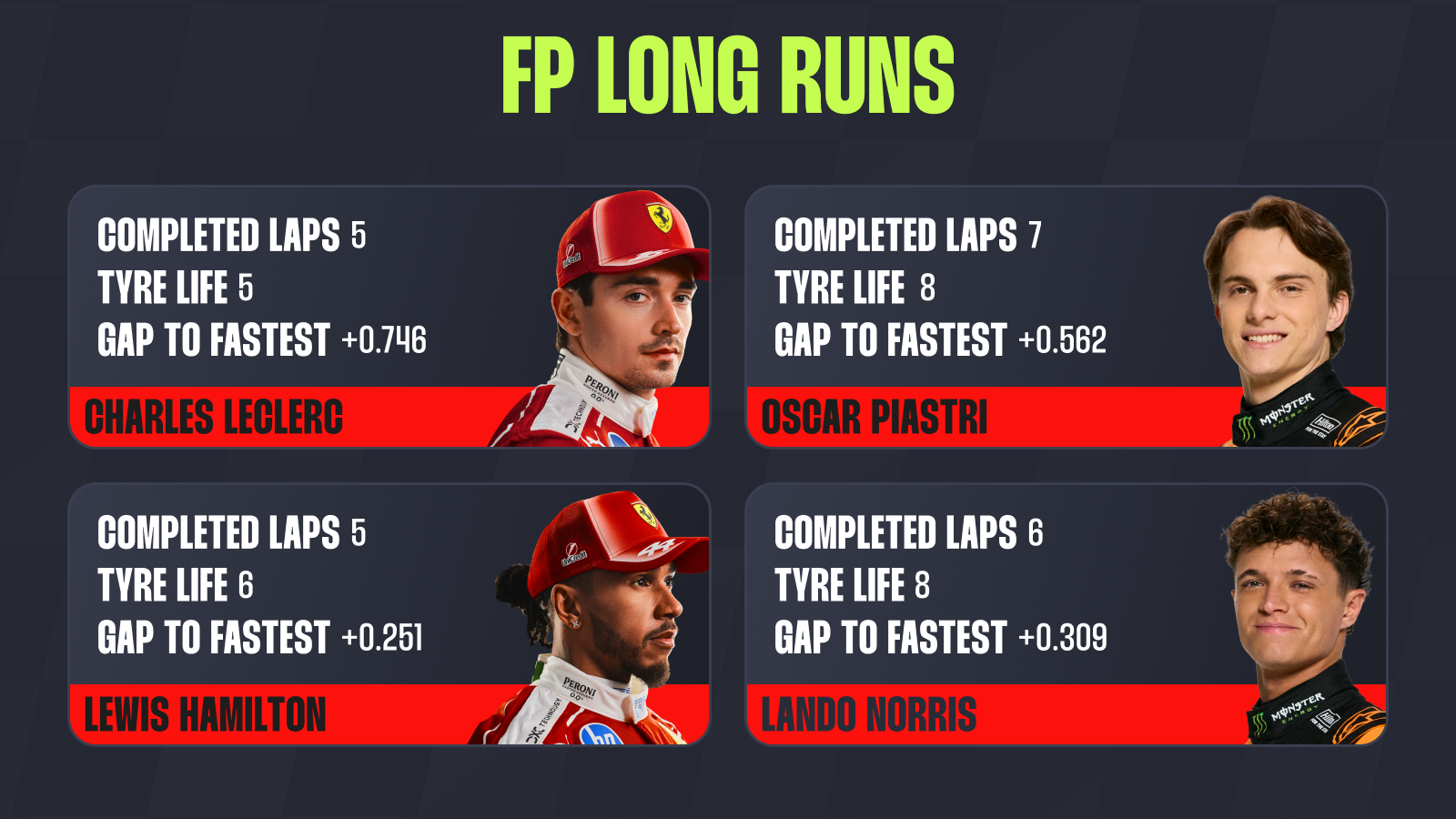
Beyond Kimi Antonelli, only Max Verstappen appeared capable of threatening Mercedes on raw pace, although the Dutchman suffered a scruffy run littered with traffic. Norris similarly struggled to find clean air, while Piastri was another driver requiring up to two full preparation laps to bring his tyres into their operational window.
The Ferrari drivers were consistently tidy, yet neither their times nor those of the McLaren duo matched the benchmarks set by Mercedes and Red Bull. Naturally, FP2 datasets must be taken with a grain of salt, as fuel loads and engine modes remain closely guarded secrets.
With Russell on pole and a heavily jumbled order behind him comprising McLaren, Ferrari, and Red Bull, we can certainly anticipate fierce wheel-to-wheel battles between second and eighth position – unless someone delivers a surprise and manages to match Russell’s pace.
The invisible threat: Wind
However, another vital variable, one that remains virtually invisible yet exerts a massive influence on the race, is the wind.
The best way to demonstrate just how critical a factor wind can be is to examine the progression of lap times from FP1 through to FP3. What the data clearly reveals is that while every driver found time on Thursday, hardly anyone improved on Friday morning (only 9 out of 22 drivers).
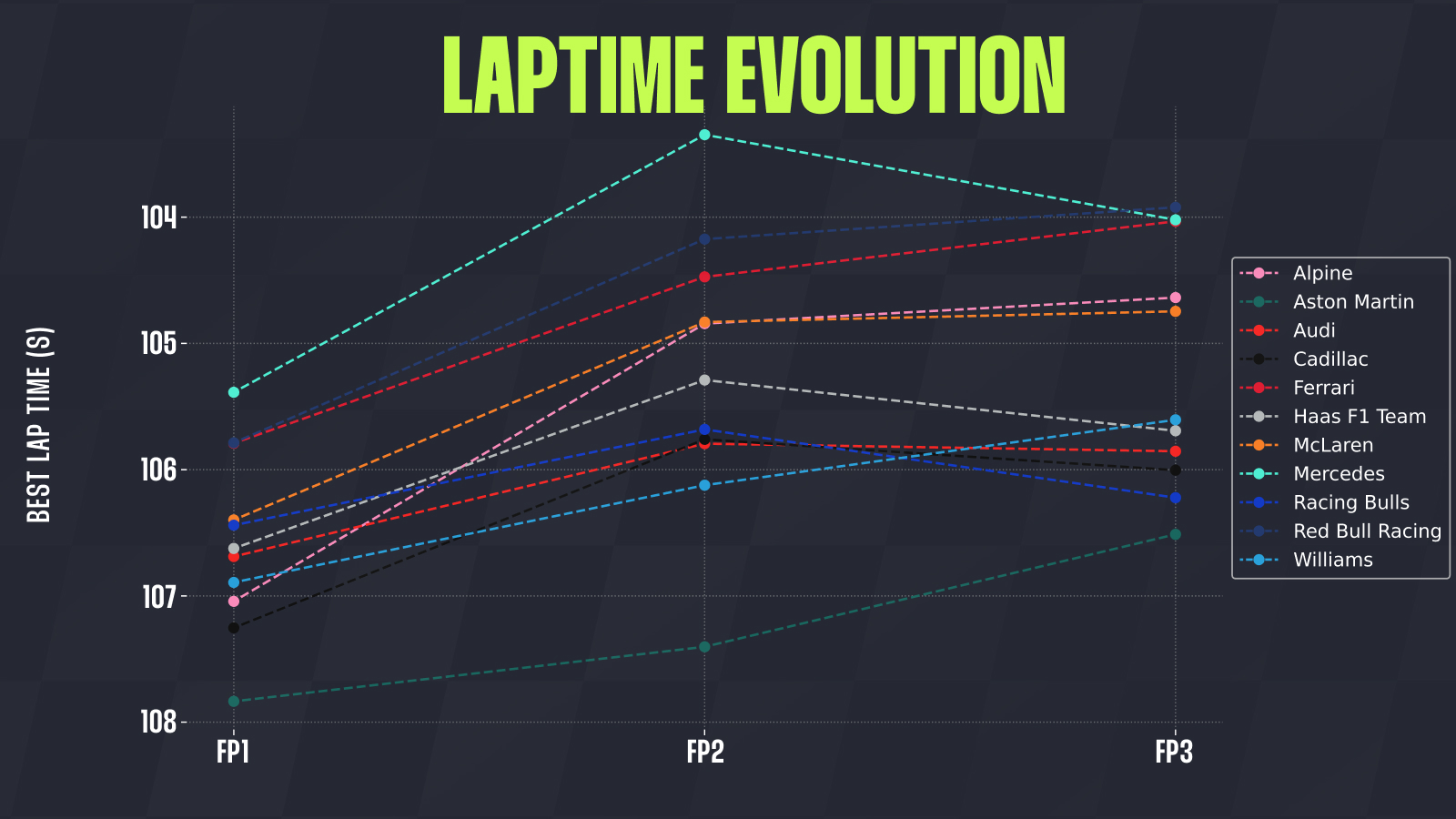
Baku being a circuit with significant track evolution – given its street-circuit nature where the asphalt cleans up and rubbers in over time – lap times in FP3 actually regressed on a surface benefiting from an extra day’s rubber.
And by no small margin: Verstappen’s benchmark time in FP3 was nearly 0.6 seconds slower than Russell’s top FP2 effort. To put that into perspective, lap times improved by a whopping two seconds in Thursday running alone.
The primary catalyst was purely the wind. On Thursday, a gentle northerly breeze blew at roughly 12 km/h, whereas during FP3, the wind swung round from the south, gusting violently between 30 km/h and 50 km/h.
Over a long race distance, wind direction and velocity can shift abruptly, catching drivers completely off guard. Through the exact same corner, a car’s aerodynamic balance can transform completely depending on ambient wind direction. Exiting Turn 1, a driver might encounter a headwind on one lap and a tailwind on the next, with virtually no forewarning.
Beyond the threat of sending a car into the track barriers, wind also severely impacts track limits compliance. In Turn 1 alone during FP3, 10 lap times were deleted for precisely this reason.
This heaps immense pressure not only on the drivers but also on team strategists as Safety Car interventions are almost guaranteed and must be factored into every scenario.
With all these variables at play, it becomes abundantly clear why racing in Azerbaijan is so fiercely unpredictable.
Want to be the first to know exclusive information from the F1 paddock? Join our broadcast channel on WhatsApp to get the scoop on the latest developments from our team of accredited journalists.
You can also subscribe to the PlanetF1 YouTube channel for exclusive features, hear from our paddock journalists with stories from the heart of Formula 1 and much more!
Read Next: Winners and losers from the 2026 Azerbaijan Grand Prix Qualifying