
Antonelli and Russell telemetry data settles Azerbaijan GP debate


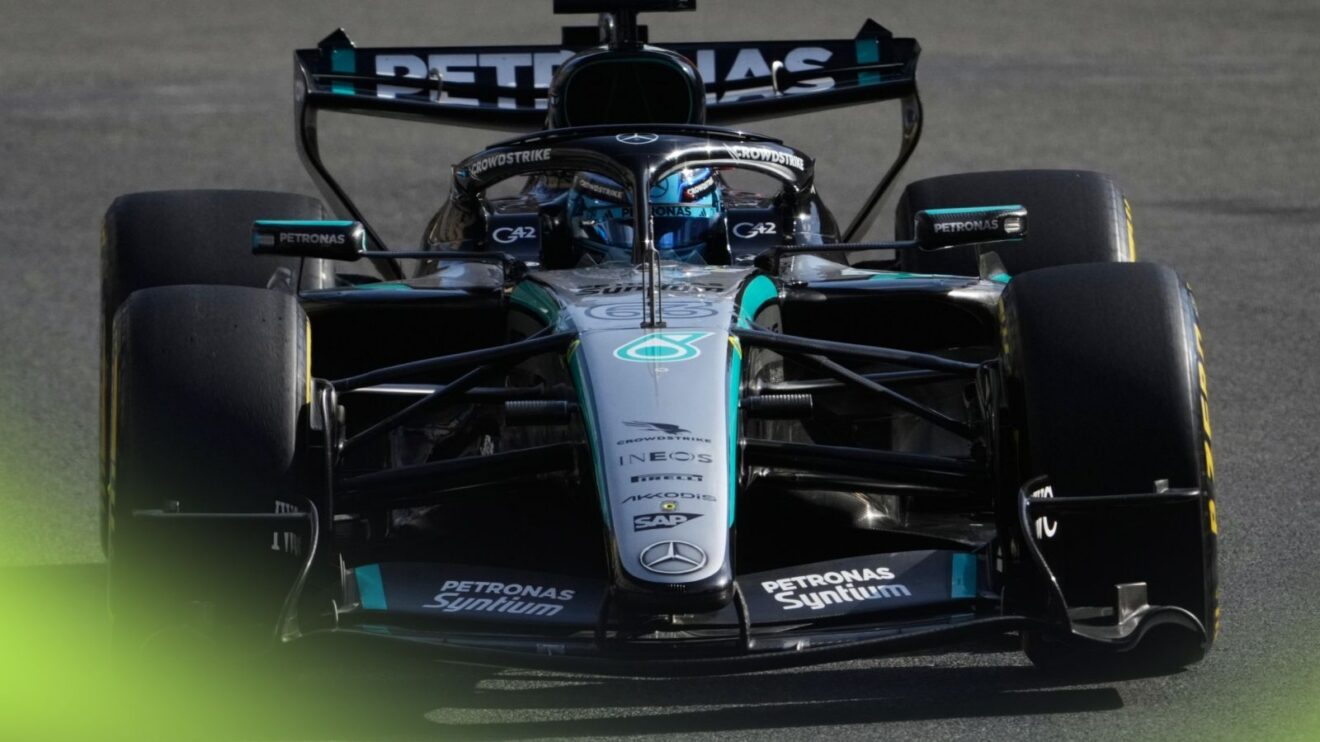
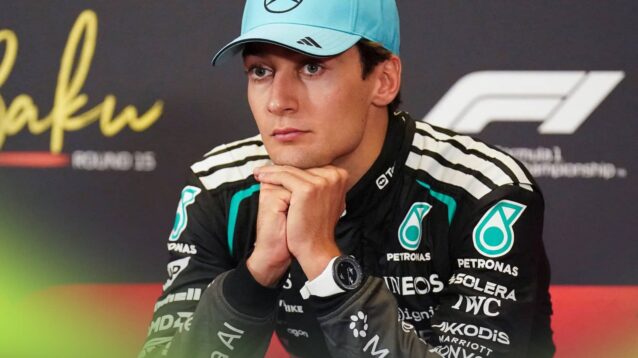
George Russell dominated in Baku
Kimi Antonelli’s distinctive, more aggressive driving style is one of the primary catalysts behind his superior performance this season over George Russell.
With the exception of the Baku event – a fact firmly borne out by telemetry data. Russell suddenly returned to form with perhaps his most dominant Formula 1 race weekend yet. So, let’s dive deeper into why this happened.
Explained: How George Russell and F1 2026 suddenly gelled
To understand how the new generation of cars impacts these two contrasting driving styles, we must recap the fundamental changes introduced this season.
First, the 2026 regulations brought smaller cars and significantly reduced overall downforce. The Venturi tunnels that previously generated colossal downforce levels were replaced by a flatter floor profile. Consequently, the snap-loss-of-grip phenomenon caused by sudden downforce drop-off has been eradicated – the car now slides progressively rather than snapping abruptly.
Second, and equally vital for this story, is the near 50/50 power split between the internal combustion engine and the MGU-K electrical system.
Let’s also not forget the narrower tyres relative to last season, which play a crucial role as we shall see. In short, these are the key technical pillars needed to grasp why Antonelli’s style generally thrives with this new machinery.
Looking at Russell first: why was his style suited to ground-effect cars?
The Briton exhibits an elegant, surgically precise technique based on a “brake less, don’t brake later” philosophy. By braking earlier on corner entry, he settles the platform and initiates a progressive turn-in, loading the tyres gradually with minimal overlap between braking inputs and steering angle.
This approach was ideal for ground-effect cars: the risk of destabilising the platform and triggering aerodynamic stall was minimal, preserving fragile aero balance throughout the corner arc.
Russell is not a high-sensitivity driver who makes micro-corrections mid-corner, a trait that proves less effective with the reduced downforce levels of 2026. He tends to demand more from the rear tyres than his peers and when rear-end stability is lacking, micro-sliding occurs bleeding lap time.
Conversely, Kimi’s approach is completely inverted: he is extremely aggressive on entry, braking later and harder, forcing the car to work more compared to Russell. Vehicle rotation with Kimi doesn’t happen smoothly like with Geroge; instead, it is sharp and rapid, which more effectively settles the rear platform while allowing the front end to progressively pick up grip.
Furthermore, Antonelli excels at making subtle mid-corner steering corrections. He executes these with remarkable precision where every input serves a purpose, allowing him to extract performance more naturally from low-downforce machinery compared to his team-mate.
Right there, we see why the 2026 cars naturally suit the Italian better. However, another crucial dimension comes into play: energy management.
Because Antonelli carries higher entry speed than Russell, his minimum cornering speed and momentum are higher. Consequently, Russell’s car has to compensate for that shortfall in momentum via micro-deployments of electrical power mid-corner. Additionally, Kimi’s harder braking events allow him to harvest slightly more energy under MGU-K recovery phases.
This variance is minuscule across a single corner, but these subtle gains accumulate over a lap, typically leaving Antonelli with a higher battery state of charge heading onto the longer straights.
A prime example was qualifying in Belgium, where telemetry consistently showed the Italian achieving higher top speeds along the straight from Turn 16 to the bus-stop chicane. Even Russell himself conceded during the Spa weekend that he was aware of the deficit, without fully grasping where the delta originated.
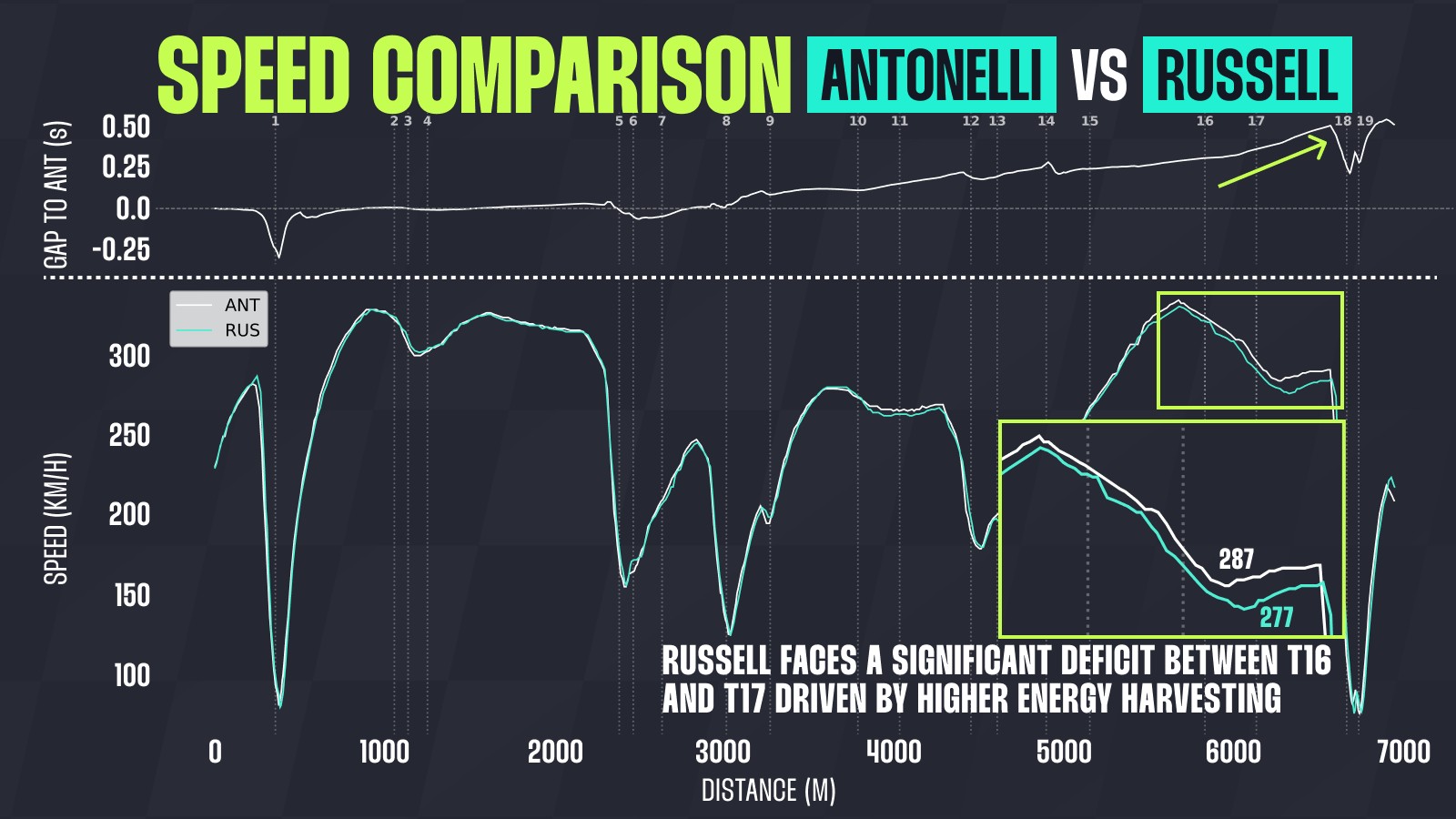
Even a closer inspection of onboard footage highlights these subtle nuances between their respective driving styles.
What Changed in Baku?
The reason all these advantages evaporate upon arriving in Azerbaijan lies in the circuit layout – more specifically the sequence from Turn 1 to Turn 8, dominated by 90-degree corners.
The fundamental difference with 90-degree street corners compared to conventional racing circuits is that they dictate a single geometric racing line, leaving zero room for stylistic variation. They feature one true apex and only one optimal method of execution: brake in a straight line, turn in with precision, and maximise exit traction with a stable rear end.
And this is precisely where Russell excels.
Antonelli no longer has the latitude for his aggressive entry technique, where he carries high speed into the turn and relies on deft mid-corner micro-corrections to adapt to available grip. Once again, telemetry data paints a crystal-clear picture.
In the graph below showing two push laps from Q1, where Kimi posted a time nearly 0.4 seconds faster overall, Russell was nonetheless quicker through the Turn 3 to Turn 7 sequence, carving out a 0.15-second advantage.
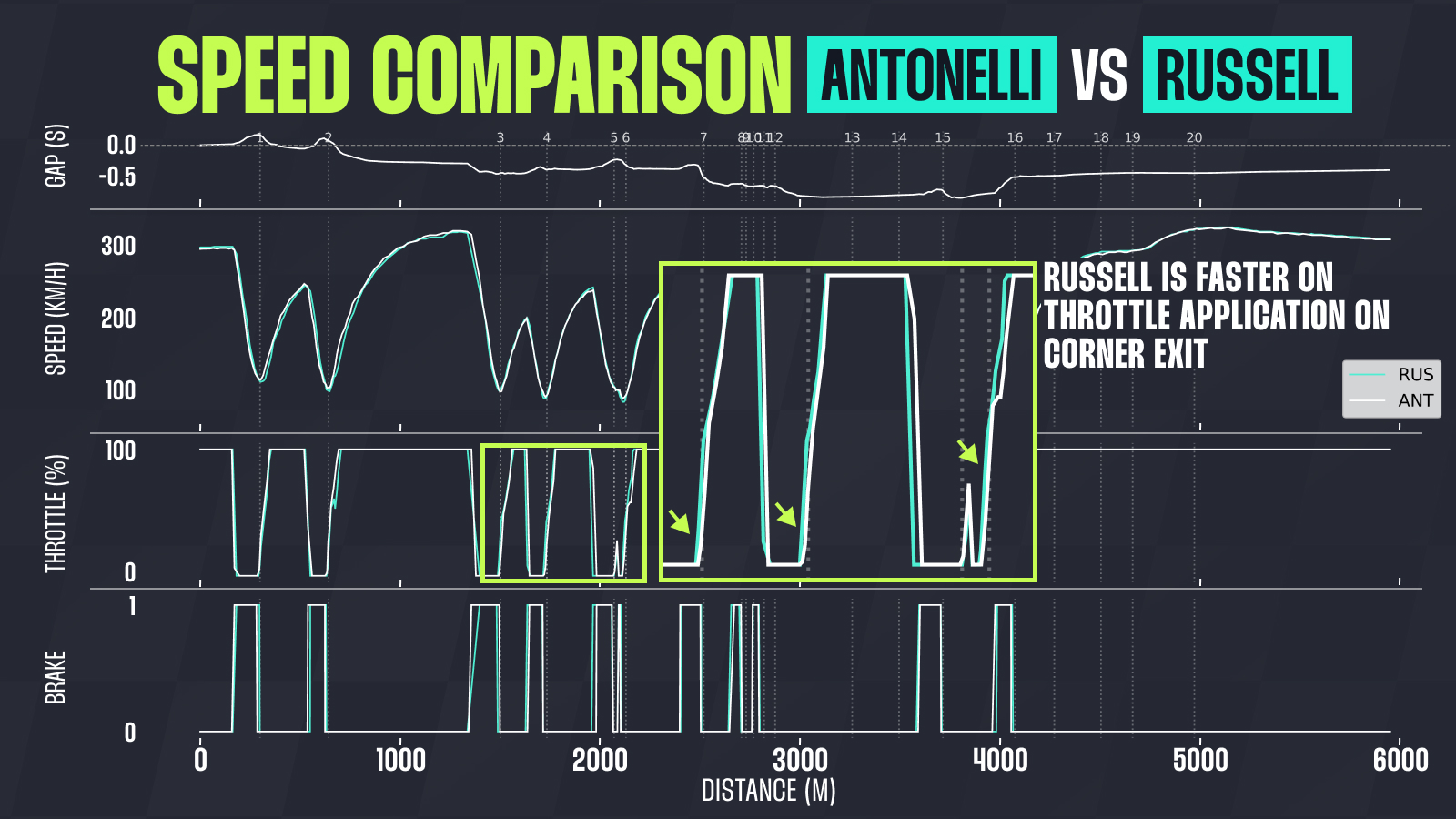
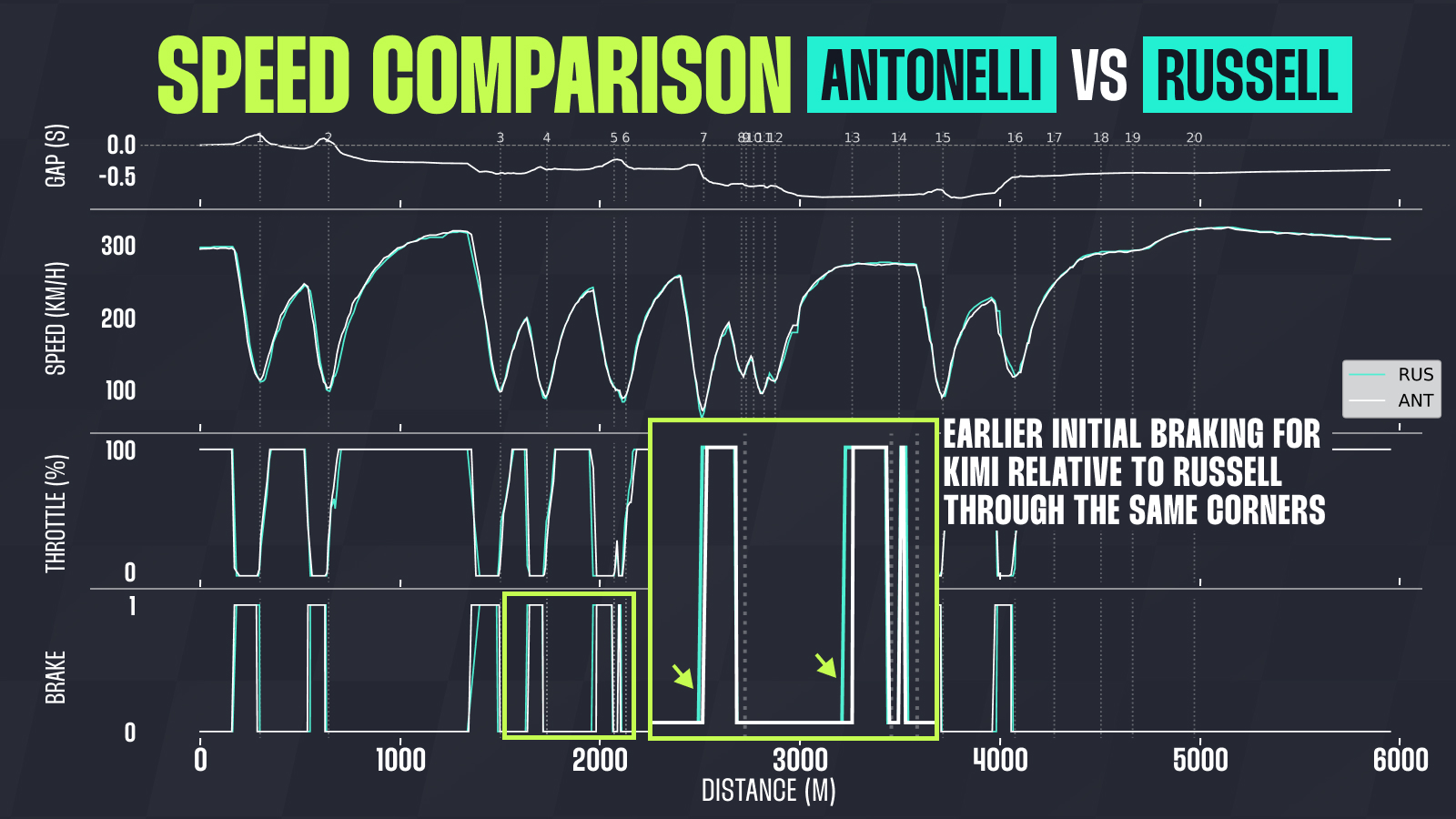
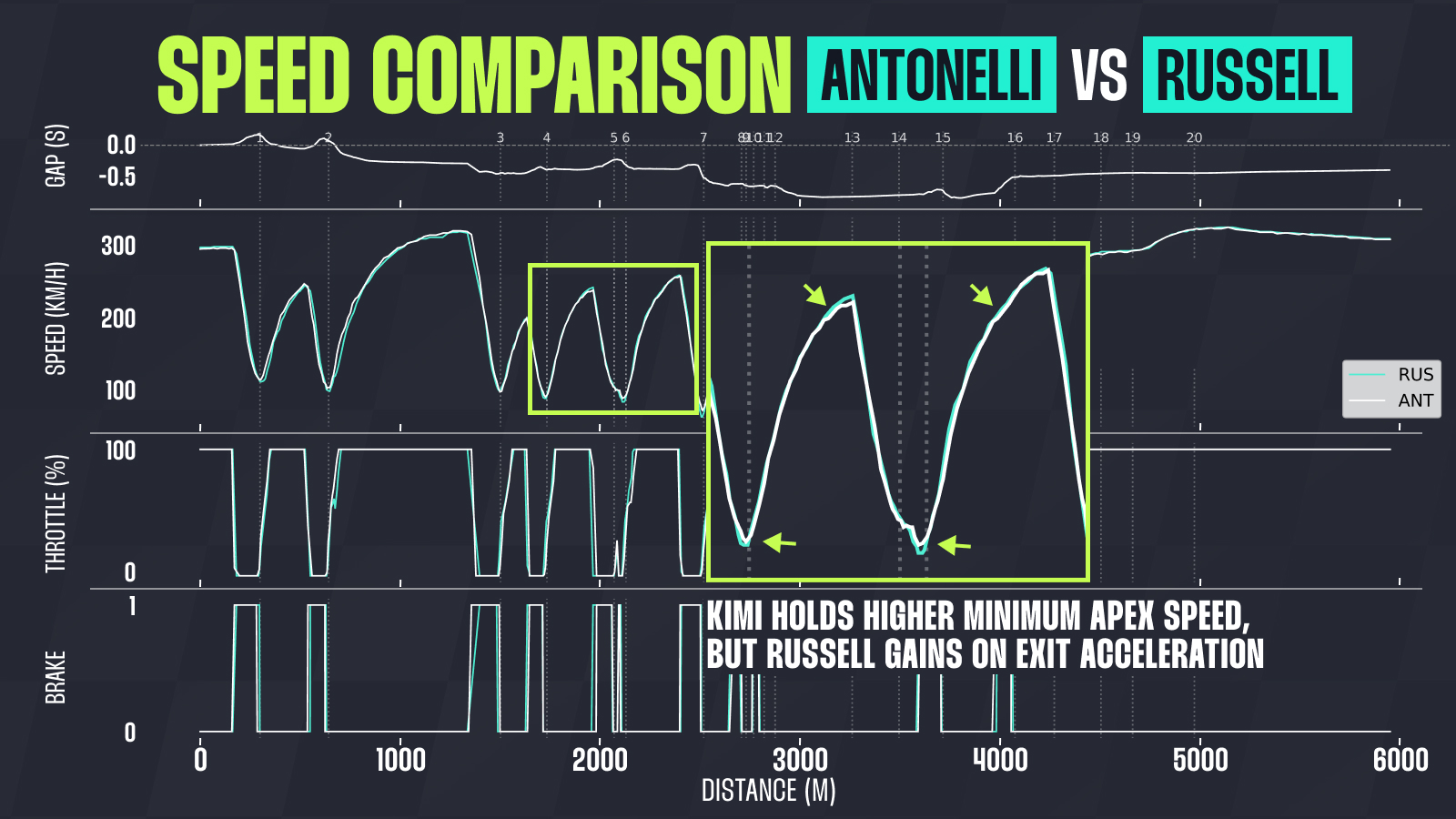
Due to Kimi’s early mistake in qualifying, we were deprived of seeing how this duel would have played out in Q3 with both drivers and cars pushed to their absolute limits. However, judging by the gap Russell created over the rest of the field, Kimi would have faced an uphill battle.
More Azerbaijan GP analysis on PlanetF1.com
How Azerbaijan GP exposed a problem F1 simply cannot fix
Nevertheless, Kimi remains the driver holding a commanding lead in the standings with his destiny firmly in his own hands. Though under different points circumstances, last year’s Baku weekend was the exact juncture where momentum swung from Piastri to Norris, ultimately deciding the championship outcome.
It will be interesting to see how this confidence boost impacts George Russell – whether he can sustain this stellar form and reignite the championship title race, even if only momentarily.
Want to be the first to know exclusive information from the F1 paddock? Join our broadcast channel on WhatsApp to get the scoop on the latest developments from our team of accredited journalists.
You can also subscribe to the PlanetF1 YouTube channel for exclusive features, hear from our paddock journalists with stories from the heart of Formula 1 and much more!
Read next: Fred Vasseur concedes his Ferrari F1 future is ‘not in my hands’