
McLaren weakness exposed after disastrous Monaco GP


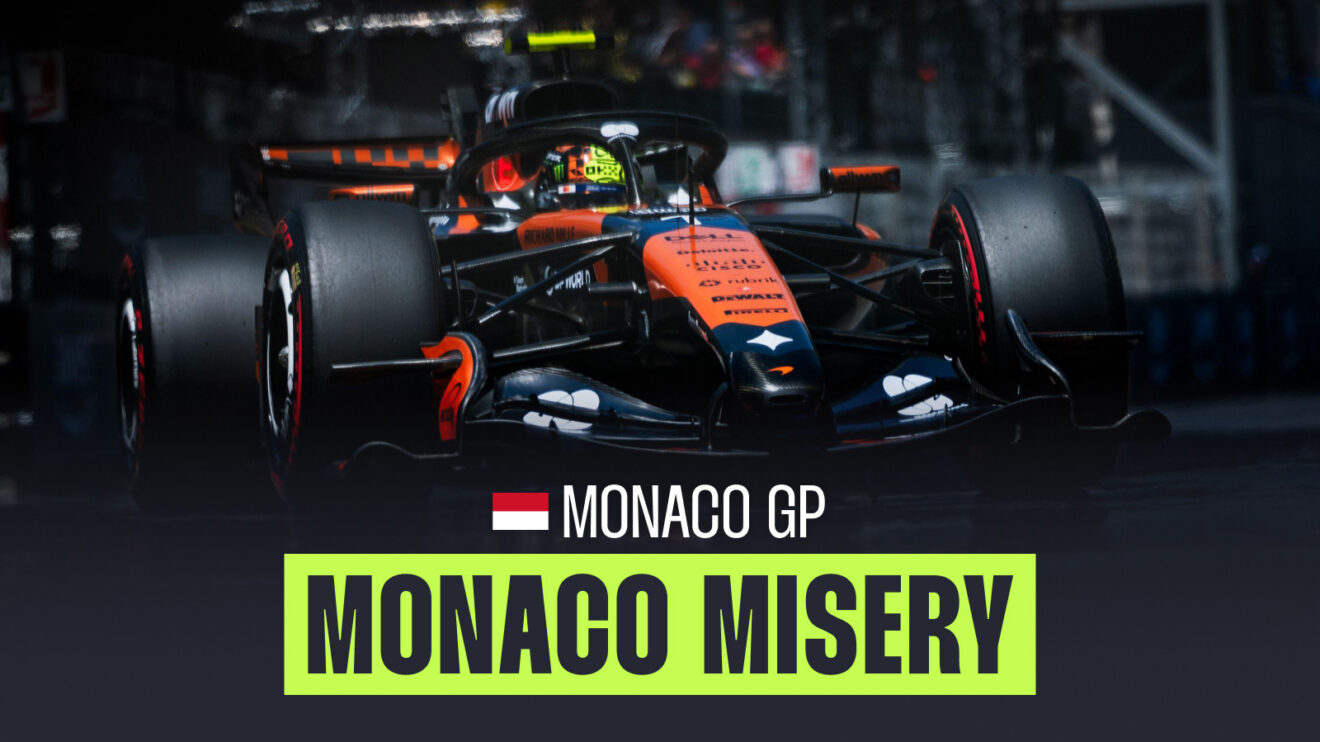
Data reveals why McLaren struggled for pace in the Monaco GP.
Following a race to forget in Canada, McLaren was unable to turn things around in the Monaco GP with its pace across both qualifying and the race the poorest of the top four teams.
Oscar Piastri’s fourth place finish was far more a consequence of retirements and penalties ahead of him than of actual performance on track. Let’s uncover exactly where McLaren’s pace vanished during the Monaco Grand Prix.
Why McLaren struggled for pace throughout Monaco GP
Want more PlanetF1.com coverage? Add us as a preferred source on Google for news you can trust.
McLaren started its path to a dismal weekend in qualifying, the single most critical session of the Monaco GP weekend. When you lock out the seventh and eighth grid slots as the slowest of the top teams, you can discard any hopes of a strong race.
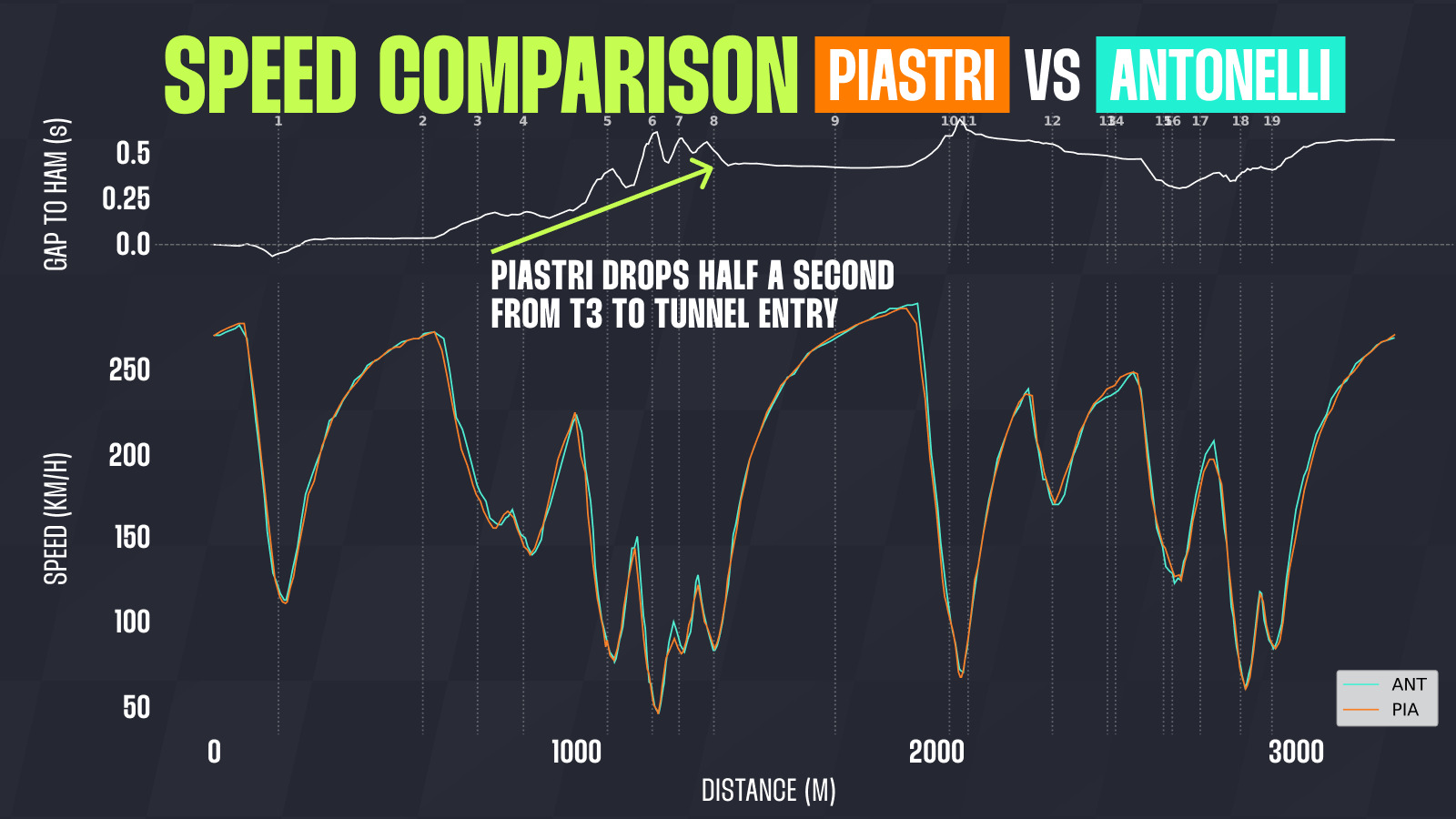
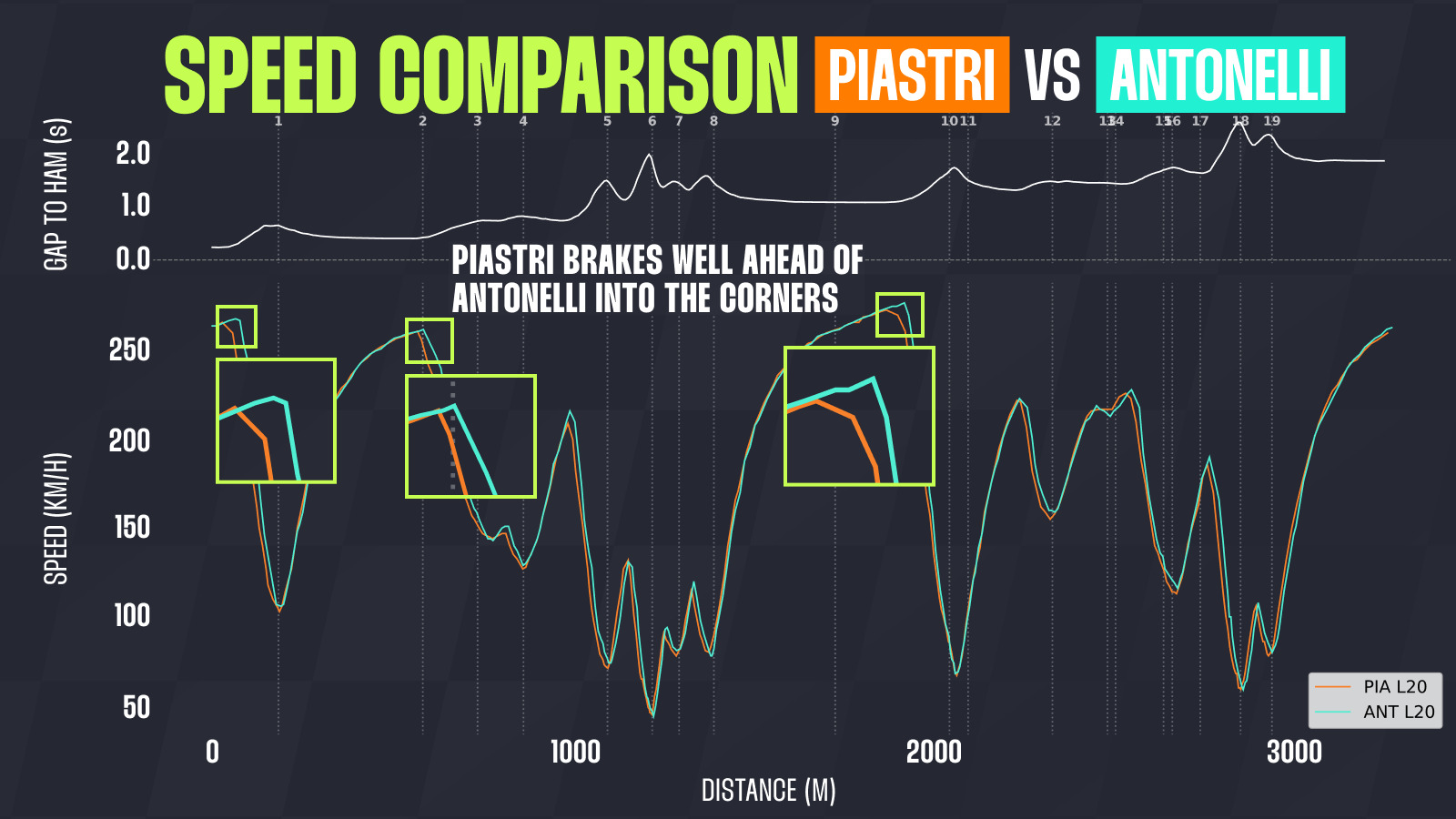
The primary culprit behind the sluggish qualifying pace was the slow-speed corners, where both drivers faced severe difficulties finding grip and rotating the car. If we compare the data from PIastri’s fastest Q3 laps to Kimi Antonelli, we can see that the Australian lost half a second from Massenet to the tunnel entry alone.
The only areas where the Papaya drivers were competitive were the medium-speed corners, but the delta there was far too small to cancel out the deficits accumulated across the rest of the circuit.
To make matters worse, Norris compromised an already poor start to his race by running wide through Turn 1 on the opening lap, dropping a position to Pierre Gasly.
On the other side, his teammate, despite running in relatively clean air, struggled to bring his tyres into the optimal working temperature window. In the graph below, we can see just how much slower he was compared to Russell, who was himself far from the fastest driver on track.
By Lap 10 of the Monaco GP, Russell had pulled a gap of nearly seven seconds over the lead McLaren through pure pace. Had it not been for Isack Hadjar holding Russell up later on, this deficit would highly likely have continued to grow.
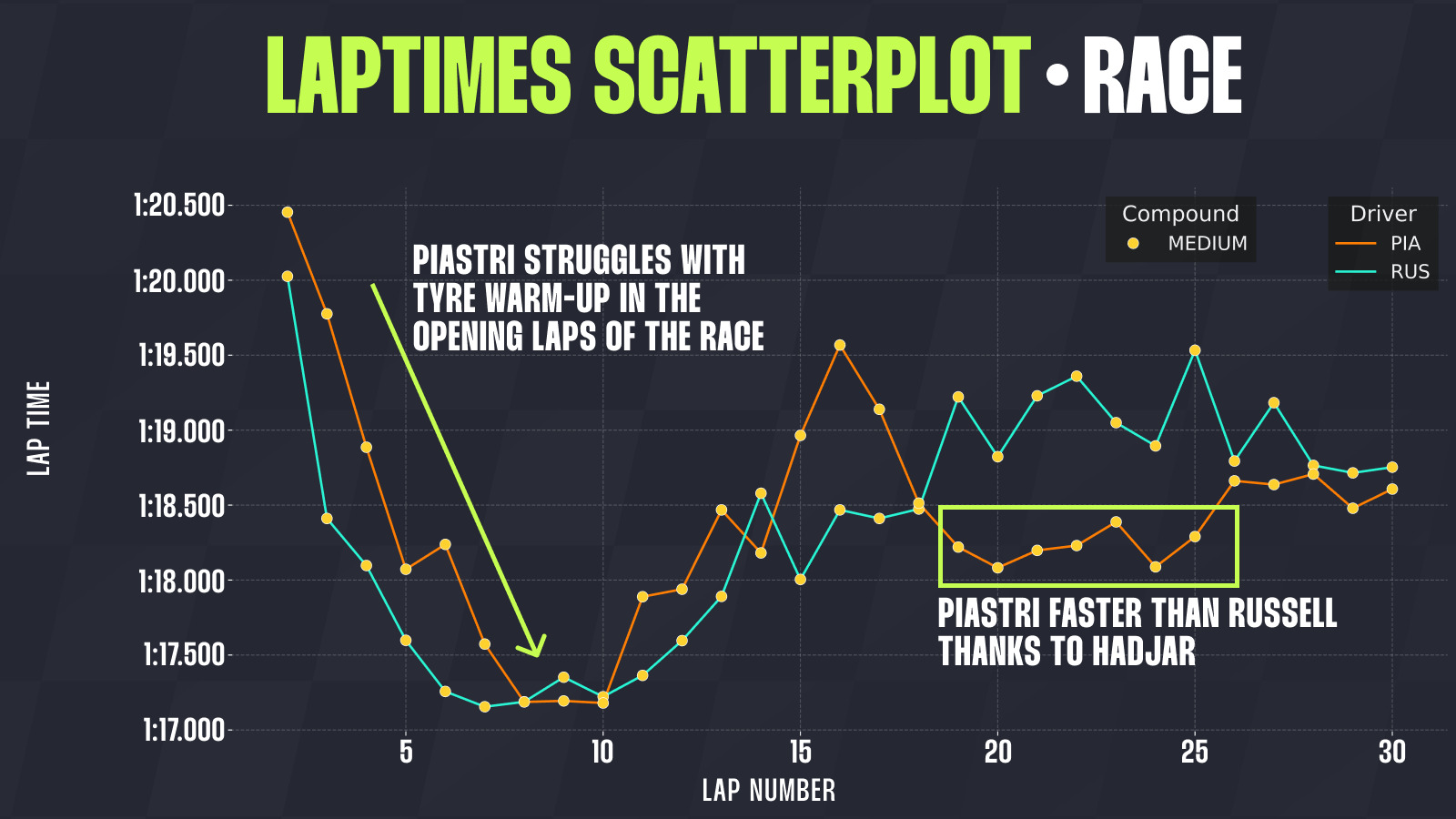
In fact, the only positive variable for McLaren at this point of the Monaco GP was the second Red Bull car.
By backing Russell up, Hadjar forced him into pitting earlier than intended. While this was a solid tactical decision in terms of their direct battle, Russell emerged from his pit stop behind Norris, opening up a perfect opportunity for McLaren to deploy a strategic game.
The blueprint was for Norris to back Russell up, allowing the field ahead to pull a wide enough gap to grant Piastri a “free” pit stop, ensuring he would retain track position ahead of Russell. We saw an extreme of this exact strategy during last year’s race.
The graph below illustrates just how much you can slow a driver down in Monaco. At one point, Norris was running 3 seconds slower than his previous baseline rhythm, bleeding time in almost every corner, most notably through the medium-to-fast sections.
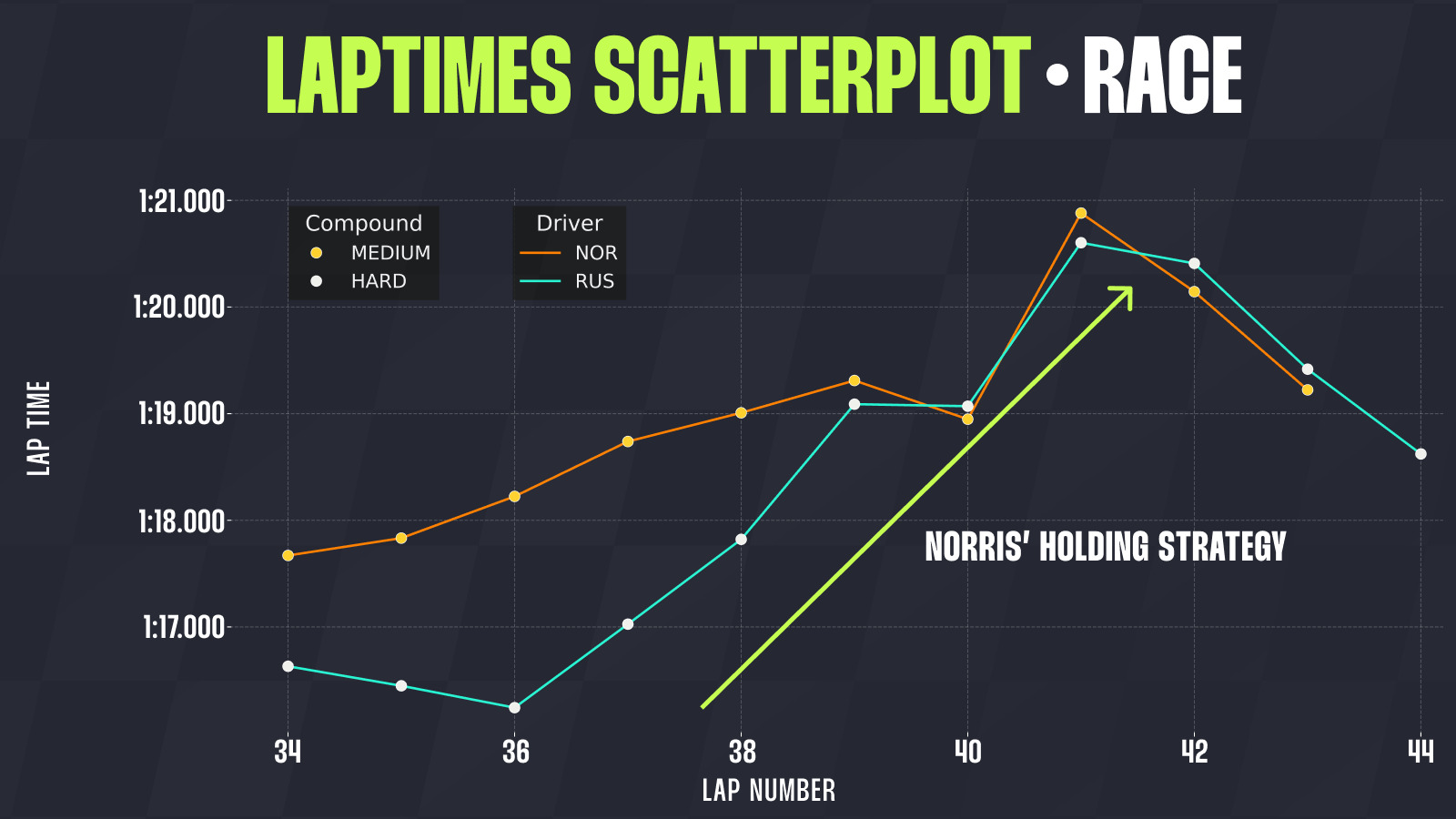
However, this plan proved short-lived. Just a few laps later, Norris suffered a sudden loss of power due to a technical failure, ending his race and rounding off a catastrophic weekend in the Principality.
Simultaneously, Russell clawed back his lost time. When Piastri finally pitted for fresh tyres on Lap 49, he re-joined the track behind both Russell and Hadjar.
Piastri likely would have finished his race there, however, Leclerc’s DNF, alongside penalties for Russell and Gasly, promoted him to fourth, a fantastic result considering the circumstances.
Naturally, McLaren cannot be satisfied with this weekend. Its biggest immediate hurdles are a fundamental lack of pace and ongoing reliability issues.
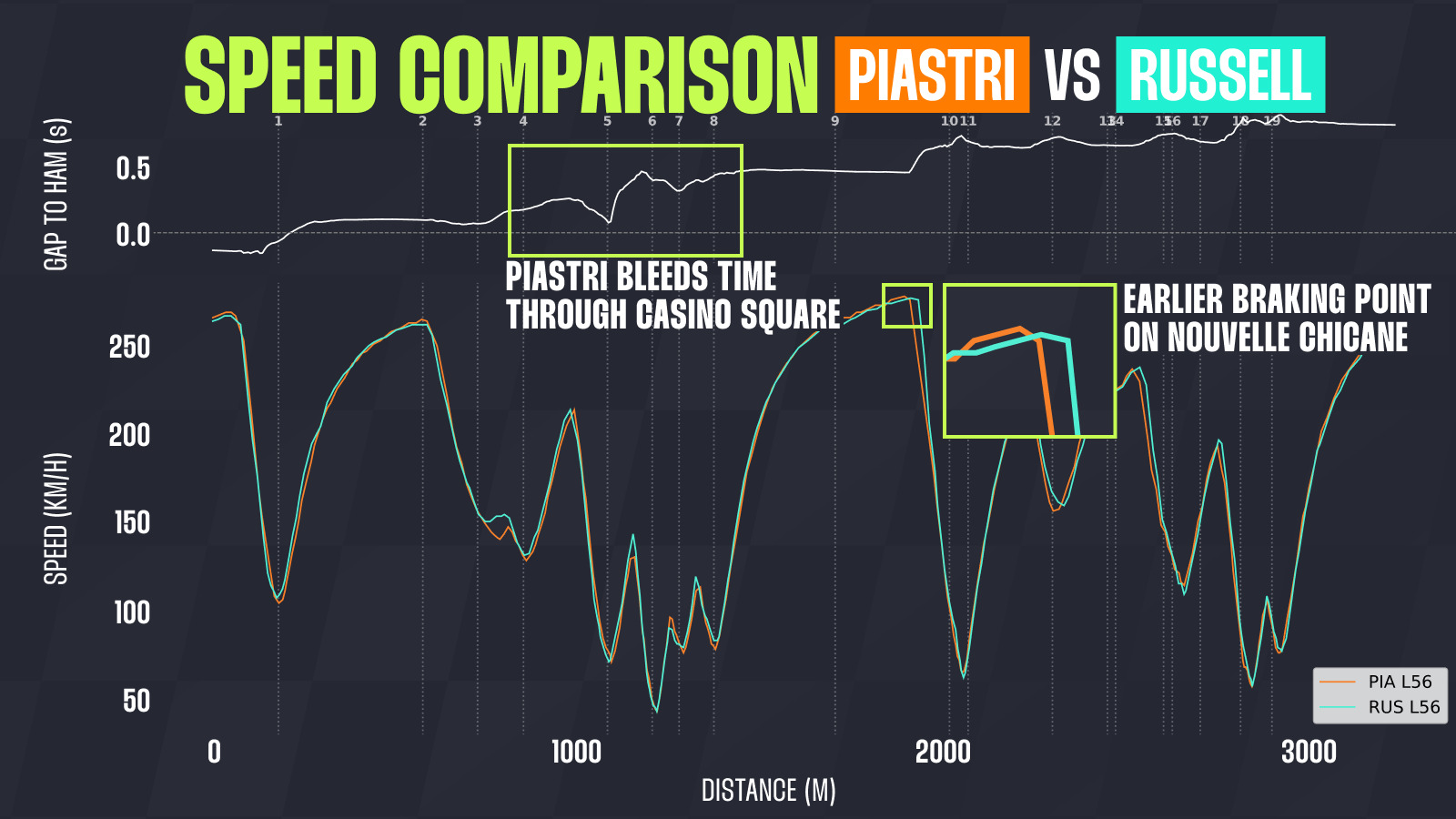
If we compare Piastri’s and Russell’s pace on the hard compound, we can observe that the Australian brakes earlier at almost every major braking zone in Monaco. In these phases, as well as through the slowest corners on the track in the Casino section, he gives up a significant amount of time.
If you were to contrast his data with Antonelli’s, you wouldn’t know these were two top-tier teams competing. Notice how much earlier Piastri has to lift and brake going into every corner; a telltale sign of immense instability and a lack of confidence in the car.
The silver lining for McLaren fans is that the Monaco GP is behind them, and we head to Barcelona next week, a circuit that plays more to the characteristics of the MCL40. McLaren’s strongest showing came in Miami, a track heavily defined by long straights and extended high-speed corners.
We expect that Barcelona will suit the Papaya team well, allowing it to re-enter the fight for podium finishes.
Want to be the first to know exclusive information from the F1 paddock? Join our broadcast channel on WhatsApp to get the scoop on the latest developments from our team of accredited journalists.
You can also subscribe to the PlanetF1 YouTube channel for exclusive features, hear from our paddock journalists with stories from the heart of Formula 1 and much more!
Read Next: Data reveals where Kimi Antonelli found decisive Monaco GP advantage