

Six stops? Madring tyre degradation creates major strategy puzzle for Spanish GP


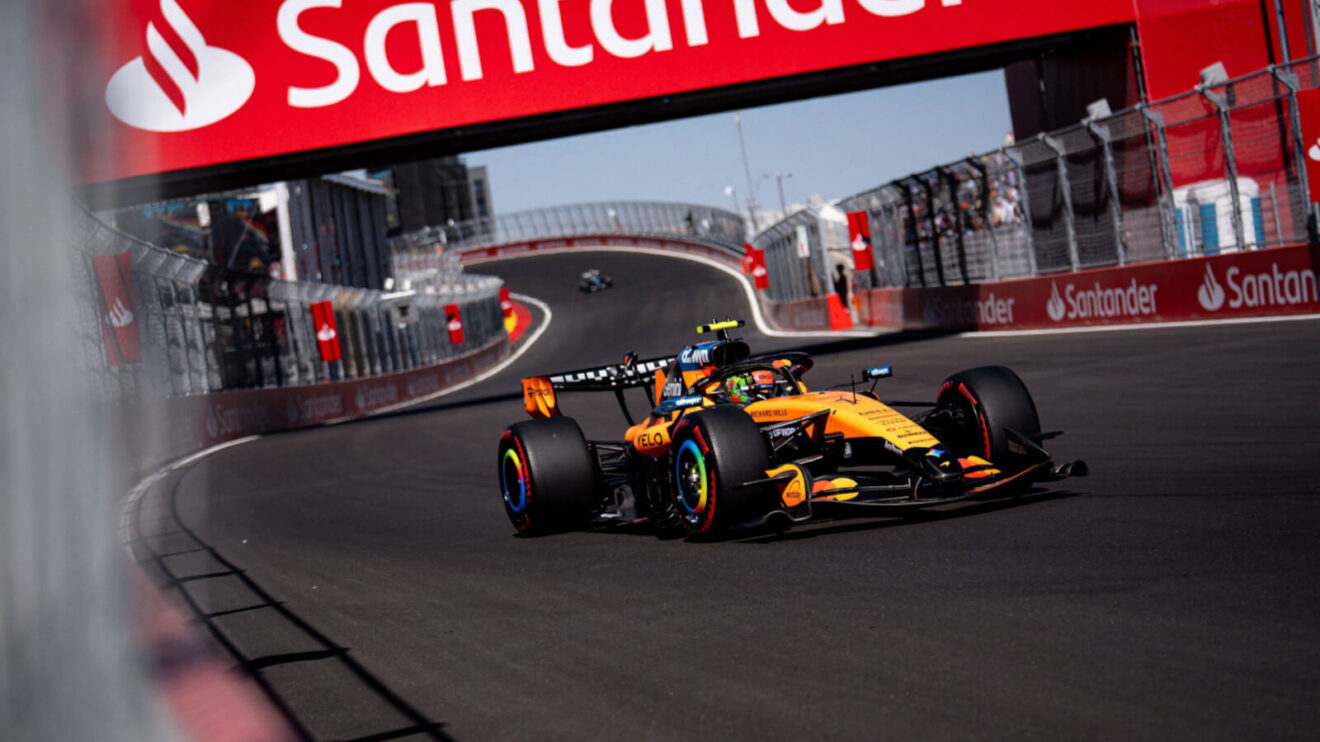
Lando Norris exits La Monumental at the Madring
The buzz phrase we have heard many times this weekend at the new Madring circuit is “tyre degradation”, with George Russell joking on Friday that it could be a “six-stop” strategy for the Spanish Grand Prix.
But let’s take a look at what the data tells us, and which strategy appears most effective for the main race.
One or two stops at the Madring?
If you are a race strategist ahead of the Grand Prix in Madrid, you face a critical and far-from-simple task. Overtaking on this circuit will be possible, but probably very difficult, putting immense pressure on strategy as the primary weapon for gaining positions.
Doing your homework thoroughly with the available data and preparing a sound strategy can yield substantial rewards here, especially if your rivals blunder. However, alongside the initial choice of starting compound, the absolute key will be real-time adaptation.
So, let’s start with the first question – which compound do you start on, and how many stops do you target?
The Madring presents a massive puzzle in that regard. The circuit features a very long pit lane where a stop will cost at least 25 seconds, which automatically shifts the strategic advantage towards a one-stop strategy.
On the flip side, free practice demonstrated that tyre degradation is exceptionally high, significantly worse than anticipated.
So much so, George Russell warned of a six-stop strategy after Friday’s practices.
“There’s a big question mark over the tyre degradation,” Russell told PlanetF1.com and other accredited media. “In FP1 with the tyre degradation we all had, we thought a six-stop race would be the fastest way!”
Let’s look at the data.
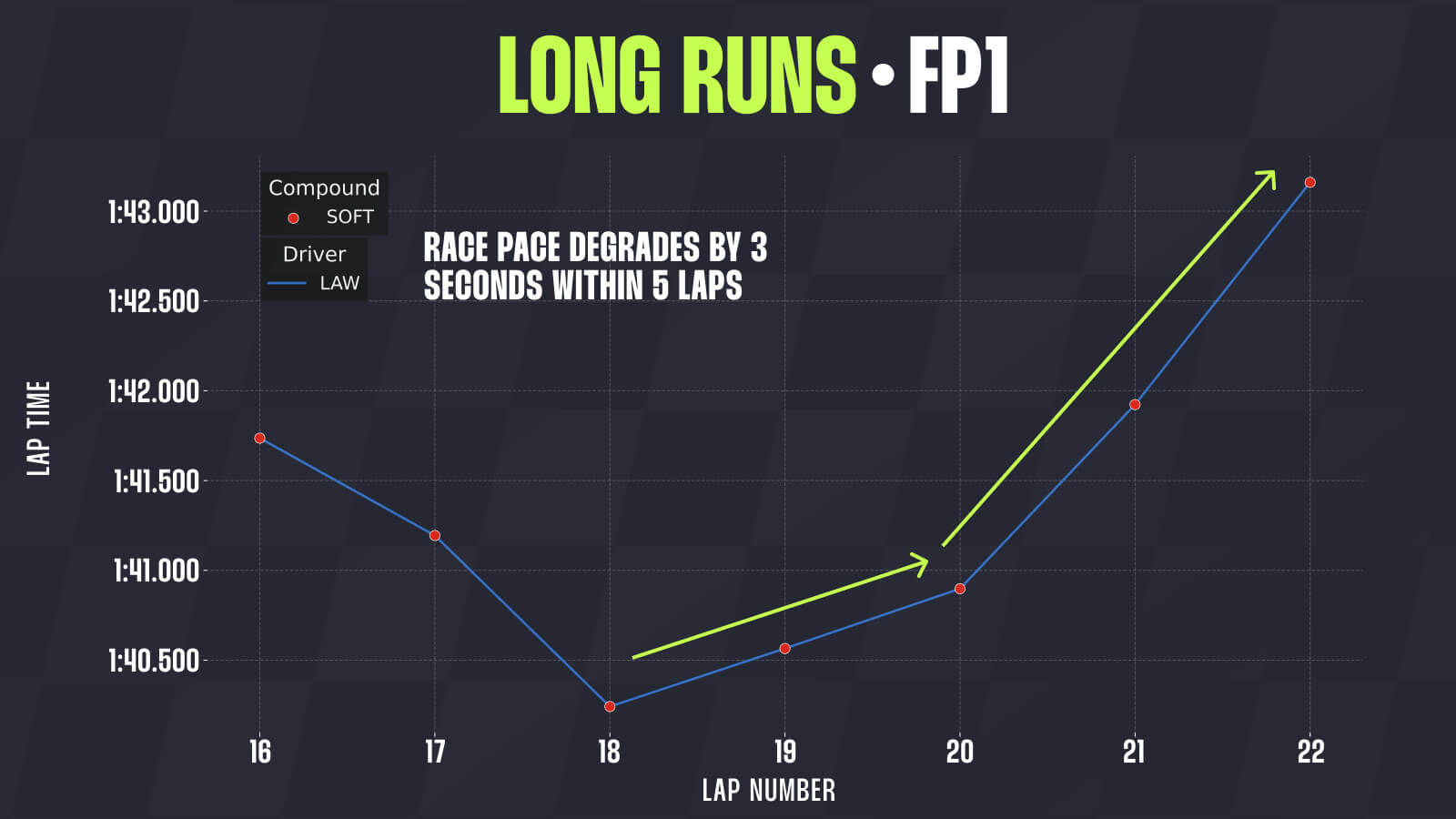
The first graph offers a prime example using Lawson’s long run on soft tyres in FP1. Following his initial flying lap, lap times began to fall before hitting a severe cliff on lap 3 of the stint. Notice just how rapidly his pace fell off.
The primary culprit is, of course, tyre overheating and rear-axle sliding. Several drivers highlighted sliding as their main issue, despite baseline grip levels being high.
When a tyre slides, it rapidly elevates surface temperatures, causing micro-tearing of the tread rubber and a consequent cliff in performance.
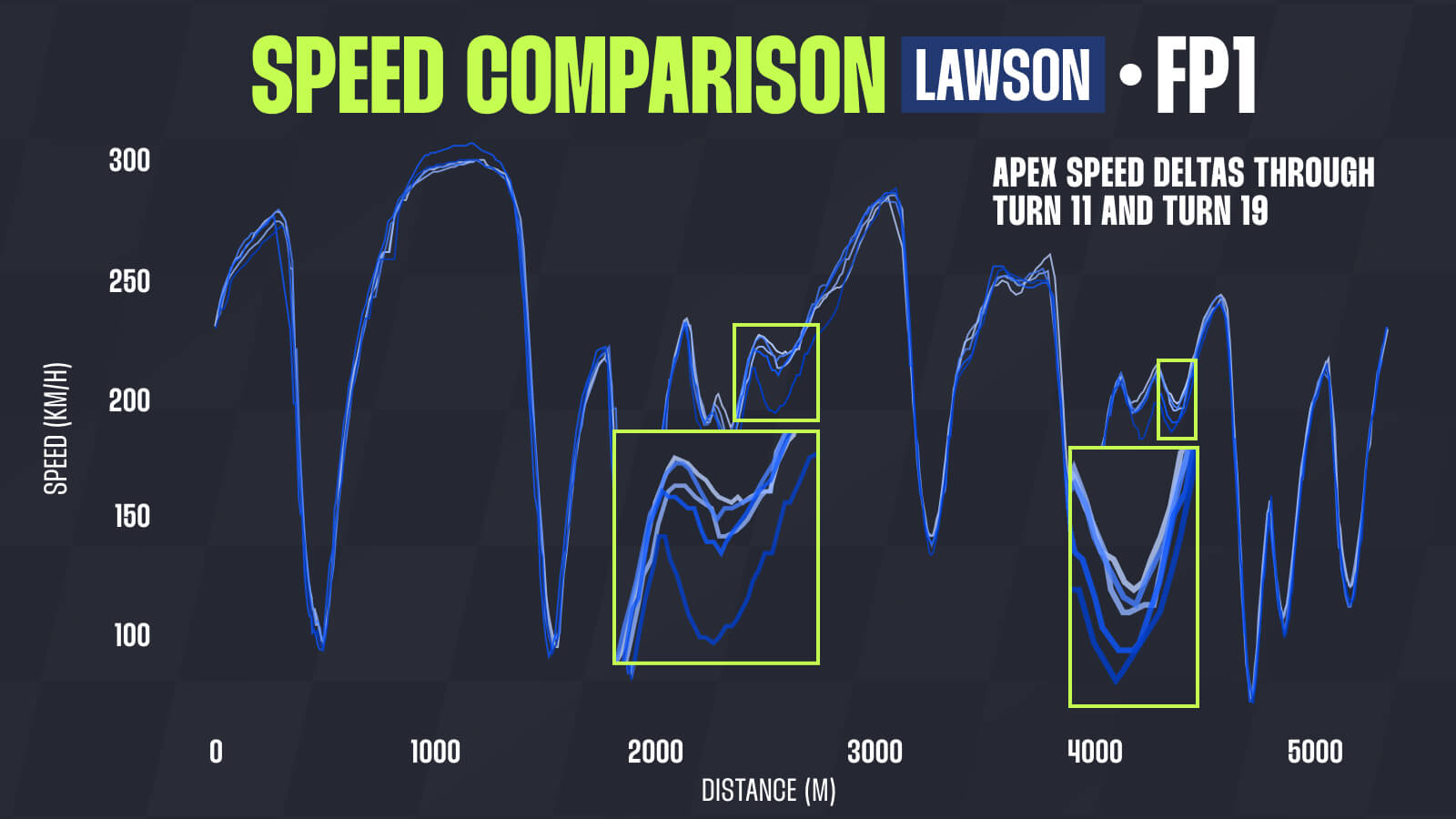
Turn 12, La Monumental, plays a massive role in this overheating with its 24% banking. Carrying such speed through a banked corner subjects the tyres to immense lateral and vertical loading, something F1 engineers have never encountered until now. Telemetry reveals precisely how this single corner impacts lap times.
The graph below illustrates Lawson’s laps during the aforementioned stint. The darker the shade, the older the lap. Performance loss is evident through Turn 12, but even more so in the subsequent corners – especially high-speed sweeps like Turn 14, Turn 15, Turn 18, and Turn 19. Across a 5-lap window, his lap time degraded by 3 seconds.
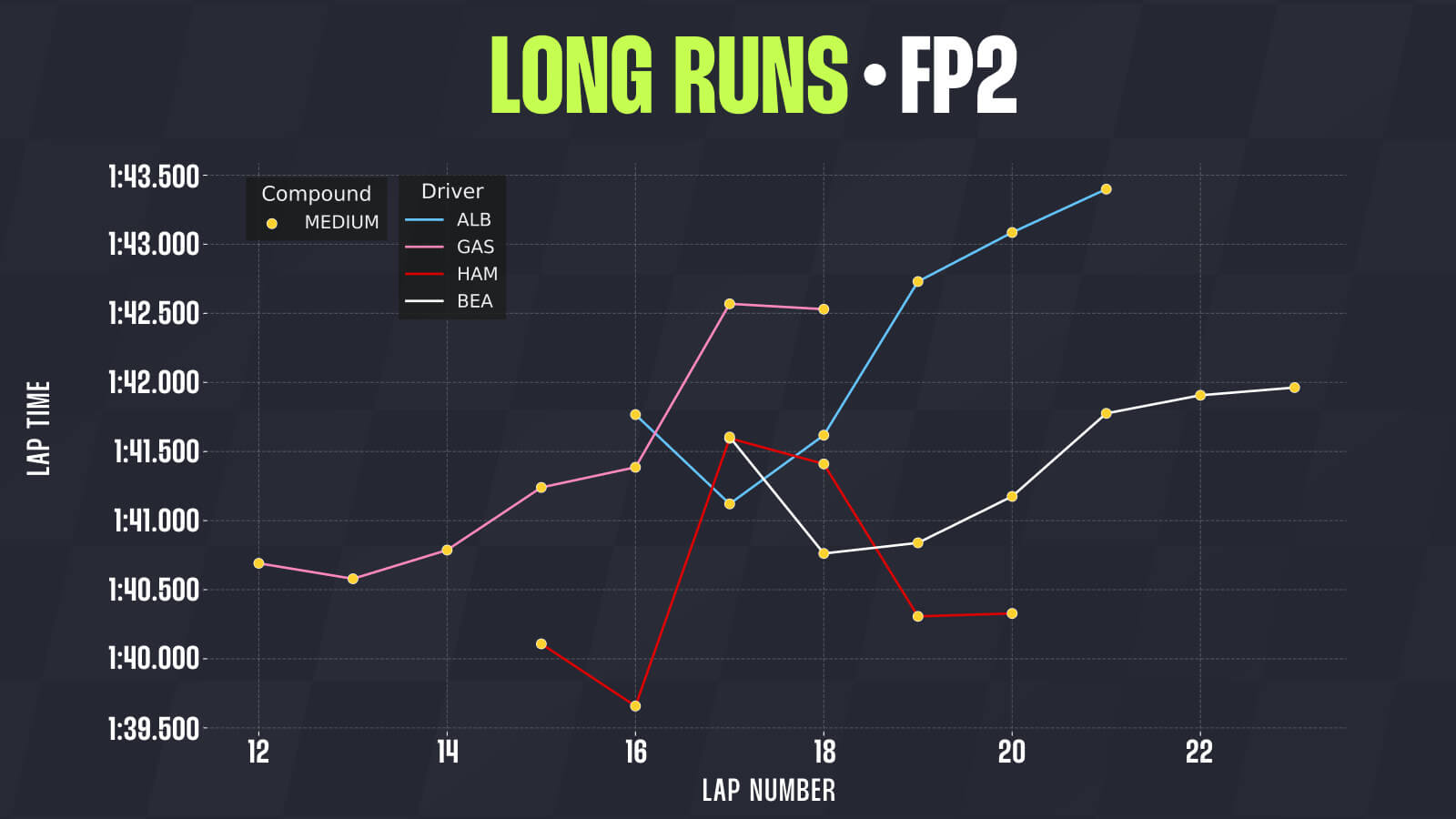
We can observe similar trends in FP2, albeit with a less pronounced drop-off since runs were conducted on the medium compound rather than the softs. Such severe tyre degradation was evident across all drivers, although very few managed to complete an uninterrupted long stint due to heavy track traffic.
Exactly how severe the degradation will be during the race is something the teams will only discover once the lights go out. Given that teams will likely diverge on starting compound choices, strategists will face the daunting task of monitoring degradation across all compounds and adapting on the fly – a far from simple assignment.
On top of that, the probability of a Safety Car deployment at this circuit is exceptionally high. Teams will face a dilemma: start on hard tyres and “wait” for a Safety Car to snatch a cheap pit stop, or start on a faster compound to make early gains?
Furthermore, the undercut looks particularly potent here on paper. If the front-runners remain close to one another (which is highly likely) pitting early could prove a deadly weapon for snatching track position, which can then be defended on a circuit where overtaking is difficult.
As we can see, there are numerous variables to weigh up, making it impossible to predict a single winning strategy. However, evaluating all available options and understanding their respective advantages is important for better race understanding.
Given that we saw virtually no running on the hard tyres in FP3, we expect this compound to be heavily relied upon during the race alongside the mediums. Unless a late Safety Car intervenes, the soft tyres will likely be avoided altogether given the severe performance drop-off observed.
What is certain is that the team that best reads track conditions and reacts decisively will hold a massive advantage.
Want to be the first to know exclusive information from the F1 paddock? Join our broadcast channel on WhatsApp to get the scoop on the latest developments from our team of accredited journalists.
You can also subscribe to the PlanetF1 YouTube channel for exclusive features, hear from our paddock journalists with stories from the heart of Formula 1 and much more!
Read Next: Winners and losers from the 2026 Spanish Grand Prix Qualifying