

F1 Tech Analysis: Secrets behind massive Audi upgrade uncovered


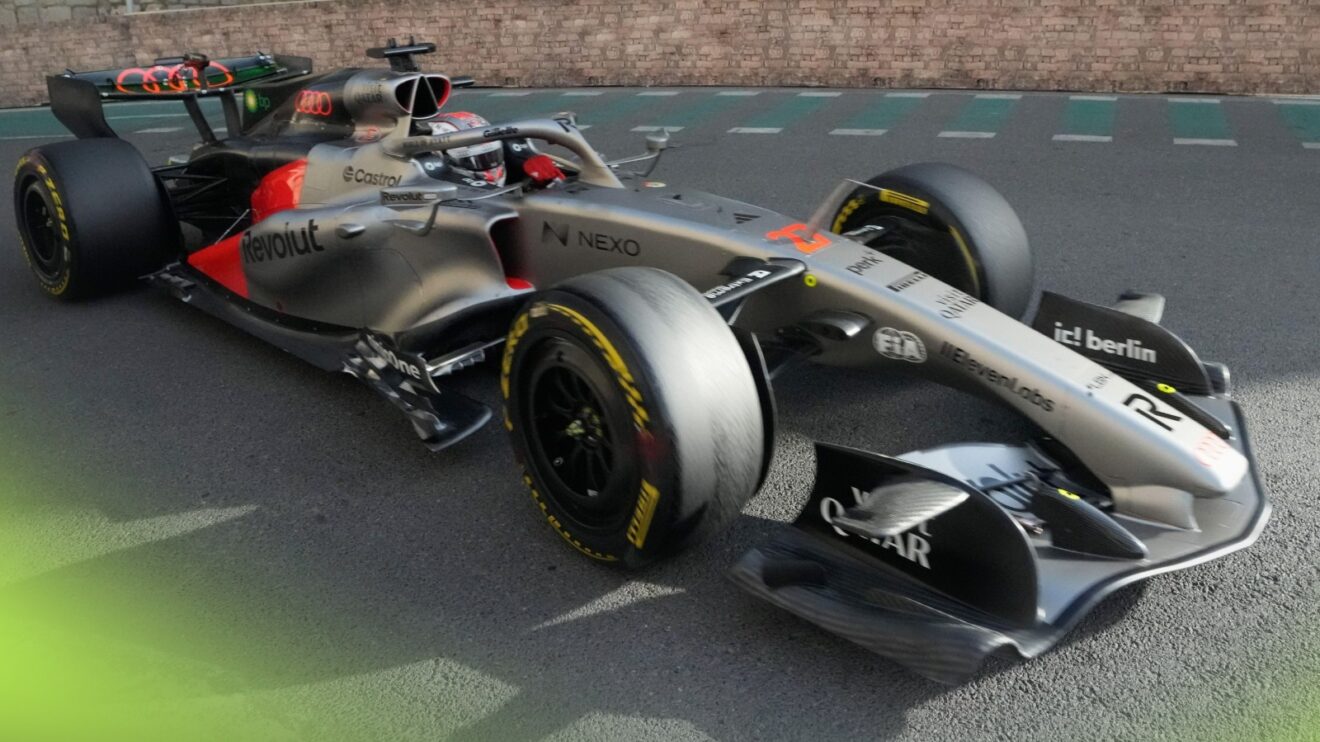
Audi introduced a significant upgrade package in Azerbaijan.
Analysis of a significant upgrade package introduced by Audi ahead of the Azerbaijan Grand Prix reveals exactly what designers for the German squad are looking to accomplish.
Virtually every area of the car, from the front wing, floor, and engine cover through to the rear wing and rear suspension in a package that almost amounts to a b-spec car.
Audi introduces massive upgrade in Azerbaijan
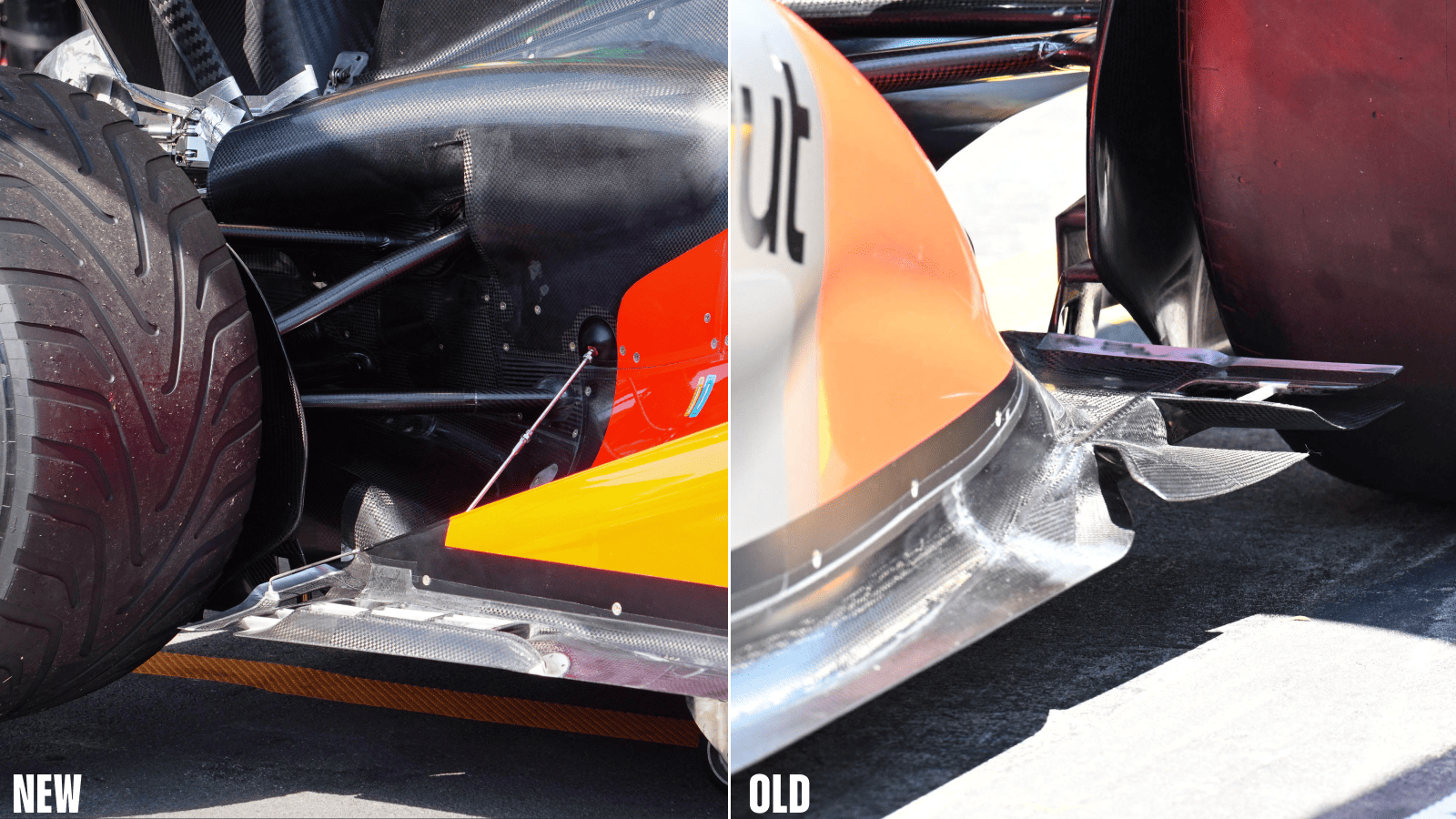
Audi’s extensive upgrade has introduced a host of new aerodynamic elements, with the floor arguably the most significant, with other items all designed to maximise its impact.
Under the 2026 technical regulations, Venturi tunnels – which previously generated vast amounts of downforce – have been replaced by a flatter underbody and a larger diffuser.
This new floor geometry produces significantly less downforce, meaning the diffuser has become a primary focal point for teams aiming to extract every ounce of performance.
Every bit of clean air fed into the diffuser carries far greater value than before.
That is precisely why the rear corner assembly has become an area of intense development for engineers. The primary role of this aerodynamic element is to supply the region between the diffuser sidewall and the rear tyre with clean airflow.
The rotation of the rear tyre generates a vast amount of turbulent “dirty” air – tyre wake – which offers zero performance benefit.
Aerodynamicists aim to deflect this turbulent air as far away as possible from critical aero structures to preserve their efficiency.
Consequently, high-energy airflow directed between the rear tyre and the diffuser edge acts as an aerodynamic barrier, sealing the diffuser and preventing turbulent wake from disrupting its operation.
This yields not only greater diffuser suction, but also far more consistent aerodynamic balance.
This can be viewed as a battle between clean, high-energy airflow and turbulent, low-energy rear wake – with the rear corner geometry engineered to ensure clean air prevails.
However, when analysing Formula 1 aerodynamics, individual components cannot be treated in isolation, but rather as interconnected links in a chain.
The operational efficiency of the diffuser directly influences how the rear wing functions. It is therefore hardly surprising that Audi chose to overhaul multiple interconnected parts simultaneously.
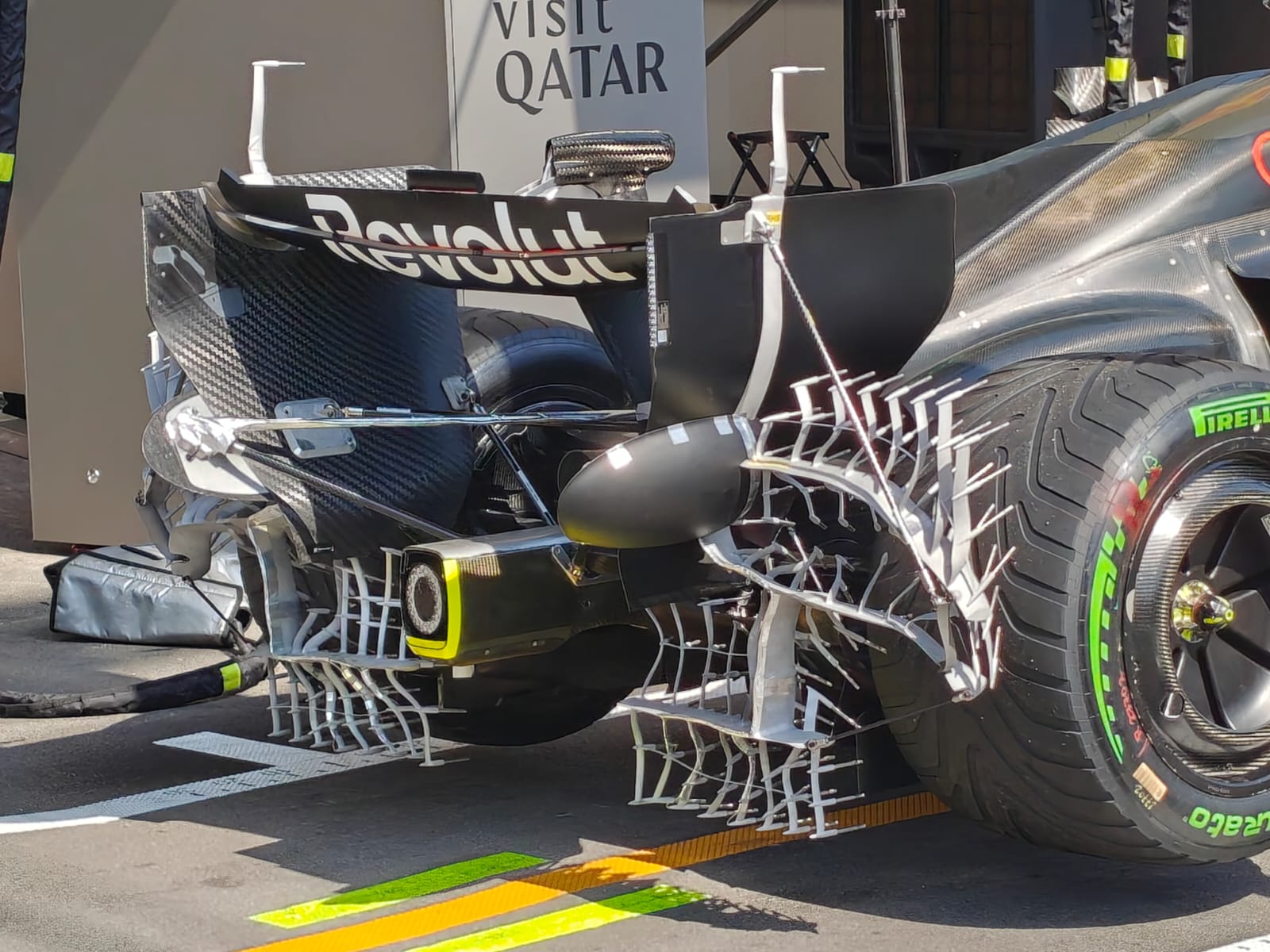
At the rear, Audi’s update package includes a redesigned rear wing, revised endplates, and a modified beam wing assembly.
It became immediately clear in opening practice in Azerbaijan that this rearward interaction was the focal point of Audi’s evaluation.
Pressure sensor arrays, now standard equipment for track-testing new aero parts, were mounted to the rear of the Audi chassis.
These instruments measure pressure and airflow velocity, allowing aerodynamicists to cross-reference real-world track telemetry against aerodynamic computer simulations and wind tunnel datasets.
Achieving correlation across these three pillars is crucial for any team; validating that track data mirrors factory predictions unlocks confidence for rapid future development. Conversely, correlation discrepancies can trap teams in troubleshooting loops while rivals pull away.
Audi went so far to confirm its correlation as to run multiple versions of its new elements to ensure consistency, including a planned rear wing swap during Free Practice 2.
“FP1, first we had one car on the old package, the other one on the new package,” explained team boss, Mattia Binotto.
“It has been more gathering data, collecting data, and now we are going through all the analysis. I don’t think there is a proper performance comparison which has been concluded yet.
“Yes, if you look at the first impression of the data, the package is delivering as expected, which is good, which is our main focus for the weekend.
“For us, upgrading, yes, it’s important for the performance, it’s important for our fight in the championship. But again, for us, what’s more important is to make sure that the team is developing in terms of methodologies and capacity.”
All-new front wing
Alongside the underbody and rearward revisions, the most visible changes appear at the front of the car – specifically on the front wing. Aerodynamically, this is where everything begins.
The front wing meets oncoming airflow first, dictating flow structures for every aerodynamic surface downstream. This explains why teams frequently package front wing modifications alongside other major updates.
In Audi’s case, revisions encompass a redesigned nosecone, altered nose fairings, and an entirely new front wing assembly – complete with updated endplates and endplate diveplanes.
The nose profile has adopted a squarer, blockier box-section shape, shedding its previously tapered point. In tandem, the mounting fairings connecting the nose to the front wing mainplane have been elongated along the main element and moved slightly outboard.
This adjustment allows greater volumetric airflow through the central region of the front wing, a modification almost certainly designed to complement unseen changes along the floor underbody.
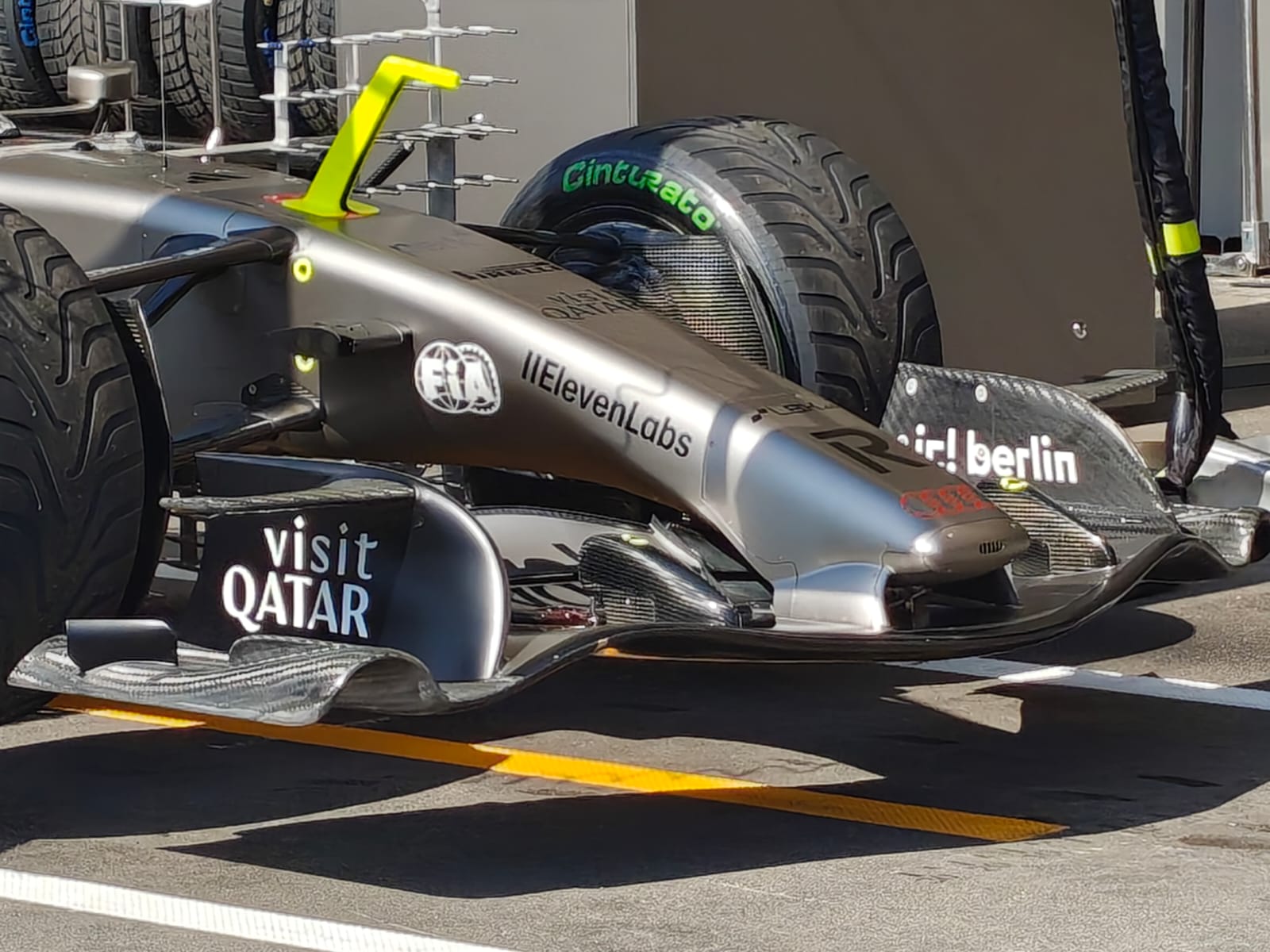
However, the most intriguing component – and one that reveals the aerodynamic intentions of the factory engineers – is the front wing endplate.
The FIA’s stated goal for the 2026 front wing was to kill “outwash”, the trick of throwing the front tyre’s turbulent wake wide of the car. For years it’s been what makes the wake behind a car so hard to follow through.
To force that, the front wing was made 10cm narrower, and the endplate was moved about 50mm further inboard than the tyre’s outer shoulder.
But the technical regulations left room for interpretation in the endplate region.
Initially, teams like Ferrari ran minimal features here, whereas Mercedes and McLaren immediately spotted an opportunity. Other teams soon followed suit.
The horizontal endplate element (orange arrow below) works in conjunction with the endplate’s curvature and the angle of attack of the upper wing flaps to recreate the aforementioned outwash effect.
A larger element indicates a team’s intent to push more front wake outward, trading away a fraction of the airflow that would otherwise feed directly to the floor.
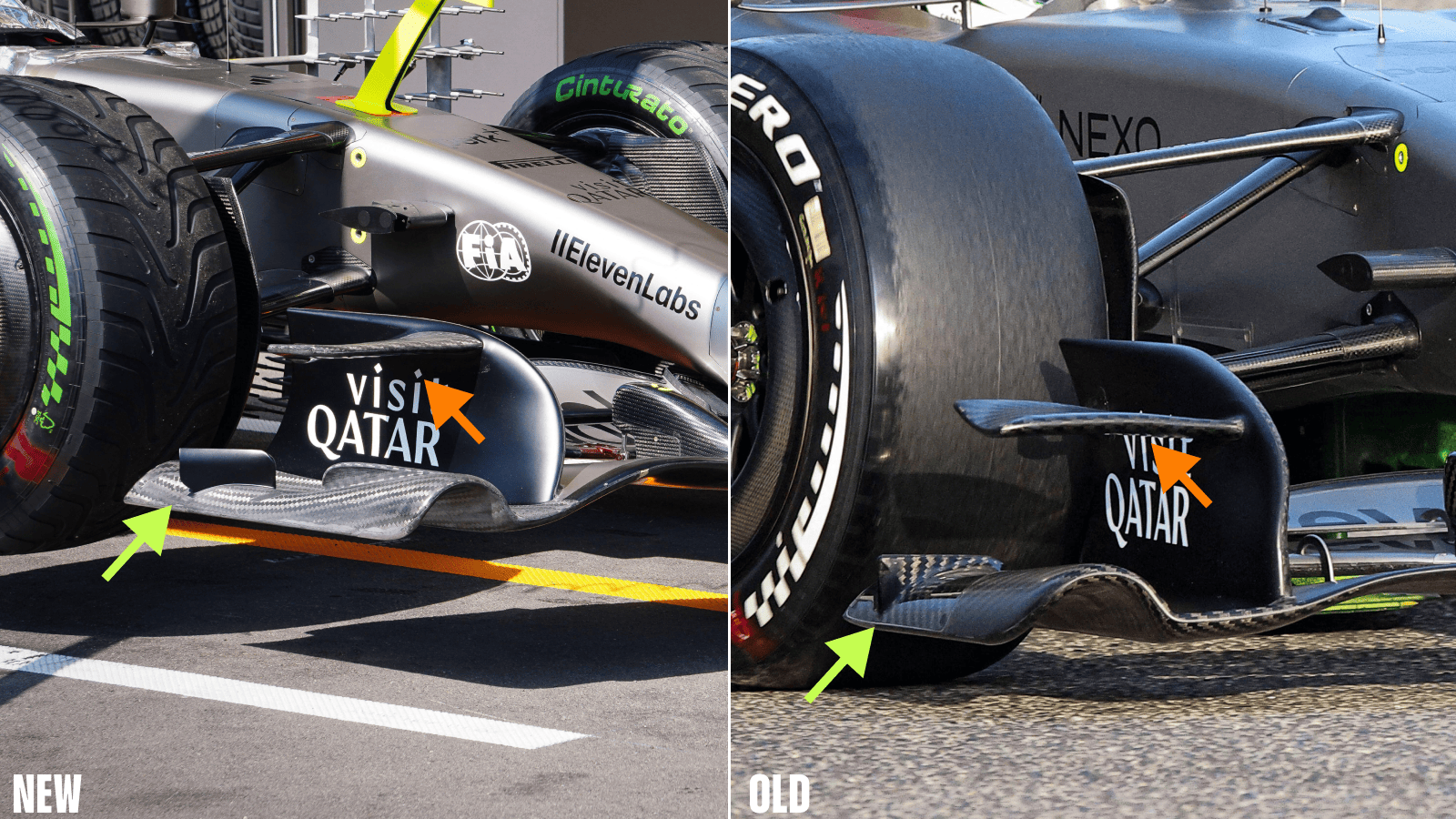
With this update, Audi has leaned further toward the outwash side of this aerodynamic trade-off, introducing a larger primary diveplane alongside a second, smaller element (green arrow).
Ultimately, deploying such an extensive update package represents a bold move, but one that can yield substantial rewards if properly executed.
Operating what is effectively a heavily revised chassis, the team will inevitably require time to dial in the setup sweet spot. How quickly it unlocks that potential hinges directly on data correlation between the track and the factory, as mentioned earlier.
There is little doubt Audi will gain lap time; it remains to be seen how quickly that performance translates into race results and whether it will be sufficient to vault the German marque into the upper reaches of the midfield.