
Revealed: The truth behind Ferrari’s Austin upgrade and Leclerc’s P1 pace
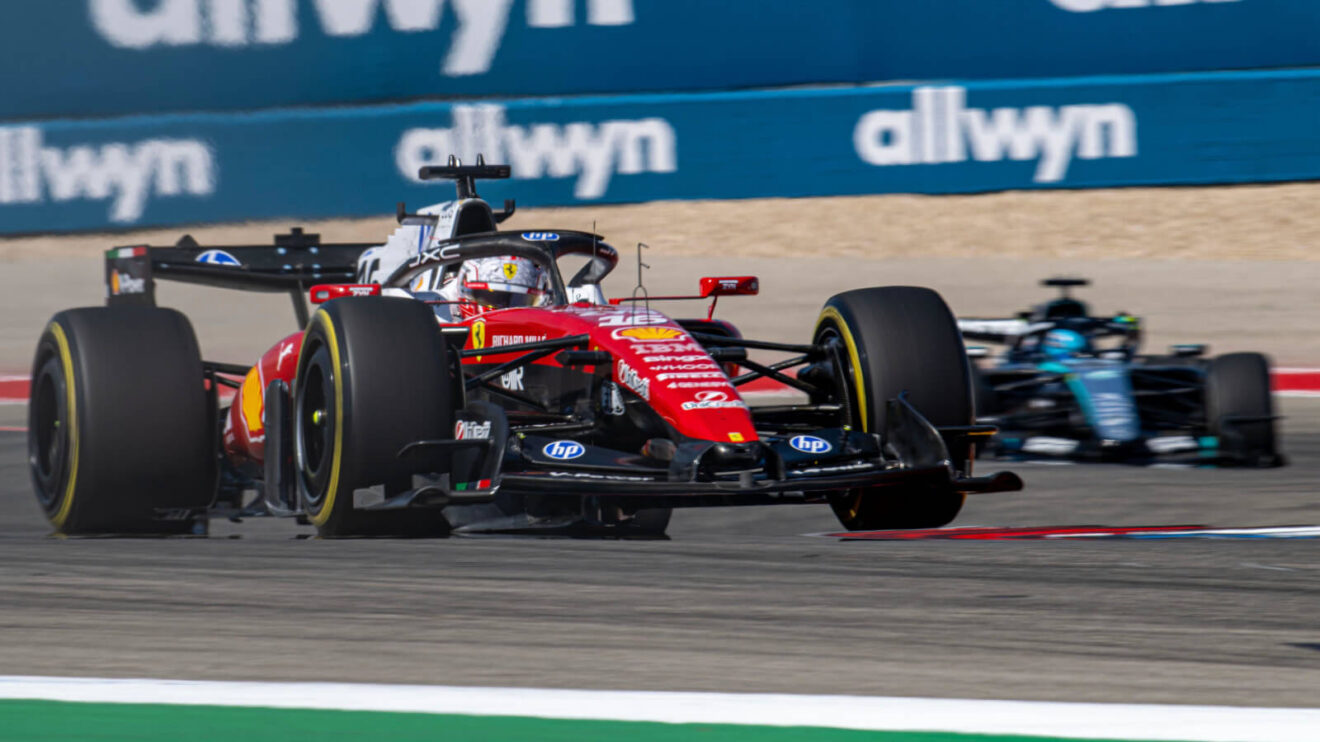
Charles Leclerc topped Friday's practices at COTA
Charles Leclerc topped the timesheets in both Friday practice sessions in Austin behind the wheel of a Ferrari equipped with a fresh upgrade package.
It has raised the question: Has the Italian stable rejoined the fight for victories? Telemetry data reveals the answer.
What can we expect from Ferrari at COTA?
The new triple-header started on a high note for Ferrari. Leclerc set the benchmark in both FP1 and FP2, firmly grabbing the paddock’s attention – especially given the introduction of Ferrari’s new update package.
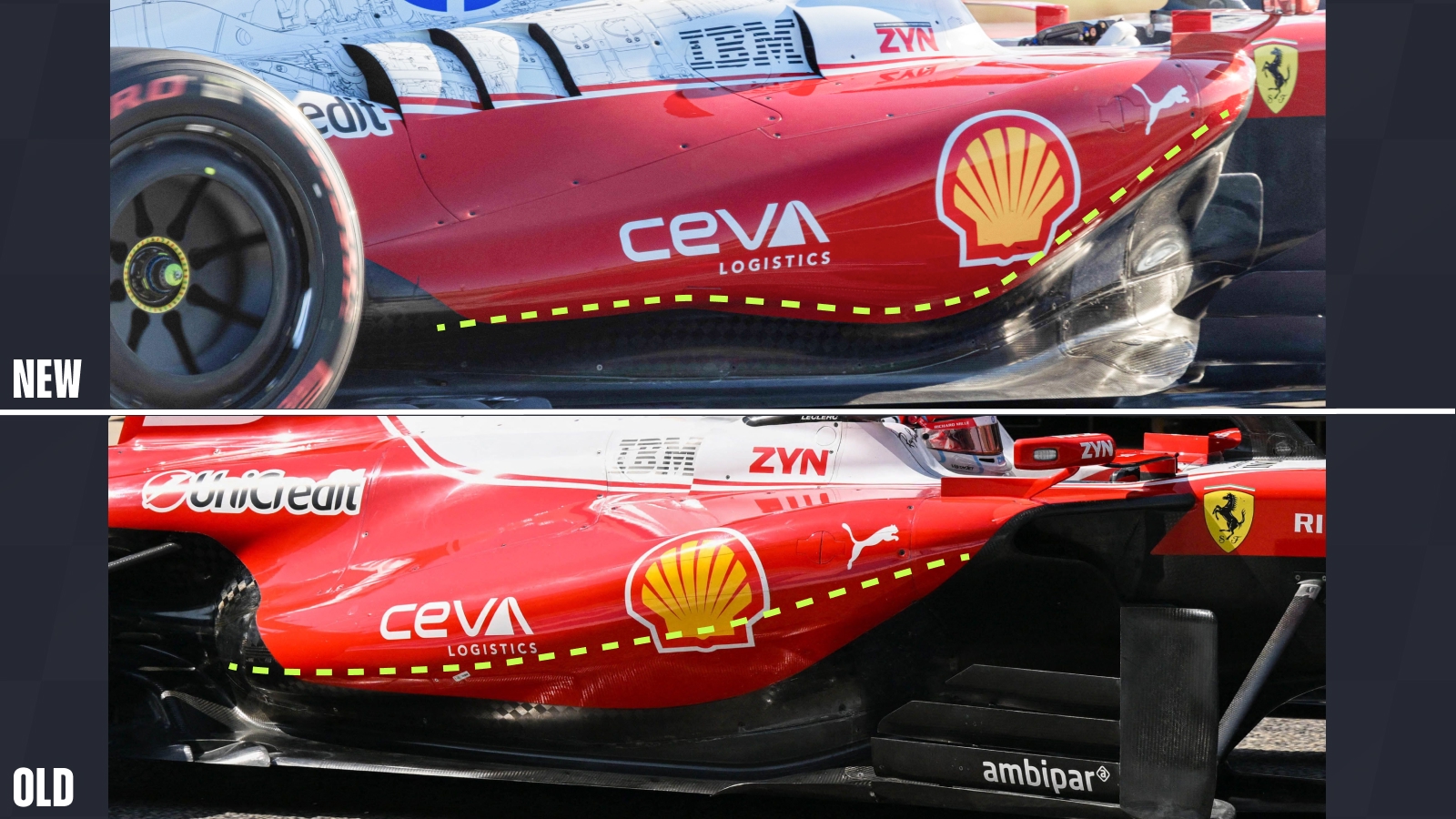
This package focuses exclusively on aerodynamic refinements, featuring a revised sidepod profile, a reworked floor edge board, a modified diffuser, and underbody floor revisions that unfortunately remain hidden from view.
While subtle at first glance, the most noticeable visual change lies along the sidepod, which sports a revised undercut contour. Additionally, the sidepod inlet is slightly wider at its outermost edge, though the overall design philosophy remains unchanged, making it somewhat tricky to pinpoint precisely what Ferrari aimed to enhance with this second sidepod iteration.
Without doubt, the primary goal remains more efficient airflow management toward the rear of the car, which likewise explains the accompanying diffuser revisions.
The initial impression from Ferrari’s first hour on track was a very well-balanced car, particularly through medium and medium-fast corners. The SF-26 has generally performed well through corners all season, and FP1 served as a strong indicator that another step forward was made in this sector.
On the flip side, the team’s biggest recurring problem this season – top speed – remains unresolved. The graph below illustrates how Leclerc’s straight-line speeds compare to Verstappen and Norris, who concluded the opening session in P2 and P3 respectively.
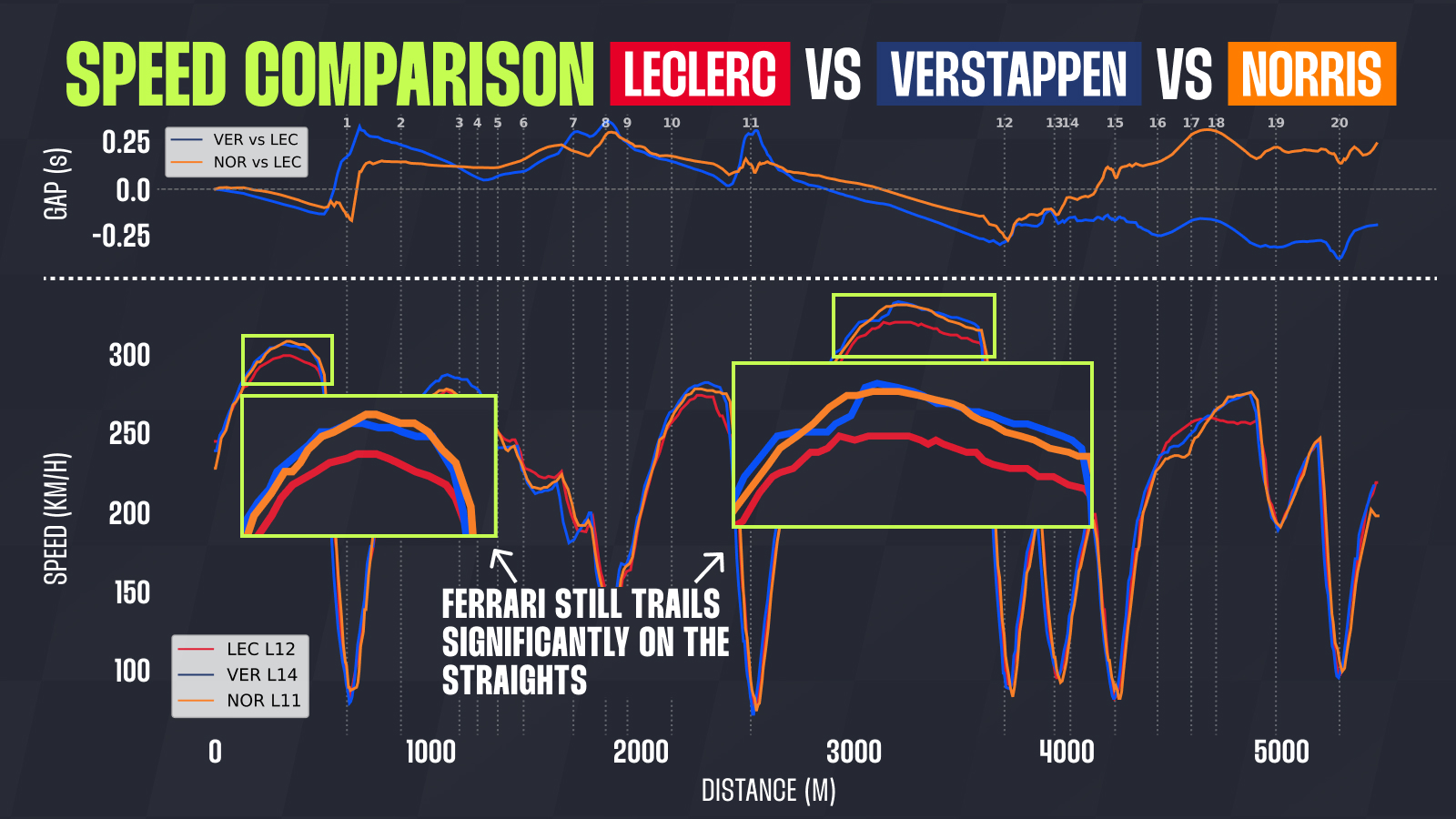
Notice Leclerc’s delta trace compared with those of Verstappen and Norris and how much it goes down across the sector between Turn 8 and Turn 12 – the Monegasque driver bleeds a massive amount of time here.
However, a thoroughly encouraging sign was Ferrari’s stellar final sector, proving once again that the Ferrari package carries an enviable amount of downforce and strong baseline balance. What was also particularly intriguing was a minor experiment Ferrari conducted, adopting a completely different electrical deployment profile through Turn 18 compared to Red Bull and McLaren, as highlighted in the graph below.
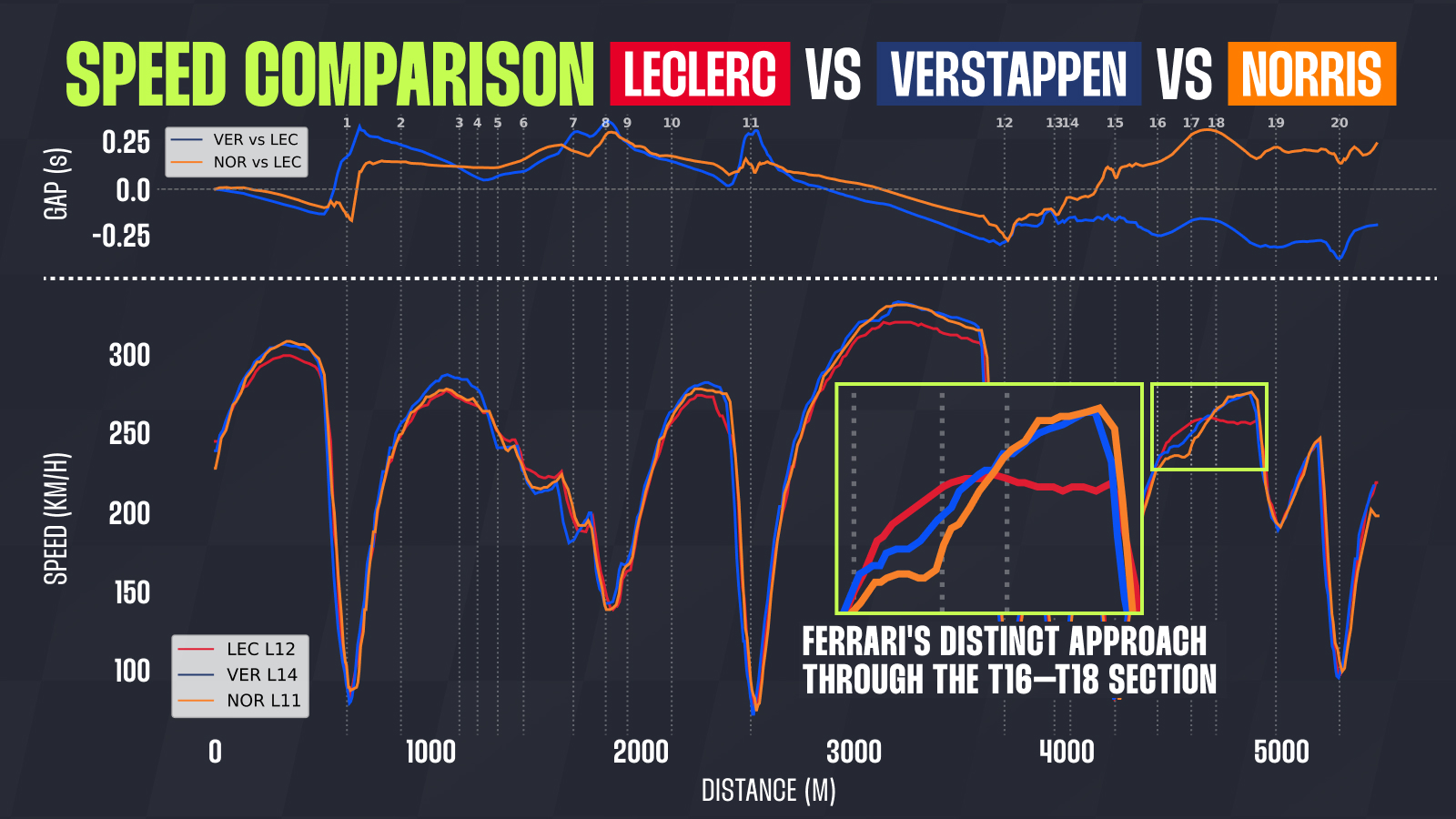
During FP2, Ferrari abandoned this trick and reverted to a more conventional approach through this section, making the deltas between teams far less pronounced.
What remained unchanged, however, was Charles Leclerc’s top spot on the timesheets, as he edged out Antonelli by a mere 0.042 seconds during the second hour of track time.
A closer analysis of the flying laps reveals that Leclerc began building a meaningful gap right at Turn 1. Kimi ran wide here, forfeiting two tenths of a second.
Although they were evenly matched through the high-speed esses, Kimi managed to claw back time down every straight up to the end of Sector 2, taking a 0.25-second advantage into the final sector. Along the long straight between Turns 11 and 12 alone, Kimi gained 0.15 seconds.
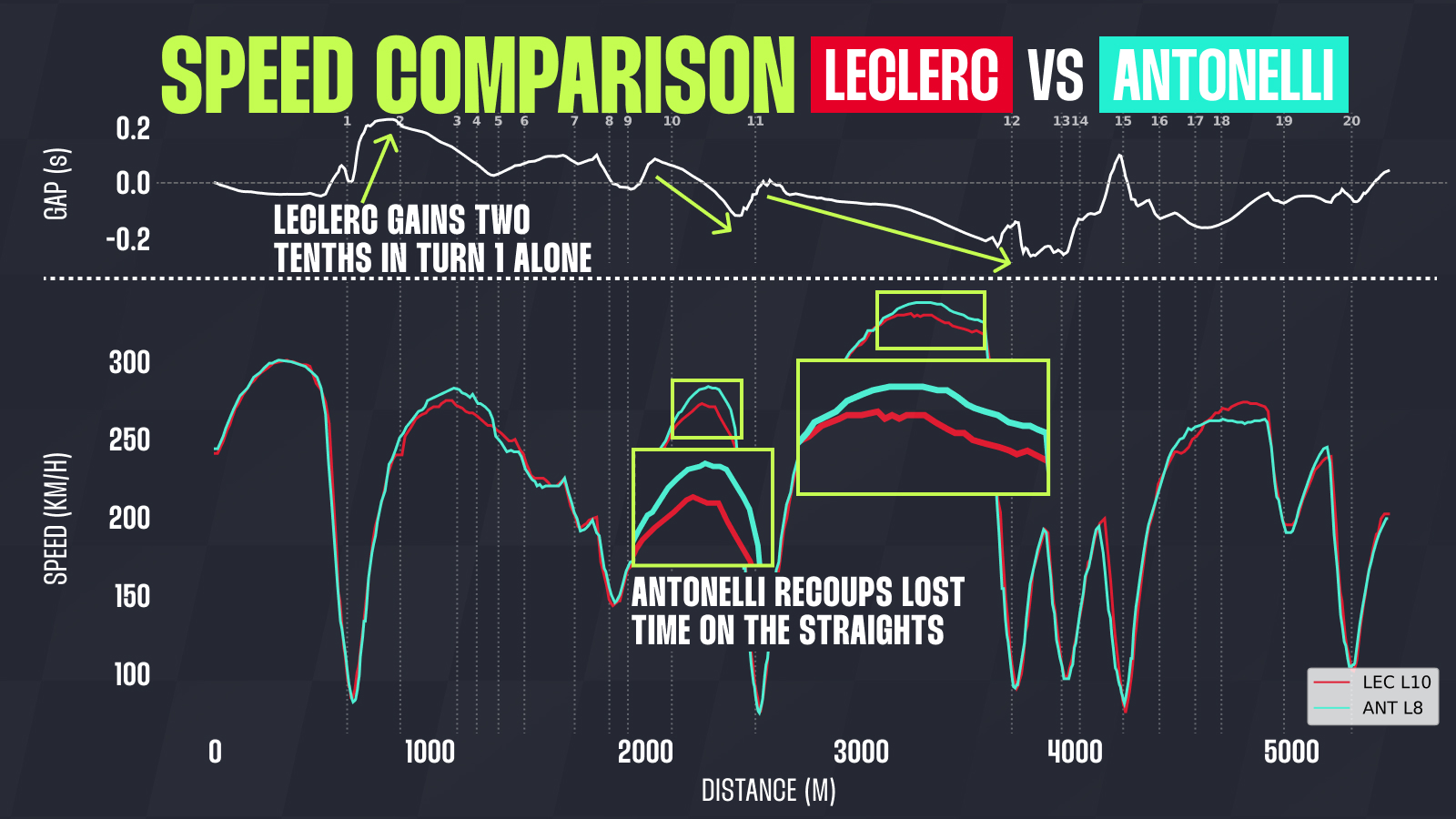
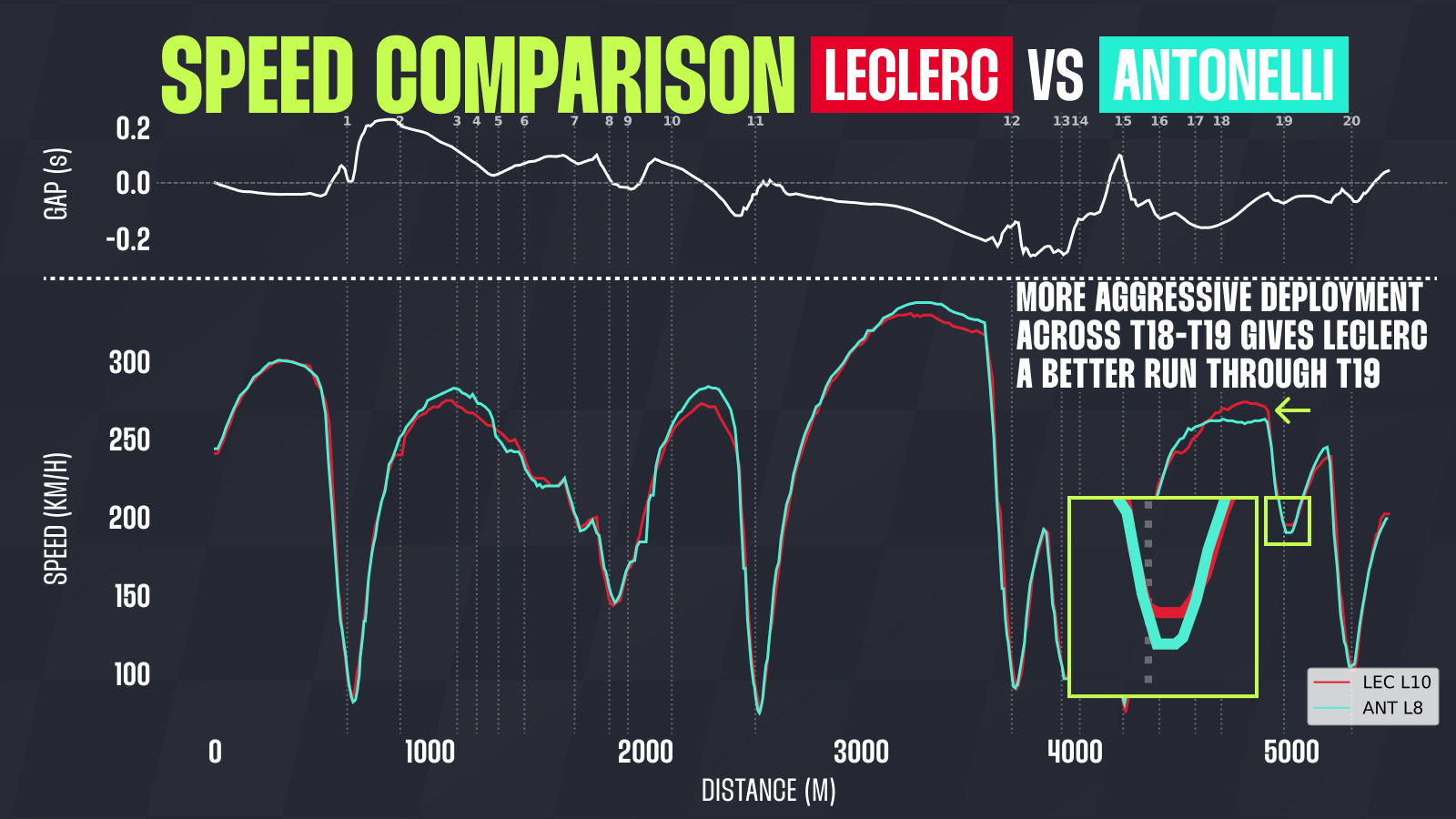
However, as we have seen before, Sector 3 is where Ferrari and Leclerc excel. Apart from the short burst between Turns 15 and 16, which resulted from differences in energy deployment strategy, Leclerc consistently gained time throughout the entire final sector.
Ferrari clearly recognised the potential of its car in this section, intentionally saving battery energy for a more aggressive deployment profile through Turn 17 and Turn 18. Charles carried this momentum into Turn 19, registering a noticeably higher minimum speed.
Combined with a cleaner run through the final corner, the Ferrari driver successfully swung the advantage back in his favour right as he crossed the line.
Despite being a long track, COTA consistently rewards drivers who extract the maximum from their machinery – whether down the straights or through the turns – and penalizes small errors.
Race pace simulations and Hamilton’s struggles
When it comes to race pace simulations, Leclerc ran an exceptionally long stint on the soft compound. It appears he started the stint with overly aggressive lap times, causing his pace toward the end of the run to look weaker than his rivals.
Despite the new upgrades, the Ferrari remains a heavily rear-limited car, as demonstrated by this stint: it easily overheats its rear tyres, leading to higher degradation and fading lap times.
This is a handling issue the engineers will certainly attempt to mitigate through setup tweaks, though it remains to be seen how those adjustments might impact Leclerc and Hamilton’s qualifying pace.
As for Hamilton, his weekend hasn’t started the way he had hoped. Across both FP1 and FP2, he lagged more than half a second behind Leclerc on push laps, while his race pace on long runs was similarly off the mark. He proved noticeably slower under both high and low fuel loads, making it harder for him to find the ideal setup for his SF-26.
Regardless, based on what we have witnessed so far, the Ferrari drivers undoubtedly have a car capable of mounting a serious challenge in both qualifying and Sunday’s main Grand Prix.
Read next: Max Verstappen responds after Ferrari drivers deride ‘nonsense’ Hadjar claim