

Revealed: Mercedes takes up 2026 development path abandoned by McLaren


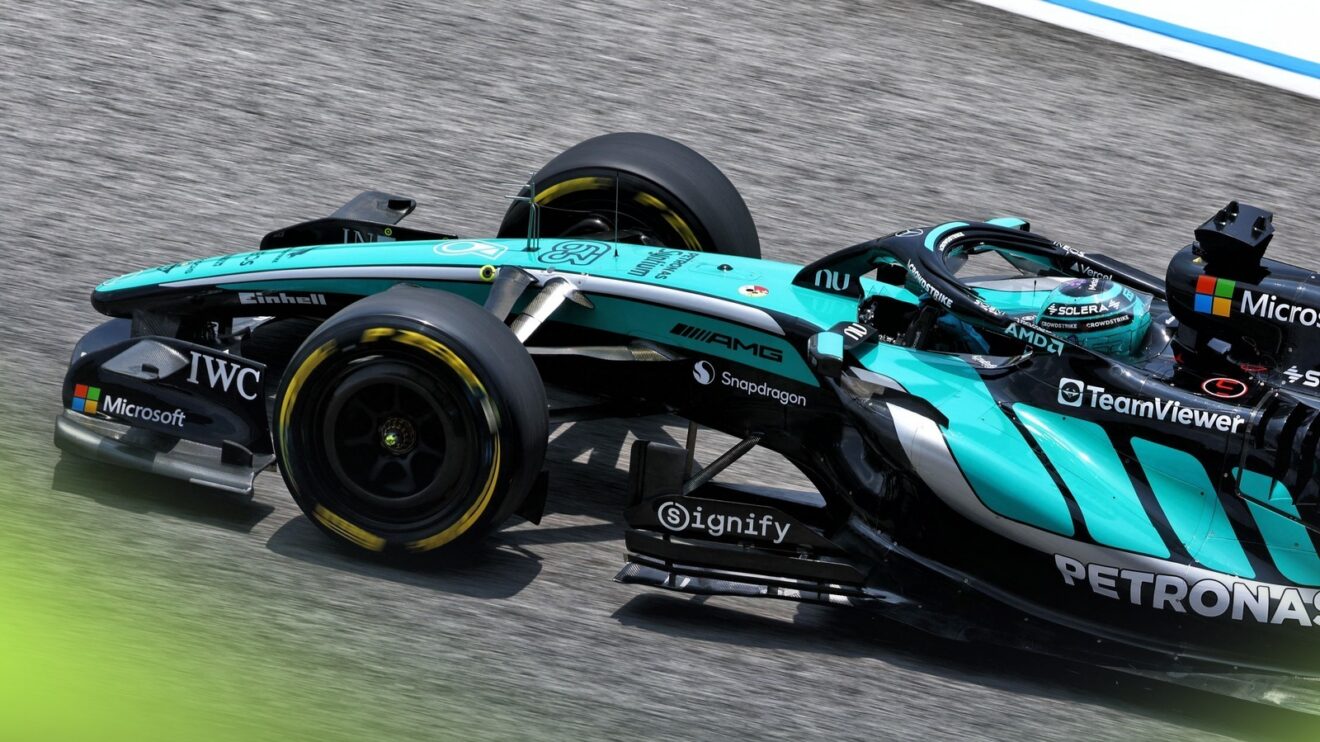
Mercedes has introduced a significant upgrade package at Sepang.
Mercedes brought a significant aerodynamic upgrade package to the Bahrain GP in Malaysia, which, intriguingly, headed in the complete opposite direction to what we saw from McLaren just seven days earlier.
The German team’s last major upgrade arrived back in May, at the Canadian Grand Prix, but it headlined the upgrades that arrived in Sepang with the most significant package of all 11 teams.
Have Mercedes and McLaren swapped philosophies?
Mercedes has been in no hurry to rush out a new package, instead biding its time and, as had long been flagged, unveiling it in Malaysia.
Up until the Baku weekend, Mercedes was by far the team that had tinkered least with its car.
To that point, it had made just 26 aerodynamic changes during F1 2027, compared with 42 for Ferrari, 45 for Red Bull and as many as 46 for McLaren.
While it is true that the opposition has closed the gap over the last few races, the fact remains that Mercedes has kept a firm grip on top spot when it comes to outright pace on track.
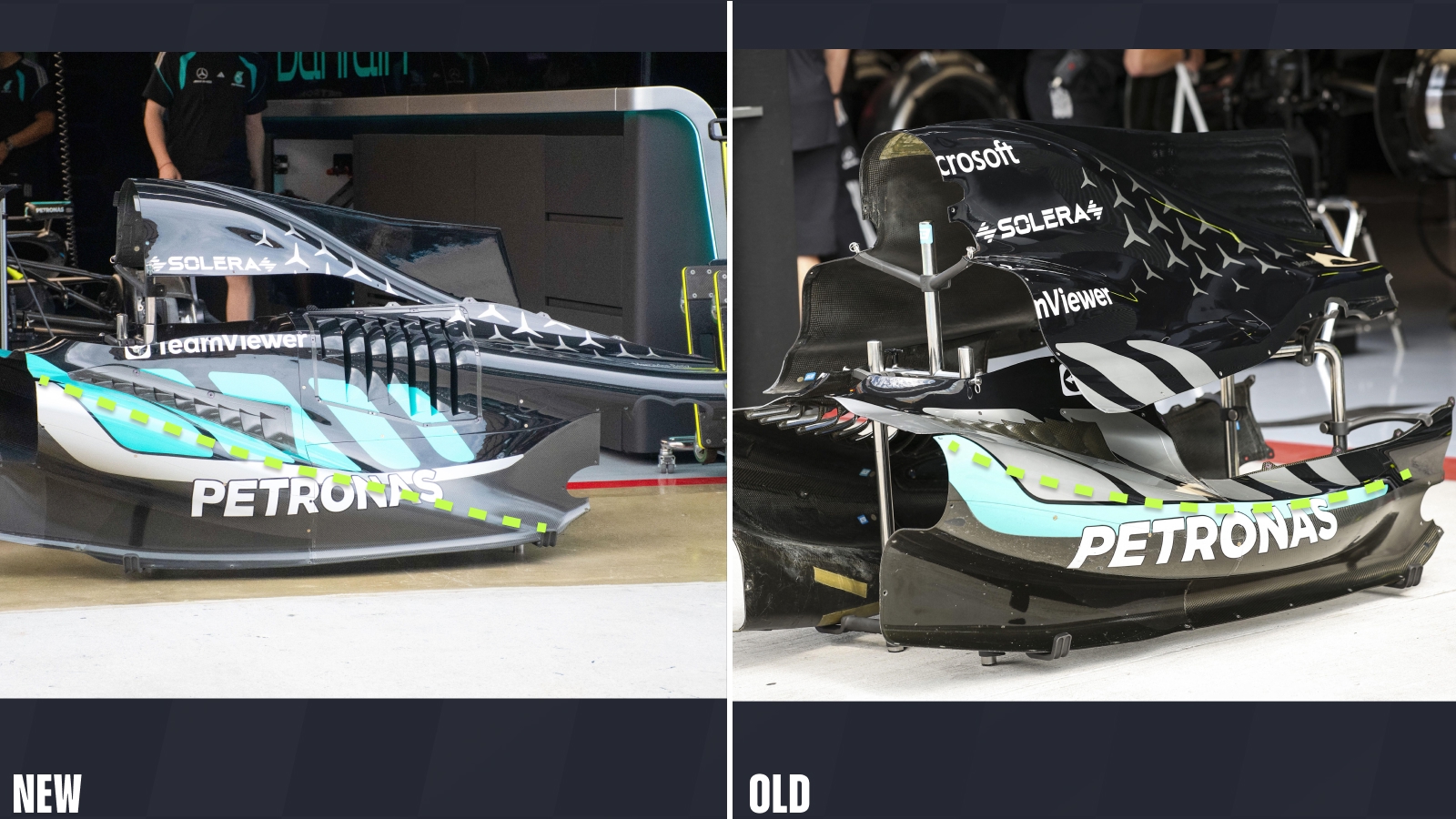
The changes the German team has made are most visible on the sidepod, which has undergone a complete change of philosophy, as well as the rear corner of the car, the floor and the floor board.
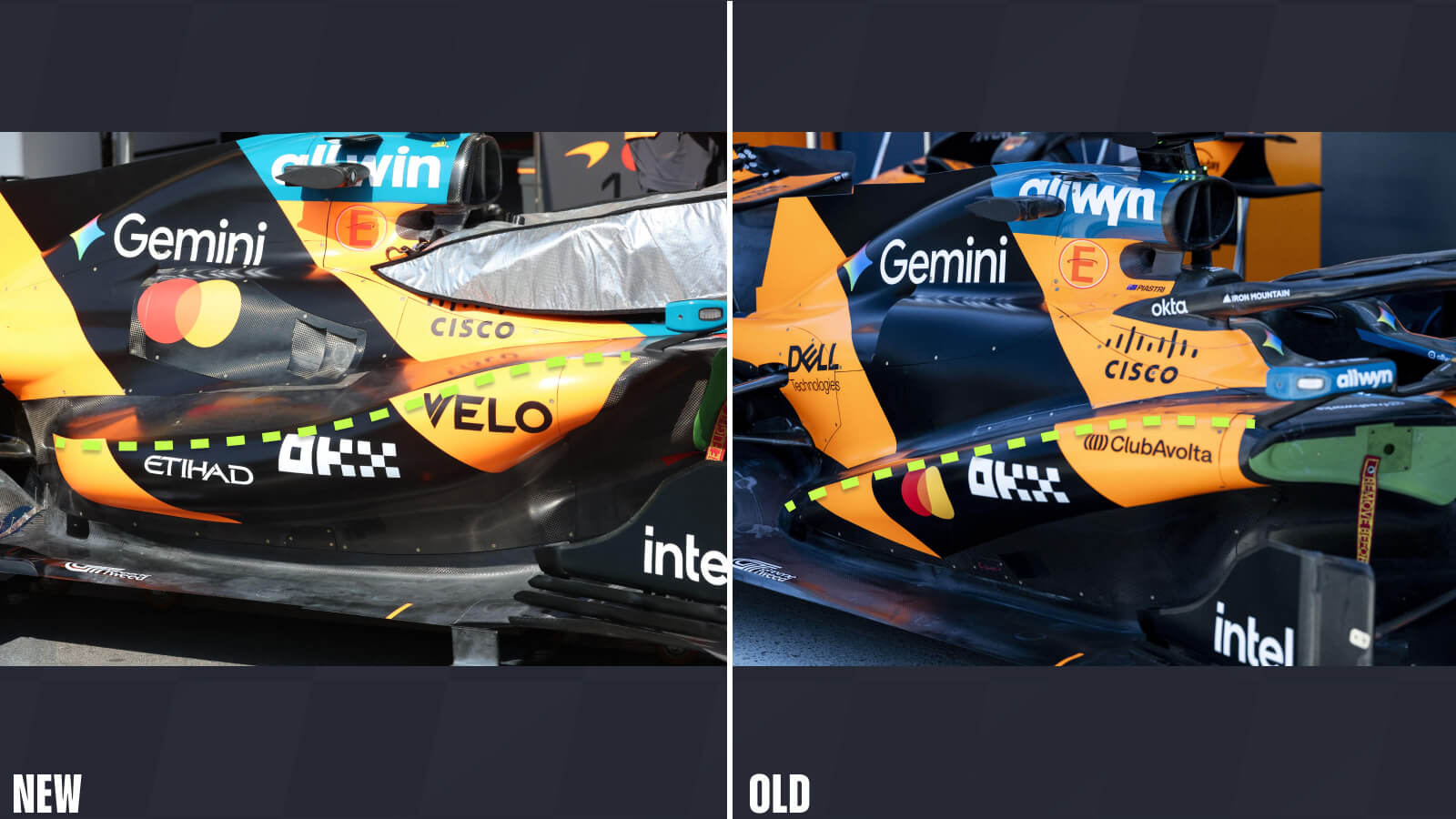
A look at the sidepod geometry shows a striking similarity to McLaren’s pre-Baku design.
The sidepod’s downwash slope is now steeper, while it has simultaneously lost the outboard curvature (width towards the outside) it previously had.
This has freed up considerably more room at the very rear of the engine cover, all with the aim of boosting the downwash flow that feeds the aerodynamic elements at the back of the car.
The more space there is, the more air can pass through this region.
This narrowing of the bodywork is a very common part of car development, particularly when a new generation of regulations is involved.
At the start of the season, teams want to play it safe, which pushed Mercedes towards wider sidepods. The main reason is controlling the dirty air created by the front tyres – wide sidepods “push” this dirty air away from the car.
Moreover, cooling the engine is also safer with more room inside the sidepods.
As the season progresses and engineers get to grips with their car, teams can slim down the bodywork, which boosts the flow to the rear of the car and reduces drag, all while keeping those aforementioned concerns firmly within a safe window.
Examining the new Mercedes sidepod design, it becomes clear just how closely this philosophy mirrors McLaren’s earlier concept – a team that only last weekend debuted sidepod upgrades remarkably similar to the now-outdated specification of the W17.
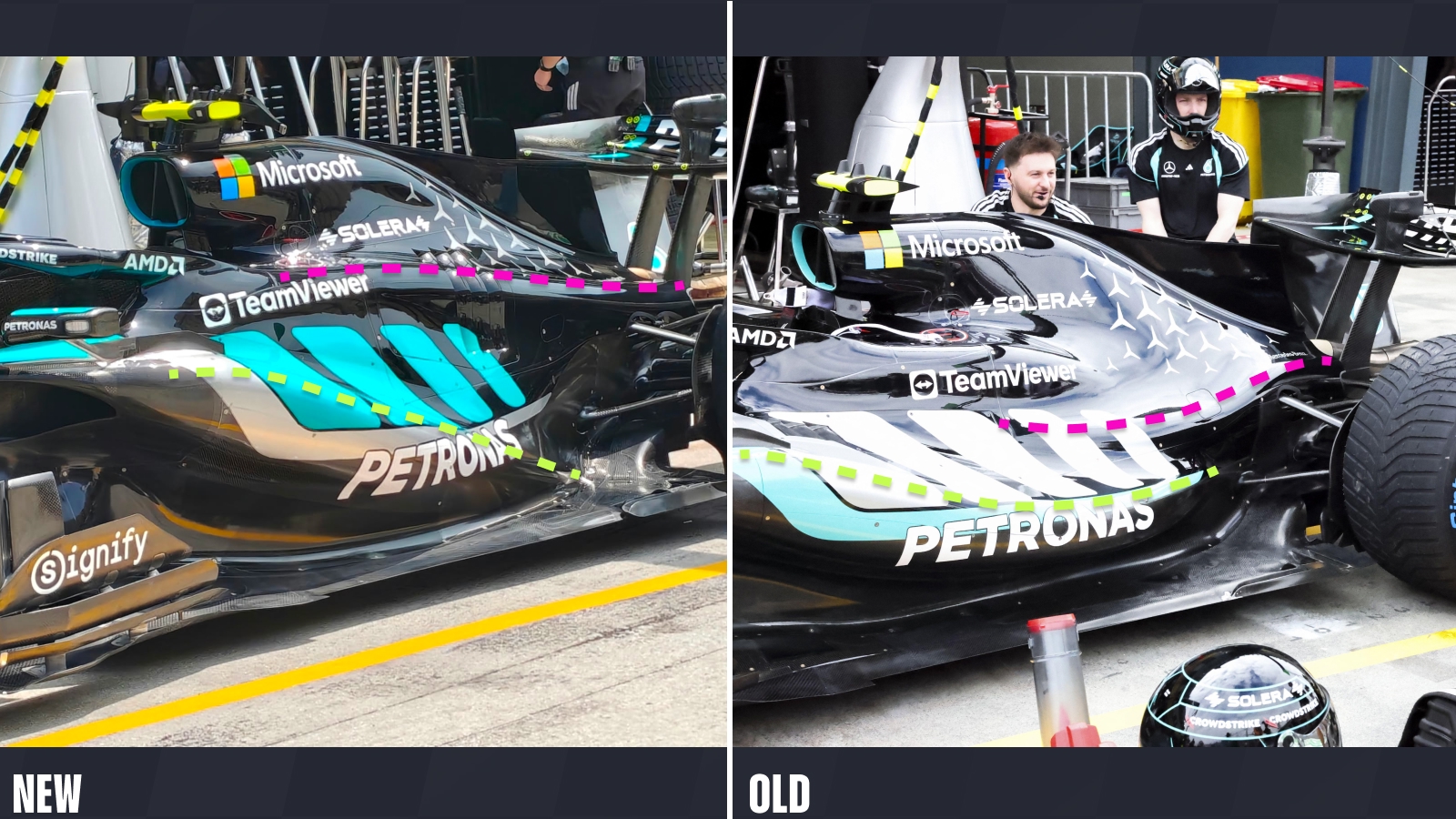
The so-called shoulder also plays a pivotal role in this system. It now sits higher on the Mercedes and its geometry is more pronounced, as we can see in the image above (purple dashed line).
The job of this element is to stop the dirty air created behind the halo and the driver’s helmet from dropping down, guiding it instead into the space between the rear wing and the diffuser, where it will do the least harm to downforce generation.
Looking at the rear wing, we can see just how much space has been freed up in the region beneath it, and how much greater the airflow towards the rear of the floor and the diffuser will be.
It is a very clear illustration of how the W17 has changed the way it feeds the rear of the car.
And, as expected, Mercedes has completely reworked this part of the car as well.
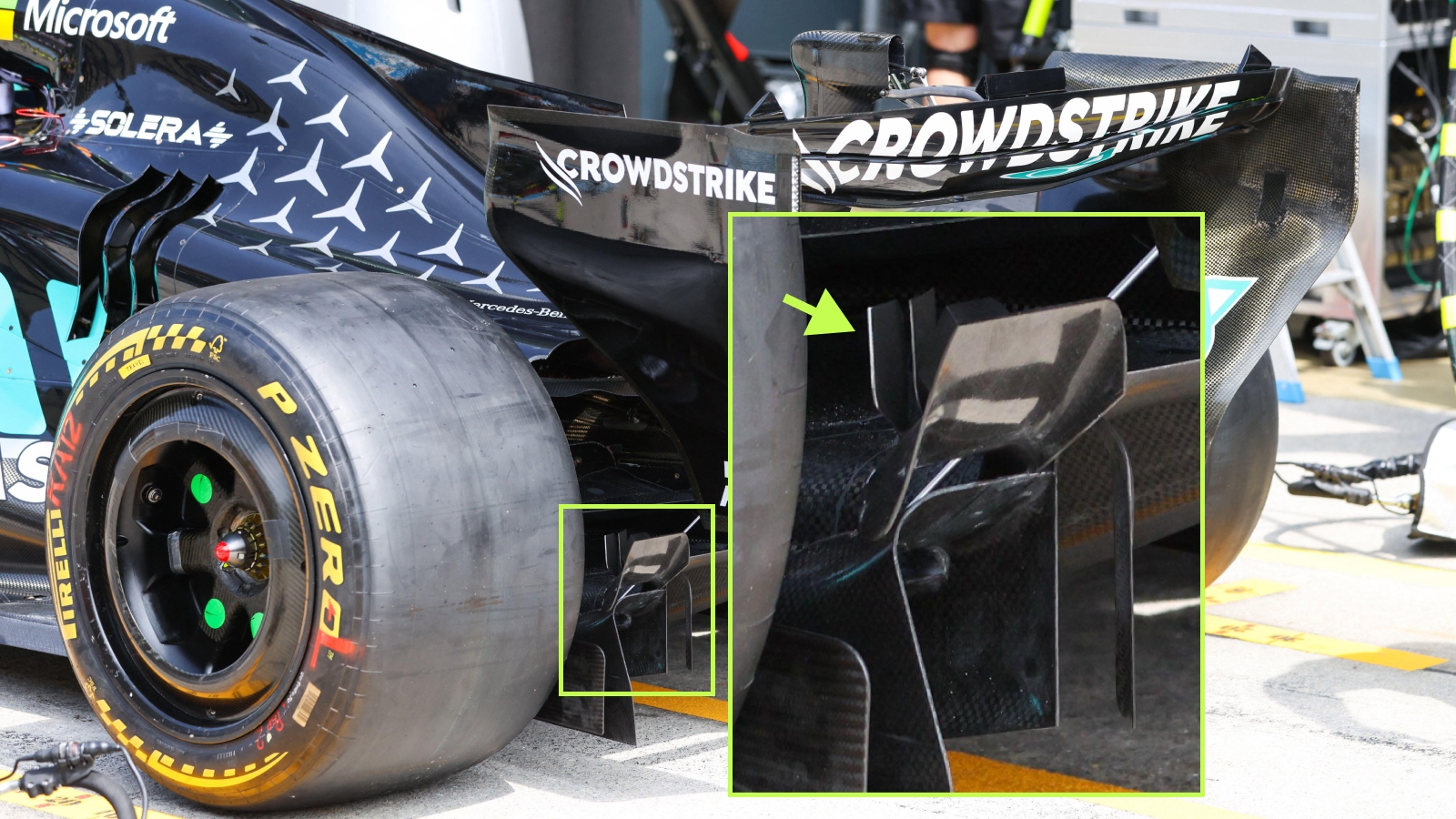
The rear corner, which both boosts the diffusers efficiency and shields it from the dirty air of the rear tyres, has now been reprofiled to work more effectively.
The diffuser has also been given a new shape, along with plenty of new, smaller winglets on both the diffuser edge and the rear drum.
All these elements work hand in hand, generating greater local downforce while helping the diffuser to draw air out from the floor as easily as possible, making the entire floor of the car more efficient.
We can also spot several elements that help the airflow expand laterally (outwash), which will prevent the rear tyre wake from interfering with the diffuser (green arrow on the image bellow).
Changes at the front
To make the changes at the rear even more effective, something always has to give at the front of the car too.
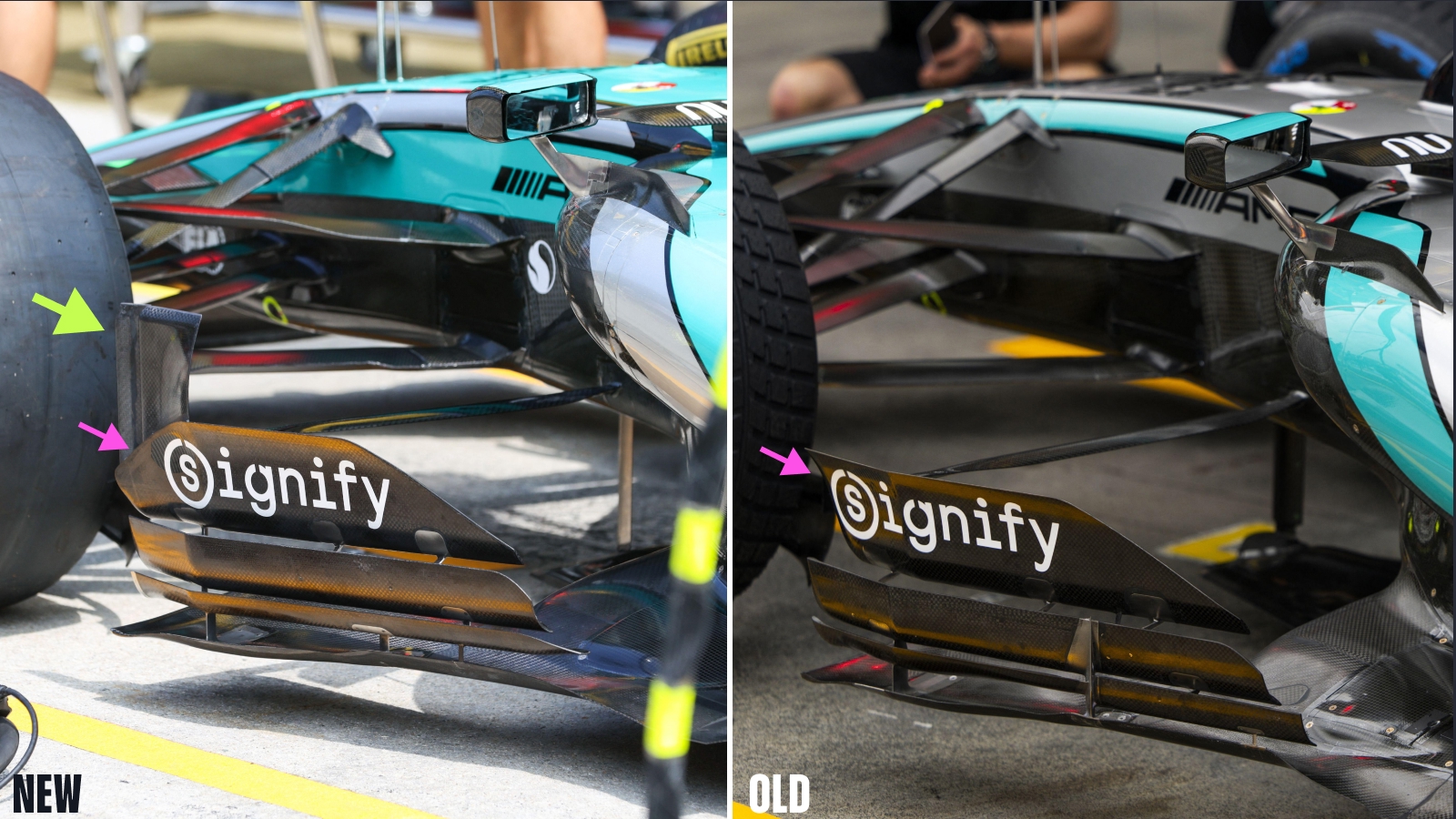
In the case of Mercedes’ Malaysian package, that is primarily the floor board, together with a different leading edge of the floor.
On top of the horizontal elements on the floor board, the team has added two vertical elements, building on an idea Ferrari introduced at the start of the season.
The entire floor board region has been tightly restricted to stop teams generating outwash. Outwash creates dirty air behind the car and make it harder to follow, as was the case up until 2022.
However, teams still have plenty of wiggle room within this control volume, and they are working hard to find innovative ways of generating as much outwash as possible so as to control the front tyre wake.
That appears to be where the additional vertical elements come in, as they not only boost the efficiency of the horizontal elements but also keep the tyre wake on a tighter leash. All, of course, with the main aim of maximising the efficiency of the rear of the car.
The proof of the pudding will be in the eating, and we will have to wait and see how much these changes affect the W17’s performance on track.
Although we haven’t raced in Malaysia for almost a decade, it is a great venue for testing new parts, with long straights, fast and slow corners and punishing braking zones.
If Mercedes fails to hit the ground running with the upgrades, which has very often been the case for other teams, this weekend could offer their rivals a chance to steal a march on them and, at least for a short while, get ahead of Mercedes.