
Spanish GP conclusions: Imaginary Hamilton challenge over, Norris joins elite, soulless Madring


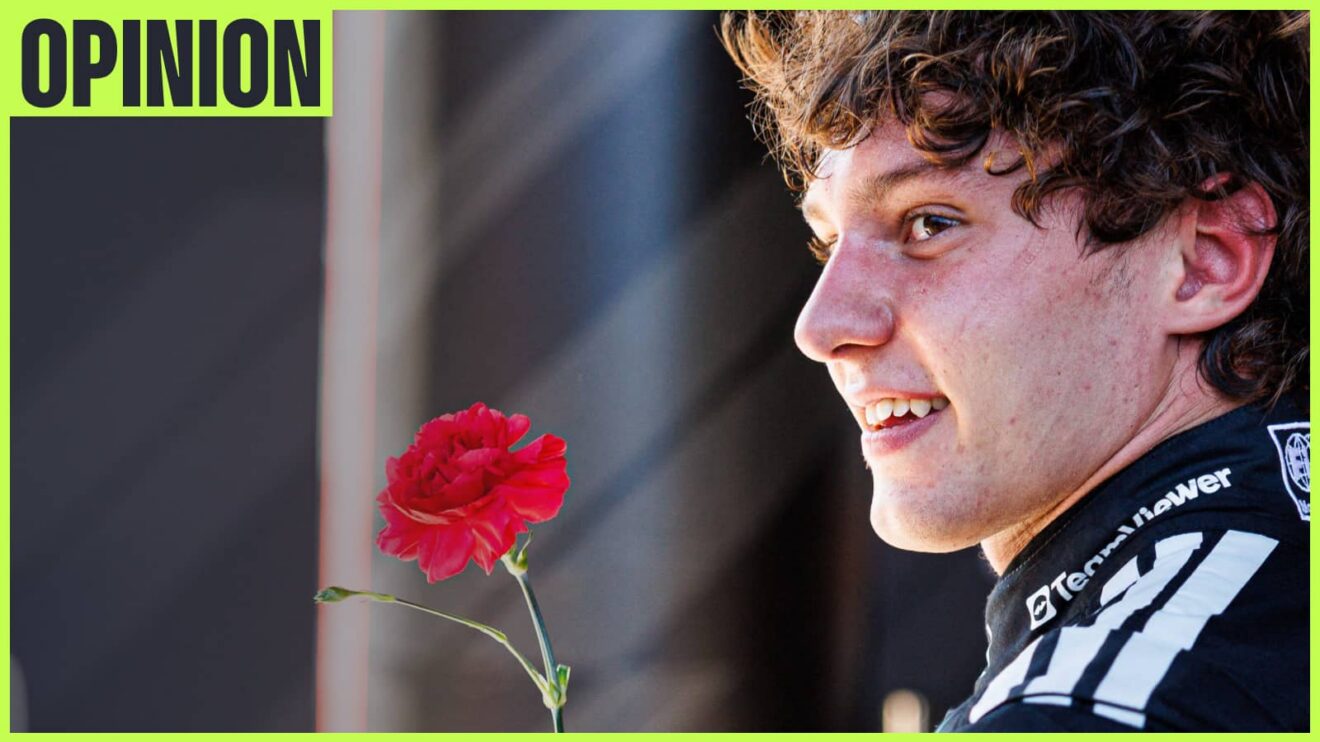
Kimi Antonelli is closing in on a first world championship following his eighth win of 2026 in Madrid
Mercedes driver Kimi Antonelli claimed his eighth win of the F1 2026 season in the Spanish Grand Prix at the Madring circuit in Madrid.
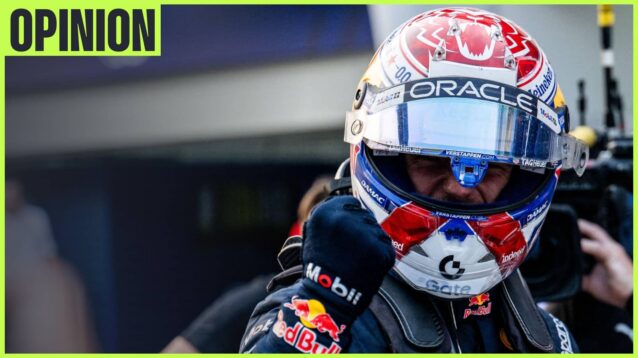
Antonelli claimed victory after McLaren and Lando Norris lost out with a virtual safety car, with Max Verstappen second for Red Bull and Norris recovering to third. Here are our conclusions from Spain…
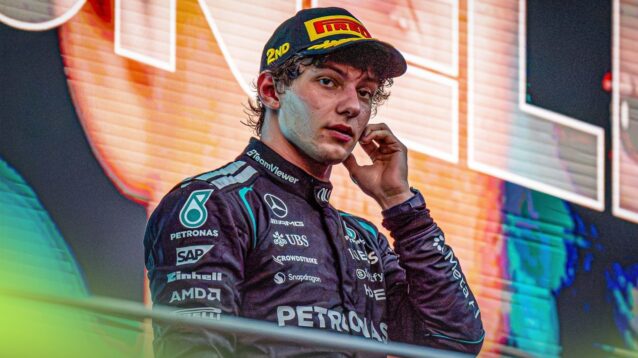
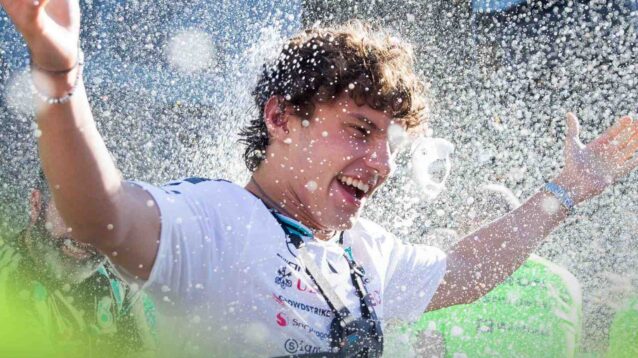
Kimi Antonelli will make a fine world champion
Until relatively recently, the status of being Formula 1 world champion came with a sort of unspoken obligation.
Not unlike a head of state, a president or a prime minister, a driver holding the ‘office’ of world champion had a duty to act as the sport’s statesman: Formula 1’s official ambassador to the world.
That has shifted slightly in the modern era.
Not because today’s drivers are different or lesser characters compared to those of the past, but because the landscape of sport – the world itself – has changed to promote a certain selfishness.
Because the various trappings of life as a world champion – the fame and celebrity it brings, the flurry of commercial opportunities it opens up – have inevitably overshadowed the status that comes with reaching the sport’s summit.
Becoming world champion is as much a career move these days as it is an achievement in itself.
It is one of the many reasons why anyone with motor racing in their bones should rejoice at the thought of Mercedes’ little prince, Kimi Antonelli, being crowned king over the coming months.
On the verge of becoming the sport’s youngest-ever world champion by some margin, F1’s answer to Valentino Rossi will restore something – a quiet dignity and grace – that has been missing in an era of endless noise.
The most impressive thing about his eighth win of the season in Madrid, putting him 81 points clear of George Russell with a maximum of nine races remaining, was not what he did on the track.
It was instead the way he carried himself in the immediate aftermath of the chequered flag as he offered his sympathies to Lando Norris, denied what would surely have been a comfortable victory by an ill-timed virtual safety car.
“I feel a bit bad for Lando,” he said over team radio as he accepted the congratulations of the Mercedes team.
Then came the opening answer of his post-race interview in parc ferme: “It’s good to win, but it doesn’t feel as good because I think Lando today deserved the win…”
The misfortune that befell Norris happened early enough in the race for Antonelli to feel no guilt whatsoever over how victory came his way.
Yet there is something – a lot, actually – to be said for the athlete, especially one so young, whose first thought in triumph is for the defeated party.
Not least after a triumph like this, one that puts him out of sight in whatever remains of this title race (in truth, the destination of the 2026 world championship has been obvious since Monaco).
It spoke volumes about the man behind the driver. Humble. Classy. Elegant.
There is a great purity about him that ensures whatever ego may lie beneath the surface – the greatest in elite sport are always defined by a towering inner certainty – remains concealed.
Still on his rocketship to the moon, there is no baggage about him. He has not yet been around long enough to become tarnished by rivalries or give the watching world an excuse to dislike him.

He is the rare sort of athlete – think Rossi himself or Roger Federer in tennis – who unites opinion rather than divides it; the type people cannot help but root for no matter where their loyalties may lie.
This is no corporate hologram in waiting, but a sportsman in the good old-fashioned sense.
A sensitive soul, too, on the evidence of how some of his feats in 2026 – the latest being his from-the-back victory at Monza a week ago – have moved him to tears.
He has been brought up well by his father Marco, there to offer him a rose in parc ferme in Madrid, and nurtured beautifully by Mercedes into a champion in all but name.
With doubt persisting over the final two races of the season in Qatar and Abu Dhabi, there is a growing likelihood that Antonelli’s first title-winning campaign will conclude, of all places, at Imola, a stone’s throw from his hometown of Bologna, as winter arrives in Europe.
What a great day that promises to be.
What better representative of our sport.
Lando Norris must now be considered one of F1’s elite drivers
A single Lando Norris comment following his victory at the Dutch Grand Prix last month spoke volumes for his personal development.
Asked during the parc ferme interviews to describe the moment that effectively won him the race – his opportunistic overtake on Kimi Antonelli at Turn 1 – Lando’s response was instructive.
“I knew I was not going to get many chances,” Lando said. “Every lap I spent behind him, my odds were getting lower and lower.”
That, right there, said it all about how much Norris has grown in a relatively short space of time.
Why? Because that is precisely the approach he had failed to take in wheel-to-wheel situations historically.
Think back to his collision with Max Verstappen at Austria 2024, where despite having much the faster car Norris dillied and dallied for a number of laps behind the Red Bull.
As each lap passed with Lando still behind, so Max’s confidence grew that, actually, he could remain ahead after all.
So his defence became ever more spirited and aggressive and daring…
Right up until the moment they came together and both their races were ruined.
Verstappen was heavily criticised for that collision yet, as noted at the time, it only happened as a result of Norris’s lack of conviction, dragging the battle on for far longer than it should have lasted.
The trick to overtaking a great racing driver, you see, is to think of it like fighting a shark: get in, punch to the nose, get out.
Get him before he gets you.
Too willingly over the years Norris had danced to the tune of other drivers.
Yet there he was at Zandvoort finally spotting – let alone seizing – the moment and zooming around the outside of Antonelli before Kimi even knew what hit him.
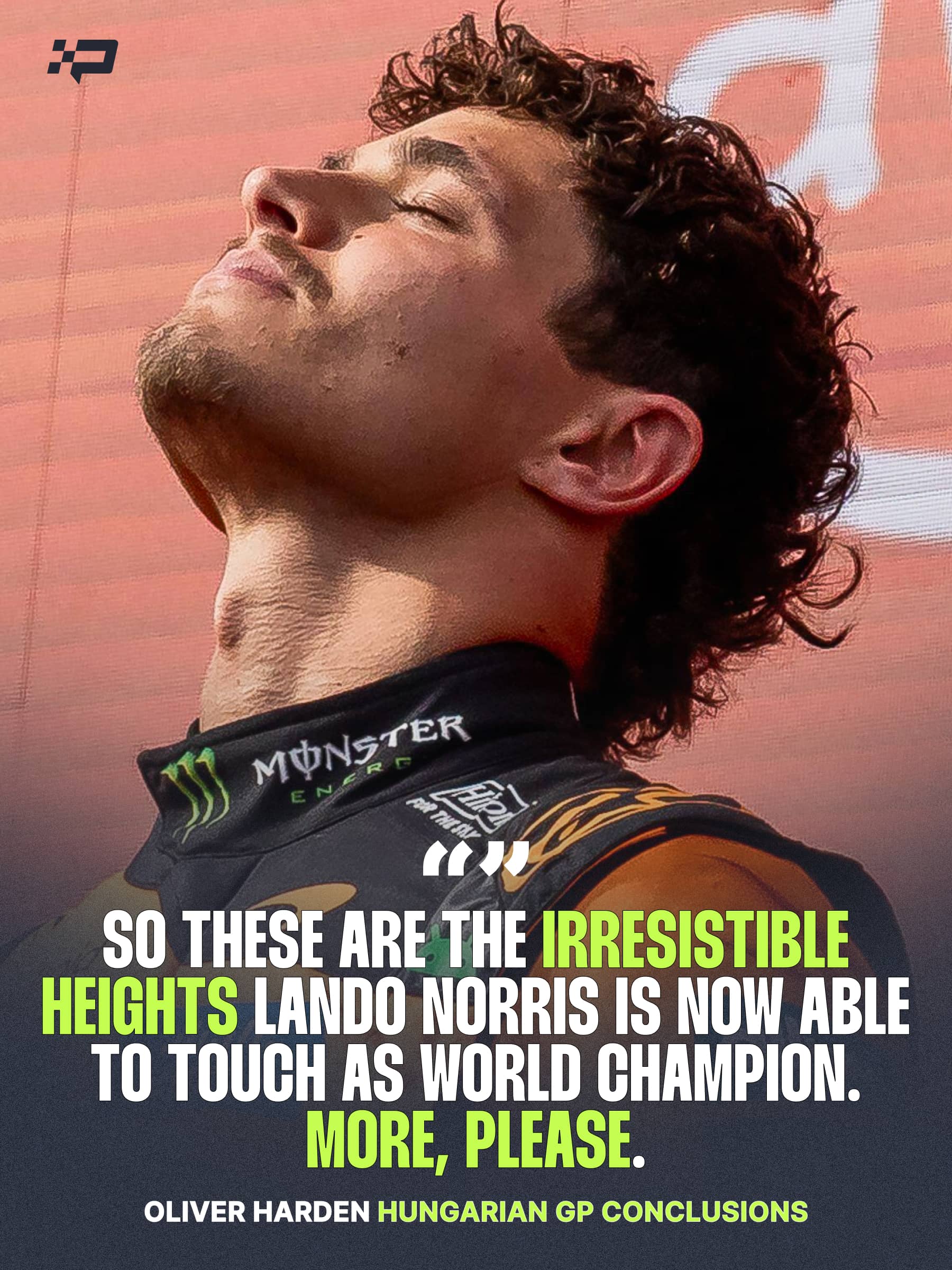
It was the pass – the victory – that elevated Norris to a higher level still.
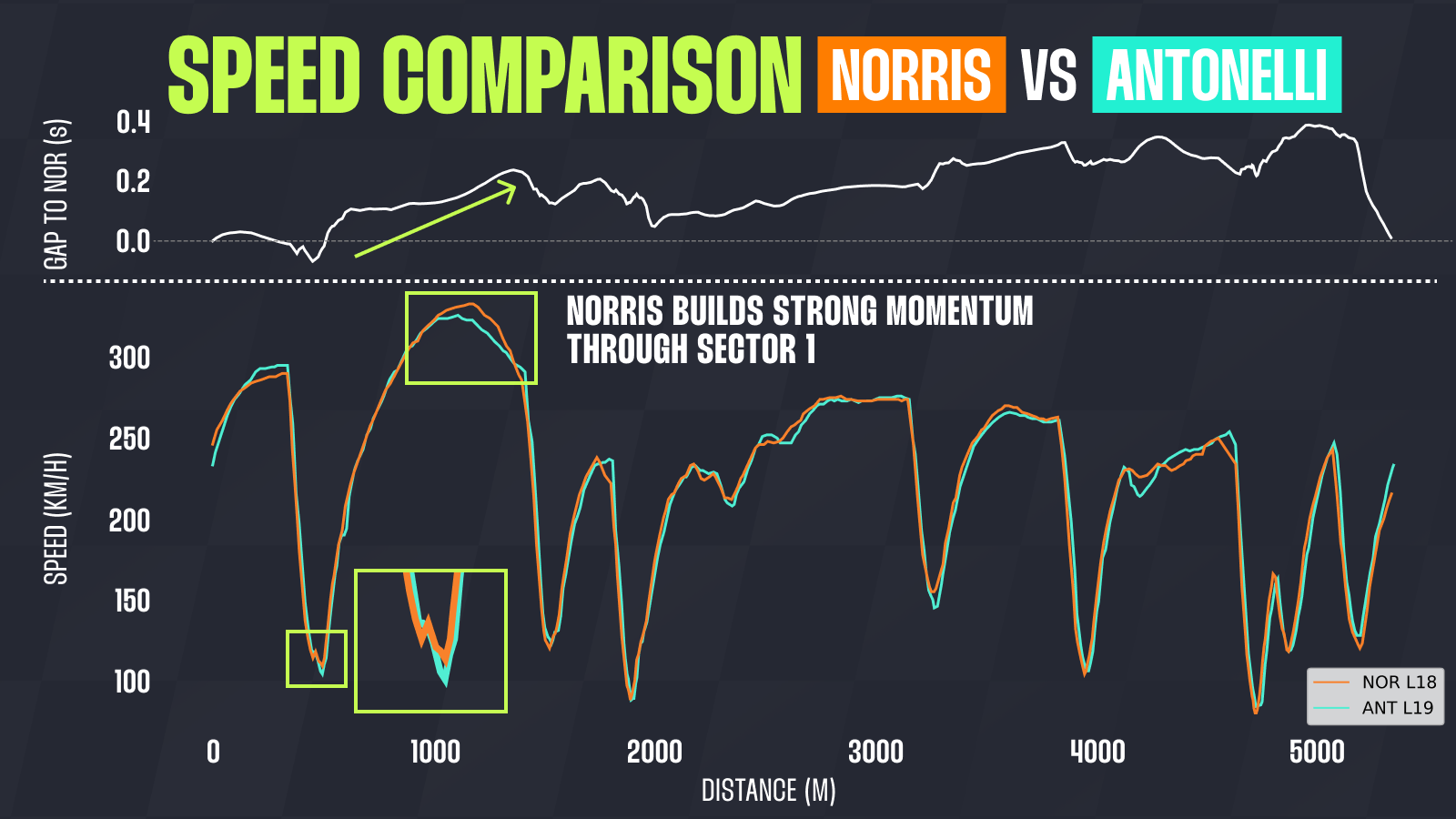
His pole position at Madrid on Saturday, with the sort of out-of-nowhere lap Max has specialised in over the years, only confirmed it.
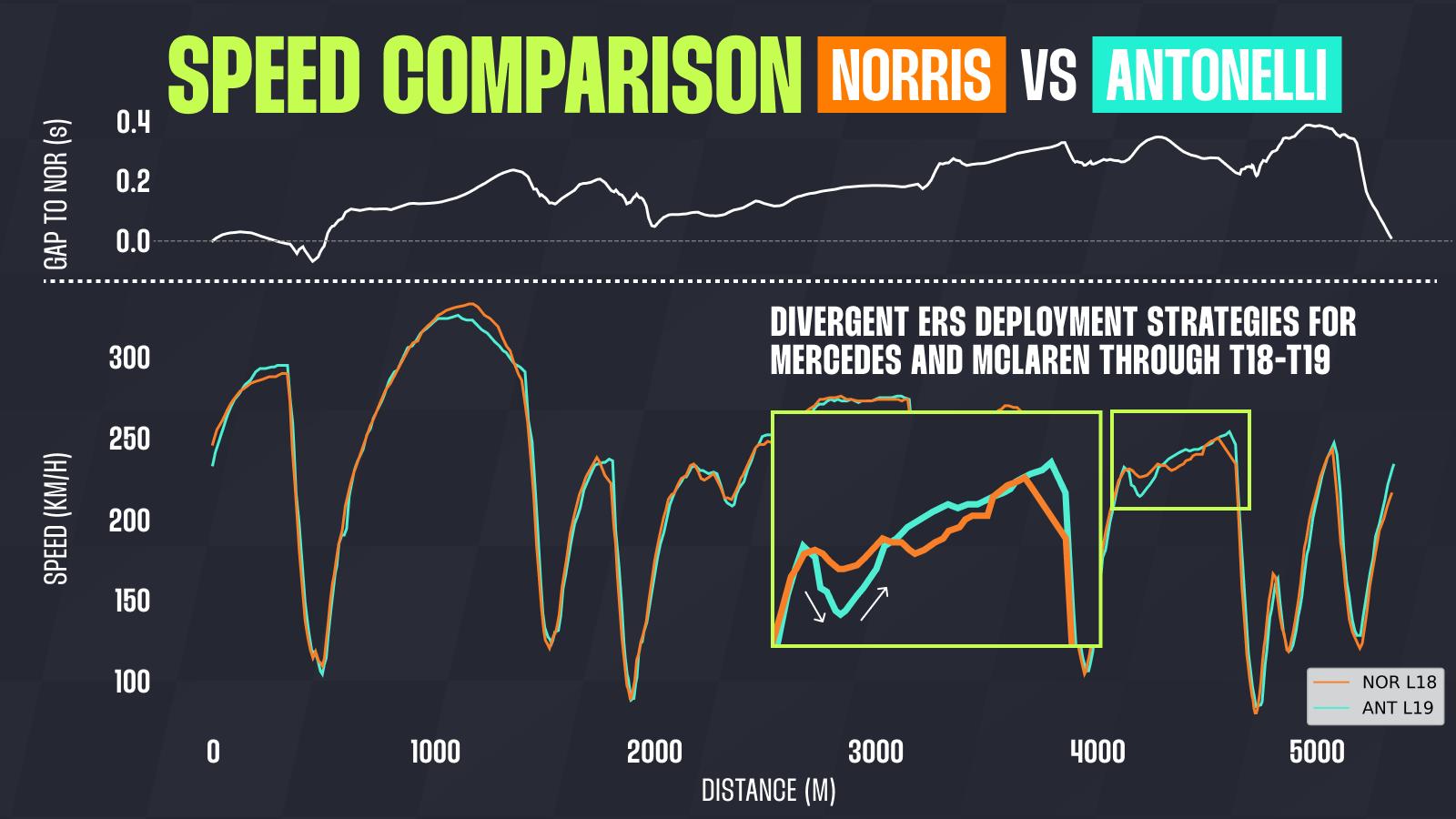
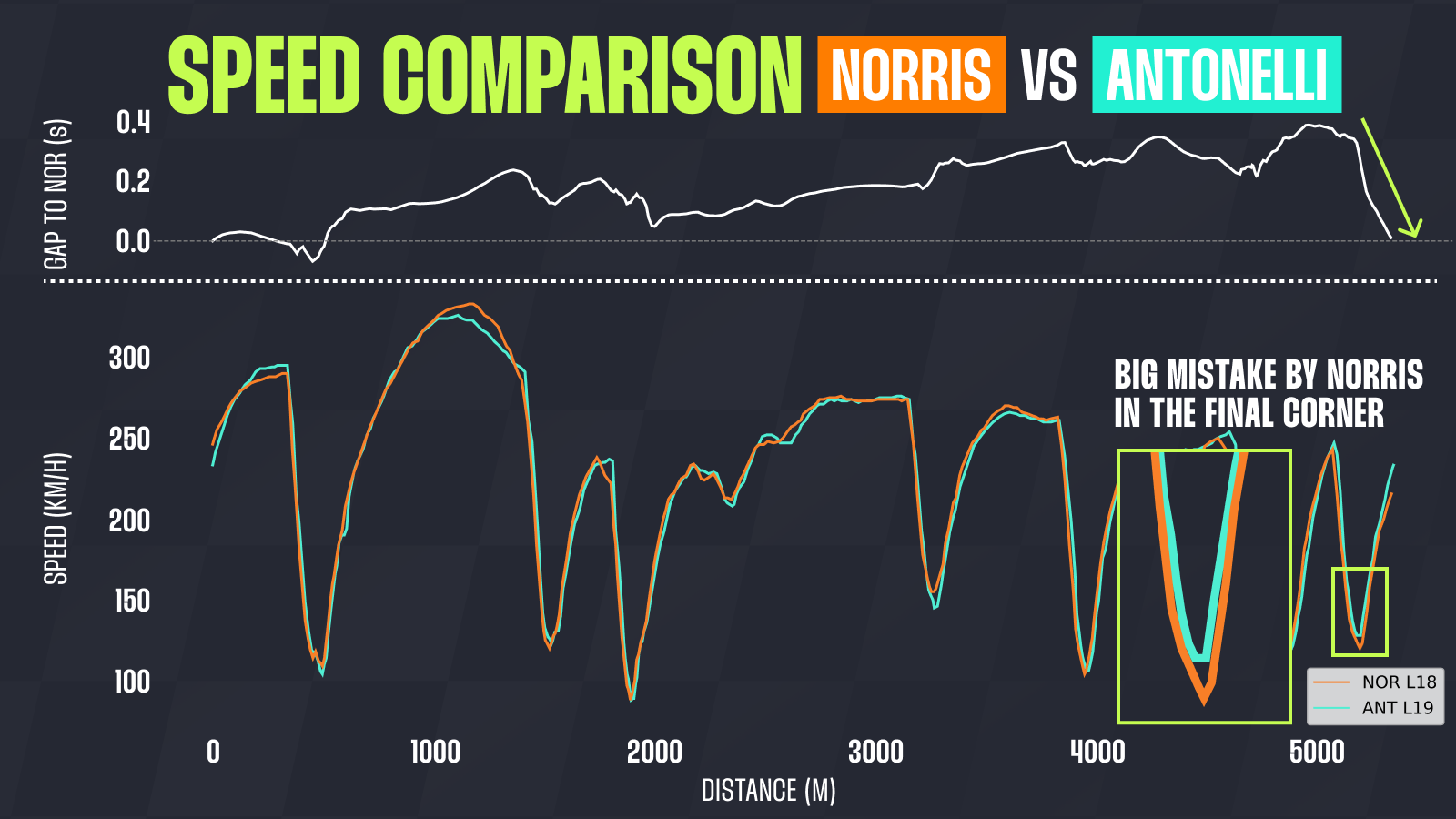
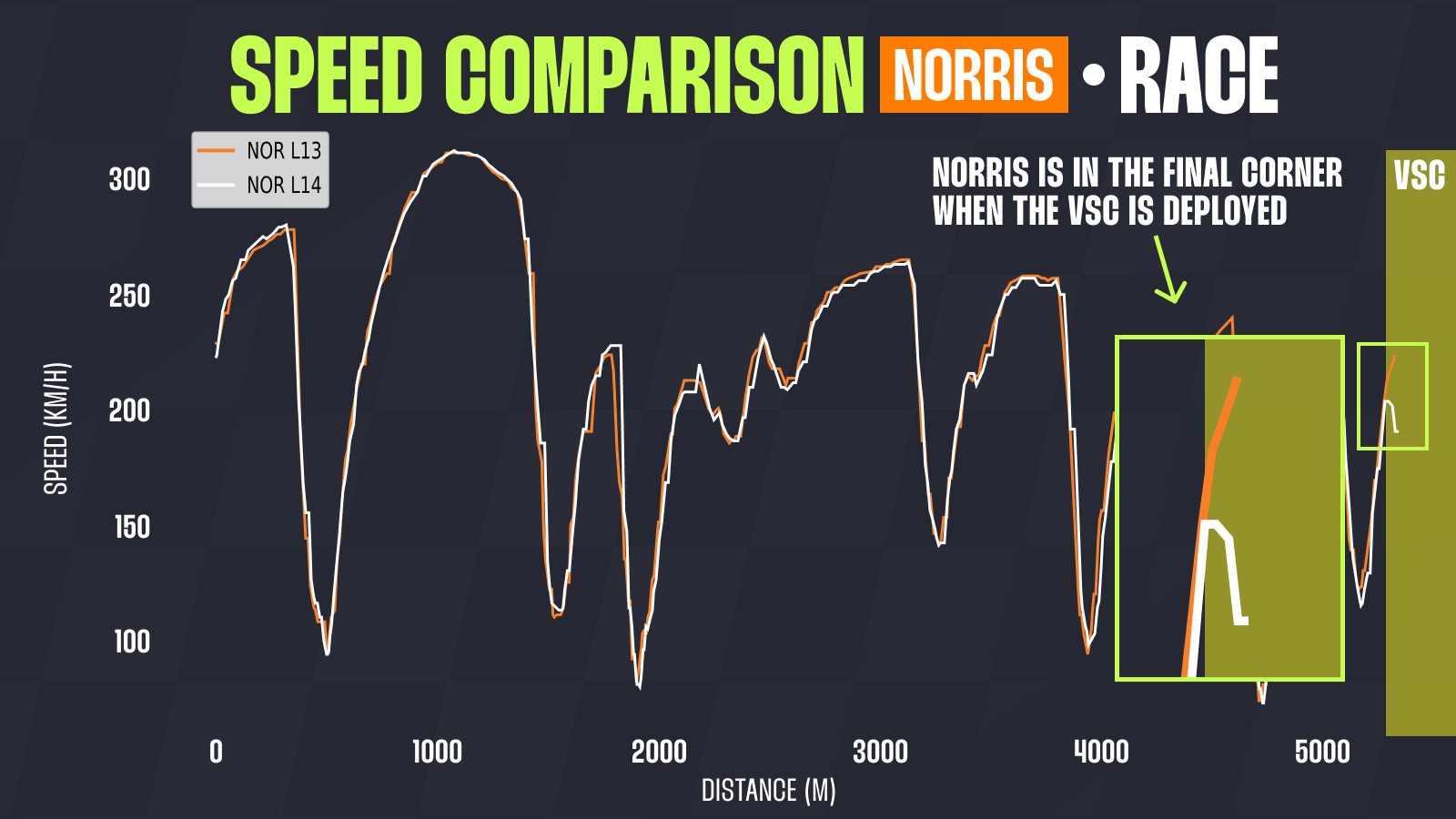
He would have won this race easily were it not for the virtual safety car (which, as he alluded to after the race, has developed an unfair, almost Abu Dhabi 2021-esque habit of plucking victories out of one driver’s hands and handing them to another free of charge).
Amazing, isn’t it, what a little self-belief can do?
This column has argued for years that Lando would be lethal if only he had the inner confidence of, say, George Russell.
Now here he is, as the reigning world champion, blossoming before our eyes into one of the most accomplished drivers in Formula 1 today.
This is Norris in full The Year After The Year mode, the satisfaction and confidence of his first championship unlocking a whole new level of performance.
The last few races have done more for his standing and reputation than his often unconvincing title-winning season in 2025.
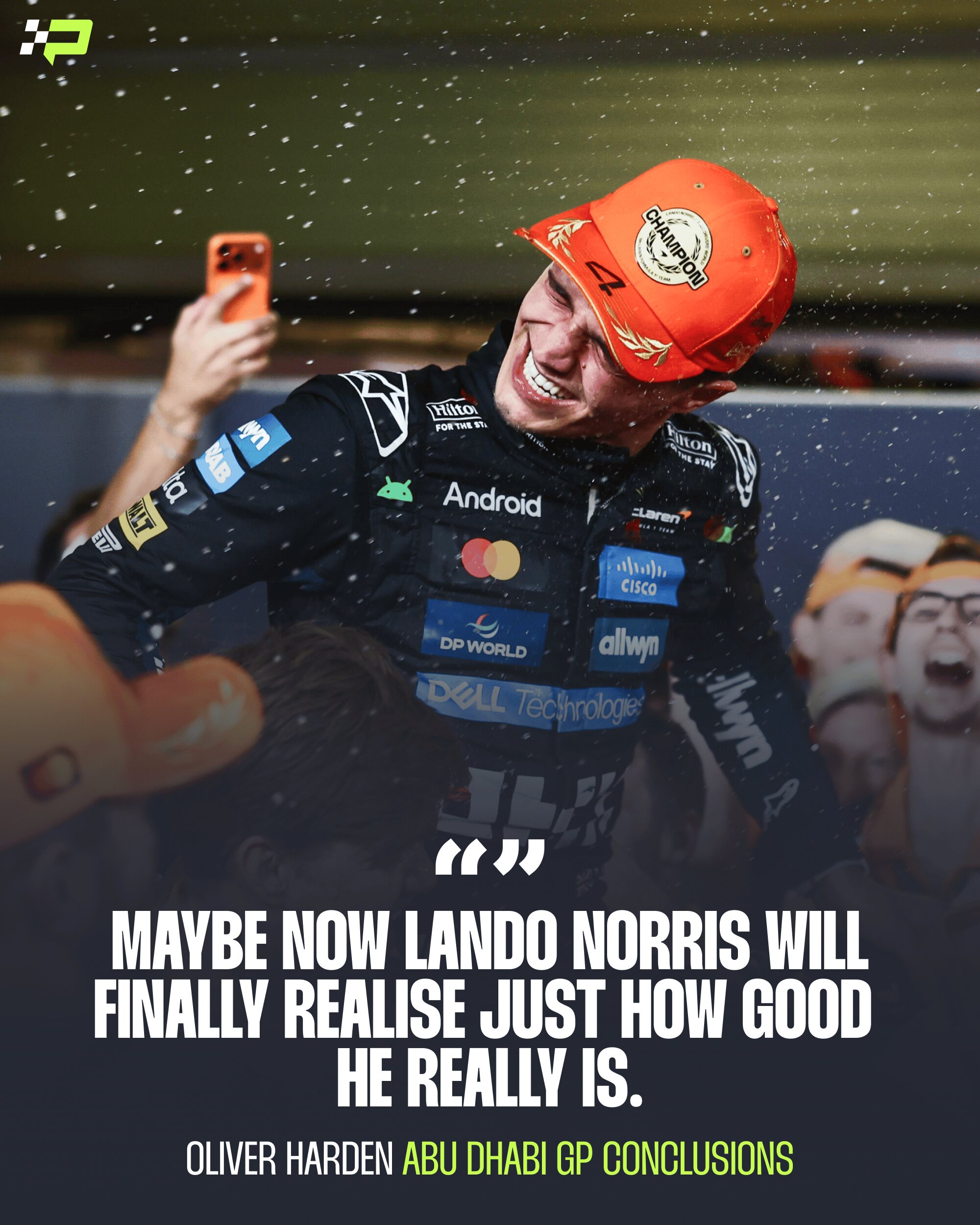
There was a suspicion after Abu Dhabi last year that Norris might consider it job done.
That, with his first title filed away and his lifelong ambition fulfilled, he would go the way of other world champions and allow himself to relax and his career to drift slightly.
Perhaps we should have known all along that it would liberate him instead.
That, having always struggled to see in himself what those closest to him saw, Lando could finally see it too.
Memo to Max, Lewis, et al: pull up another chair, for a new face has arrived at F1’s top table.
Lewis Hamilton’s imaginary title challenge is over – now is a chance to reset the Ferrari relationship
The irony was delicious following Lewis Hamilton’s accident in FP3 in Madrid.
For weeks he had been bleating about the poor communication at Ferrari. Now here was his race engineer, Carlo Santi, repeatedly urging him to stop the car as he attempted to limp back to the pits with damage.
And what do you know? Lewis chose to ignore it.
That entertaining sideshow on Saturday morning was yet another sign of the desperation that has crept into Hamilton over recent weeks.
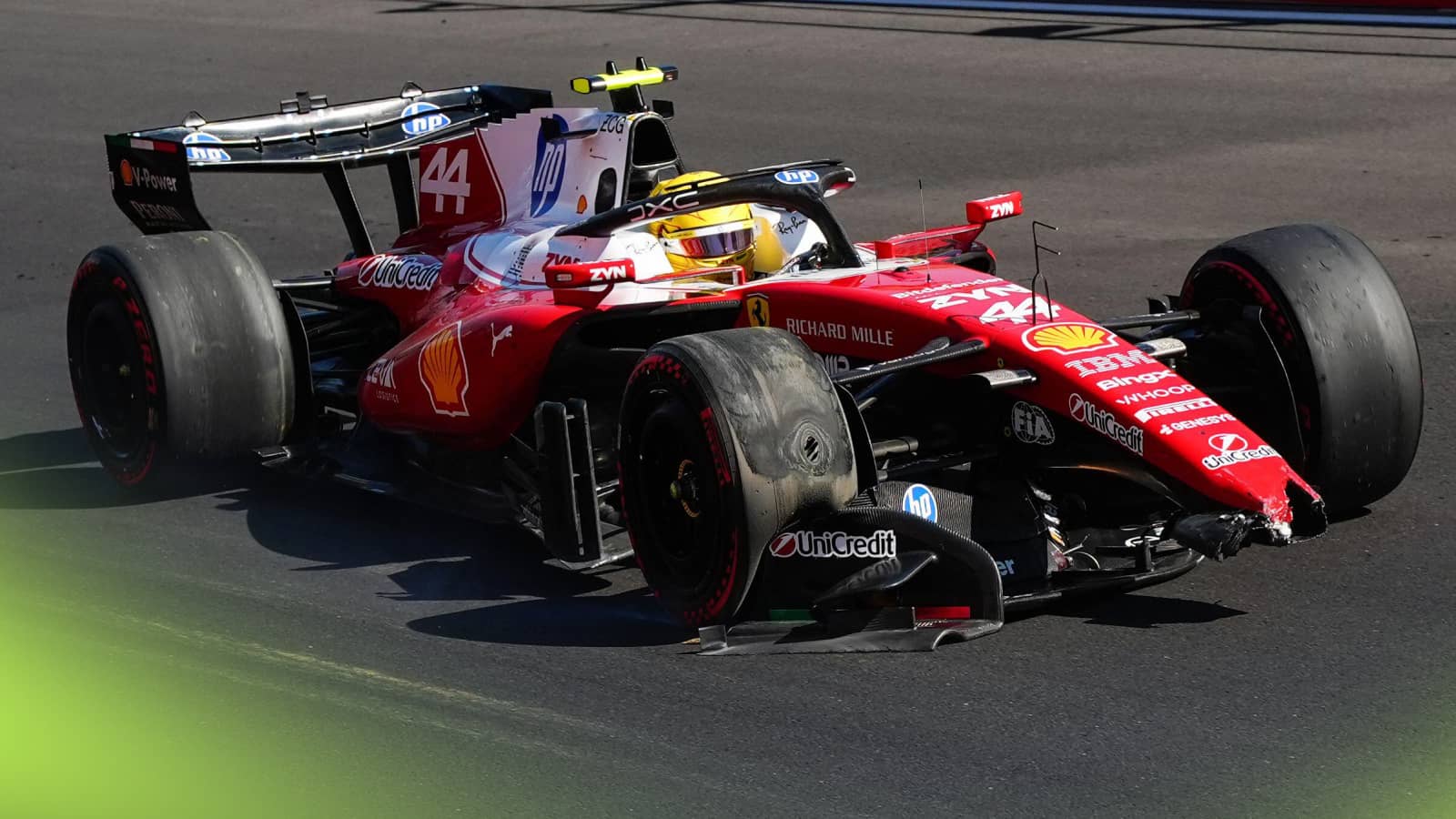
The sort of desperation that, for instance, led to him positioning his car on the inside of Charles Leclerc’s on the approach to the first corner at Monza.
He once again put his front wing in a place it did not belong at Turn 1 in Madrid on Sunday, backing out just in time to avoid causing havoc.
As F1 returned to Spain for the first time since his only win for Ferrari in Barcelona in June, it made sense this weekend why Hamilton has recently become so agitated.
Why is it that so soon after the Hamilton/Ferrari partnership never looked stronger, the same old cracks in the relationship began to reappear?
Almost certainly because Hamilton could sense an opportunity to sneak an eighth world championship in 2026… at the same time he saw a team ill-equipped to deliver it to him.
With precious few opportunities left for him at 41, it seems this is a mismatch that Lewis has struggled to reconcile as the season has developed.
Hence the sudden yearning for his old life at Mercedes: Mercedes did this better, Mercedes did that better. Mercedes, Mercedes, Mercedes.
Put another way, Hamilton’s Ferrari career has ended up becoming a little too serious in the three months since Barcelona.
Perhaps more serious than even he – arriving at Ferrari in 2025 riddled with doubt about his own performance level – ever envisaged.
After all, wasn’t the whole point of his move to Ferrari about ending his F1 career on a happier note than his final years at Mercedes had threatened to deliver?
About the joy of finally driving the red car? The Prancing Horse on his chest?
Notice how those classic Ferrari platitudes have dried up over recent months as Lewis has increasingly struggled to contain his frustration with the team’s lingering limitations.
As noted in PlanetF1.com’s conclusions from the British Grand Prix – the last race he finished on the podium – the suggestion that Hamilton was ever a serious factor in this year’s championship was purely a figment of the imagination of an overexcited media.
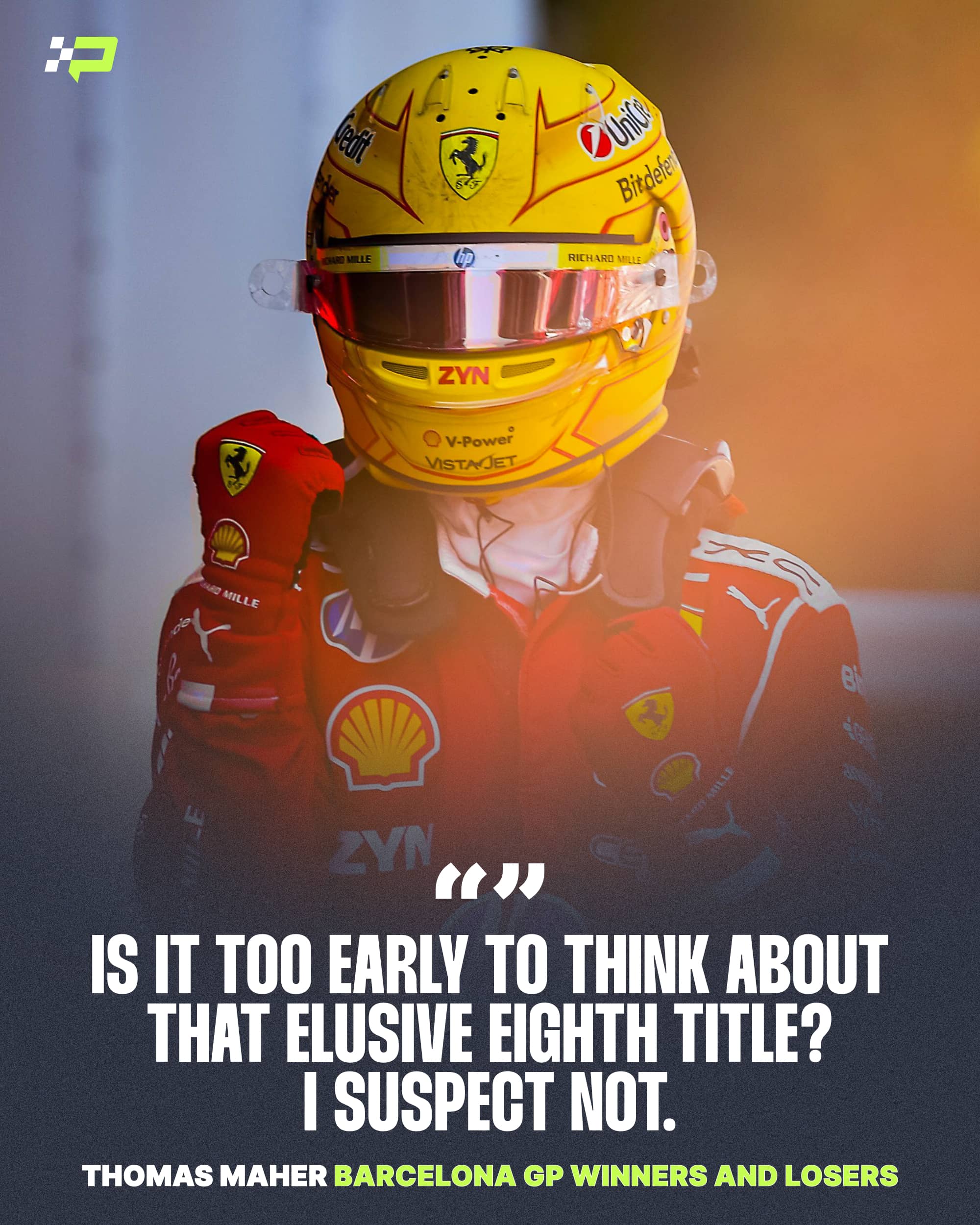
It would have required a few more Barcelonas for him to become a remotely noteworthy threat to the Mercedes drivers.
But try telling that to a competitor of Hamilton’s intensity as he became convinced that the window of opportunity was opening up before him.
The same thing has happened more recently to Lando Norris, who since Hungary has repeatedly been asked whether he still has ambitions of retaining his title in 2026.
Unlike Lewis, however, Lando has had the good sense to avoid being lured into setting himself up for disappointment.
With that in mind, maybe his retirement in Madrid will ultimately prove a positive development for Hamilton and Ferrari.
Now 101 points behind Kimi Antonelli after this race, there is no longer a need to fret about the title slipping away.
Now they know for sure that the championship is gone, it could ease the pressure and restore a sense of peace to Maranello.
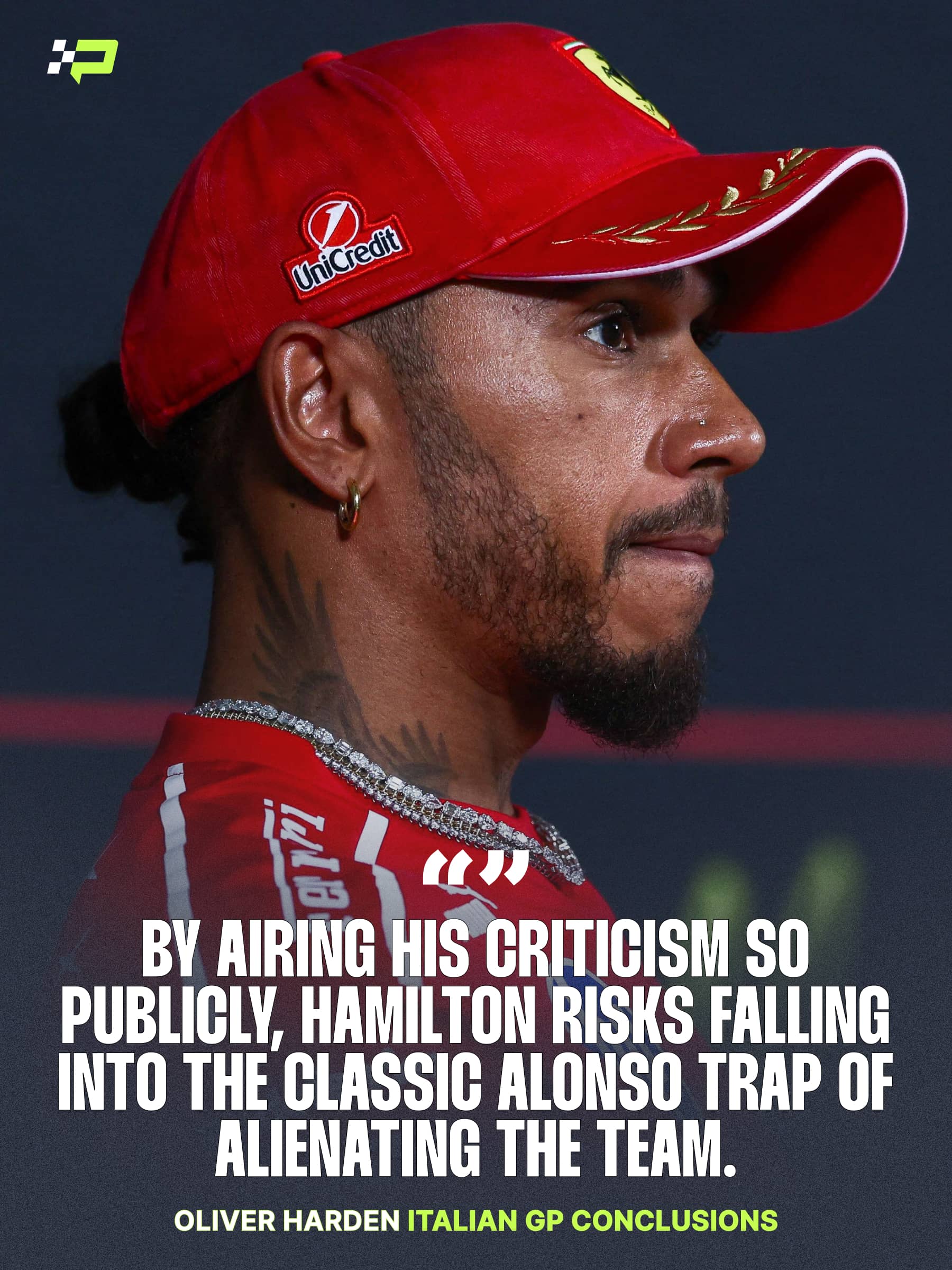
Here is a chance to finally pause for breath and hit the reset button.
To smooth out the friction that has developed between team and driver over recent months.
To understand what has worked well this season and what they must do better.
And to start looking ahead, united again, to mounting a more sustained challenge in 2027.
Carlos Sainz’s reputation is starting to disintegrate
Martin Brundle has a go-to phrase for drivers who are having an absolute stinker during a grand prix.
Treat X’s car like the hind legs of a donkey, he will often say, as the driver concerned gets involved in all manner of scrapes as though magnetically attracted to the cars around him.
Carlos Sainz has had a few weekends like that lately as the deep frustration of Williams’ situation has started to seep into his own performances.
It did not reflect well on Sainz when he committed the Esteban Ocon-esque sin of clattering into Oscar Piastri’s McLaren in Hungary just before the summer break, destroying any chance Oscar had of retaining the lead from Lando Norris.
That came on a weekend he was called to the stewards for two impeding incidents, separated by a matter of minutes, in practice.
His home race in Madrid followed a similar theme, Sainz penalised for impeding Valtteri Bottas in qualifying (Williams did not warn him over team radio that the Cadillac was approaching) before initiating contact with Yuki Tsunoda and Fernando Alonso on race day.
During his career at Ferrari, Sainz eventually managed to curb the messy side of his driving in such a manner that brought him a respectable level of success.
Yet now he has returned to the midfield he spent so much of his career trying to escape, it has brought out the worst in him again.
The reputation he curated over his four years at Ferrari is disintegrating with each passing race.
For all his protestations since signing a new contract with Williams that he is perfectly happy where he is, Sainz was revealingly open about the need to assess all options prior to the summer break.
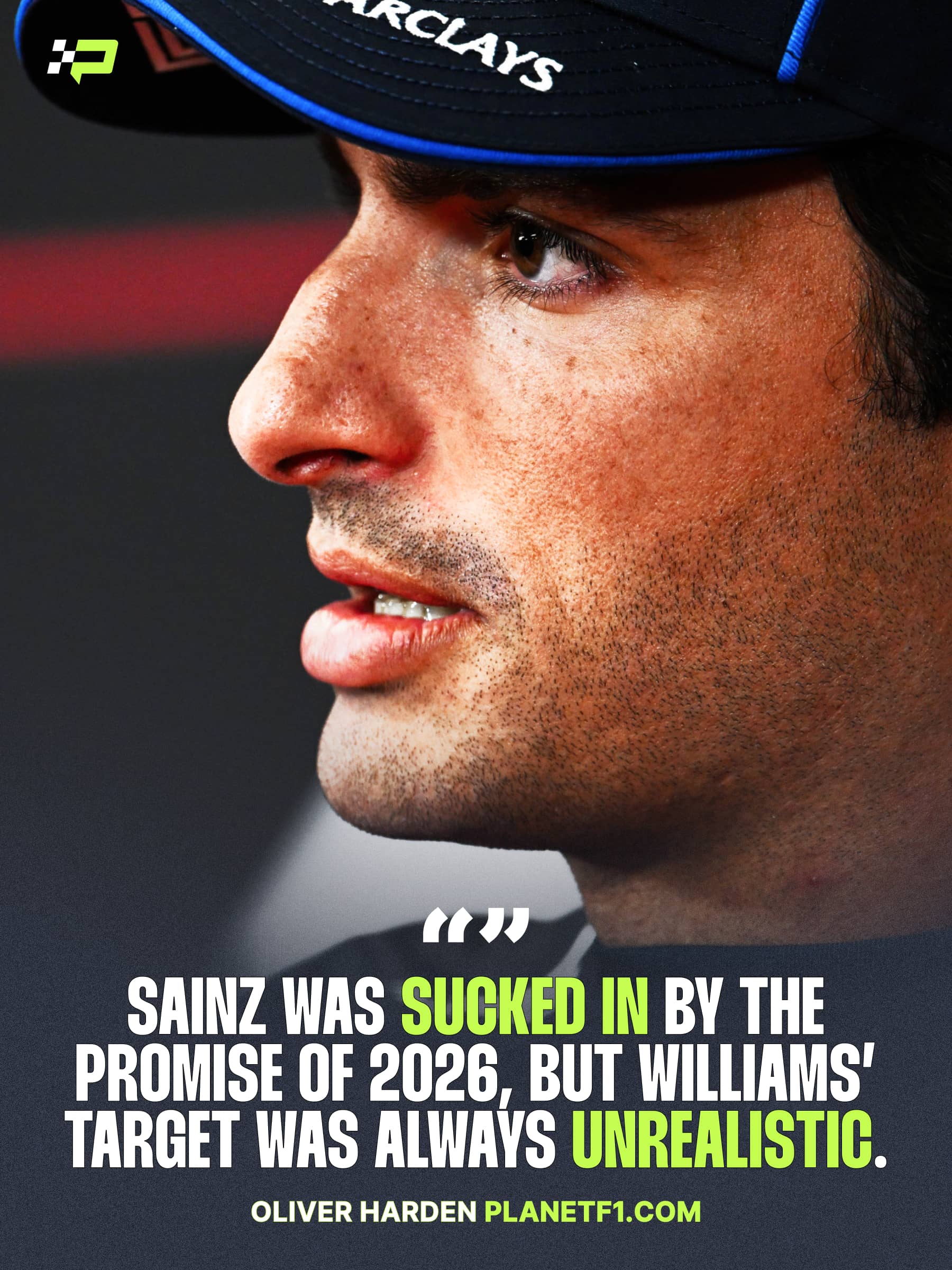
Having seemingly failed to engineer a move to a team like Audi, Carlos – who turned 32 at the start of this month – has entered the awkward age range that makes it far from certain that teams once interested in his services would ever come calling again.
Which self-respecting team, after all, would turn to a mid-30s Carlos Sainz for 2028/29 in an era in which everyone is looking to the long term?
In which everyone is determined to unearth the next Kimi Antonelli?
Faced with that scenario, he really has no option but to go all in on Williams, cross his fingers and hope for the best.
“I’m just going to work extremely hard to make sure this is the last year that I come here to Madrid without a chance of fighting for something bigger,” Sainz told PlanetF1.com and other media outlets in Thursday’s FIA press conference.
Wishful thinking. Wishful thinking indeed.
Increasingly it feels like the best days of Sainz’s career are gone – and aren’t ever coming back.
Madring: Another reason to question the direction of modern F1
It was with some regret that F1 bid farewell to the Dutch Grand Prix three weeks ago.
In a season in which the sport has changed beyond recognition as a result of the new regulations, it felt necessary to hold Zandvoort just a little tighter this year.
For all the complaints that F1 had long since outgrown the place, every year the Dutch Grand Prix seemed to hit the right note and capture everything good about motor racing.
With Zandvoort gone, so another little fragment of Formula 1’s DNA was lost.
There has been far too much of that in 2026.
Yet times change, as they say, and what do we have now as the beloved racetracks of old are gradually replaced by the new?
Another street circuit. Another identikit street circuit. This time in Madrid.
A forgettable circuit for a forgettable season; yet another reason to question where exactly modern F1 is heading.
The one redeeming feature of the Madring? La Monumental.
How tragic, though, for such a spectacular sight to be reduced to a charging station thanks to the delights of the 2026 engines.
You can see clearly where the layout has been inspired by the likes of Jeddah, Baku, Miami and even, er… Sochi.
That, combined with the fact that there is no overtaking opportunity of note in this weirdly deserted-looking corner of the Spanish capital, is the problem.
Hold the race under floodlights and this circuit could easily have been mistaken for Jeddah.
And what exactly is it, other than the time zone and the one decent corner, that separates this track from Miami?
What makes it distinctive? What makes it Madrid?
Conclusions recap: How the F1 2026 season has unfolded
Italian GP conclusions: Shameless Hamilton playing dangerous game, painful Russell defeat
Dutch GP conclusions: No tears for Zandvoort, Verstappen power play, Lawson makes his case
This is an issue because the very best street circuits all ooze character.
There is a reason why Monaco remains undroppable even though most people seem to have fallen out of love with it by now; why Singapore remains the standout of the many street circuits to have been added to the calendar over the last two decades.
Las Vegas, the last new addition to the calendar in 2023, is not perfect either. But there is no denying that the place has personality.
Perhaps it is too early to write off Madring, soulless as it may seem at first glance. Let’s try and be generous.
This circuit evidently has the potential to produce classic races in the years to come even if the flat first edition was reminiscent of Baku’s debut in 2016, when it seemed the drivers recognised the potential for chaos and agreed among themselves not to do anything stupid.
Those truces tend not to last much beyond the first year.
Maybe, as with most things in 2026, it is unwise to leap to too many conclusions given the unusual circumstances of this season.
Maybe, when Formula 1 cars revert to being more like something people can recognise, Madrid will demonstrate that it holds a special place on the calendar too.
Maybe, with a few adjustments for 2027, there is a great circuit here just waiting to break out.
Or maybe not.
Want to be the first to know exclusive information from the F1 paddock? Join our broadcast channel on WhatsApp to get the scoop on the latest developments from our team of accredited journalists.
You can also subscribe to the PlanetF1 YouTube channel for exclusive features, hear from our paddock journalists with stories from the heart of Formula 1 and much more!
Read next: The mindblowing hypocrisy of Lewis Hamilton