
Data reveals genius Ferrari call at United States GP
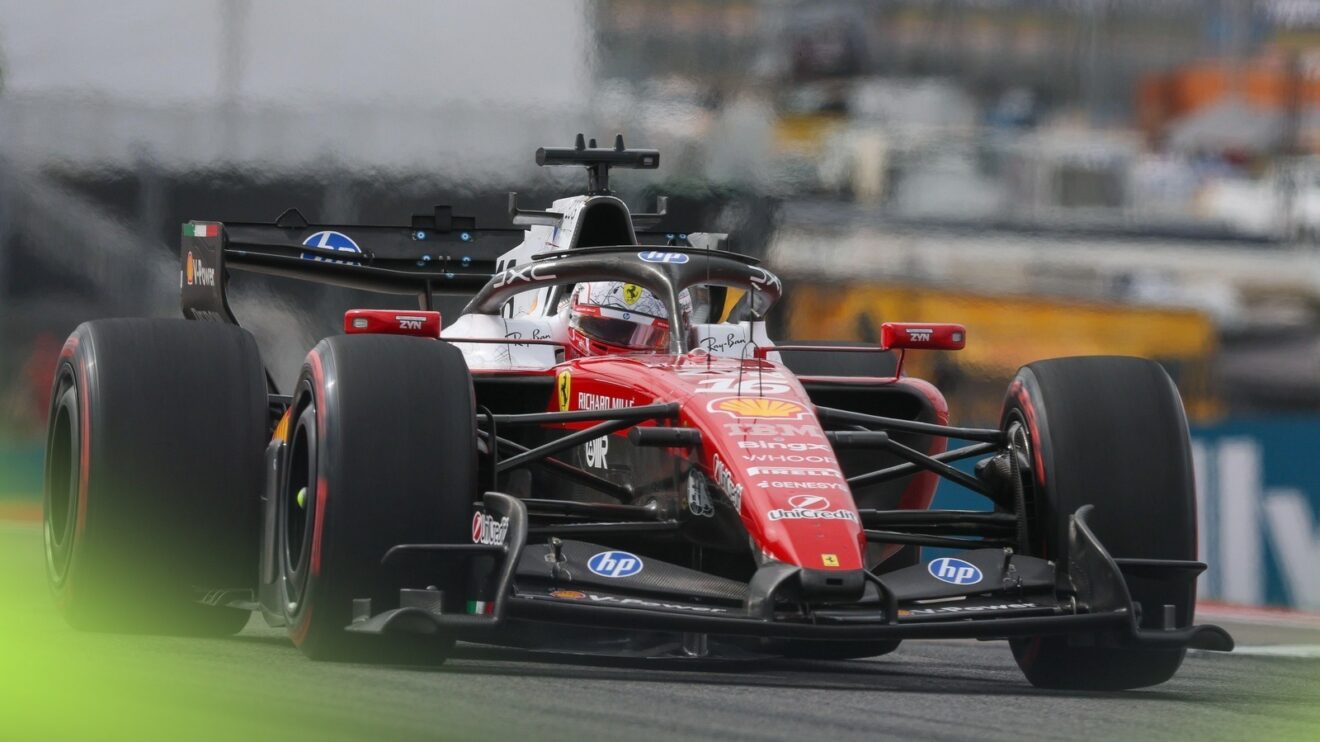
Charles Leclerc finished second in the United States Grand Prix.
Several key strategic decisions during the United States Grand Prix played a significant part in the outcome of the race, with Charles Leclerc gaining the upper hand over Max Verstappen at the Circuit of The Americas.
Telemetry data shows how the switch to mediums and then hards put Leclerc in position to strike back against Verstappen, but might a different strategy call have given him a shot at victory?
Could Leclerc have challenged for victory in Austin?
Starting from P4 alongside Ferrari teammate Lewis Hamilton, Leclerc got off to a flyer on the soft compound, which was widely expected to be the preferred starting tyre. Both dispatched Hadjar with ease, while Leclerc even spent part of the opening lap running in second place following a sublime pass on Verstappen through Turns 2 and 3.
However, Verstappen reclaimed P2 shortly after, instantly establishing himself as Charles’ primary rival for the afternoon as Kimi Antonelli cleared out ahead.
The opening stint proved neck-and-neck between Verstappen and Leclerc.
Both drivers dropped more than two seconds behind the car ahead to avoid dirty air and protect their soft rubber, which proved far less durable over a stint than initially anticipated.
Verstappen pitted earlier than expected, on lap 13, with Leclerc following suit two laps later, confirming that both were committed to a two-stop strategy. Antonelli, meanwhile, managed his pace on the medium compound to execute a one-stop strategy.
Unlike Verstappen, who took on a second set of softs, Leclerc opted for the medium compound – a far more versatile choice that afforded him greater flexibility. Crucially, it was also noticeably faster, as demonstrated in the lap time chart below.
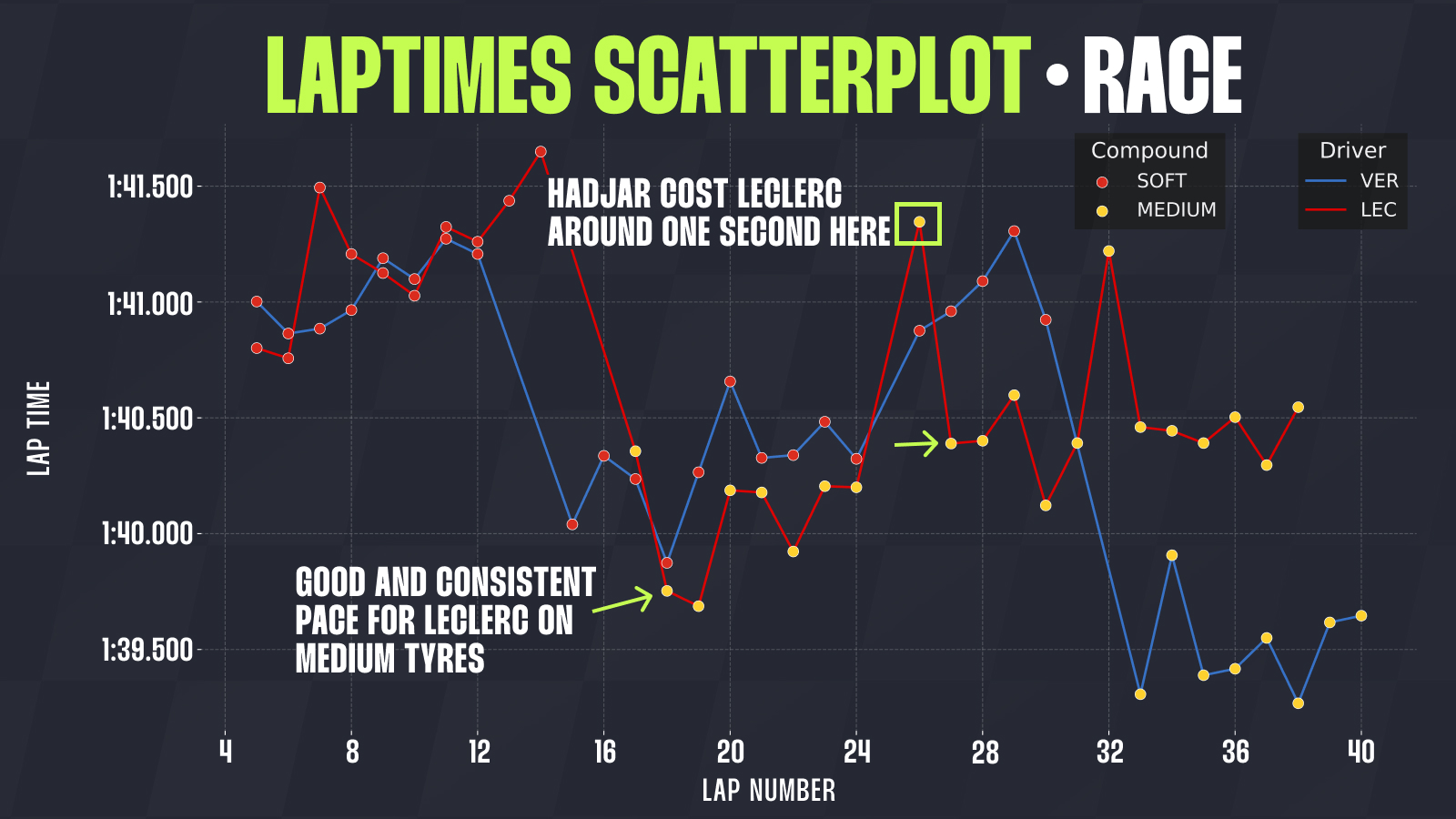
Discounting the time surrendered on lap 25 while working past Hadjar, the Ferrari driver set a consistently quicker and more stable pace.
Verstappen’s lap times fell off a cliff during the second half of his stint before he was forced back into the pits. The soft tyre proved to be arguably the weakest race compound, yet Red Bull somehow locked the Dutchman into running the tyre for his first two stints.
Where the Ferrari pit wall deserves real credit is its swift strategic adaptation.
Rather than mirroring Verstappen as it did in the opening stint, it chose to extend Leclerc, despite bleeding time relative to the Red Bull driver on fresh rubber.
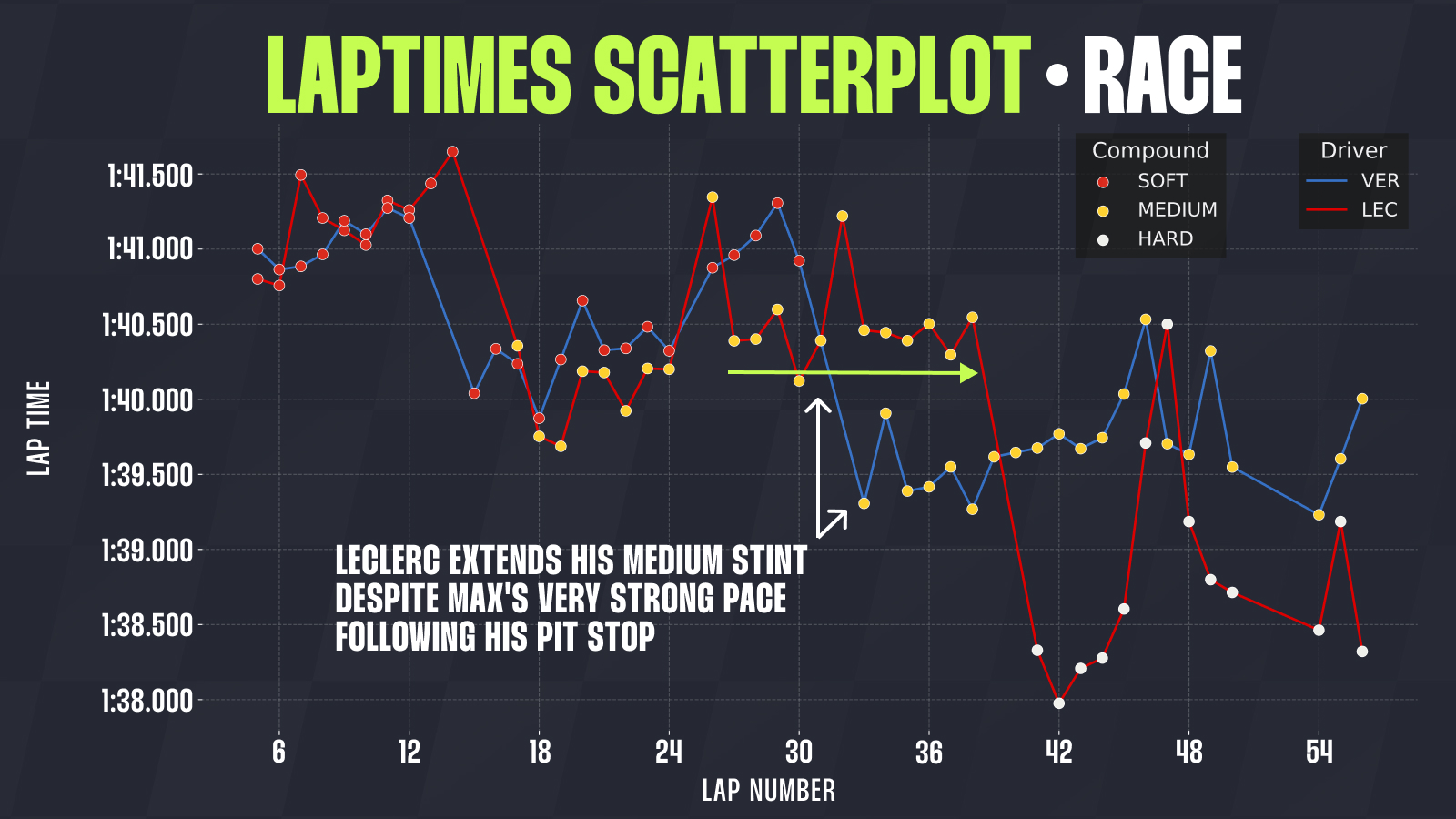
Midway through that stint, Ferrari almost certainly spotted that the hard compound was performing exceptionally well in the prevailing track conditions.
The initial evidence came from Lando Norris in the McLaren, who set the fastest lap times on track during his opening laps on hard tyres.
That indicator, backed up by Antonelli switching to the hard compound as well, prompted Ferrari to commit to the hard tyre for Leclerc’s final stint.
It was undoubtedly the right call. Leclerc was absolutely flying on track, diving past Verstappen for P2 on lap 47.
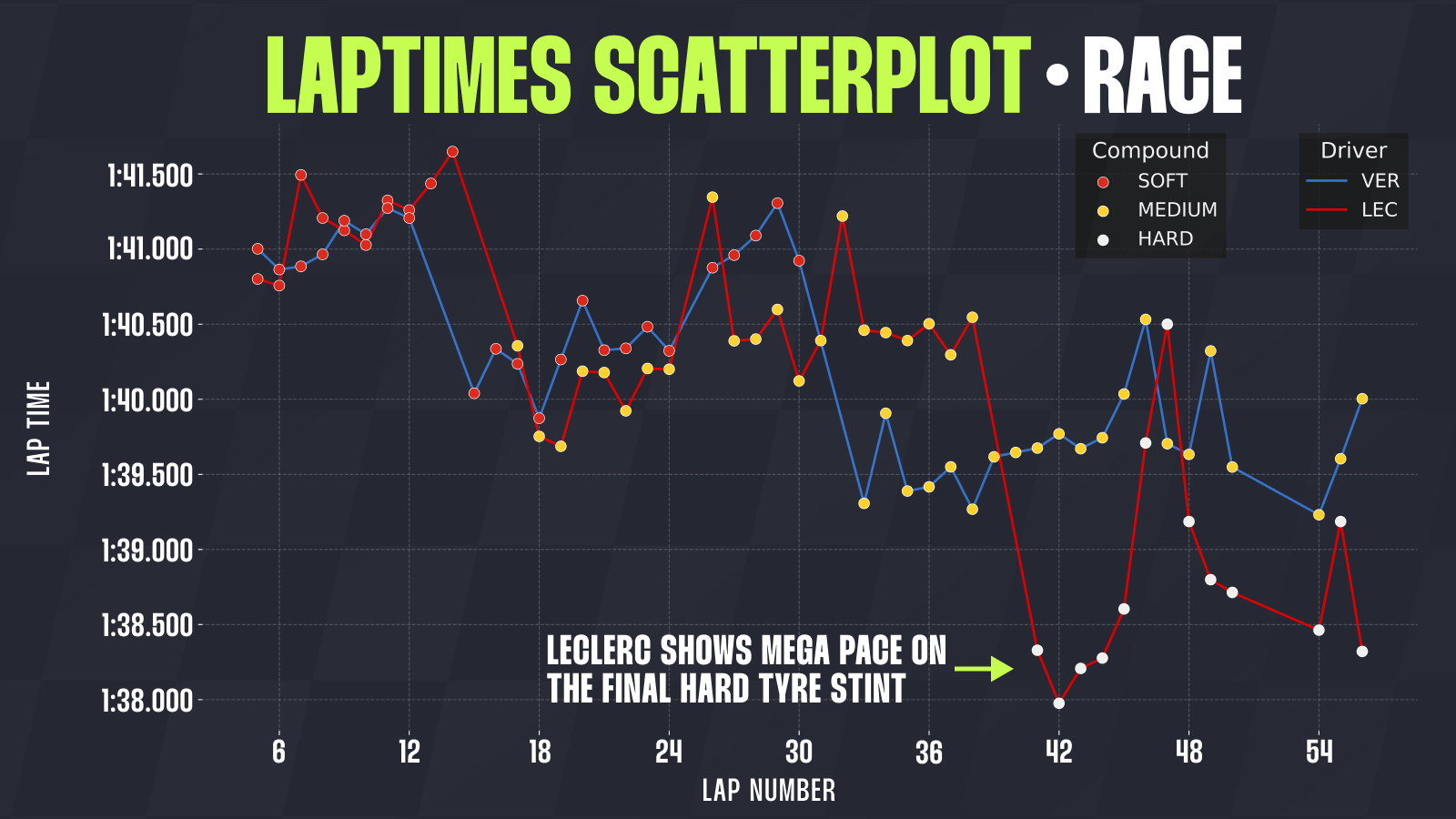
Hamilton could well have achieved a similar result at the chequered flag had his momentum not been truncated by the late Virtual Safety Car.
His strategy mirrored Leclerc’s and proved vastly superior to Verstappen’s, making it fair to say Ferrari deserved a double podium in Austin.
More from the United States Grand Prix
United States GP: Antonelli wins but title celebrations on hold
First reaction: F1 top three as Kimi Antonelli wins in Austin
Was Victory Ever a Realistic Prospect?
Leclerc briefly held second ahead of Verstappen on the opening lap. Had he maintained track position there, his race dynamic would have shifted, though it remains highly doubtful he could have challenged Antonelli for the win.
In hindsight, the medium-to-hard strategy was the fastest way to cover the race distance.
By starting on softs, Leclerc was essentially locked into a two-stop strategy from the outset. Even had he retained P2 on lap 1, he would have remained closer to Verstappen than to Antonelli, and would almost certainly have covered Verstappen’s first pit stop to safeguard track position.
However, had he secured a higher grid slot and launched on a cleaner baseline strategy (which involves a few extra “ifs”), he stood every chance of going wheel-to-wheel with Antonelli.
The SF-26 proved exceptionally gentle on its tyres. The slow thermal warm-up that proved so costly on Saturday became a clear strength over Sunday’s long stints.
Compounding that advantage was the new aerodynamic package introduced on a technically grueling circuit.
Despite the demands of the track, the Maranello squad dialed in the car’s setup window, making the updated package fast right out of the box. That is something we have rarely seen from rival teams this season, and credit must be given where it’s due.
With Verstappen in great form across recent outings and Leclerc now firing on all cylinders, the battle for P2 in the Drivers’ Championship is blown wide open among four drivers. Let’s see what Mexico brings.
Read Next: Revealed: The truth behind Ferrari’s Austin upgrade and Leclerc’s P1 pace