
Laurent Mekies addresses Aston Martin speculation over a potential Red Bull engine deal
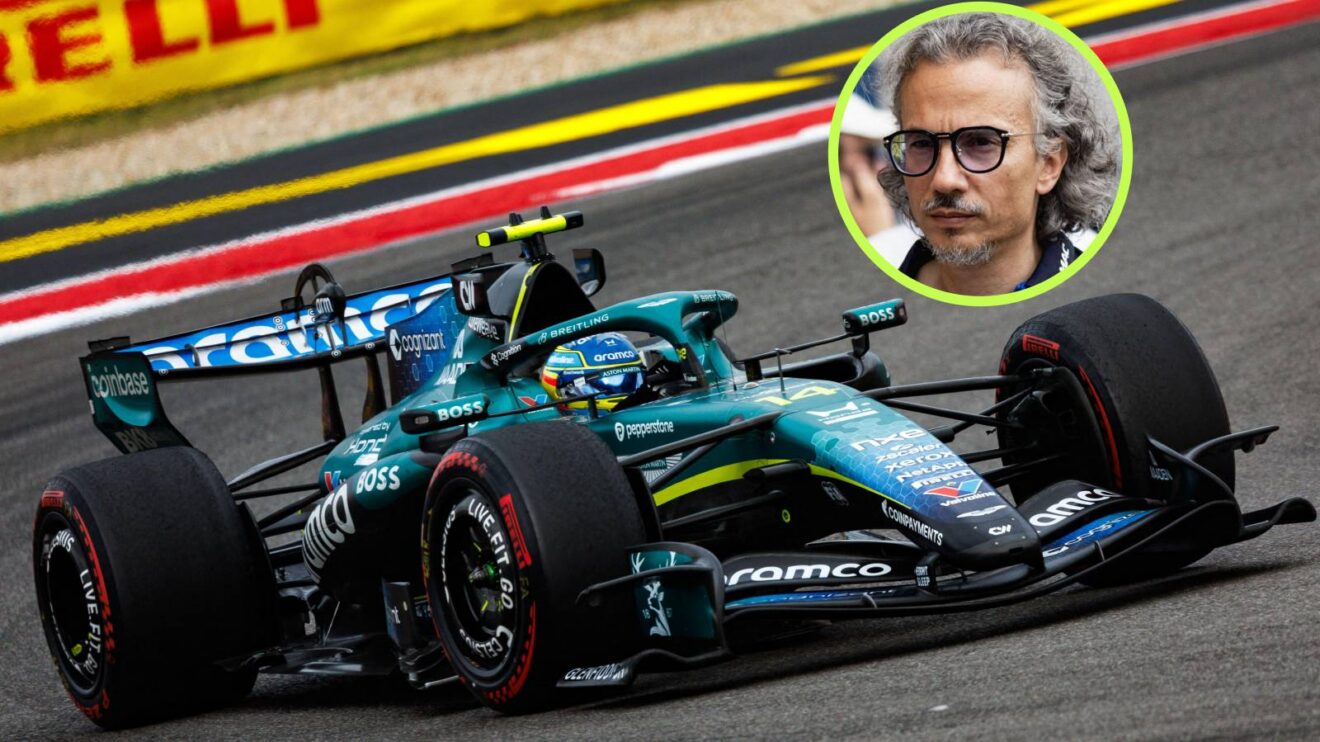
Laurent Mekies has said Red Bull Powertrains has no intent of becoming a supplier to more teams any time soon.
Laurent Mekies says Red Bull Powertrains is some way off being able to supply any other teams, amid speculation tenuously linking Aston Martin to the British engine manufacturer.
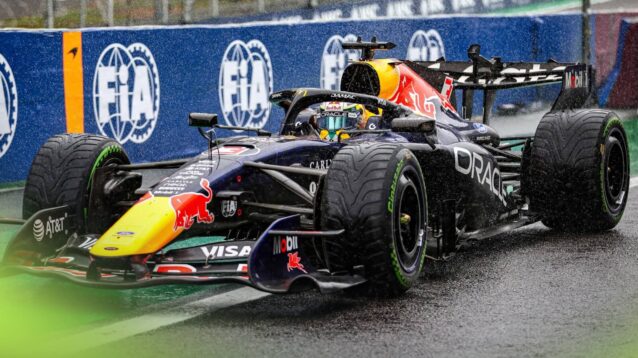
Red Bull Powertrains became a fully-fledged power unit manufacturer by joining the grid in 2026, supplying the eponymous team and sister squad Racing Bulls.
Laurent Mekies explains Red Bull Powertrains’ position amid Aston Martin engine speculation
With Red Bull Powertrains powering only one ‘customer’ squad, aside from its factory arrangement with Red Bull Racing, the manufacturer clearly has potential to become a supplier in its own right.
This is the arrangement Mercedes and Ferrari operate under: Mercedes High-Performance Powertrains [HPP] supplies Alpine, McLaren, and Williams, as well as the factory team, while Ferrari units also power the Cadillac and Haas cars.
While there are some drawbacks to this arrangement, by way of supplying competitors with potent equipment, the negatives are outweighed by the chance to recoup development and manufacturing costs through a customer arrangement, as well as greatly increasing the amount of data available for understanding.
This has been an area in which Honda, as well as Audi, has had to battle through in 2026, the first year of the new power unit regulations, with both manufacturers only supplying a single team – two cars on track, rather than the eight units that Mercedes has on track at any given event.
With RBPT successfully making it on the grid this year after a five-year development from the conception of the idea under former CEO Christian Horner and the late company owner, Dietrich Mateschitz, the engine has proven to be something of a revelation.
Indeed, the RBPT unit has been judged to be the best-performing internal combustion engine [ICE] of the five manufacturers, according to the FIA’s ADUO [Additional Development and Upgrade Opportunities] system, a remarkable success for the brand-new manufacturer.
Aston Martin engine speculation puts Honda partnership under scrutiny
Speculation has floated throughout the summer that Aston Martin owner, Lawrence Stroll, has kept one eye on alternative options to his current Honda supply deal, despite the exclusivity of the arrangement with the Japanese manufacturer.
While Honda has enjoyed plenty of success in recent years through the four-year engine freeze from 2022 to ’26, it has struggled in the first year of the new regulations after a late resumption of its engine activities meant it has been playing catch-up relative to its rivals.
With Honda holding its hands up over its relative lack of competitiveness, it’s become evident through the year that the power unit is the critical weakness of the Aston Martin package, as the AMR26 has proven capable of scoring points when the engine factor becomes less critical to lap time.
The speculation over Stroll’s exploration of alternative options points to the F1 2028 season as being the earliest possible moment at which a change could, in theory, be made, although sources have indicated that any communication with other manufacturers can be seen along the same lines as that of driver market exploration – a case of maintaining open lines of communication and understanding, rather than a specific targeting of a switch.
Suggestions made to PlanetF1.com over the summer primarily focused on Mercedes power units, with the Aston Martin squad having been powered by HPP engines for most of the last two decades through its previous iterations as Force India and Racing Point.
Mercedes has previously indicated a desire to reduce the number of customers it supplies by the time of the next engine rules cycle, which is set to begin in 2030.
But, with RBPT starting off so well, and as the top-performing engine without any external customers, the Milton Keynes-based manufacturer could also be seen as an alternative, and Stroll is understood to have made contact to explore possibilities – there is also the fact that team boss and managing technical partner, Adrian Newey, is hugely familiar with the RBPT project, as well as the senior leadership, from his near two decades working for Red Bull.
More on Red Bull
Laurent Mekies admits Red Bull’s start problems need major changes for 2027
New Max Verstappen engineer assessed after United States GP outing
Laurent Mekies rules out an imminent Red Bull Powertrains supply deal
However, sources have indicated that RBPT is averse to any sort of supply deal at this early stage: the focus remains on building synergy across the departments, rather than risk diluting focus by way of customer considerations at this point.
Asked about speculation regarding RBPT becoming a supplier to any other team in the near future, CEO Laurent Mekies said there’s no intent on changing the current arrangement any time soon.
“We got a lot of unwanted positive publicity about the performance of our engine, and that came with, certainly, attention from a lot of teams,” he said.
“Are we having any serious conversations with anyone to supply another team? No, we don’t feel we are ready for that.
“Is it set in stone for the next five years? No, because I don’t know what’s going to happen in the next five years.
“But for sure, for us, there is enough work, on our side, to improve the power unit, to improve its integration in the car, and to get to the level of the best competitors before considering being able to supply one more team on top of Racing Bulls.
“So nothing will change in the next year or so.”
Mike Krack backs Aston Martin’s long-term Honda partnership
Aston Martin chief trackside officer Mike Krack was also asked about speculation linking his squad with RBPT. While he didn’t deny the idea outright, he pointed to his confidence that, once Honda does come good, Aston Martin will remain powered by its engines.
“I can only say we have a partner, a long-term partner, which is Honda, that, by the way, has done its 500th race this weekend,” he said, “and I think we will be together also when we win our first race together.”
What is critical for Aston Martin is that it doesn’t fall into the same trap that McLaren did a decade ago. The Woking-based squad swapped from Mercedes to Honda power units in 2015, the second year of the hybrid regulations, with the Japanese manufacturer similarly struggling with reliability and power.
Three years of pain followed before McLaren cried enough to swap to a Renault customer supply in 2018, only for Honda to almost immediately come good as Red Bull picked up the supply: initially with the then-Toro Rosso squad, before the senior team swapped over in 2019 and became race winners during that season.
With Aston Martin now going through growing pains with Honda, the benefits of its exclusivity deal are yet to be felt, but history suggests patience will be key, and will eventually be rewarded, rather than Stroll’s team essentially carrying out years of testing, only to risk another team reaping the rewards of those efforts.
Red Bull’s works engine partnership offers a technical advantage
There’s also the technical advantage that having a factory arrangement with a manufacturer bestows upon a team.
While a customer team has little input into the overall design parameters of a power unit, and simply has to work its car design around the unit’s specifications as supplied by the manufacturer, a ‘works’ team can work with the supplier to help shape the final product.
It’s a key benefit that Red Bull is enjoying with its RBPT units this year, the first time in its two-decade history it has been able to explore the potential this brings, as technical director Pierre Waché explained to PlanetF1.com in Malaysia.
“The main aspect is that we can discuss compromise,” he said of working with a bespoke engine department.
“If you do that, we have that. The compromise between chassis and engine is taken into account; when they are not together, the compromise is already chosen – that is the main aspect.
“After the packaging, when you have a certain aspect, the lead time to achieve an engine and the lead time to have the chassis are completely separate.
“It’s more in terms of concept. This kind of thing we can discuss and make a direction change on both sides, compared to if you have somebody supplying you.
“I think it is a collaboration of the concept that is changing more than the packaging aspect.
“It can give you a little bit more because the reactivity is quicker, but this one depends on the capacity of the engine manufacturer or not; it’s more that the discussion from the start gives you a better compromise or, maybe it’s better to say, a choice of compromise. You are involved in the compromise.”
Read Next: Ferrari’s Q3 mystery leaves Fred Vasseur searching for answers