
Christian Horner recalls ‘Mercedes’ ban quip at Red Bull Powertrains
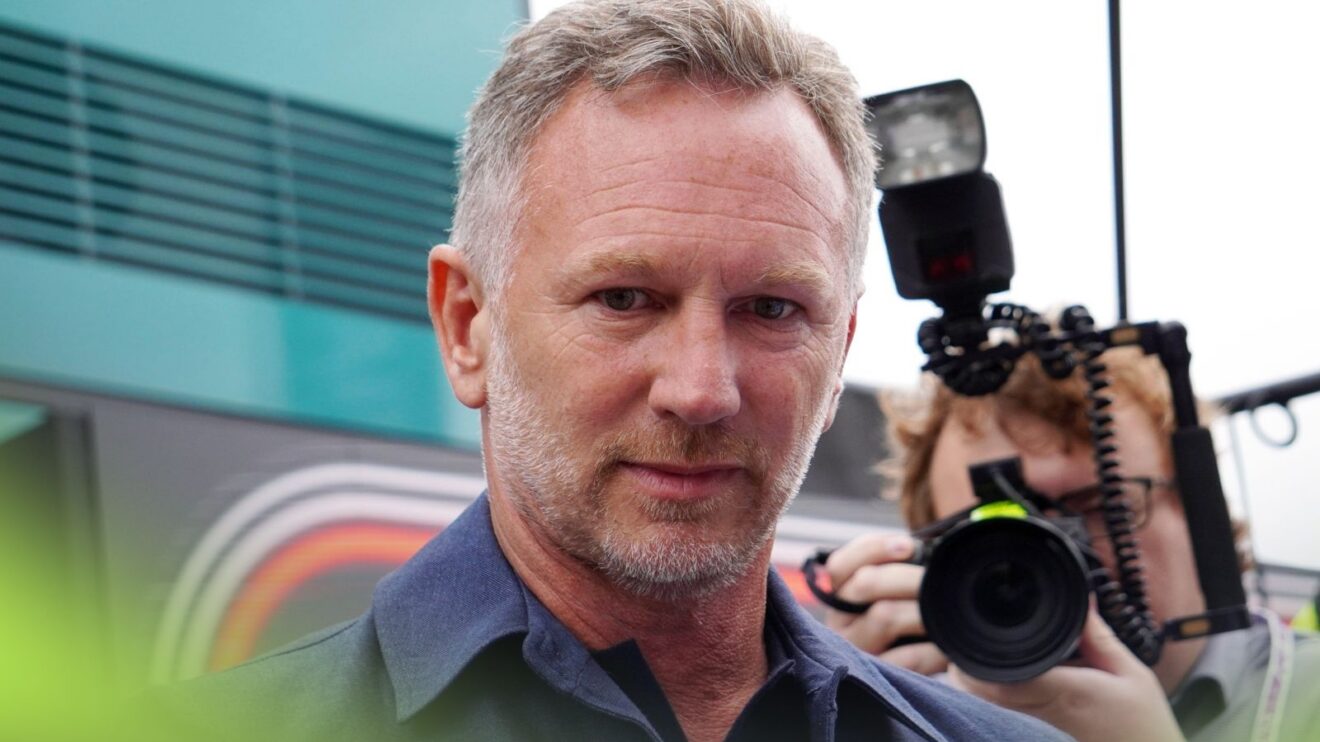
Former Red Bull F1 team boss Christian Horner
Having recruited heavily from down the road at Mercedes for its new Red Bull Powertrains start-up, Christian Horner quipped that the term “Mercedes” actually got banned, such was its regularity.
Instead, it was now known as ‘team B’, Horner offering a fascinating insight into the foundations of RBPT, why the Porsche deal did not come to be, and the resulting alliance with Ford.
Christian Horner had enough of hearing ‘Mercedes’
After Honda’s initial decision to withdraw from Formula 1, Red Bull took the plunge by signing up as a manufacturer in its own right for the new F1 2026 power unit regulations.
Horner, the Red Bull team boss at the time who oversaw RBPT’s establishment, previously told Channel 4 of 200 staff being poached from rivals Mercedes High Performance Powertrains (HPP) in Brixworth.
Perhaps it was inevitable then, the course that those early meetings took.
“There was too much talk of, well at Mercedes we did this, at Mercedes we did that, at Mercedes… So in the end, it got banned from meetings,” Horner, with a smile, told Autosport/Motorsport.com.
“We’re not going to mention Mercedes. It became team B [laughs].
“Within a year, we had our first prototype engine up and running, but I think there were still some nerves within the group, within Austria, that, really, could we produce a competitive engine.”
Red Bull initially held talks to align with Porsche, but a deal did not materialise.
“Then suddenly Porsche came as a possibility,” Horner continued, “and I think in Dietrich [Mateschitz’s] mind, by this stage, he wasn’t in great shape, but he saw the benefit of the Porsche brand, an amazing brand.
“A Red Bull-Porsche was really premium. They make engines, we don’t.
“And so we explored that. I went to Weissach and saw some of their facilities and recognised that we were miles ahead in terms of what we were doing in preparation for Formula 1 [compared with] where they were, and it felt like there were going to be a lot of compromises bringing these two entities together, with perhaps challenges in the direction in a 50-50 partnership.
“And so that deal didn’t go through in the end. But we needed a partner because it was a big burden. I was very conscious, in turning the Porsche deal down, that the whole engine [programme] was sitting on Red Bull’s hands.”
This was where Ford ultimately came in.
“Ford Motor Company were looking around Formula 1 at the time. I went to Detroit and had a meeting with Bill Ford and Jim Farley.
“Straightaway, you could see there was an enthusiasm for them to come.
“Having been involved in the team in its previous iteration [Jaguar], Bill Ford said to me, ‘We’re going to let you guys… You are the specialists, the learnings that we had from our last experiences, we don’t want to over-involve ourselves in your business. How can we help you? How can we support you?’
“So, that partnership got going in time for the ’23 season.”
More on Christian Horner from PlanetF1.com
Horner claims Max Verstappen ‘needs’ conversation impacting Red Bull still
Christian Horner opens up on Abu Dhabi 2021 F1 controversy
It did not take long for the Red Bull-Ford PU to win. Max Verstappen achieved that landmark with his Bahrain Grand Prix in Malaysia victory. He was P1 again next time out in Singapore.
Horner added: “It was arguably the biggest challenge I had in my time at Red Bull because it was from nothing. There was nothing there. It was a complete start-up.
“Therefore to see the milestones that that engine was achieving, and we built our own manufacturing facility, manufacturing pistons and machining cylinders out of solid blocks and all this kind of stuff, it was amazing, the commitment that went into that project.
“And it was scary as hell, because we had no experience of building engines, but bringing and backing the right talent, giving people the chance, the satisfaction of seeing that engine win in its 16th race, in its first year, I take great pride in that and tremendous pride in the people, what they have done and achieved.
“I think in many respects, it’s easy to underestimate the challenges of taking an engine from scratch, particularly within the most complex set of engine regulations in the history of the sport, and beating teams and manufacturers with so much more experience.”
Read next – Exclusive: Pierre Waché reveals how Red Bull turned the RB22 into a race winner