

F1 prepares Imola finale as Qatar and Abu Dhabi hang in the balance


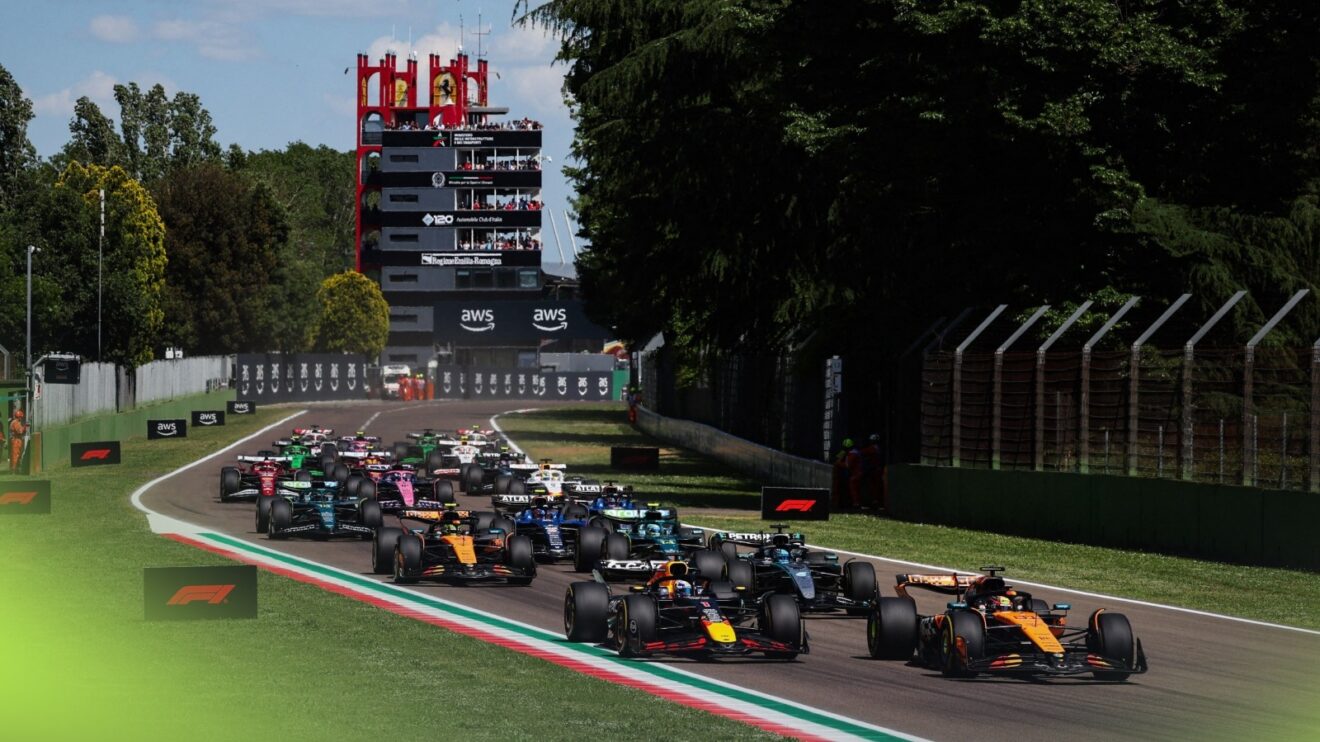
Formula One Management has a Plan B and Plan C for the F1 2026 finale.
Formula One Management is actively working to prepare Imola as an ‘oven-ready’ replacement for the F1 2026 season finale.
The sport’s commercial owners remain confident the year will conclude in Qatar and Abu Dhabi, but they are actively working on a Plan B, and Plan C, nonetheless.
F1 preparing Imola as Qatar and Abu Dhabi replacement
Qatar and Abu Dhabi are scheduled to host the final two rounds of the F1 2026 season on November 29 and December 6 respectively.
FOM has remained insistent that the two races will go ahead as planned despite conflict in the region clouding the back end of the calendar for much of the season.
The sport’s commercial boss, Stefano Domenicali, had flagged mid-September as the point at which a decision would need to be made on whether the events could proceed as planned.
That deadline has now been pushed back, with PlanetF1.com understanding that teams are only likely to be informed in the coming weeks – potentially not until mid- to late-October.
Should Qatar and Abu Dhabi be nonviable at that point, Plan B would be invoked.
Imola as Plan B and Plan C
That would see the two Middle Eastern events cancelled and the year end in Imola on December 6.
While timings are tight, a late October decision would afford about a month to formally sell tickets to the Imola event, where preparations are beginning as though the venue will host a race.
That includes the construction of grandstands, while FOM has booked hotels and made other logistical arrangements in case the event is needed.
It is not the only means by which Imola could end the year, with plans also understood to be in place to jet the F1 circus back to Europe post-Qatar should the situation in the region deteriorate at that point.
For the moment, however, FOM is insistent that Qatar and Abu Dhabi will go ahead as scheduled.
Travel advice from the UK Foreign Office, to which FOM has a direct line, coupled with advice from heads of state in the Middle East will inform whatever decision is made.
FOM has its own security team, as do some of the teams themselves, with third-party advisors also involved. The default stance is that, provided it is safe to do so, Qatar and Abu Dhabi will happen as planned. Should it not be safe, Imola will be ready and waiting.
While that is a pragmatic approach, it creates an awkward waiting brief for the sport, leaving key stakeholders to potentially react late should a change be made.
That impacts more than just the teams; the FIA, Pirelli and other suppliers, broadcasters, and more currently find themselves in limbo.
The full impact of an Imola F1 2026 finale
FOM is incentivised to travel to Qatar and Abu Dhabi owing to the contracts in place with the local promoters.
The two events are lucrative, with PlanetF1.com estimates indicating promoters in Abu Dhabi are on the hook for $49 million in 2026.
It’s thought Qatar’s contribution is more significant, potentially as high as $64 million this year, making for a combined $113 million across the two events.
FOM’s revenue has already taken a hit with the cancellation of the Saudi Arabian Grand Prix while the rescheduled Bahrain Grand Prix is thought to have come with a reduced hosting fee.
The impact of event cancellations stems beyond the loss of hosting fees, with corporate hospitality and freight also taking a hit.
Freight and licensing combine for around 20 per cent of Liberty’s annual F1 income and is estimated to contribute almost $70 million in revenue across Qatar and Abu Dhabi.
When combined with hosting fees, it creates a potential $180 million exposure.
That is reflected in Liberty Media’s second quarter financial results, the period during which both Bahrain and Saudi Arabian Grands Prix were scheduled to be held, with F1 revenue reaching just $764 million, down from $1.23 billion in the same period a year earlier.
While quarterly fluctuations are somewhat normal given the nature of the F1 calendar, and when hosting fees therefore fall due, it is the most significant quarterly drop the sport has experienced outside of 2020 under Liberty Media’s ownership.
Since acquiring Liberty Media in 2018, F1’s commercial revenue has risen by about $400 million per annum, and last year hit $3.87 billion.
Without the cancellation of Saudi Arabia and relocation of the Bahrain Grand Prix, that figure was expected to soar beyond $4 billion for the first time. Current estimates have reduced that to be far closer to last year’s figures.
As a consequence, there is strong financial motivation in ensuring the Qatar and Abu Dhabi events go ahead, provided safety considerations don’t force FOM’s hand.
That stance comes amidst a tide of cancellations and postponements of other events in the region, adding weight to concerns and speculation within the F1 paddock.
The World Rally Championship has cancelled its Saudi Arabian event, after Hyundai and Toyota announced they would not attend the rally. The Dubai 24 Hours, a staple of the endurance racing calendar, will instead be held in Kyalami, while there are suggestions the UAE Formula 4, and Formula Regional Middle East competitions have been ‘postponed’ until the end of 2027.
A potentially key consideration is how an Imola replacement would be funded.
It’s estimated an event costs FOM in the region of $15 million to put on, a figure that covers logistics, television production, and other fees (FIA, hospitality setup, etc).
Much of that could be covered by hospitality sales, though a hosting fee would naturally also be desirable to sweeten the pot.
The reprised Bahrain Grand Prix, held in Malaysia, retains backing from the original race promoter, meaning FOM softened the financial hit by bringing in a hosting fee while opening up associated revenue streams such as corporate hospitality.
However, it’s not expected that either Abu Dhabi or Qatar will back the replacement finale.
Imola was one of the lowest paying promoters when it was a regular calendar fixture, suggesting any fees FOM derives would be modest and perhaps as low as just $10 million.
When adding revenue for Paddock Club, F1 Experiences, and other streams, it’s plausible that Liberty Media to have revenues of just $25 million for an Imola event (and quite possibly less), a long way short of the $180 million should it travel to the Middle East.
The decision therefore ultimately comes down to how safe is acceptable, a decision based on input from the Foreign Office among others, with the upside potentially worth more $150 million.
Want to be the first to know exclusive information from the F1 paddock? Join our broadcast channel on WhatsApp to get the scoop on the latest developments from our team of accredited journalists.
You can also subscribe to the PlanetF1 YouTube channel for exclusive features, hear from our paddock journalists with stories from the heart of Formula 1 and much more!
Read Next: F1’s 2030 V8 engine: What we know about the next power unit rules