
Wolff email to Mercedes staff after Kimi Antonelli title win revealed
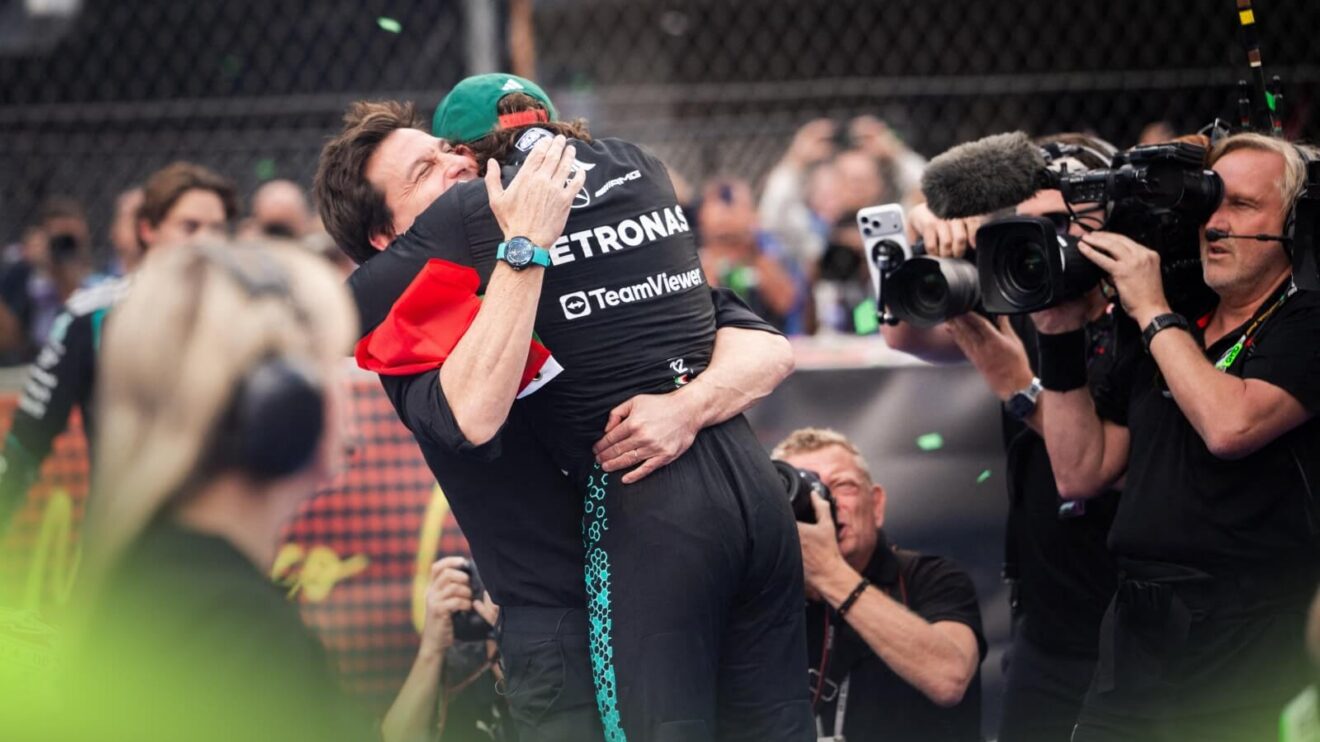
Toto Wolff's decision to promote Kimi Antonelli has paid dividends
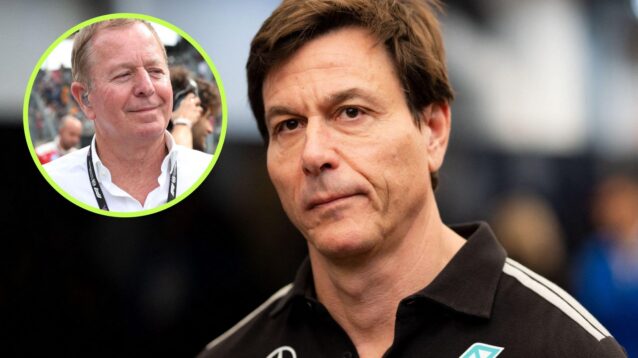
An email written by Mercedes boss Toto Wolff to the entire team following Kimi Antonelli’s historic Formula 1 title win last weekend has been revealed to the public.
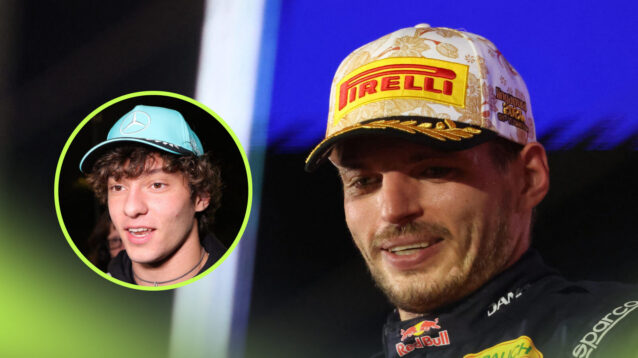
Antonelli, 20, was crowned F1’s youngest-ever world champion on Sunday in Mexico City, beating Sebastian Vettel’s previous record from 2010 by three years, twm months and 26 days.
Kimi Antonelli title prompts heartfelt Wolff email
There has been much external credit attributed to Wolff, given it was he who made the decision to promote Antonelli into the race seat Lewis Hamilton vacated in 2025.
But while he has acknowledged his involvement in Antonelli’s success, Wolff has also paid testament to the various other people that have helped the Italian on his road to the championship in a letter that was addressed to every Mercedes member.
“Success has many fathers. Failure is an orphan,” Wolff’s email, released by Mercedes Deputy Team Principal Bradley Lord on LinkedIn, began.
“That’s how the saying goes. But as I reflect on Kimi becoming World Champion, I feel that I have been given far too much credit for a story that belongs to so many people.
“I first met Kimi when he was just 11 years old. To see that little boy become a Formula 1 World Champion is something very special. But the journey from those early days in karting to where he stands today has been shaped by a number of extraordinary people, many of whom will never receive the recognition they deserve.
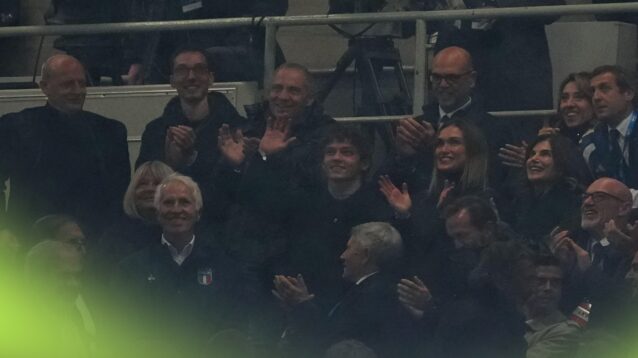
“It all starts with his parents, Marco and Veronica.
“Marco didn’t just introduce Kimi to racing. He taught him how to drive, how to understand a racing car and how to develop the skills that have made him the driver he is today. And Veronica was there at every single karting race, from the very beginning, providing the love, stability and support that a young boy needs when growing up in such a demanding environment.
“As a karting dad myself, I know how difficult it is to find the right balance between encouragement and tough love. Marco still lives that challenge day in, day out, and when it comes to knowing when to push Kimi and when to give him space, we are instinctively on the same page.
“But what they gave Kimi goes far beyond racing.
“His humility, integrity and loyalty, combined with his extraordinary ambition and determination, are qualities that came from home. We may have helped him develop those values further along the way, but the foundations were laid by his family. He couldn’t have asked for a better start in life.”
“Then there are the people who recognised and nurtured his talent in those early years.
“Dino Chiesa, who played such an important role in Kimi’s development in karting. Gwen Lagrue, who was the first person to tell me about a young driver called Kimi.
“Stephane Guerin, who was with Kimi in his years through the junior series. And of course Sergi, who has been at his side throughout, and a key foundation of Kimi’s growth and development beyond the scope of physical training.”
Wolff reserved a special mention for Antonelli’s esteemed race engineer Peter ‘Bono’ Bonnington, who was also the voice in Hamilton’s ear for his six titles with Mercedes.
“As Kimi progressed through the karting and junior formulas, more people helped shape him into the driver he would become.
“And within Mercedes, there is an entire organisation that deserves enormous credit.
“The engineers who introduced him to the technical machine that is a Formula One car, its intricacies in vehicle dynamics, aerodynamics and how to operate a driver-in-the-loop simulator, helping him adapt to the demands of a Formula 1 car and develop the technical feedback and consistency required at that level.
“And then the race engineering team around Bono and Shov [Andrew Shovlin, Mercedes Trackside Engineering Director], who took that foundation and helped Kimi make the transition into Formula 1 racing, working with him on car set-up, tyre management, race execution and understanding how to get the most out of himself and the car.
“Bono deserves a special mention. Fiercely ambitious and demanding, but always the calm voice in the briefing room and at the other end of the radio when things get tough in the car. Someone who knows when to push, when to challenge and when a young driver simply needs reassurance. That combination of high expectations and genuine care has been invaluable for Kimi, particularly through the difficult moments.
More on Kimi Antonelli’s maiden F1 title
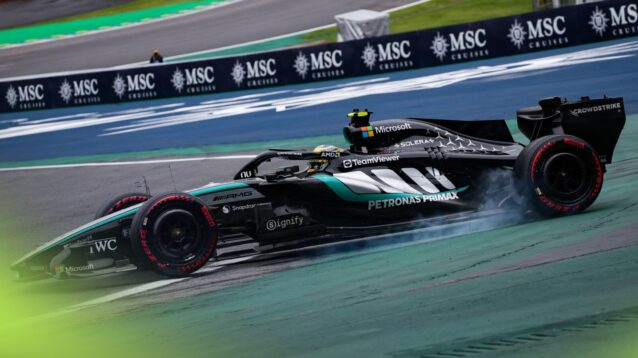
Meanwhile, Wolff credited Mercedes Technical Director James Alisson with designing a car in this season’s W17 that has allowed Antonelli to express his talent.
“I want to single out James Allison in particular,” he said.
“James has always been something of a sceptic when it comes to drivers. As an engineer, he naturally believes that the car is the most important part of the equation, and he isn’t easily carried away by the excitement surrounding a Formula One driver in general. But when I came to him with the idea of putting Kimi in the car, he had my back. He trusted my judgement, supported the decision and made sure that the technical organisation gave Kimi everything he needed to succeed.
“That meant an enormous amount to me. Because the most valuable support doesn’t necessarily come from people who agree with you on everything, but from those who challenge your thinking and then stand firmly alongside you when a decision has been made.
“Our marketing and communications team, under the leadership of my Deputy Team Principal Bradley, his Head of Communications Clare [Robertson], who makes sure every competing marketing, comms and engineering demand is balanced to always prioritise performance, and particularly Rosa [Herrero Venegas, Senior Public Relations Manager], who brought all her experience of working with Lewis to help Kimi understand the responsibilities that come with being a Mercedes Formula 1 driver. Not just how to deal with the media, but how to handle the attention, the expectations and the pressure while remaining himself.
“And of course, the hundreds of people at Brackley and Brixworth whose work gives our drivers the opportunity to succeed. The people who design, build and develop the car and engine, who work through the difficult days, and who never stop pushing to make us better.”
Wolff recounted how there was severe scepticism over his decision to pick Antonelli as the successor to seven-time F1 champion Hamilton, which grew louder when he crashed on his FP1 debut at Monza in 2024 and again during his rookie campaign.
“I also want to recognise the many other people who had the courage to back a decision that was anything but obvious,” he continued.
“Replacing Lewis Hamilton, the most successful driver in Formula 1 history and arguably its most culturally significant figure, with a teenager was never going to be an easy decision.
“There was plenty of criticism, both from within the sport and outside it, about putting an 18-year-old into a Mercedes. And when Kimi went through a difficult period, with several races without scoring points, those doubts understandably grew louder.
“But we had never expected his first year in Formula 1 to be without setbacks. Quite the opposite. We knew there would be difficult weekends, mistakes and moments when people would question our judgement. That was always part of the journey we had committed to.
“You cannot ask a young driver to learn and then punish him for making mistakes. The important thing was never where Kimi stood after one difficult race, but where he could be in the years to come.”
Despite George Russell encountering a challenging season on the opposite side of the garage, Wolff highlighted how it was the Briton’s impressive speed and maturity in previous years that enabled him to take the gamble on placing a rookie in the other seat.
“And one of the reasons we could take that leap was George,” he underlined.
“This wasn’t George’s year. He and the car weren’t always the best of friends, and I know how frustrating that has been for him. But we could only take the risk of putting Kimi in the car because we knew we already had a champion and a number one driver in George. Someone with the speed, experience and leadership to carry the team, and the strength of character to embrace a young teammate with enormous potential. That gave us the confidence to make a bold decision.”
“That confidence extended beyond the racing team. Our Board of Directors at Mercedes Grand Prix trusted our judgement and supported the decision from the beginning. And Ola Källenius, my partner throughout so many years, deserves a special mention. During the difficult periods, when results weren’t where we wanted them to be, he never lost faith in our organisation or in the people leading it. And when I spoke to him about putting Kimi in the car, there was no hesitation.
“The same goes for our partners and sponsors. I spoke to many of them very early about what we wanted to do. They understood that this wasn’t simply about replacing one driver with another. It was about starting a new chapter, taking a calculated risk and building something together.
“Many of them embraced that vision with genuine enthusiasm. They chose to believe in the journey before knowing where it would lead. And that meant a great deal to us, particularly at a time when not everyone was prepared to come along.
“And on a personal level, I want to thank my wife Susie. She knows better than anyone what this job demands, and she understands motorsport and the pressures that come with it. When I was weighing up the decision to put Kimi in the car, she encouraged me to trust my instincts and have the courage to follow through on what I believed was right. Having someone by your side who understands both the professional consequences and the personal weight of such decisions makes an enormous difference.
“And finally, there is Kimi himself.
“Because however much support, opportunity and guidance you give a young driver, nobody can do the driving for him.
“Nobody can give him the determination to keep going after a difficult weekend, the courage to get back into the car after making a mistake, or the resilience to deal with the extraordinary pressure that comes with driving for Mercedes.
“Those qualities have to come from within.
“Kimi has made mistakes. We all have. But he has never stopped learning, never stopped listening and never stopped believing in what he could achieve. And through it all, he has remained the same fundamentally decent young man I met all those years ago.
“So when people tell me that I deserve credit for discovering Kimi or making him World Champion, I know how many others have contributed far more than they will ever be recognised for.
“Yes, I believed in him. And yes, at a certain point I had to make a decision and stand by it.
“But believing in someone is much easier when so many good people have already given you every reason to believe.
“This is not my success story. It is ours.
“And I couldn’t be prouder of everyone who has been part of it.”
Read next: Toto Wolff calls out ‘endless radio moaners’ in new Kimi Antonelli claim