
George Russell backs hybrid power as F1 prepares for V8 engine return
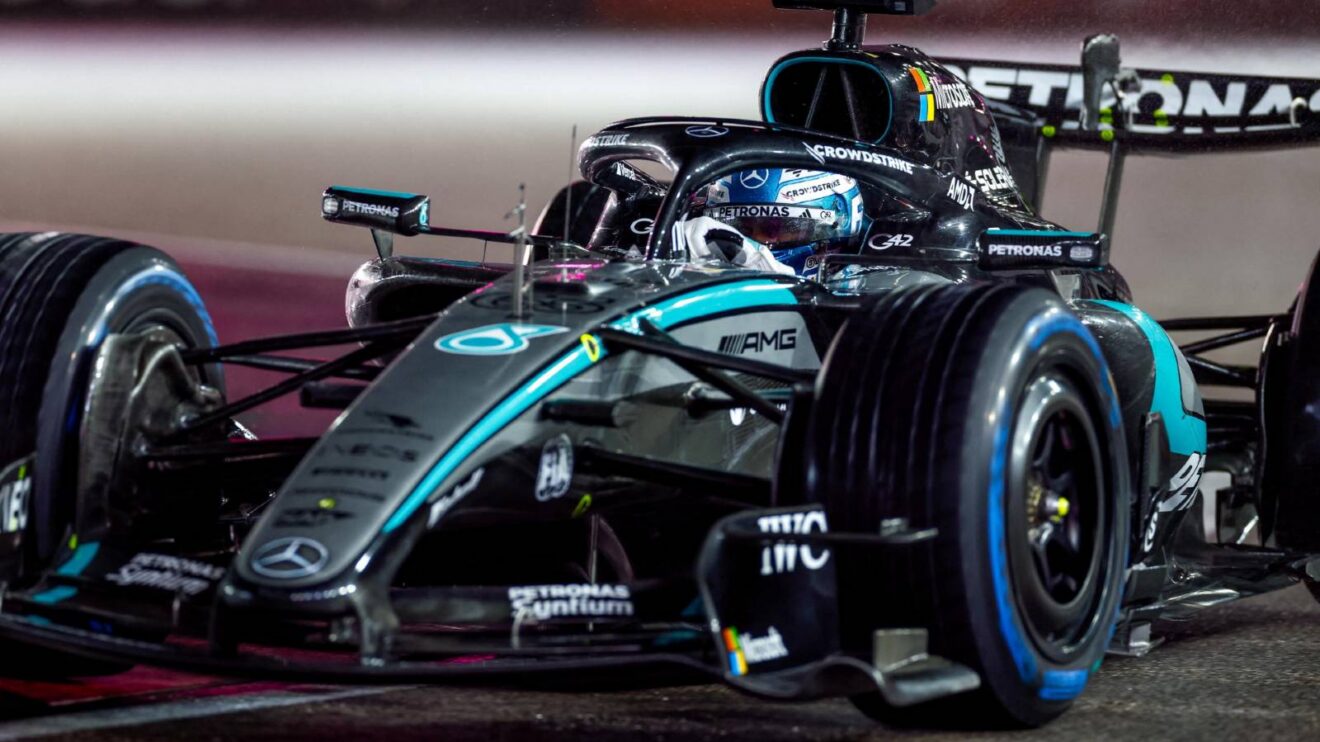
George Russell believes Formula 1 must retain some electrical power in its next engine formula, even as the sport prepares to ditch its current V6 hybrids...
With the V8 plans for the F1 2030 season confirmed, George Russell believes the next power units should retain an element of hybrid power output.
The FIA has revealed a unanimous agreement in principle has now been reached among shareholders for the return of V8 engines.
George Russell explains why F1’s next V8 engines still need hybrid power
FIA President Mohammed Ben Sulayem spearheaded the expedited switch away from the current V6 hybrids after their introduction resulted in fundamental changes in driver behaviour as well as a lukewarm reaction from drivers and fans.
The exact details of the new engines were briefly confirmed via a press release from the FIA on social media, before being withdrawn moments later. Official confirmation of the new power unit framework has since arrived.
The broad strokes of the engine that will be introduced in 2030, a year ahead of the original plan for the next cycle, will see the sport switch to a turbocharged V8, with a small hybrid element, mooted to be around 10 per cent of the overall power output.
The current engines are currently at a near 50/50 split between the thermal engine, ie. internal combustion, and the MGU-K, ie. the electrical side, but the methods for harvesting the energy for deployment by the MGU-K have resulted in the drivers being unable to attack corners due to the need to preserve energy for the straights.
With sustainable fuels now in use in Formula 1, the prospect of a fully naturally aspirated engine such as the long-extinct V10 briefly appeared to be a prospect for the next cycle but, with no road relevance as a design or utilisation of technologies that benefit the automotive sector, such a prospect quickly became apparent as a pipe dream.
The compromises needed for the next formula encompass considerations for road relevance, given F1 provides a perfect test platform for technologies, alongside those of noise pollution, efficiency, power output, and cost.
The favoured path balances all of these considerations, with a turbocharged V8 platform nothing new to Formula 1, having last been used under the 2.4-litre regulations between 2006 and ’13.
Many of the drivers and some of the team bosses have shared their thoughts on the returning V8s.
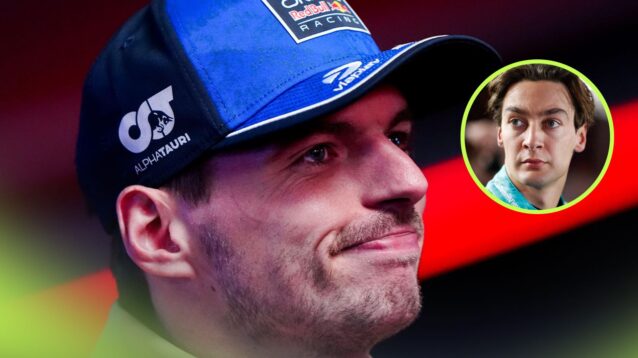
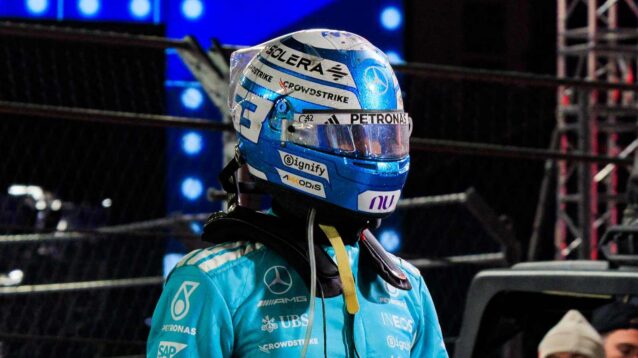
Mercedes’ George Russell was one, with the British driver having been one of the voices of positivity early in the season; coinciding with the time period when he and Mercedes hit the ground running as the early season favourites.
Russell believes that keeping the hybrid element, even reduced from the current percentage, is imperative to maintain overall performance levels.
“The purists will say take away all electrical power, but I think when you look at how a lot of these cars have evolved in recent years, and the power output from some of these electric motors these days, if Formula 1 is going to continue to be the fastest race cars on the planet, you need to have it. That’s just the reality,” he said on Wednesday in Las Vegas.
“You need to have some sort of hybrid because the power you get, you can’t reproduce that solely on internal combustion.
“So I think, if we go back to V8s, having some sort of electrical power as well to give you that extra 400, 500, 600 kilowatts to bring the cars to 1000-plus horsepower, that’s what we want.
“I think it’s worth remembering as well, actually, the final V8 era, it sounded awesome, but the cars weren’t actually very fast, and I don’t think many people realise that.”
McLaren’s Zak Brown revealed, ahead of confirmation, that an “agreement in principle” had been reached regarding the change for 2030. The final details were being discussed.
“Everyone is very excited. Now it’s about dotting the i’s and crossing the t’s,” he said on Thursday.
“If you look at what the FIA has done, they’ve announced full-time stewards, so they are very proactive; they move quickly, they do what they say they’re going to do.
“The sport has never been healthier; the competition is amazing. I’ve got a lot of confidence in the future of the sport. Where it is today is great.
“I’m excited for the new engines; everyone will be. But there’s a lot more also going on to continue to evolve the sport. Between the FIA and F1, they’re doing a great job.”
Sitting alongside Brown in the FIA press conference was Alpine’s Flavio Briatore.
“It is not signed, but it looks like everybody is agreed: 2030, V8s.
“I’m very happy; it’s the right way to go. We need an engine with a lot of noise, a simple engine, and we need racing with that.
“In the end, I believe what is best is for the spectator, for everybody, is a very simple engine, a lot of noise.”
This change of course has also had an effect on the power unit manufacturers. For Cadillac, the General Motors’ engine programme will now commence a year later than had been the original intent.
Originally, the current engine cycle was planned to run until the end of 2030 and, with GM’s V6 hybrid intended for a ’29 debut, would have given Cadillac two years of competition as a factory effort, gleaning some reward for the effort of developing a V6 hybrid.
Now, the V8 plans mean that Cadillac is set to remain a Ferrari customer in 2029, with GM entering in ’30 to coincide with the arrival of the V8.
“We’re glad to see the series coming together under the leadership of the FIA to set that direction for a V8 in 2030,” said Cadillac CEO Dan Towriss.
“We’re super happy with that. Our new power unit facility opens up on December 18th.
“So as a new manufacturer coming into the sport, the direction is obviously very helpful. We’re excited about the direction, and the crew is hard at work, getting ready.”
With positivity in the air about the changes, some of the older drivers, such as Fernando Alonso and Sergio Perez, opted against celebration, due to their expectation that they will not be actively racing in F1 by the time the V8s arrive.
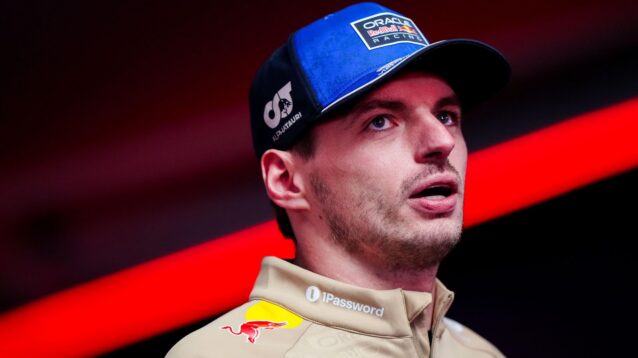
But another driver who says the sport, as a whole, is making the right choice is Max Verstappen, with the four-time F1 World Champion one of the most vocal critics of the current power units when they first rolled out as a reality earlier this year.
With the Dutch driver known for being a ‘purist’, such as Russell spoke about, Verstappen said he understands why there is a need for compromise on the architecture and design even if, in an ideal hypothetical, a screaming V10 would be his dream.
“Probably, at some tracks, you [wouldn’t be] allowed to race because it would be too loud,” he said.
“Because if it’s up to me, of course, I would take the turbo, and I would get rid of it. Maybe you could use it as a push-to-pass, but not too much of the battery side.
“Fuel consumption, of course, goes up a lot without a turbo, so you would need a bigger tank if you don’t want to do refuelling in the races. So, of course, I understand that you would want to have a turbo.
“If it were fully up to me, of course you’d go back to, like, a V10 or whatever. That sounds even better, but I know that that’s not something realistic.
“This is good. This is for sure in the right direction.”
Read Next: Max Verstappen issues ‘rather stay at home’ verdict on F1 Middle East finale