
‘Mercedes sent a message to the paddock’ with Qatar front row lock-out
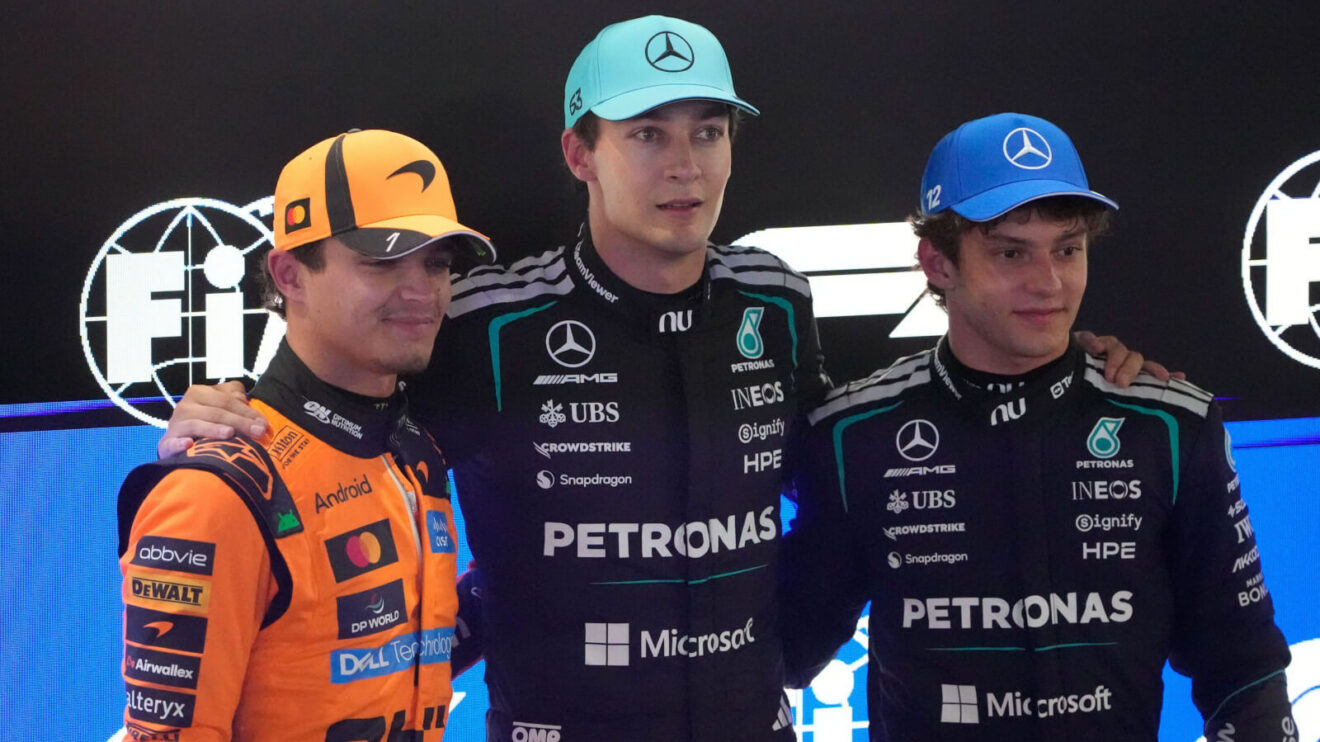
Lando Norris lost out to Mercedes in Qatar quali
McLaren team principal Andrea Stella says Mercedes sent a “message” to its rivals with its blistering pace in qualifying at the Qatar Grand Prix.
George Russell claimed pole position ahead of Kimi Antonelli, with the Briton almost half a second ahead of the nearest non-Mercedes driver, Lando Norris.
Andrea Stella reveals why Mercedes’ Qatar pace has left F1 rivals on alert
Mercedes has had the measure of its rivals throughout the Qatar Grand Prix weekend, as it locked down the 1-2 in all three practices before doing so again in qualifying.
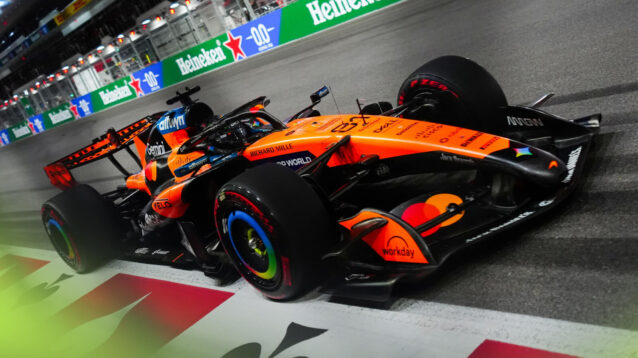
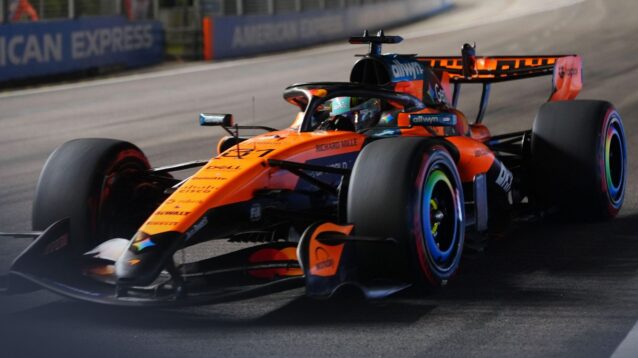
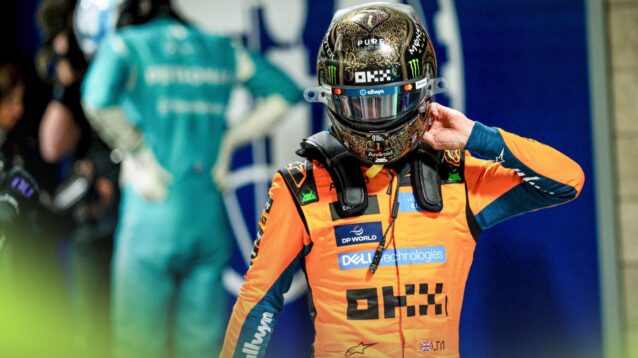
Russell claimed pole position, a tenth up on Antonelli, while the McLarens of Norris and Oscar Piastri were roughly half a second slower than the Briton.
But while all four cars are powered by Mercedes HPP power units, it was downforce generated by the Mercedes W17 that will have been a warning to the Brackley squad’s rivals.
Mercedes has already secured this year’s double, with Antonelli winning the Drivers’ title in Mexico City before the team wrapped up the Constructors’ crown in Austin.
Stella says Mercedes’ rivals will be taking a long hard look at any and all photographs they can get of the W17 to unwrap its secrets ahead of the F1 2027 championship.
F1 2026: The season’s winners and losers
The results of the F1 2026 championship
The F1 2026 Drivers’ and Constructors’ Championship standings
“Mercedes sent a message to the paddock,” the McLaren team principal told PlanetF1.com and other accredited media.
“While they might have struggled with the exploitation of the peak potential that their car seems in condition to realise in circuits of this kind, or when you can control through setup the window in which you operate the car, then the level of downforce that they seem to be able to generate looks like a step ahead of anybody else.
“So I’m sure everyone will take a look, even with renewed interest, at the photographs that every team takes of each other, and look at what details in terms of aerodynamic design may be relevant in order to be able to achieve this performance.
“There’s also one more dimension for those of you who are technically interested.
“You may remember that when we visited Malaysia, there were some comments not only by McLaren, that you know, like some teams were not able to explain why the car wasn’t performing very well. There’s some corners in Malaysia which are not very different to the corners that we have here.
“But there’s some other aspects which affect aerodynamics that are very different between here and Malaysia. I’m not going to tell you what, but you can come to me with some hypotheses, and privately I may say whether that’s right or wrong.”
More on McLaren
Stella, though, went on to explain that one of those aspects was the tarmac, the difference between a rough or smooth surface, and it played a big role in helping Mercedes unlock the full potential of the W17.
“There’s elements of variability which they don’t have to do only with layout, but definitely there seems to be sensitivity to the tarmac, which one would not think,” he said.
“In reality, once you’ve started to look at how the car operates from an aerodynamic point of view, you understand that this can be a relevant factor.
“Also let me say that this is part of having aerodynamics that is more and more sophisticated. Like you extract more and more, which also means that you get more and more sensitive to some boundary conditions in the way you operate,
“So not necessarily a surprise when you get into the details, but certainly one more dimension to take into account. And obviously, the challenge becomes: Can I do a car that is good in Malaysia and here?”
Read next: Lando Norris makes Qatar complaint after two-by-two qualifying