
Max Verstappen telemetry data reveals clever tricks after Las Vegas GP win
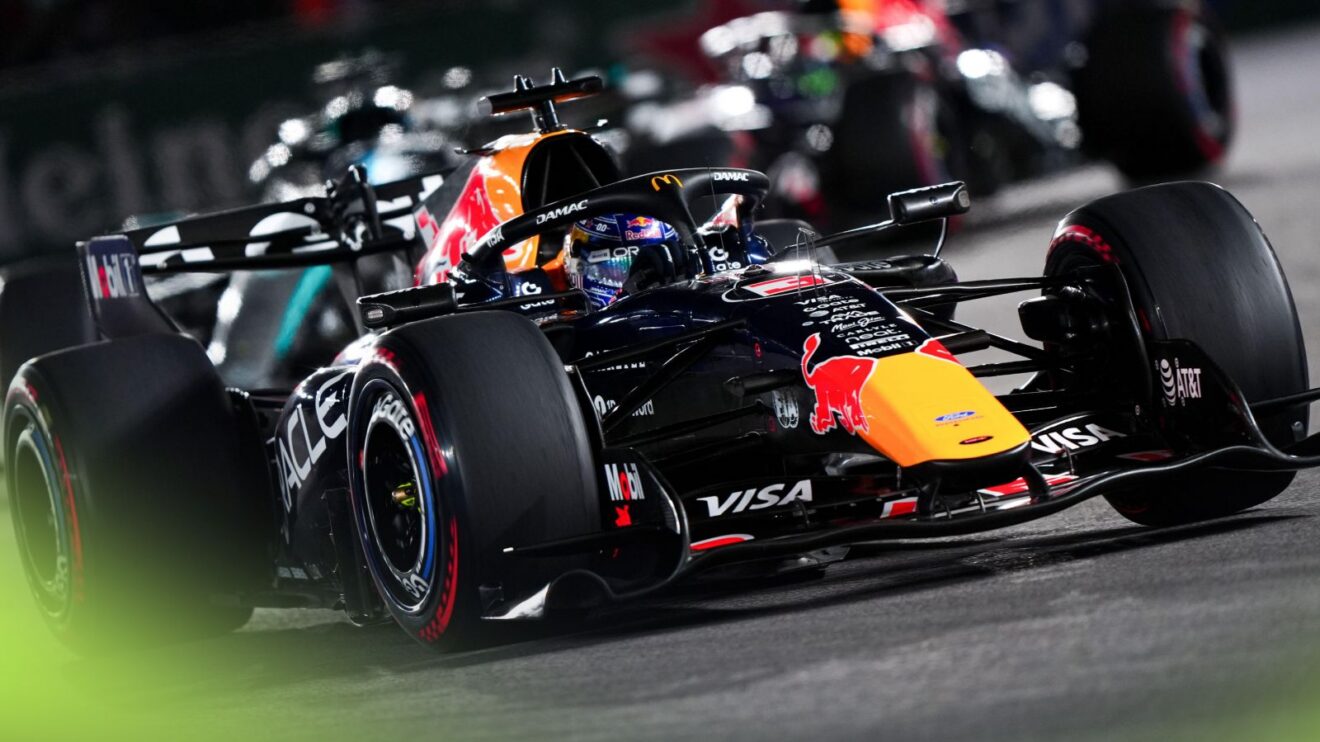
Max Verstappen in action for Red Bull at the 2026 Las Vegas Grand Prix
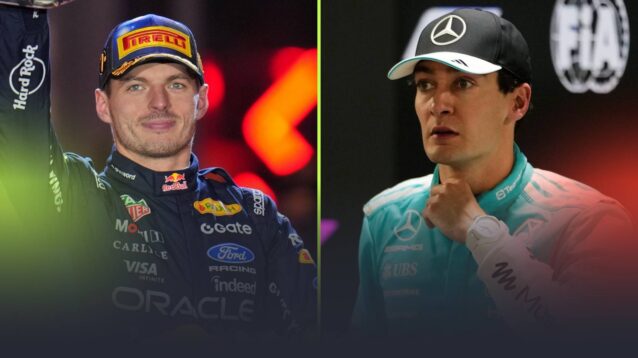
Max Verstappen drove an astonishing race in Las Vegas, claiming a well-earned victory in a Grand Prix where three different drivers tried many different ways to beat him—and none succeeded.
Using telemetry data, we uncover the details behind the deployment chess match and how Max consistently outsmarted everyone else.
Max Verstappen masterclass: Nobody could beat Max in the deployment game
Three different drivers tried distinct approaches to beat Verstappen in the race: first Russell before and after the Safety Car, then briefly Norris, and finally Antonelli. Each tried something different, yet every single time Verstappen was a step ahead with a ready answer.
Let’s start at the beginning: the race start itself was surprisingly calm, unexpected after the FP3 drama between Russell and Max. The Red Bull driver got away cleanly and held onto the lead.
During those opening laps, Hadjar stepped up and drove very strongly, battling consistently with George for P2 and giving Max a brief cushion. At one point Hadjar even tried to challenge for P1, but the team intervened and instructed him to hold station.
Although that wouldn’t have dramatically altered the final outcome, Red Bull may have missed a trick here: as we saw later in the race, the fastest way to make progress was constantly using the slipstream of the car ahead alongside overtake deployment mode.
What made this race so unusual was that the cold track prevented tyres from overheating in dirty air—unlike at other circuits where drivers regularly have to drop back to cool their tyres.
That effect kept the top ten bunched closely together, generating a massive number of overtakes throughout the Grand Prix.
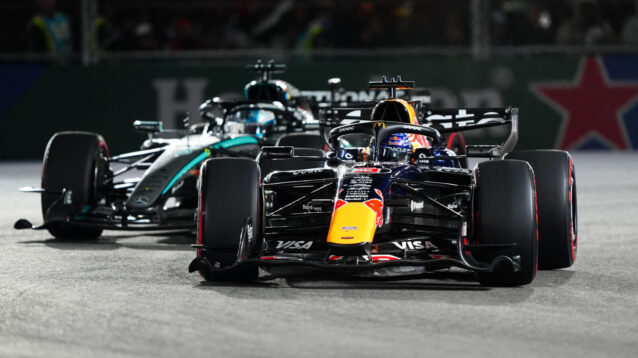
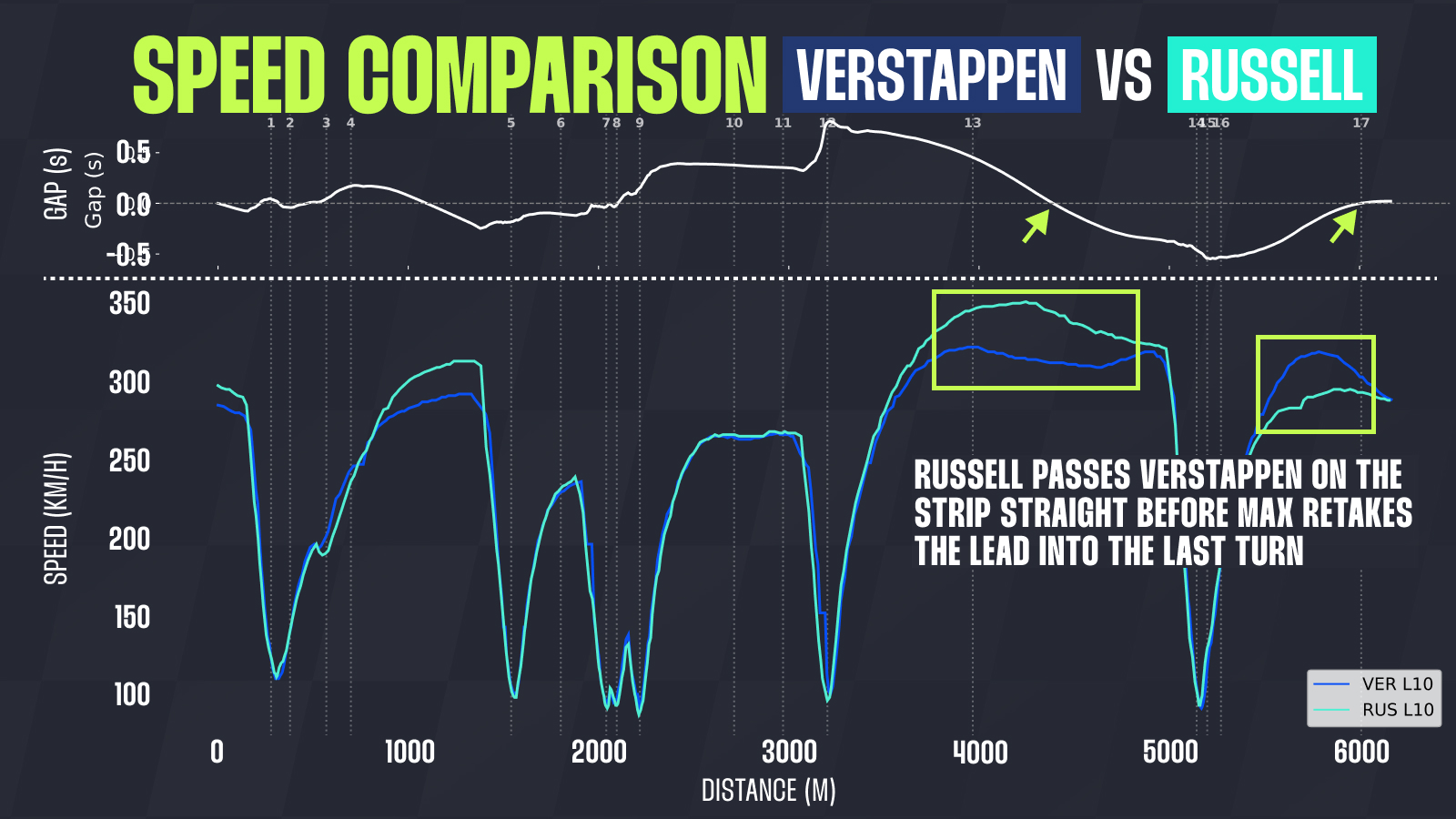
On Lap 10, Russell moved into the lead for the first time—at least momentarily—showing us how Verstappen approached this deployment battle.
Russell would pass Verstappen with a big speed advantage down the Strip straight, while Max tucked into George’s slipstream along the second half of the straight to conserve battery. Entering Turn 14, he would always show a nose in the mirrors to distract the Mercedes driver for a moment.
With a fuller battery than his rival, Max carried far better drive out of Turn 16, reclaimed the lead at Turn 17, and held it through the remainder of the lap, as illustrated in the graph below.
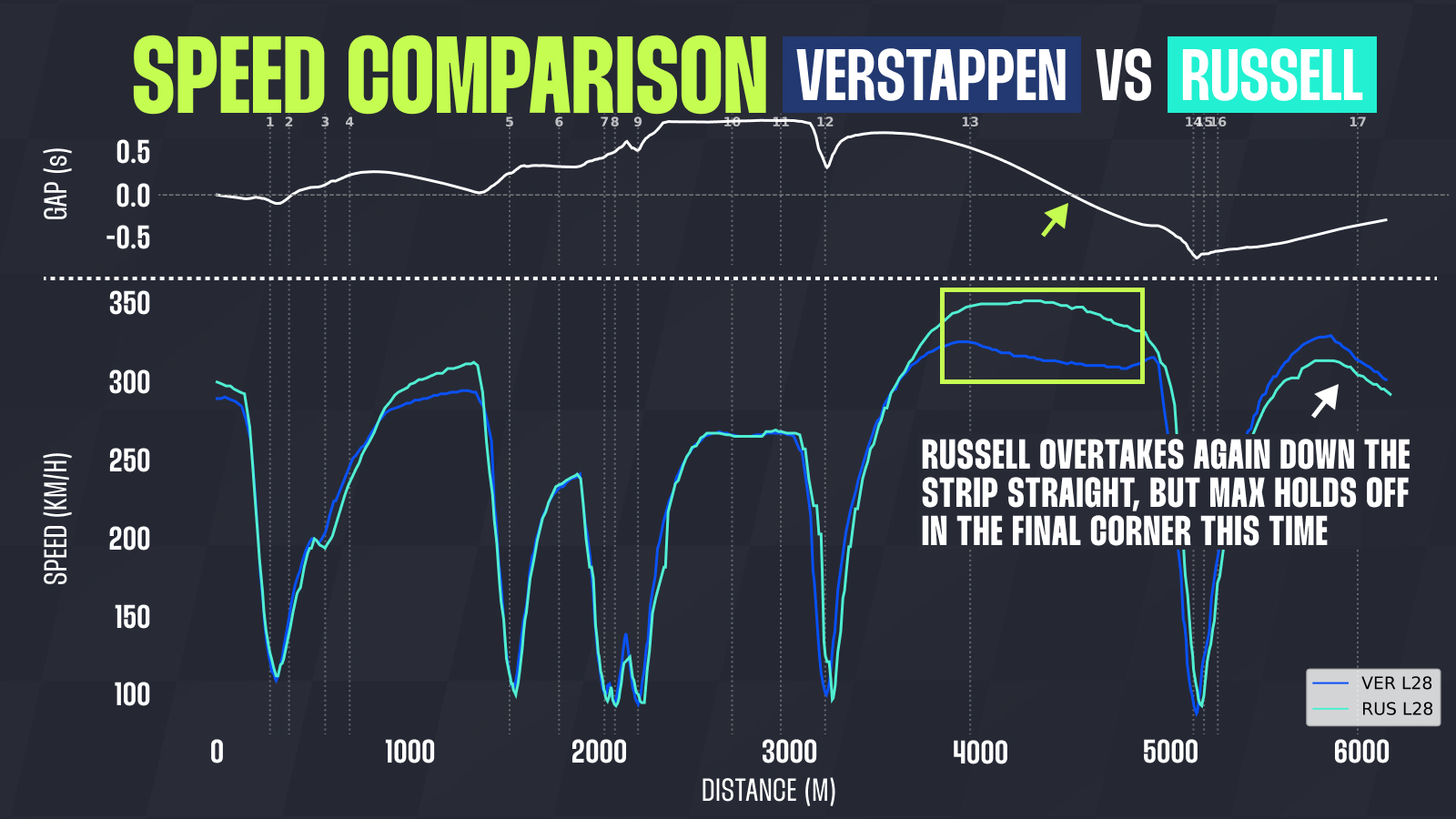
However, the real chess match in Las Vegas began after the Safety Car, once everyone who started on softs switched to mediums. Knowing he had shown his hand, the Dutchman pivoted to a new approach.
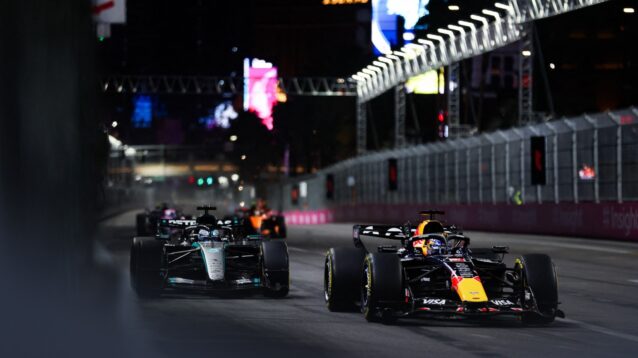
On Lap 28, Russell made his move down the Strip straight to take the lead, but this time Max didn’t strike back at Turn 17. Instead, he bided his time, applied pressure into Turn 1 to force George onto a defensive line, and then unleashed heavier deployment through Turn 3 to sweep around the outside and retake the advantage. The exact same sequence played out on Lap 31.
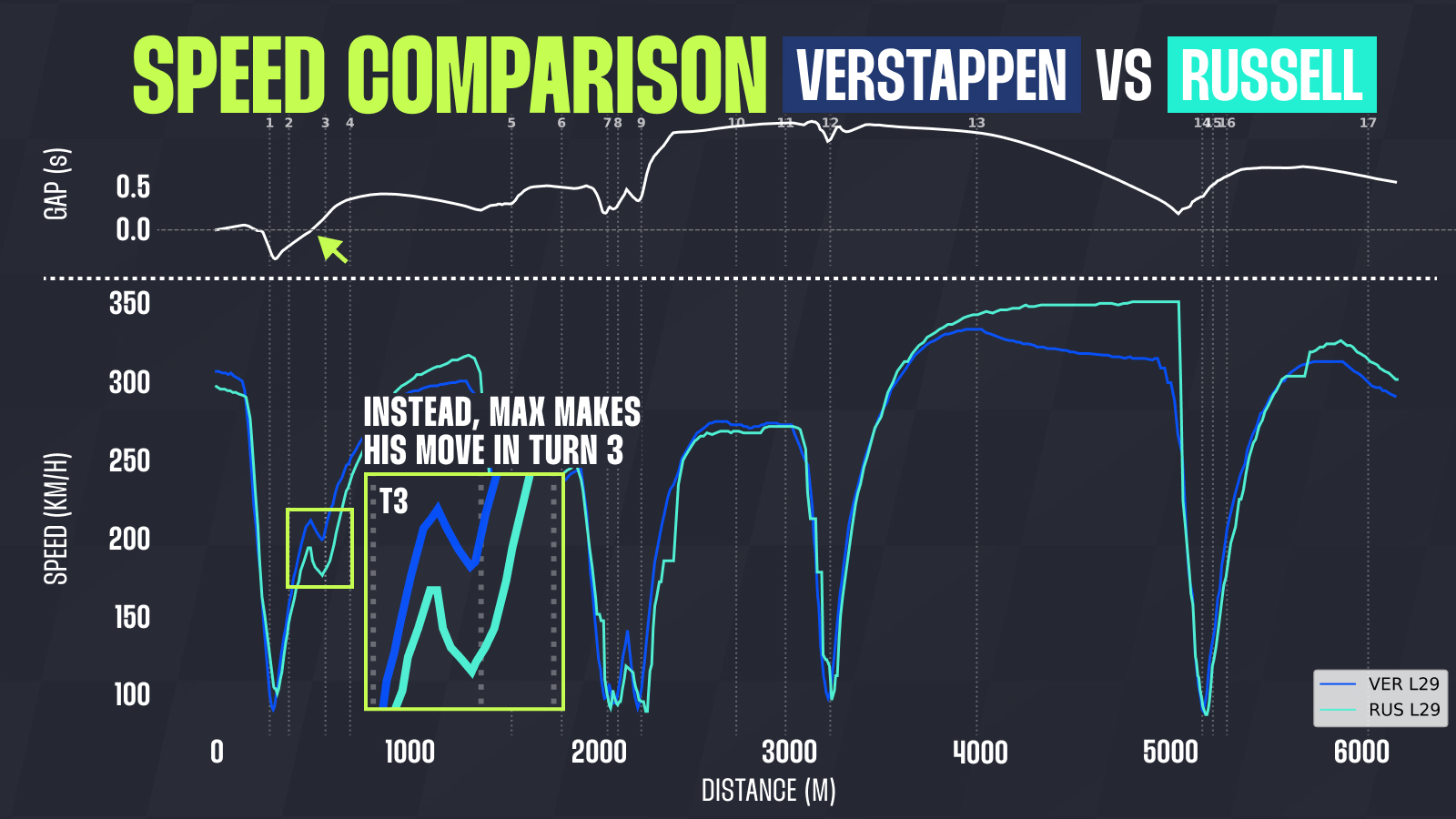
On Lap 37, the battle took on another dimension—only this time it was George who changed tactics. He chose not to attack down the Strip straight, opting instead for a Turn 17 move just like Verstappen had used earlier. Naturally, Max had an answer: he shifted tactics again, declining to attack at Turn 3 (telemetry shows him deliberately lifting more and taking a cleaner line), deploying his battery along the straight between Turns 4 and 5, and reclaiming the lead once more.
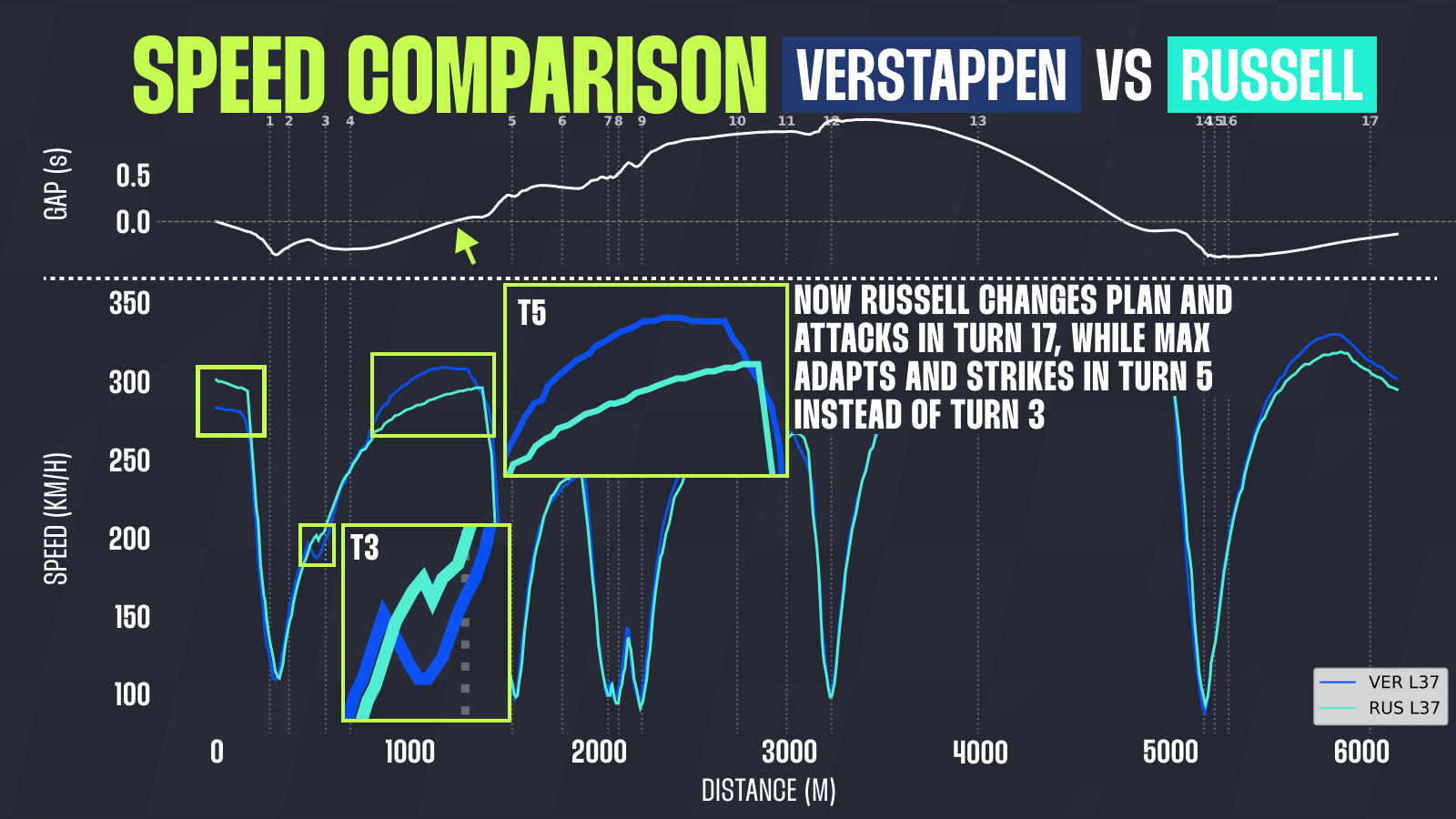
Aware that Russell had switched up his attack on the previous lap and that Mercedes now understood his defensive playbook, Max radioed his team to prepare a fresh plan specifically for the final lap. Depending on how Max defended, he crossed the start-finish line sometimes first and sometimes second during those tight exchanges.
Meanwhile, Antonelli entered the fray after taking P2 from his teammate, attempting to make his own move.
Unsurprisingly, Max pulled out his earlier trick against Russell—repassing through the final corner—to fend off the Italian on Lap 41. The exact same scenario and tactic repeated on Laps 43, 44, 46, and 48. Max always had an answer.
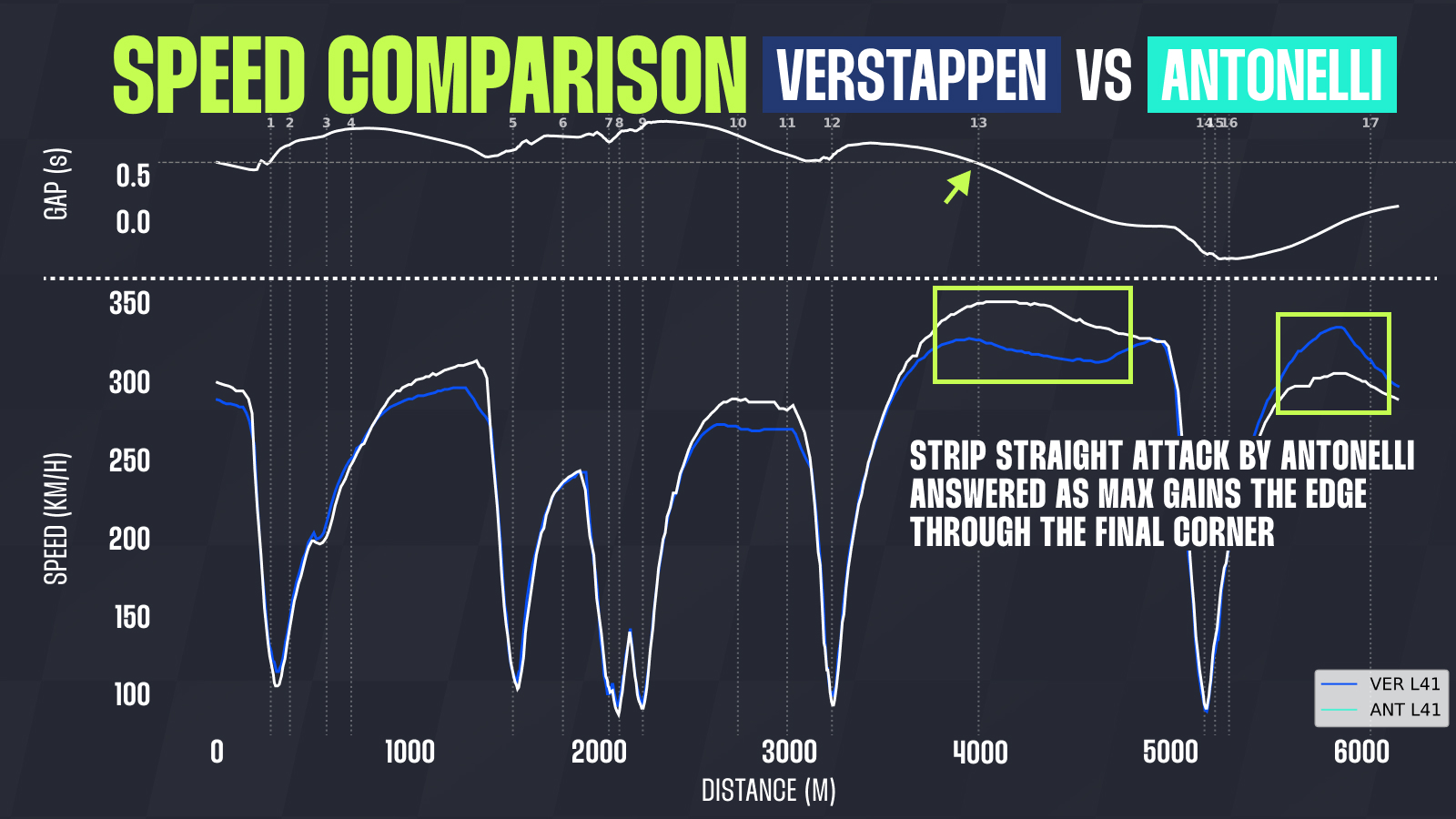
At that stage, everyone’s eyes were glued to the main straight, as Max regularly reclaimed P1 right there, with thousandths of a second deciding who led across the line—sometimes Max, sometimes Kimi.
For the final lap, however, the Italian decided to completely alter his approach. On Lap 49, he chose not to pass Max down the Strip straight, lifting off the throttle instead, as he explained after the race. Unfortunately, that disrupted his ERS algorithm, leaving Kimi suddenly sluggish through Turn 17 and across Turns 1, 2, and 3 on the final tour. As a result, he lost ground to both McLaren drivers behind, while Verstappen cruised home unchallenged to take the win.
Quite simply, a masterclass from the four-time World Champion.
Read next: Winners and losers from the 2026 Las Vegas Grand Prix