

Why Adrian Newey’s AMR26 suspension choice could prove critical for Aston Martin
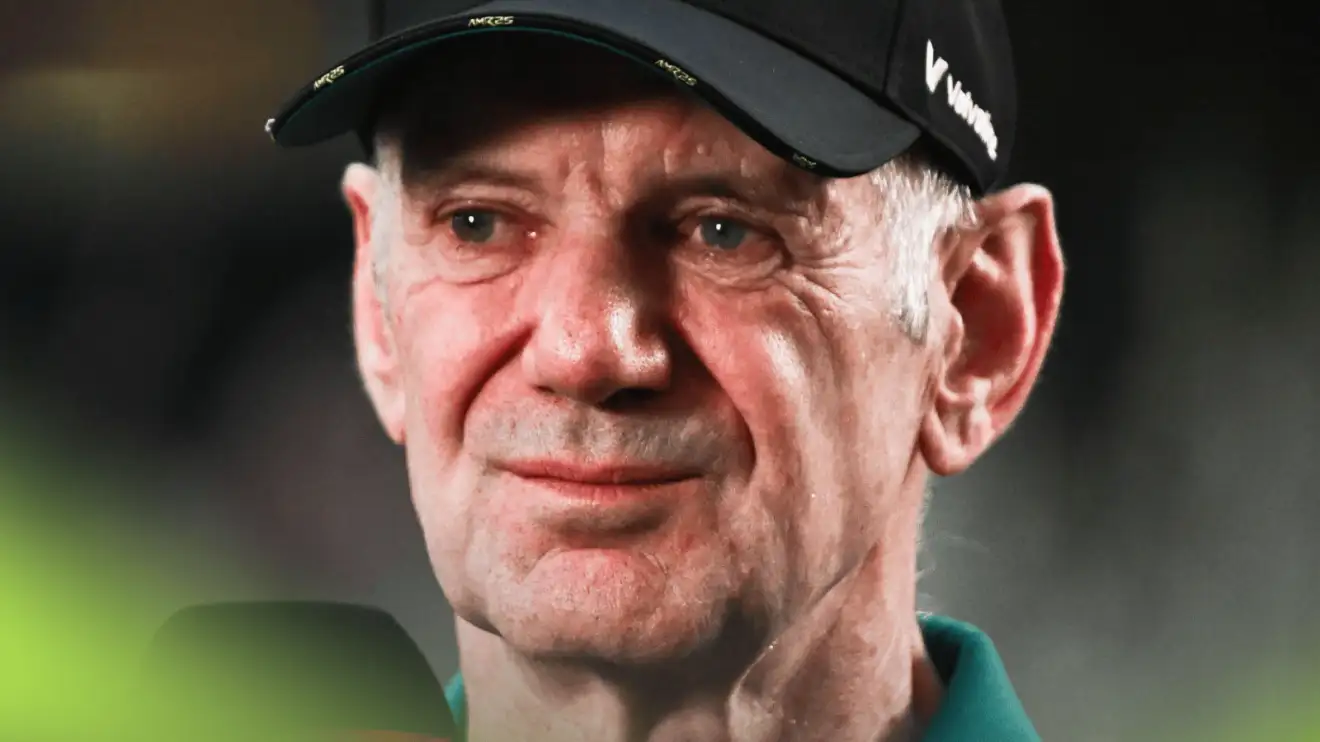
New Aston Martin team principal Adrian Newey at the 2025 Qatar Grand Prix
Adrian Newey reportedly delayed a final decision on the Aston Martin AMR26 suspension design until as late as possible.
Newey, who will act as Aston Martin team principal this year, has led the development of the new AMR26 car for the F1 2026 season.
AMR26 suspension a key consideration for Adrian Newey and Aston Martin
Want more PlanetF1.com coverage? Add us as a preferred source on Google to your favourites list for news you can trust
The AMR26 will be the first car to be produced by Newey since he completed his high-profile move from Red Bull last year, as well as marking the start of Aston Martin’s new technical partnership with Honda.
The arrivals of Newey and Honda have resulted in high expectations for Aston Martin in F1 2026, which sees the chassis and engine rules overhauled as the sport embraces 50 per cent electrification, fully sustainable fuels and active aerodynamics.
The AMR26 is currently scheduled to appear on track for the first time in the opening pre-season test of F1 2026 in Barcelona next week.
A five-day test will be held in Spain across January 26-30 with each team limited to a maximum of three days of running.
Aston Martin will then officially launch its F1 2026 car on February 9 ahead of the final two tests in Bahrain.
Adrian Newey: Aston Martin’s ticket to the top of F1
Why Adrian Newey’s private Alonso talks are so important for Aston Martin
F1 2026 uncovered: Next-gen cars, new tyres, and design decisions
The suspension choices taken by each team has made for an early 2026 development trend over recent weeks.
A double-pushrod suspension was spotted on the Audi F1 2026 car during the team’s shakedown earlier this month, with Red Bull and Racing Bulls following the same path with its showcars and renders last week.
Persistent reports over recent months have claimed that Ferrari is to also have a pushrod suspension at the front of the rear of its new SF-26 machine, which will be officially presented on Friday.
Other teams are expected to switch to a pushrod suspension – a move facilitated by F1’s move away from ground-effect machinery for 2026 – as launch season unfolds this week.
However, it has been claimed that Newey has been agonising over the choice of suspension for the AMR26.
A report by Italian publication Auto Racer has suggested that the Aston Martin team principal delayed a final decision on the car’s suspension until ‘as late as possible’ in the car’s development.
Suspension has been a key consideration for Newey over recent years with the 67-year-old revealing in 2022 that he personally designed the front and rear suspension of Red Bull’s RB18 car for that season.
Newey’s expertise in this area ensured that Red Bull was not as affected as other teams by the porpoising phenomenon, which became a theme of the first ground-effect season in 2022.
That year saw Red Bull claims a constructors’ and drivers’ title double as Max Verstappen claimed a then-record 15 victories.
A decision on Aston Martin’s suspension for 2026 may have been complicated by the arrival of Enrico Cardile, the former Ferrari technical director who arrived in the role of chief technical officer last summer.
Ferrari’s suspension choices were heavily scrutinised in Cardile’s final years at Maranello as the Scuderia and customer outfit Haas were the only teams to stick with a pullrod rear suspension long after every other team on the grid had switched to pushrod.
Defending the decision at the launch of Ferrari’s 2024 car, Cardile told PlanetF1.com and other media outlets that the team found no notable performance differences when directly comparing a pushrod and pullrod suspension.
Writing in his 2017 book, How To Build A Car, Newey revealed that he introduced a system at Red Bull designed to scrutinise a development idea before a decision was taken on whether the team committed to it.
The so-called ’24-hour rule’ saw Newey and his technical team mull over a suggestion for a minimum of 24 hours before a conclusion was reached.
Newey wrote: “At Red Bull I’ve introduced what I call the 24-hour rule, which is that we sit on an idea for a day or so, throw it around and talk about it, but don’t do anything concrete until it has been critiqued.
“Does it still stand up after 24 hours? If the answer’s no then we chuck it in the bin.
“After that comes developing the idea. In my own case this usually means first a sketch and then the drawing board.
“In the 1980s, if the drawings were for aerodynamic components they would be passed to the model makers to make a model by hand.
“Nowadays, almost all manufacturing is by computer-controlled machines; my hand drawings are scanned and then turned into 3D surfaces on our computer systems.
“Then you go to the wind tunnel, test the parts and the results will determine whether your ideas are any good or not.”
Newey has used regulation changes to good effect over the course of his F1 career with Red Bull, McLaren and Williams all enjoying success after major rule resets over the last three decades.
However, the design guru cautioned last year that Aston Martin is unlikely to enjoy a similar leap forward at the start of the new rules cycle in 2026.
Speaking during his first trackside appearance with the team at last year’s Monaco Grand Prix, Newey branded Aston Martin’s simulation tools “weak.”
He also warned that the driver-in-the-loop simulator, a critical device in the era of limited on-track testing, “needs a lot of work because it’s not correlating at all at the moment.”
Aston Martin has since taken steps to remedy the issue, hiring Giles Wood – Newey’s former colleague at Red Bull – to the role of simulation and vehicle modelling director just weeks after Newey’s remarks in Monte Carlo.
Wood’s move to Aston Martin saw him return to F1 for the first time since 2017 after a spell with technology giant Apple in the intervening years.
As reported by PlanetF1.com, Aston Martin also brought in simulations guru Marco Fainello, who worked at Ferrari during Michael Schumacher’s period of dominance, as a consultant last November.
Newey’s concerns over Aston Martin’s readiness for 2026 were echoed at the end of last season by driver Lance Stroll, who told PlanetF1.com and other media outlets that the Silverstone outfit does not yet have “all the tools to be a top team” at this stage in its development.
Despite its recent title successes with Red Bull and Verstappen, meanwhile, Honda has also tempered expectations for the new season over recent weeks.
The 2026 season technically marks a full-time return to F1 for the Japanese manufacturer, which officially withdrew at the end of 2021.
The U-turn is likely to have compromised its preparations – both in terms of manpower and development time – compared to rival manufacturers ahead of 2026.
Koji Watanabe, the president of the Honda Racing Corporation, conceded earlier this month that “not everything is going well” with the development of the firm’s 2026 engine.
Watanabe told Japanese outlet Sportiva: “To be honest, not everything is going well, so there are many areas where we are struggling, but nothing fatal has happened that we cannot overcome.
“In this situation, we are quietly concentrating on improving performance and reliability.
“Aston Martin also wants to keep building cars that reflect Adrian’s vision, so I think the next step for us on the power unit side is to figure out how to adapt to that.
“If doing so increases our competitiveness and makes us more likely to win, then we’ll do whatever it takes!”
Want to be the first to know exclusive information from the F1 paddock? Join our broadcast channel on WhatsApp to get the scoop on the latest developments from our team of accredited journalists.
You can also subscribe to the PlanetF1 YouTube channel for exclusive features, hear from our paddock journalists with stories from the heart of Formula 1 and much more!
Read next: F1 2026 uncovered: How Boost, Overtake, and sustainable fuel change the game


