

Max Verstappen reveals essential driver trait for F1 2026
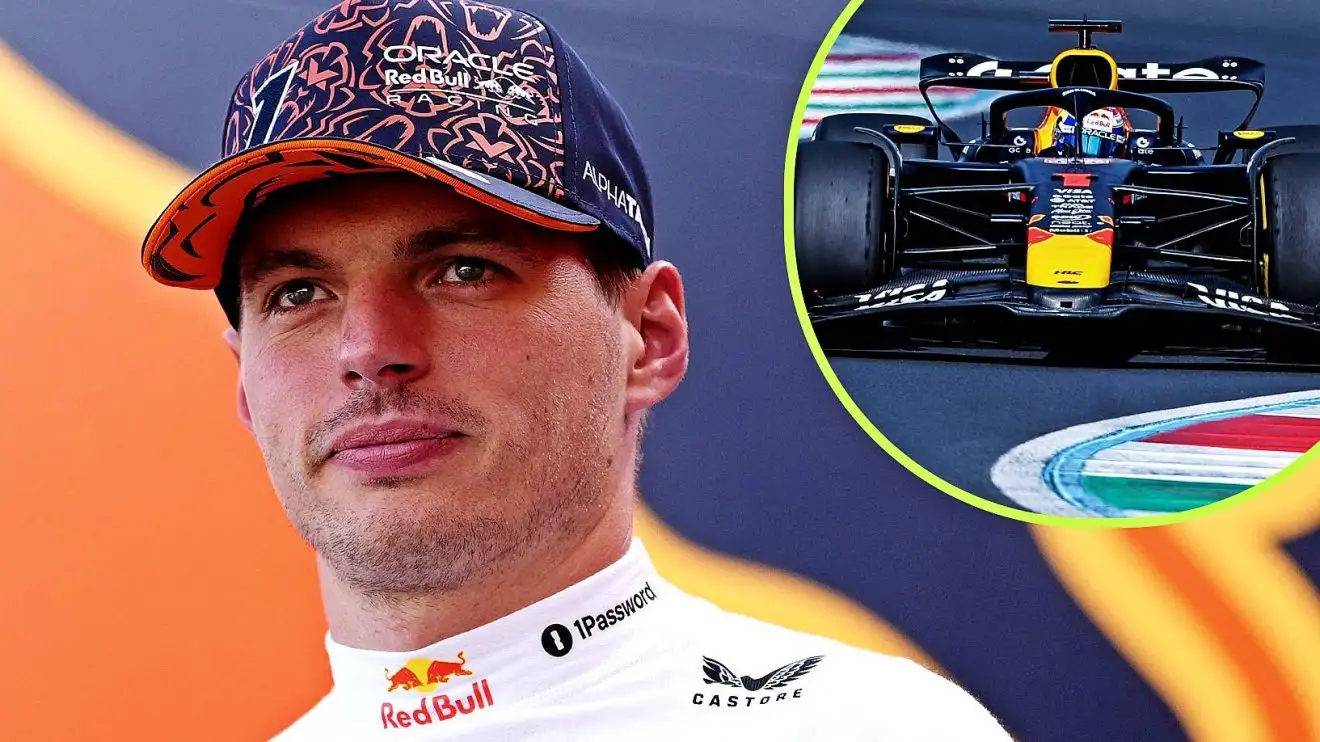
Max Verstappen believes adaptation will be the key to a strong 2026.
Max Verstappen is adopting a take-it-as-it-comes attitude in F1 2026, as he’s identified adaptation as a key priority for the new regulations.
Formula 1’s revolutionary new ruleset means the formbook of recent years has to be ripped up and thrown away, meaning there’s no guarantee of any success for Red Bull or any of the usual front-runners.
Max Verstappen: I’ve enjoyed ground-effect, but change doesn’t hurt
Want more PlanetF1.com coverage? Add us as a preferred source on Google to your favourites list for news you can trust.
Verstappen heads into the new rules cycle as the leading light of Formula 1, having dominated most of the ground-effect era between 2022 and ’25.
While he was toppled from his reign as World Champion at the end of ’25, this was due to a period of inconsistent performance from his Red Bull in the first half of the season, rather than any dip in performance from the Dutch driver.
But this proved to be merely a wobble in what was otherwise a four-year stint of competitiveness for Red Bull, which nailed the ground-effect regulations coming off the back of Verstappen’s first title win under the previous regulations in 2021.
For 2026, both the chassis and engine regulations have been completely overhauled. Ground effect aerodynamics gives way to more traditional overbody downforce generation, albeit with active aerodynamics, while the hybrid engine formula has been changed to increase electrification to a near 50/50 split of power output with the internal combustion engine.
Such a change means that the old formbook is irrelevant. Teams that have been at the front in recent years could stay there, or slip back entirely, while outfits that have been backmarkers through the ground-effect era could suddenly steal a march on the rest – there simply is no guarantee of anything in these early stages of revolution.
Speaking to Bloomberg, Verstappen said he doesn’t find it strange to suddenly be fighting on a different playing field from what has been the challenge of the last four years, a formula in which he proved himself almost unstoppable.
“You know that even heading into that season, right? So it’s not like it comes as a shock,” he said, matter-of-factly.
“The team is prepared for that, and it’s also a bit of a new challenge.
“I mean, I enjoyed the cars the last three years, but at the same time, sometimes it doesn’t hurt to have a bit of a change.
“It can also really upset the grid; you don’t know, so we’ll see how that goes.”
Verstappen is widely known for avoiding conjecture and, upon being asked to assess how the new regulations might suit Red Bull and its competitiveness, the four-time F1 World Champion said the only certainty for him is that speedy adaptation will be the key.
“I honestly have no idea. I haven’t even done that many laps in the simulator, you know,” he said.
“So, for me, I will just see what happens when I sit in the car.
“I think what is always very important as a driver is that you can adapt quickly to the situation that you’re in.
“If that is on a current car that you’ve known for a long time, or a completely new car, you just need to be able to adapt quickly, learn quickly as well, because the cars will evolve, I think, also very quickly.”
F1 2026: Formula 1’s season of change
F1 2026 uncovered: Next-gen cars, new tyres, and design decisions
Explained: F1’s complex power unit upgrade system
Verstappen has proven himself a highly adaptable driver over the years and, away from F1, has also become a race winner in the German racing series Nurburgring Langstrecken Serie (NLS) over the past 12 months.
Unsurprisingly, this means the challenge of adaptation is one he’s not losing sleep over.
“I’m not too stressed about that, to be honest,” he said.
Another question mark for F1 2026 is just how competitive Red Bull Powertrains [RBPT] will be in its first year as a manufacturer, with Red Bull becoming a fully autonomous constructor in its own right as chassis and power unit are designed and manufactured at its complex in Milton Keynes.
Rumours have suggested RBPT is one of two, the other being Mercedes, to have discovered and incorporated a design grey area regarding cylinder compression ratios.
While this has, unsurprisingly, not been confirmed by RBPT technical director Ben Hodgkinson, who firmly stated his belief that the team’s engine design is fully legal ahead of the FIA meeting with all the PU manufacturers on January 22nd, Verstappen said he’s not allowing himself to be distracted by any such factors.
“It’s impossible to know,” he said of whether such a grey area of maximising the regulations could be beneficial for him.
“I mean, everyone is just trying everything they can. From our side, and especially from my side, I mean, I have to focus on the driving; I’m not there to be the engine technician and explain everything in detail to you.
“At the end of the day, it’s also something between the FIA and the engine manufacturers to sort out.
“I drive the car, and I trust that, from our side, we always try to do our very best to get the most performance out of the engine.”
As for whether the new, smaller and lighter cars will be more enjoyable to drive, or easier to battle and overtake in, Verstappen again opted against trying to guess.
“It’s a bit too soon to be able to say that it will be easier to pass. Everything is still unknown,” he said.
“The cars look a bit nicer when they’re a bit smaller and not as wide. Once we get on track, then it’s a bit easier to get a bit of an understanding of what is all happening and going on.”
Want to be the first to know exclusive information from the F1 paddock? Join our broadcast channel on WhatsApp to get the scoop on the latest developments from our team of accredited journalists.
You can also subscribe to the PlanetF1 YouTube channel for exclusive features, hear from our paddock journalists with stories from the heart of Formula 1 and much more!
Read Next: Marko voices Max Verstappen concern with ‘one hearing’ about potential dark horse


