
Carlos Sainz admits Williams ‘shock’ as FW48 weaknesses expose harsh reality


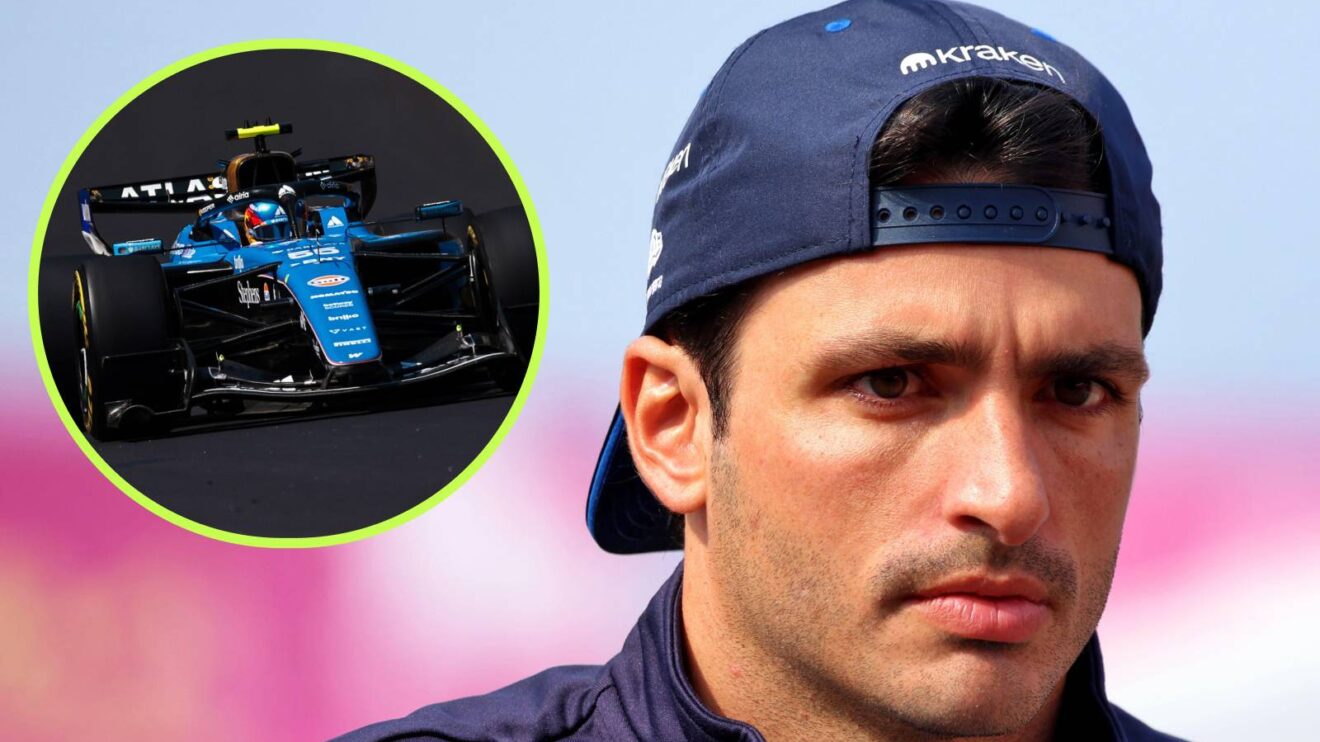
Carlos Sainz has said Williams' slump in competitiveness at the start of 2026 has come as a "shock".
Williams’ Carlos Sainz has admitted that his team’s drop in competitiveness has been a “shock”, with the Grove-based squad going through a difficult start to the season.
Williams claimed fifth in the Constructors’ Championship last year, but has slipped back in the pack after a delayed start to the season when the FW48 wasn’t sufficiently ready for the team to comfortably make it to the first Barcelona shakedown.
Carlos Sainz details Williams FW48 struggles after difficult start
Want more PlanetF1.com coverage? Add us as a preferred source on Google to your favourites list for news you can trust.
F1 2026 had long been earmarked as the season that team boss James Vowles had hoped he could lead the former giant of the sport back to fighting near the front, having concentrated efforts on the big regulations reset for this season.
But the start of the season has been anything but an improvement, with delays in the build phase of the FW48 resulting in the team sitting out the Barcelona shakedown.
Vowles explained to the media, including PlanetF1.com, that the delay was “an outcome for making sure we’re making aggressive decisions to keep as much performance in the car as possible.”
“We could have made it [to Barcelona testing], but in doing so, I would have to turn upside down the impact on spares, components and updates across Bahrain, Melbourne and beyond,” he said.
“I stand by it that the right thing to do is to make sure we’re turning up in Bahrain correctly prepared and prepared in Melbourne as well.”
From then on, Williams has been playing catch-up and certainly, across Bahrain testing, appeared to have done a good job of doing so as the team logged significant mileage with no serious reliability issues.
But, over the first three Grands Prix, it’s been clear that Williams is not as competitive as it was at the end of 2025, with the FW48 suffering from a comparative lack of downforce as well as being overweight.
From being regular points scorers and even managing occasional podiums last year, Williams has scored just two points in three events, courtesy of Sainz’s ninth-place finish in China, and has slipped to ninth overall, only ahead of newcomers Cadillac and the beleaguered Aston Martin.
“For sure, it’s been a shock for me, for the team, for James [Vowles], for Alex [Albon], for all the engineers,” Sainz explained in Japan of his resetting of expectations for this year.
“I think it’s no secret that it’s been tough, and I could already smell it coming in December, January.
“I started bracing for the bump, because we already started having these conversations of delays; not arriving at that first test, starting here in the overweight numbers.
“I said it doesn’t look very promising to start, but, for me, like I said from the beginning of the bump, I knew at some point Williams was going to hit a bump.
“Not all the roads to success are linear. There was always going to be a bump. This bump is big, probably even bigger than what I expected.”
Speaking in the pre-season, Vowles had expressed confidence that the FW48’s more complex design would pay off, suggesting that it is the “best car” produced at Grove during his four-year tenure, but admitted that he “didn’t scale the business in the right way to achieve the output, clearly.”
For Sainz, he’s expressed hope that the uncovering of these weaknesses will go a long way towards rooting them out of the team’s systems.
“Now, it’s about resilience and how you recover from the bump,” he said.
“Because, if this bump is going to help to eliminate all the bad things that the team had intrinsic into the way we were doing the production, in the way we were doing the design, in the way we were delivering overweight chassis or overweight components; if this is going to kill the little, let’s say, viruses that we had as a team, and we recover well from this, then it could create the opposite effect, a big, big jump in performance.
“So, for me now, it’s seeing and analysing and observing the way that we are able to jump back from a bump that was much bigger than what I think everyone expected.”
With Albon explaining that shedding excess weight from the FW48 is a “key focus” for the team, with plans to carry out a weight-saving programme for the Miami Grand Prix, Sainz said not all of the team’s issues can be put down to being over the weight limit.
“I think, as a team, we know we haven’t done a good job with the weight,” he said.
“But I think we also know that our downforce package is not up there either. We had plenty of time last year to focus on this set of regulations and come up with a good car.
“We had plenty of wind tunnel hours, plenty of time to develop it. When I see the gap to the top teams, and even today [Saturday], [Pierre] Gasly was 1.2 seconds quicker than us.
“That’s not all weight, and we need to add downforce. That’s why you will not hear me only talking about weight because, as a team, we need to also make sure we add downforce.”
More on Williams and Carlos Sainz
Carlos Sainz: Williams investigating after long-term problem ‘flared up again’
Williams under pressure as Hill warns of ‘tough road ahead’ in F1 2026
With the stark reality of Williams not joining in at the front of the pack, as had been the aim for the regulatory reset, Sainz said it’s become evident that the Grove-based squad is not at the level it thought it was.
“When you do all the analysis that James and his team have done of how we ended up in this situation, you realise we were not where we thought we were at the level we thought we were as a team,” he said.
“Now it’s clear. But three, four months ago, when you were P5 in the championship with three consecutive podiums (sic), almost, in the last half of the season, the momentum was high, the confidence was high.
“You almost stop seeing where the flaws of the team are. It’s motorsport, and sport in general. You go through good moments, then you realise you’re still doing things not the way you should do them, and you learn again, and you put it together and try to recover.
“It’s this recovery process that is going to be extremely important for the team in the next few months.
“I think every team that is not one of the top four teams this year has realised how far the midfield teams are from the top teams. You need a regulation change to realise the process of how far you are from a top team organisation, and the processes that they have.
“There is the fact that a top team last year, with fewer wind tunnel hours, less time, and more development in 2025 investing in development, was able to produce a car that is one second quicker than any of the midfield cars.
“For me, that just shows that, if you want to become and do the jump from the midfield to being a top team, the jump is much bigger than anyone could expect.
“Because, if you asked me last year at this time of the year… we’re going to have more wind tunnel hours, we’re going to have more time to develop, we’re not going to invest in our ’25 car and we’re just going to prepare for ’26, you think we’re going to be close to the top teams, but the reality is that is the opposite.
“You’re more far. These new regulations, if anything, have shown all the midfield teams that we have a lot of work to do. We want to match the top teams.
“Between the weight and the [aero] load, we haven’t got things right, but I’m hopeful that once we find the right way, we are able to start adding performance.”
Want to be the first to know exclusive information from the F1 paddock? Join our broadcast channel on WhatsApp to get the scoop on the latest developments from our team of accredited journalists.
You can also subscribe to the PlanetF1 YouTube channel for exclusive features, hear from our paddock journalists with stories from the heart of Formula 1 and much more!
Read Next: Alpine A526 ‘pretty good’ but Steve Nielsen flags key weakness