
When Ferrari nearly signed Adrian Newey: ‘Incredible’ offer, Horner intervention, announcement plan
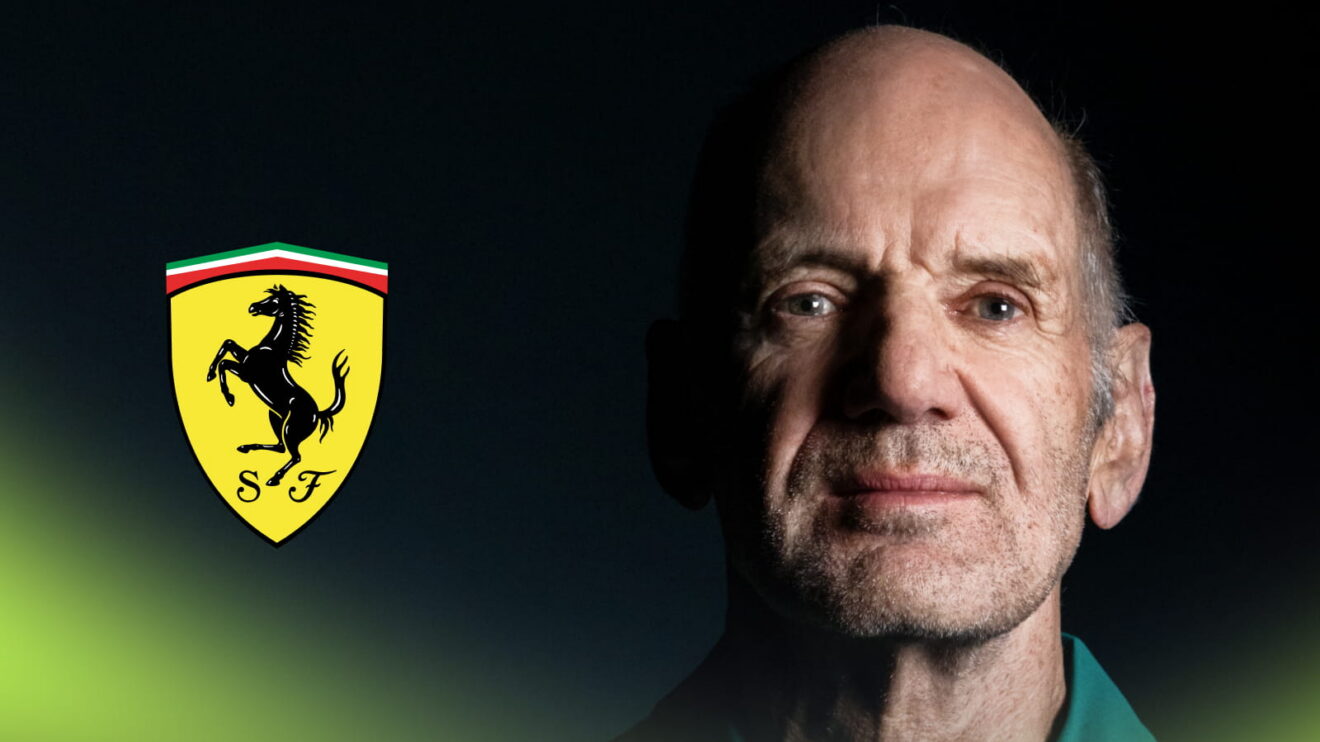
Adrian Newey has often been linked with a move to Ferrari over the course of his glittering F1 career
Christian Horner has revealed how close Adrian Newey came to leaving Red Bull for Ferrari in 2014.
Horner has claimed that a press release was written and approved by Ferrari to announce the signing of Newey at that year’s Monaco Grand Prix before Red Bull convinced the legendary designer to stay.
Christian Horner lifts lid on Adrian Newey’s Ferrari 2014 talks
Newey spent almost two decades at Red Bull between 2006 and 2024, playing an instrumental role in the team’s dominance with Sebastian Vettel and Max Verstappen.
The tech genius was heavily linked with a move to Ferrari in 2014, the first year of the V6-hybrid engine rules, which coincided with the end of Red Bull’s first period of dominance with Vettel.
With Red Bull and then-engine partner Renault struggling under the new regulations, Newey was the subject of a lucrative offer from Ferrari, which, Horner claims, came with the opportunity to design a road car for the Italian manufacturer.
Writing in his memoir, Drive, Horner says that he realised he could no longer rely on Newey after Ferrari’s approach, writing that “our partnership was no longer as solid as I’d previously believed.”
Horner writes that Newey’s “mojo dissipated” in early 2014 when he realised the Renault power unit was “a disaster and incapable of bringing the fight to Mercedes.”
He was left worried that “a turning point was approaching” when Newey opted against travelling to Paris for an FIA hearing following Daniel Ricciardo’s disqualification at the season-opening Australian Grand Prix.
According to Horner, Newey informed him of Ferrari’s interest ahead of the Spanish Grand Prix in Barcelona in May 2014.
He writes: “Prior to the Spanish Grand Prix, Adrian wandered over to my office. ‘Um, I’ve got bad news,’ he said, sheepishly.
“I feared something terrible had happened. ‘What’s wrong?’
“‘Well, I think I’m going to Ferrari…’
“I felt shocked. And then angry. This can’t be right, I thought. But Adrian hadn’t finished. He was justifying his decision.
“‘We can’t win with this engine,’ he said. ‘We’ve no chance for the foreseeable future and I don’t think Renault can turn it around.’
“‘Yes. But it’s s**t for everybody, not just you—’
“He cut me off. ‘Ferrari have said I can do a road car there.’
“There it was. The kicker. Adrian had long wanted to create a road car that aligned Formula 1 technology to road-legal engineering.
“No doubt about it: Ferrari had made a move that appealed to Adrian’s dreams.
“‘You don’t need to go there to do that,’ I said. ‘You can do that here.’
“Adrian’s face brightened. ‘Really? How?’
“‘Leave it with me,’ I said, not having the faintest idea of how to launch such an ambitious project.
“I had to move fast, because Ferrari, being Ferrari, were unlikely to cool their interest.”
Horner recalls Newey, David Coulthard and Martin Brundle meeting in a hotel bar in Barcelona, with Newey openly discussing his potential move to Ferrari.
Coulthard slipped away to the toilets to call Horner, informing the Red Bull boss that Newey could put pen to paper on a Ferrari contract that weekend.
Horner remembers rushing downstairs to join the trio before Newey was persuaded to make “a decision that would seriously impact Red Bull.”
He writes: “I was hurt. We were friends, and had built a championship-winning team together, with him running the technical side and me managing the business and the team.
“I had his back and believed that he had mine. But at the first sign of adversity, Adrian wanted to abandon ship. I felt very sad about that.
“When we picked up the conversation the following morning, he looked flustered. Adrian wasn’t very good in a conflict situation.
“‘I don’t want to hang around if we can’t be competitive,’ he repeated. ‘The Ferrari deal is incredible…’
“On paper, it certainly was. Under the arrangement, he could live in Monaco, commute to work via helicopter, and enjoy complete technical freedom.
“But he was also under a lot of pressure to sign. Plans had been made to announce his appointment at the Monaco Grand Prix two weeks later, and a press release was written, approved and ready to go.
“‘And the road car …’ he said. ‘It’s important.’
“‘I’ll speak to Dietrich [Mateschitz],’ I said, knowing that my bluff had been called. ‘Leave it with me.’
“Right then, I learned two things. The first was that I couldn’t afford to lose Adrian – at that time, no other designer came close to his talent.
“The second was that, sadly, I couldn’t rely on him any more – our partnership was not as solid as I’d previously believed. Both conclusions were painful.”
Horner went on to describe the lengths he went to ensure Newey remained at Red Bull, with Mateschitz approving the launch of Red Bull Advanced Technologies – a vehicle to extend the team’s F1 expertise into other commercial ventures.
He also approached Andy Palmer, the newly appointed chief executive of Aston Martin, over a partnership with Red Bull that was confirmed in early 2016.
Newey worked with Aston Martin to produce the Valkyrie hypercar as well as the RB17 via Red Bull Advanced Technologies.
“Adrian’s attentions on Formula 1 were diluted for a while,” Horner concluded. “But our overall aim, to keep him at Red Bull, was successful.”
What Adrian Newey said about Christian Horner’s 2014 reflections
Speaking at last month’s United States Grand Prix, Newey admitted to “pain and frustration” at Red Bull from 2014 until 2019, when the team replaced its customer Renault engine supply with a works partnership with Honda.
Newey described the situation at Red Bull as “quite bleak” under the new rules for 2014, claiming that Renault showed little urgency to address its problems.
Appearing in the team principals’ press conference in Austin, Newey said of Horner’s book and his claims that he tried to abandon ship at the first opportunity: “I haven’t read any of it yet.
“I think 2014, as a chassis designer, if the PU manufacturer has a bad year, that happens and you accept it.
“If the PU manufacturer has a bad year and doesn’t appear to have any intention of trying to address the problem, that’s altogether a different matter and that’s quite bleak at that point.
“That’s the situation that, unfortunately, we faced in 2014 and, as it turned out, that situation didn’t really change with that supplier until we changed to Honda in 2019. So, you can imagine my pain and frustration at that.
“I don’t think Christian fully understood that, perhaps, but I was in conversation. The rest of it, I really can’t comment, but Christian and I remain friends.
“As many of you know, I am godfather to his daughter, Olivia.”
Read next: Meet Mercedes’ quiet owner: The billionaire racing driver involved in the team’s latest success