

Red Bull boss calls for ‘gloves-off’ F1 2026 engine fight
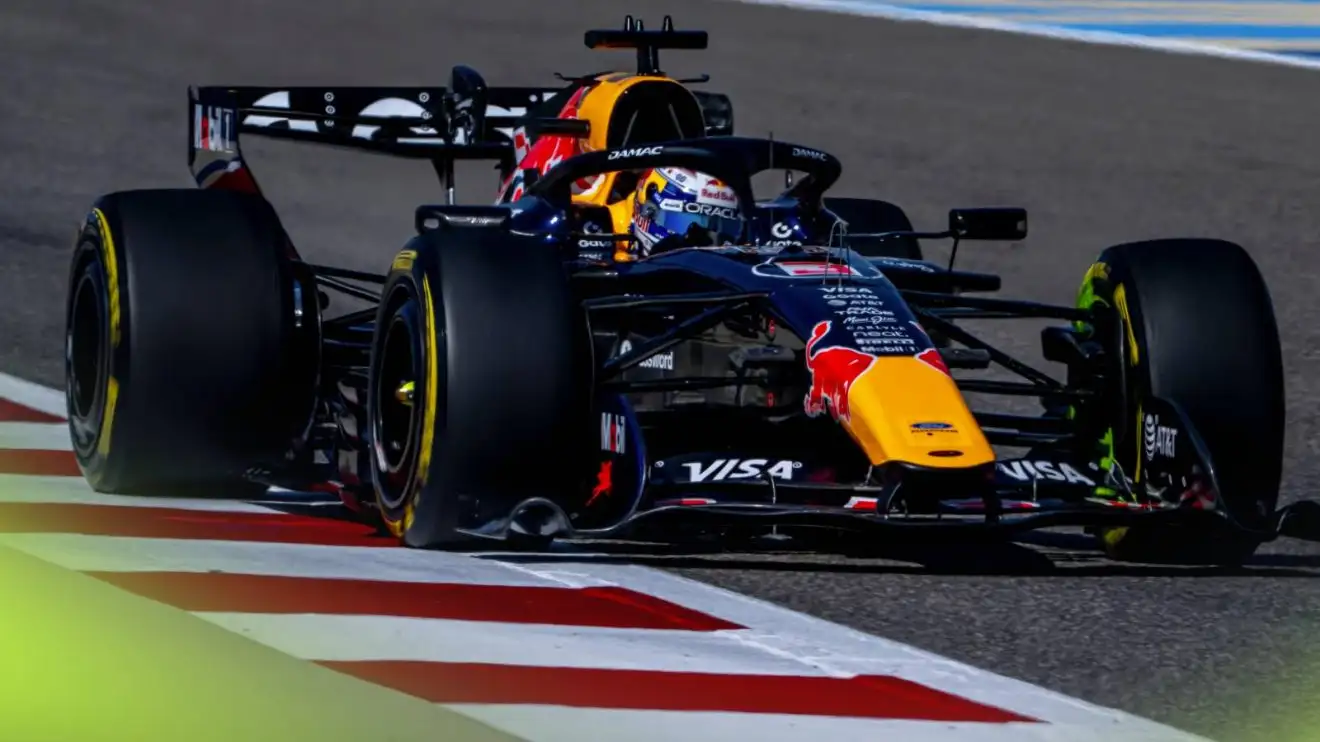
Ben Hodgkinson would welcome a 'gloves-off' approach to power unit homologation rules.
Red Bull Powertrains’ Ben Hodgkinson would love to see a ‘gloves-off’ fight between the power unit manufacturers, given the existence of a budget cap.
F1 2026 sees the introduction of a budget cap that applies to the power unit manufacturers [PUMs], restricting their spending abilities in the pursuit of greater performance, efficiency, and reliability.
Ben Hodgkinson: There are enough limits without homologation
Want more PlanetF1.com coverage? Add us as a preferred source on Google to your favourites list for news you can trust.
Following several years of development of the power units for the brand-new regulations in F1 2026, the latest-generation power units are set for homologation with the FIA on March 1.
Homologation refers to the official approval process by the FIA, in which the governing body will sign off on the legality and conformity with all specified standards, with the five power unit manufacturers required to lodge their designs by the first day of March.
The PU manufacturers will then have a month to furnish the FIA with a physical example to go with the documentation.
Once homologation is concluded, the scope for development and upgrades becomes very limited, particularly on performance grounds. The PUMs are permitted to introduce upgrades to specific areas of the architecture at set windows through the five-year rules cycle.
The introduction of a safety net, known as Additional Development and Upgrade Opportunities [ADUO], offers more chances, at shorter intervals, to any PUM who is granted such permissions by the FIA, as the governing body will maintain a performance index of each power unit in order to ensure all five are within a certain percentage of performance.
All upgrade opportunities, whether ADUO-granted or under the normal regulations, must be made within a set budget, as the PUMs, like the teams themselves, now also have to work to a budget cap, set at $190 million for 2026.
Given the existence of this budget cap, on top of the existing restrictions in the regulations, Red Bull Powertrains’ [RBPT] technical director Ben Hodgkinson said he’d be in favour of a more open battleground.
“I would personally love just to get rid of homologation and have a gloves-off fight. That’s what I’d really like. But we are where we are,” he said in response to a question from PlanetF1.com for his thoughts on the effectiveness of the ADUO system.
“We have a cost cap, and we have dyno hours limits. So I think there are enough limits in place without this.”
With ADUO’s intent being to ensure struggling power unit manufacturers don’t fall too far behind those who have got it right from the off, does Hodgkinson believe the system sufficiently rewards those who have initially produced a superior unit?
“I think so because, the bit that I don’t think is fully understood, actually, amongst the rule makers, is that the gestation time of an idea in power units is much longer than it is in a chassis,” he said.
“So, if I need to make a change, I’ve not just got two cars to update. I’ve got a whole fleet of engines in the pool. I could have 12 power units that I need to update, so that takes time.
“But also, because we’re homologated, you can’t really take a flyer on something that isn’t well proven, because you could be signing up to a world of pain.
“So we’ve got a minimum number of durability [requirements] that we’d want to achieve on our new part and our new idea. So our parts are very, very high precision, normally metal bits that just take time to manufacture.
“We can have a 12-week manufacturing time on some bits, and then it will take a similar length of time to prove it all out, and then a similar length of time to get it all furnished in the race pool.
“So, if a team has an advantage on the power unit in race one, it’s going to take some time before anyone else can catch up.
“So a way to peg them back is kind of what’s necessary, which the ADUO does offer in some respects.
“After six races, it’s assessed so, technically, in the seventh race, you can introduce the update. I think that it’s quite challenging to come up with an update in a couple of weeks. If I had 20 kilowatts to bolt on the engine right now, I’d do it.”
More on the F1 2026 power unit rules
F1 2026 explained: why ‘super clipping’ could reshape racing
Explained: F1’s complex power unit upgrade system
There’s no doubt that RBPT is one of the manufacturers looking strong to start the new regulation cycle, despite its newness.
Overseen by former Red Bull CEO and team boss Christian Horner, a key proponent in the establishment of an autonomous power unit division for Red Bull, Hodgkinson was one of the high-profile engineering names tempted away from Mercedes High-Performance Powertrains [HPP].
Other names included Dr. Omid Mostighimi, head of powertrain electronics and ERS, engineering director Phil Prew, and head of internal combustion engine operations Steve Brodie.
While Horner is no longer in the picture, having been removed from his posts by parent company Red Bull GmbH in mid-2025, RBPT has produced an engine that has caught the attention of the paddock after showing remarkable reliability and performance during the pre-season tests.
While Mercedes’ Toto Wolff pointed to the RBPT engine as the benchmark, Laurent Mekies – Horner’s successor as the head of RBPT and the Red Bull F1 team – believes there’s still a “mountain” to climb to match the likes of HPP and Ferrari.
“A huge well done to everybody back in Milton Keynes,” he said.
“On the PU side, we can’t forget that, three years ago, it was a field right where we have our PU factory.
“The guys that were there from day one, the ones that came after, they just did an amazing job just to get the car out of the garage in Barcelona, to do that magic 100 laps on the first day that we’ve done out there.
“It’s historical, and they should be proud, and we are very proud of them.
“Now, does it put us in a position where we can be satisfied with? No, it doesn’t, because we very well know the size of the competition.
“We very well know the size of the mountain that is still in front of us. We just had a very good start at it.
“But we know we are going to run into a number of uncomfortable moments where the gap to the competition will be too big, where the car will stop on track, or will not get out of the garage.
“But that’s part of the game, and we are happy to be in the game. The performance shown by the top guys is stratospheric, and it’s going to be a huge development race, chassis and PU side, but it’s what we all love.”
With the RBPT unit, at worst, appearing to be keeping Red Bull in contention in the top four teams, Mekies explicitly ruled out being the benchmark, after Wolff suggested that the levels of energy deployment and management seen from Red Bull is beyond what is possible for Mercedes.
“I think there is a good game in the pit lane to try to move the attention on competition, and our approach is that we try to keep the noise low, to concentrate on ourselves,” Mekies said.
“We have a huge amount of work to do. We are, unfortunately, not the benchmark. We have a very high confidence that we are probably trailing the group of the top guys right now.
“But, nonetheless, it’s fair to say that probably a fair part of the pit lane was surprised by the fact that we could run with that level of consistency with a completely new project.
“Again, it’s something that our people back in Milton Keynes should be proud of. The competitive fight ahead is going to be massive, and it will take us a lot of time to reach the level we want to reach.”
Read Next: Christian Horner reveals ‘loss and hurt’ after Red Bull axing