
F1 regulation tweaks earn driver support but questions remain over long-term fix


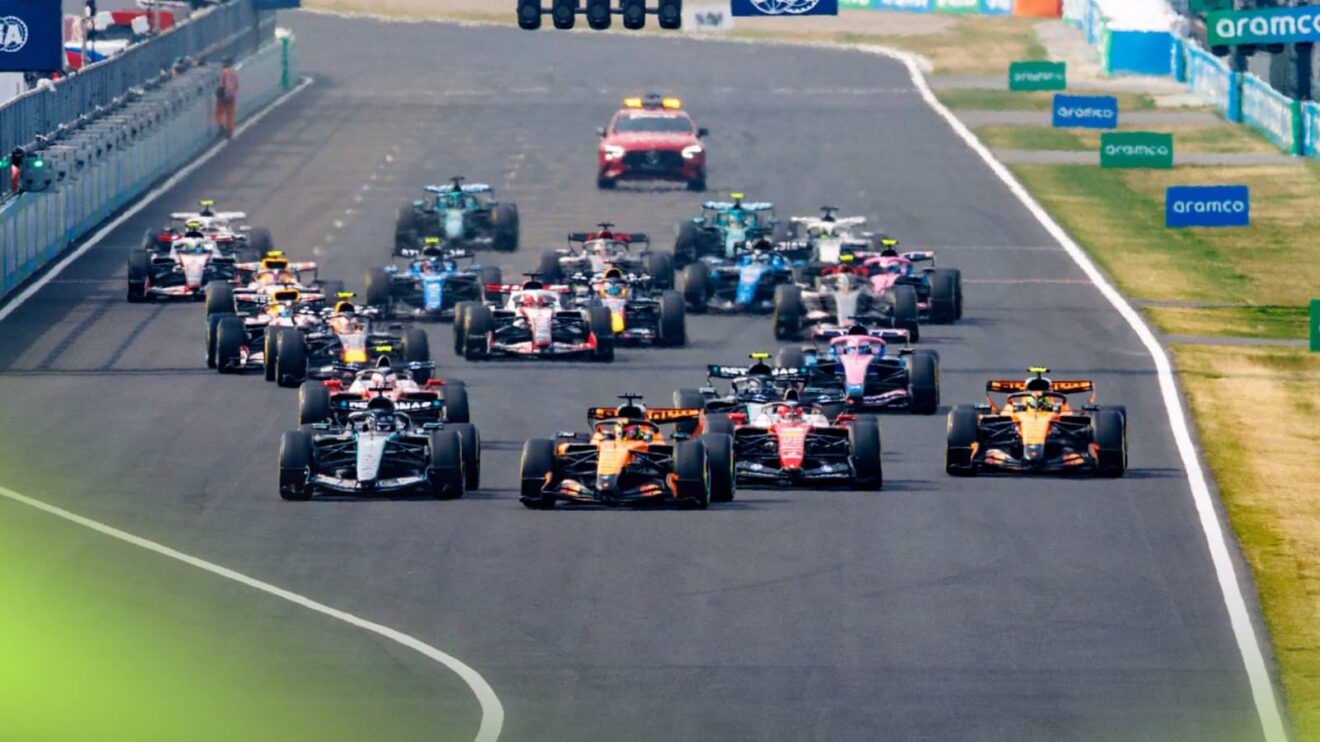
Oscar Piastri (McLaren MCL40) nudges into the lead at the start of the 2026 Japanese Grand Prix at Suzuka
F1’s new regulation changes were greeted with relative enthusiasm from the drivers, but the real question is whether they go far enough.
Tweaks to the regulations for Miami and beyond see a reduction in maximum permitted harvestable energy, as well as increasing the super clipping rate to 350kW; key steps that should create more natural driving dynamics going forward.
F1 drivers say changes are ‘a step in the right direction’
Want more PlanetF1.com coverage? Add us as a preferred source on Google to your favourites list for news you can trust
By the end of Thursday’s media day in Miami, some of my fellow journalists had started making rather lame jokes with each other, mostly nonsensical, about how we were “making steps in the right direction” in relation to our respective workloads.
This was off the back of what seemed almost like coordinated messaging from the drivers throughout the 14 individual media sessions and two FIA press conferences as the topic of the regulatory tweaks introduced for this weekend was addressed by all.
What is evident is that the drivers appear placated by the successful introduction of the tweaks after the FIA’s push to make changes on the grounds of safety was met with general consensus after weeks of discussions following the Japanese Grand Prix; a consensus that was no mean feat to pull off.
The changes are not dramatic; relatively minor tweaks that aim to just evolve the driving experience a tad in favour of more natural driving techniques after the outcry of negativity about the unusual and unenjoyable requirements of the 2026 F1 power units that favour a placid corner approach as the energy-starved electrical systems reward with the fruits of this passivity by unleashing longer periods of energy deployment down the straights.
The changes aim to bring down the maximum harvestable energy to figures that are achievable through natural driving, without an excessive need for lift and coast, as well as increasing the amount of energy harvested from the ‘super clip’ technique of engine mapping; a technique in which energy is siphoned from the internal combustion engine to charge the battery, while the driver remains flat on the throttle.
“A small step, but a step in the right direction,” was Valtteri Bottas’ summary of the changes as he was the first driver to speak to the media at the Miami International Autodrome on Thursday and, as the day wore on, it became clear this was a sentiment broadly shared amongst the entire F1 grid.
More on F1’s regulation tweaks
Lance Stroll calls F1 2026 rules ‘sad’ and fundamentally flawed
Drivers deliver their verdict on F1 2026 rule changes
With no real-world evidence to provide the proof of concept, its simulator work that has informed the drivers at this early point of the weekend, but even this has been enough to convince that the steps at this point are a net positive.
But more may be needed, as some explained.
“I think there are differences that are going in the right direction, for sure,” Esteban Ocon said.
“It’s limiting the lift-and-coast that we have to do, it’s limiting the weird driving a little bit that we have to do.
“I think we still have to do some, you know, we can’t drive exactly the way that it would be the quickest in the corner, because we will lose in the straight still, but it’s definitely better than if we would have started in a normal way.
“It’s small steps better. I don’t think it’s yet the full clear story, but I think there will be other iterations, probably this year, you know, to try and improve further.”
“I think that it improves some aspects,” Alex Albon agreed.
“Is it pretty pure, where we’re just driving as quickly as we can? No, I don’t think so.
“There’s still a few more steps to go, but I think we need to see how these changes go, first of all.
“I think that we’re definitely heading towards the right direction, and then it’s just, how much more do we need to do?
“I imagine we’re going to finish this weekend, and the drivers are going to put their take on what extra bits we need.
“I think it’s a great first step, but there’s going to be likely a second step and a third step and a third step afterwards. So yeah, I think it’s positive for everyone.”
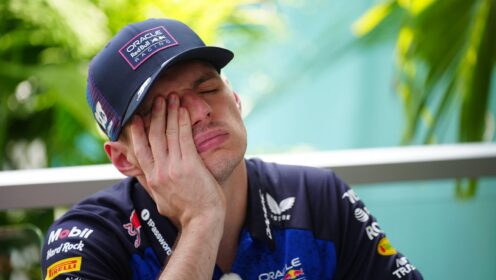
Max Verstappen says changes ‘won’t change the world’
But while there is a sense that more changes may be needed in order to further improve the situation, changes that may be more difficult to accomplish both in terms of achieving political consensus as well as within the restrictions of physics dictated by the current regulations, the positive feeling about the achievement pulled off during the unofficial break appears to be that the drivers have felt listened to by the powers-that-be.
While the Grand Prix Drivers’ Association [GPDA] may not have a place in governance, the success in getting changes made even appears to have placated the likes of Max Verstappen; one of the most outspoken critics of the regulations throughout the opening months of this cycle.
The Dutch driver said that while the tweaks may not be enough to completely change the complexion of the dynamics this year, he revealed his satisfaction with how the process has played out.
“The positive things about it is we had some nice meetings with Formula 1 and the FIA, and I think that’s probably like a starting point, hopefully for the future, even for in a few years time when maybe I’m not here anymore,” he said.
“I really hope that, for the future drivers as well, there’s more input to come from the drivers to the organisers in general. Because I do think that most of the drivers here, we have a good understanding and a good feel of what is needed to make F1 a good product, a fun product.
“I think that’s already like a huge step forward in terms of the communication, and, with the changes that I made, I think it’s more like a tickle, because at the end of the day, F1 is a very complex and political sport, but I think everyone has tried their best to at least do something. But it won’t change the world.
“It’s not what we need yet to really make it flat out, but it’s complicated to get everyone to agree. I just hope for the next year, we can make really big changes.”
GPDA chairman George Russell, perhaps the driver most likely to benefit from the regulations in their current guise given Mercedes’ apparent superiority, was similarly effusive in praising the process of collaborative talks.
“I think there’s been some really good conversations, to be honest, with the FIA and a number of drivers, and I think they have listened to the concerns,” he said.
“It’s definitely the most collaborative they’ve sort of ever been in this regard, which is positive. I think we concluded that they want to include us more when it comes to future regulations as well.
“Because I think we kind of suggested that we could maybe foresee some of these issues before they actually came to fruition. And, if we was involved in the process, we could have helped it, for everybody’s sake. So that’s been positive.
“I think the changes are good, and the main goal being to remove the large closing speeds like we saw with Franco and Bearman. And I think, with these new rules, that incident wouldn’t have happened. So that’s a positive.
“I think the biggest concern was lift-and-coast on a quali lap; that’s now gone. Losing major speed at the end of the straight on a quali lap, that’s now gone. Reducing the closing speed of overtaking, that’s now gone.
“So, from what we’ve said, what we’ve wanted, the FIA has achieved what the complaints were about. Now, of course, there’s always going to be people who aren’t happy about it, and especially people further down the order, but we’ve told them what we’re not happy about, and they’ve gone out, changed the regs, and they’ve achieved what we’ve asked, really. They’ve ticked the boxes they set out to do.”
Carlos Sainz, another to have urged change prior to the break, said, “Well, [I’m] just simply happy that there was a reaction from FIA, FOM, drivers, teams. We all sat down together and tried to obviously improve the situation.
“I don’t believe we will come up with a magic bullet here that will suddenly change everything, but I think all the changes are sensible and hopefully going to make things a bit more enjoyable from our part.
“So yeah, just happy to see we’re collaborating, working together to make the sport better and more enjoyable. And whether it will make a big difference or not, we will obviously have the next few races to analyse, adapt and see if we need to do further changes.”
It’s this spirit of collaboration, more so than the changes themselves, that appear to have quelled the clear unhappiness and rictus smiles that dominated the opening weekends of the year. Of course, maybe some of that optimism is down to the drivers coming back refreshed from the unexpected break, and doom and gloom will set in again in no time. Hopefully not.
After all, mere tweaks to what is a highly complex and fundamentally energy-starved formula won’t result in night-and-day changes, but the fact that there is no burying heads in the sand about the acknowledgement and requirement for change appears to have placated most – but not all.
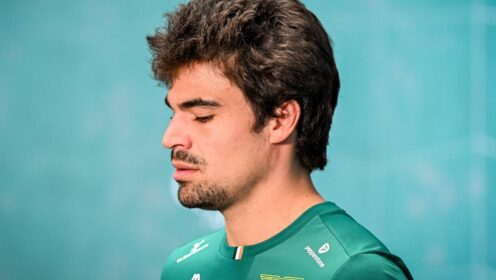
Indeed, with the most critical drivers having softened their cough after feeling heard, the only outright negativity that lingered on Thursday was from Lance Stroll.
While his current competitive predicament may be colouring his view somewhat, Stroll remains steadfast in his belief that the regulations as they stand simply don’t do enough to right the ship.
“I think we’re miles off from where we should be,” he said.
“We had time off in the break and I was randomly watching old races and stuff. Even the Monaco historics on the TV, and I heard some cars from the Ferrari cars from early 2000s and how good they sounded and how small and nimble.
“There was some onboards I saw from early or even mid-2000s in the V8 and V10s era, and then what it looks like versus now… you hear what it’s like now, and the character of the cars, just how much more intense it looked, and how much more exciting it looked back then compared to now.
“It’s a bit sad, but hopefully we’re heading back in that direction.
“I don’t know what’s gonna happen, but hopefully we go back in that direction – loud, fast, light, nimble machines that are exciting for the fans, exciting for the drivers. You really feel like you’re pushing on the limit.”
Confirming that current F1 cars are not particularly fun to drive, Stroll also said that “it’s sad we’re in this situation“.
From an engineering perspective, the new power units are masterpieces, and it’s these engineering interests from F1’s OEM manufacturers that the rulebook hasn’t simply been quickly torn up in favour of a simpler engine that keeps sport in mind, first and foremost.
The multi-year cycle looks set to be seen out, and Miami will prove the first testing ground to see whether this first moment of positivity translates across a weekend.
With the first patch fix applied, a long and arduous road remains ahead to see if these regulations will prove a damp squib of simply slapping more on top in a bid to desperately eke out some value for the years and millions invested by the power unit manufacturers.
Software changes are the name of the game at this point, but will that be enough to convince that the potential for years of damage to F1’s image and building of a fandom has been successfully assuaged at this point?
“It’s tough to go that much further, honestly,” Lando Norris said, when asked by PlanetF1.com about whether the changes are merely the band-aid on more fundamental issues.
“I think when you start to cover up some problems, you also reveal other issues, you know? So there’s only so much you can do with the rules that you have to keep things within.
“I think we would all have more in the direction that they’ve gone, but some of those are more hardware, bigger things to change, and those are hard things to change in the middle of a season when you have one team dominating and doing very well and another team is struggling.
“So it’s difficult from that end to do a lot more, but they move things in the right direction, especially for qualifying. The race really isn’t going to be that different.
“Some things are not going to change that much, and quali should be a bit more flat-out qualifying style laps, which is a nice thing. We want that as drivers so I think we have to be happy with the amount of changes that they’ve done, but yes, we will want more, but that’s something we have to be patient with.”
With tangible track results a matter of hours away, a bunch of happier drivers head out to take part in the Miami Grand Prix, but will the evolution be enough, or will real-world limitations quickly resurface?
Want to be the first to know exclusive information from the F1 paddock? Join our broadcast channel on WhatsApp to get the scoop on the latest developments from our team of accredited journalists.
You can also subscribe to the PlanetF1 YouTube channel for exclusive features, hear from our paddock journalists with stories from the heart of Formula 1 and much more!
Read Next: Franco Colapinto ‘not happy’ with Oliver Bearman comments after Suzuka crash fallout