

FIA to hold F1 2026 engine talks ahead of Barcelona pre-season test
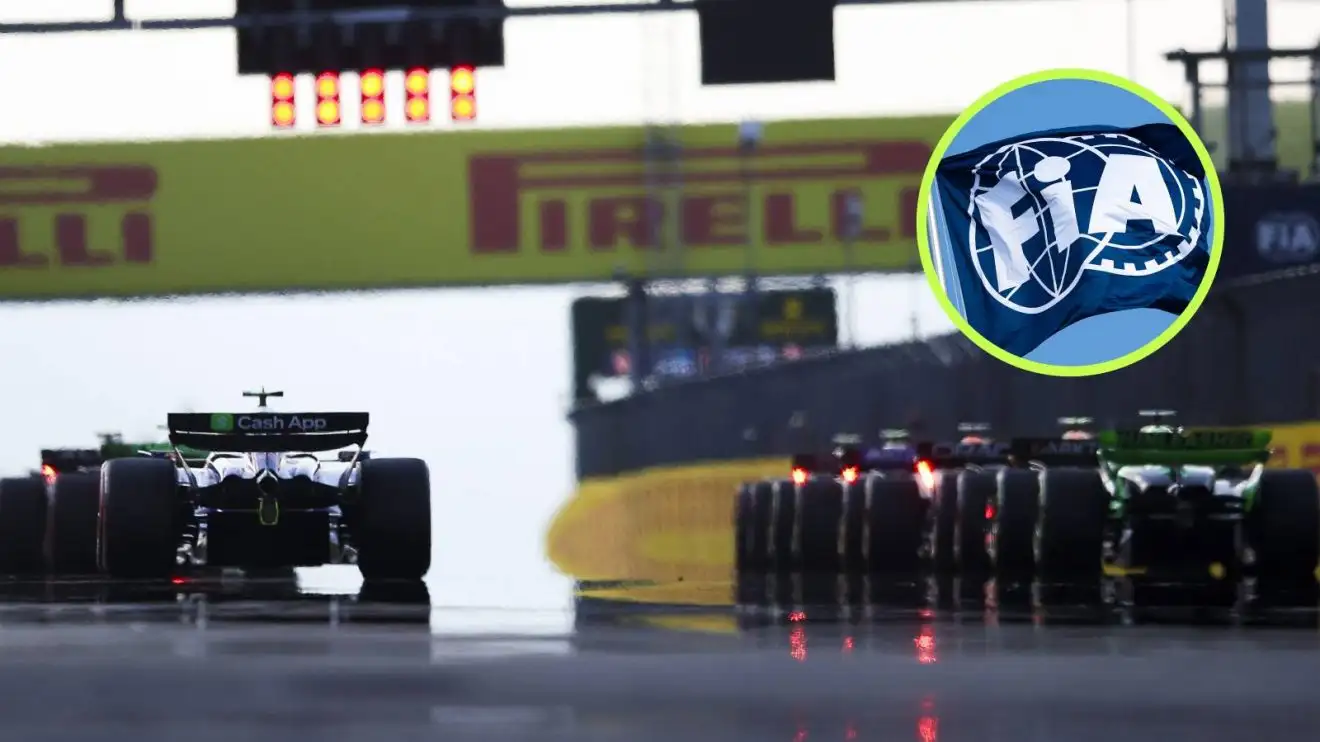
The FIA is to meet with F1's power unit manufacturers before pre-season testing.
The FIA is set to meet with technical experts later this month to address matters related to the F1 2026 power units.
Formula 1’s engine regulations change for this season, with a new power unit formula using a new-generation 1.6-litre V6 hybrid that uses sustainable fuel and increases electrification to a 50/50 split with the power generated by the internal combustion engine.
Why is the FIA having a meeting with power unit manufacturers?
Want more PlanetF1.com coverage? Add us as a preferred source on Google to your favourites list for news you can trust.
After purported concerns about a possible technical loophole that may result in one or two power unit manufacturers being a step ahead at the start of the F1 2026 season, the FIA is set to meet with the power unit manufacturers to address the topic.
In a statement issued to PlanetF1.com, the governing body confirmed the meeting, which will be held a few days before the beginning of the first pre-season test in Barcelona.
“As is customary with the introduction of new regulations, discussions on the 2026 iteration covering power unit and chassis are ongoing,” an FIA spokesperson confirmed.
“The meeting planned for 22 January is between technical experts.
“As always, the FIA assesses the situation in order to make sure the Regulations are understood and applied in the same manner between all the participants.”
The situation pertains to differing interpretations of specific wording of the FIA regulations, which could result in a disparity of performance.
Article C.5.4.3. of the 2026 Technical Regulations states that, “No cylinder of the engine may have a geometric compression ratio higher than 16.0.
“The procedure to measure this value will be detailed by each PU Manufacturer and executed at ambient temperature.
“This procedure must be approved by the FIA Technical Department and included in the PU Manufacturer homologation dossier.”
However, it’s thought that the wording of the regulation has resulted in one or two of the power unit manufacturers interpreting this as ensuring this compression ratio is met when being measured in ambient conditions, but otherwise running at a higher ratio when on track, potentially resulting in slightly higher power output.
F1 2026: Formula 1’s season of change
F1 2025 v F1 2026: Nine key questions ahead of huge regulation changes
F1’s secret battleground revealed amid preparations for 2026 revolution
F1 2026 engine homologation date is just weeks away
Speculation has suggested that two power unit manufacturers are predominantly of concern to the others, with some reports naming Mercedes and Red Bull Powertrains as those to have exploited the grey area of the wording.
Ferrari is understood to have expressed concerns to the FIA, with reports that Honda and Audi have followed suit, with an eye to seeking clarification on the matter.
As for possible changes being required of the manufacturers, it’s thought that any changes to the now-developed designs are with an eye to the F1 2027 season.
All the manufacturers are required to submit homologation documents to the FIA, finalising their designs for 2026, by March 1st, with further development and upgrade opportunities restricted under recently-defined ADUO regulations.
Introduced as a safety net for struggling PU manufacturers, the ADUO concessions will allow said manufacturers, whose ICE (internal combustion engines) performance figures are below pre-determined indexing, to make upgrades to address these shortcomings.
These updates will only be permitted at certain windows throughout the year, which are divided into four equal segments of six races. The number of potential upgrades is also defined, based on whether a manufacturer is above two percent off the best-performing engine, or more than four percent.
Read Next: Audi F1 shakedown footage emerges as first F1 2026 car hits the track


