
FIA issues statement on 2026 rules after Oliver Bearman crash concerns


The FIA and F1 flags on display in the paddock.
The FIA has issued a statement following the 50G crash that Oliver Bearman suffered at the Japanese Grand Prix.
A dramatic difference in closing speeds was the leading cause of the terrifying crash, a factor that has been introduced by way of the new F1 2026 power unit regulations.
FIA confirms review of 2026 rules after Bearman concerns
Want more PlanetF1.com coverage? Add us as a preferred source on Google to your favourites list for news you can trust.
With the new power units requiring unusual driving techniques to keep the batteries topped up for energy deployment, the side effect of the energy running out is the cars dramatically slowing down as the electrical output disappears.
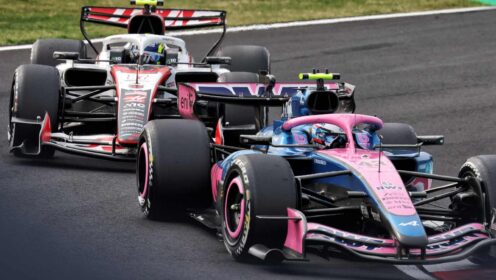
This was a contributing factor to the crash involving Oliver Bearman at Suzuka, when the British driver encountered a slowing Franco Colapinto on the racing line approaching Spoon.
The Argentine driver was in a harvesting phase, meaning his car was moving considerably slower than Bearman’s, who was in deployment mode, and the dramatic speed difference caught the Haas driver out.
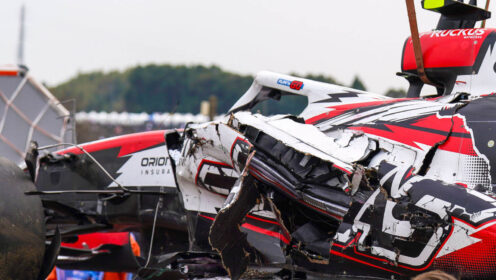
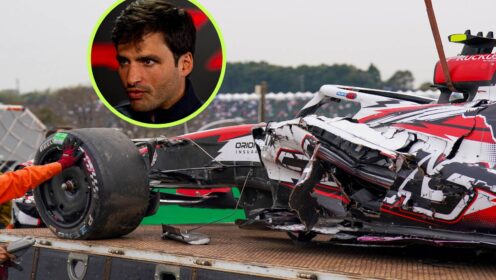
Losing control of his car on the grass as he took avoiding action, Bearman slid off the track and hit the barriers sideways at high speed, registering a 50G impact that left him clearly shaken, although uninjured.
With the drivers becoming increasingly critical of the direction taken for the new power unit regulations, which have had a demonstrable effect on the way racing takes place, the FIA has issued a statement to reveal the next planned steps in the evolution of the current ruleset.
“Following the accident involving Oliver Bearman at the Japanese Grand Prix and the contribution of high closing speeds in the accident, the FIA would like to provide the following clarifications,” a statement provided to PlanetF1.com said.
“Since their introduction, the 2026 regulations have been the subject of ongoing discussions between the FIA, Teams, Power Unit Manufacturers, Drivers, and FOM. By design, these regulations include a number of adjustable parameters, particularly in relation to energy management, which allow for optimisation based on real-world data.
“It has been the consistent position of all stakeholders that a structured review would take place after the opening phase of the season, to allow for sufficient data to be gathered and analysed. A number of meetings are therefore scheduled in April to assess the operation of the new regulations and to determine whether any refinements are required.
“Any potential adjustments, particularly those related to energy management, require careful simulation and detailed analysis. The FIA will continue to work in close and constructive collaboration with all stakeholders to ensure the best possible outcome for the sport and safety will always remain a core element of the FIA’s mission. At this stage, any speculation regarding the nature of potential changes would be premature. Further updates will be communicated in due course.”
The crash prompted GPDA director Carlos Sainz to state a firm position that he wants to see changes made to the regulations by the time F1 returns at the Miami Grand Prix in four weeks.
“Here, we were lucky that there was an escape road,” he said.
“Now imagine going to Baku, or going to Singapore, or going to Vegas, and having these kinds of closing speeds and crashes next to the walls.
“We, as GPDA, have warned the FIA that these accidents are going to happen a lot with this set of regulations, and we need to change something soon, if we don’t want them to happen.
“It was 50G, I heard, just imagine what kind of crash you could have in Vegas, Baku, etc.
“I hope it serves as an example, and the teams listen to the drivers, and not so much to the teams and some people who said the racing was okay, because the racing is not okay.”
Bearman, who confirmed that he was “absolutely fine” after returning to the paddock after a precautionary trip to the Medical Centre, summed up his crash as being a direct product of the new regulations.
“We’ve, as a group, warned the FIA what can happen,” he said, “and this has been a really unfortunate result of a massive delta speed that we’ve never seen before in Formula 1 until these new regulations.”
Want to be the first to know exclusive information from the F1 paddock? Join our broadcast channel on WhatsApp to get the scoop on the latest developments from our team of accredited journalists.
You can also subscribe to the PlanetF1 YouTube channel for exclusive features, hear from our paddock journalists with stories from the heart of Formula 1 and much more!
Read Next: Max Verstappen reveals Red Bull outlook after Japanese Grand Prix struggle