
Winners and losers from the 2026 Chinese Grand Prix


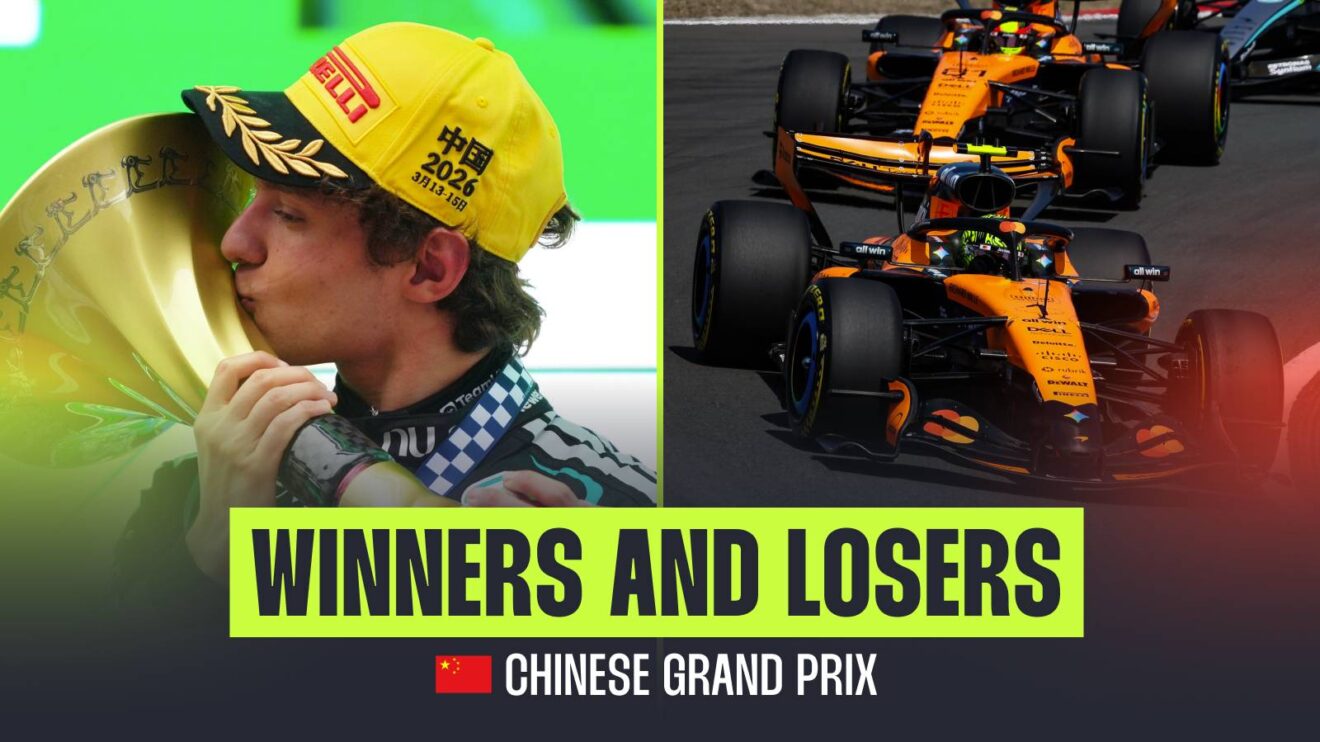
Winners and Losers from the 2026 Chinese Grand Prix.
With victory from pole position, Kimi Antonelli is the big Winner from the Chinese Grand Prix, but who else features, and who is on the Losers’ list?
Here is PlanetF1.com’s full list of winners and losers from the 2026 Chinese Grand Prix.
Winners and losers from the 2026 Chinese Grand Prix
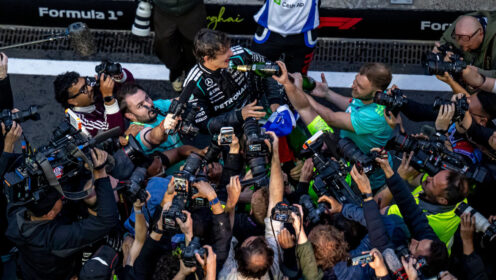
Winner: Kimi Antonelli
Kimi Antonelli only lost one battle on Sunday in China, and that was his fight to try keeping himself from bursting into tears as he spoke to David Coulthard in the pit lane straight after climbing out of his W17 as a maiden race winner.
Even the stoniest of hearts melted at his evident joy, overcome by the enormity of the moment that marked the culmination of what had been a journey of several years, not just of the weekend.
Much like Rubens Barrichello so memorably did at Hockenheim in 2000, Antonelli didn’t bother trying to compose himself for long and, instead, gave into his emotions.
It was a wonderful moment, one that will have won him a legion of fans, and his popularity with his fellow drivers was evident as both George Russell and Lewis Hamilton paid tribute to the might of his drive.
It’s a far cry from his tears after qualifying at Spa last year, when his mid-season difficulties caused him to start driving in his own head, overthinking and conscious of every input. With no future at Mercedes guaranteed, the dream was slipping away, and it’s a testament to Mercedes’ gentler and understanding approach to driver management that he turned things around towards the end of last season.
Now in his second season, Antonelli is expected to up his game and, on the evidence of the first two races, he is doing that. Granted, he hasn’t been perfect, as his Melbourne FP3 crash indicated, but he is fully aware that he is still figuring out the “risk vs. reward ratio”, which is a marvellously reassuring thing for Toto Wolff to hear.
Antonelli’s job was made easier by Russell’s misfortunes at the start of Q3, but what Antonelli was given in that moment was merely an opportunity to capitalise, rather than victory being handed to him.
He still did the hard work of overtaking Hamilton after losing the start, building a lead up as the cars behind squabbled, and, even once Russell got into second, stamped his authority on the race by pulling away another 2.5 seconds.
The only slight blemish was his moment of relaxation in the closing stages, locking up dramatically into the hairpin in an incident that could have been far more costly than it proved to be.
It gave him a self-confessed “heart attack”, but was there a better moment for learning than almost having his moment of triumph ripped away from him in what would have been brutal circumstances?
While Russell’s experience, the British driver can be expected to be the Mercedes man with far greater consistency and the level required to deliver the championship, which is where Antonelli is likely to fall short this season.
As his race engineer, Pete Bonnington, explained afterwards, there’s a very different level of consistency required to deliver a championship compared to a solitary win, and Antonelli is only at the point in his career where he’s returning to tracks for the first time, making it a very tall order to be able to face off against Russell.
There’s also the question mark over whether he’d even be permitted to turn it into an intra-team war, given that Wolff and Mercedes will have memories of Hamilton and Nico Rosberg a decade ago. Given the likelihood that Antonelli’s consistency is still likely to be variable compared to Russell this year, would it really be worth risking team harmony to allow a more contentious battle to emerge?
Of course, what Antonelli can aim for is to be fast enough to force the issue…
Loser: McLaren
Two Grands Prix into a 22-race calendar, and Oscar Piastri is yet to complete a single race lap… did McLaren ever envisage such a disappointing start to the season after giving up on 2025 development so early?
A week after Andrea Stella revealed that McLaren felt on the back foot as an engine customer for the first time since reuniting with Mercedes, the team made a point of confirming its issues in starting the Chinese Grand Prix were entirely on the power unit side, although the Italian emphasised that he has “complete trust” in the work of Mercedes High-Performance Powertrains in assessing what went wrong on Sunday.
It’s been a shocking start to McLaren’s title defence, and there appears to be little chance of Lando Norris being able to make it back-to-back titles at this point, given he only has a single fifth-place to show for his efforts so far.
What was unusual about McLaren’s inability to take part in the Chinese Grand Prix was how both cars suffered terminal issues within minutes of each other, related to the same area of the car, but entirely distinct problems from each other, something Andrea Stella labelled as “exceptional and uncharacteristic”.
For Norris’ car, it was an issue with the electrical side of the power unit, which saw the team lose the ability to communicate with the errant component. Without having to strip the car down, McLaren did what it could, but ultimately wasn’t able to get the car out on track.
For Piastri’s car, his problems set in while on the grid and were related to the same power unit component, albeit in a different way.
While HPP’s engines have proven reliable in the factory team’s cars, aside from the glitch that compromised Russell’s qualifying on Saturday, the fact that it happened to both McLarens begs the question of whether it’s something specific to the installation of the power units in the MCL40.
Certainly, Stella has explained that the problem parts are not something McLaren has any control over, but the nature of the double-DNF coincidence suggests the Woking-based squad has simply missed something communicated to it by HPP during the customer disclosure periods during preparations for this year.
With Mercedes romping to a 1-2, the power unit is clearly delivering, but the obvious drawbacks of being a customer team are now being felt once again at McLaren.
In happier news, the chassis does seem relatively strong, with the drivers clearly claiming the third row in qualifying to slot in behind the benchmark Mercedes and Ferrari cars, and the penalty of losing the data of an entire Grand Prix doesn’t appear to be a major concern for Stella.
“The most detrimental aspect of not being able to participate in this race is the points in the championship,” he said.
“While, at the moment, Mercedes seems to be in their own category and we are a little closer to Ferrari, we obviously race with the ambition to compete for important results, and we are just losing ground.
“These points could have been important at the end of the season. So the most important shortcoming of what happened today is not scoring the points.
“At the same time, it’s also quite regrettable and disappointing for our fans and for our partners from a commercial and technical point of view. So there are obviously several downsides.
“Every lap is important in 2026. At the same time, I think we are learning quite rapidly, and what we have learned in Australia, yesterday in the sprint, we think we are actually in a good position now in terms of especially exploiting the power unit.
“So, definitely, more data would have been very useful. But what we regretted the most today is not having the championship points.”
Winner: Lewis Hamilton
Having been beaten to the podium by Leclerc in the Sprint, Hamilton came out on top of a particularly spirited battle with the Monegasque driver on Sunday to claim his very first Ferrari podium.
It started with him beating Antonelli off the line to take the lead, before his Mercedes successor got ahead and disappeared up the road, leaving Hamilton to squabble with Leclerc and former teammate George Russell.
What unfolded was a particularly enjoyable back-and-forth fight between the trio, with Russell eventually able to use his Mercedes’ pace to get ahead and stay ahead of the Ferraris.
Left to their own devices, Hamilton and Leclerc then went up against each other in a manner that their respective race engineers and Fred Vasseur must have been watching through their fingers.
It all had a feeling of it being far bigger than merely a third-place finish in a Grand Prix. Perhaps Hamilton’s revival has underlined to Leclerc that, once again, he is paired with a teammate of whom he may have similar talent, but is without the impressive resumé of an established Champion.
Keeping Ferrari as “his team”, a team that is besotted with him, hinges on beating Hamilton, and perhaps that’s why their duel in China felt like a contest for supremacy.
If it was, Leclerc did his best not to show it as he expressed his enjoyment over team radio, and smiled for the TV interviews afterwards.
But was this enthusiasm a facade? Was it an affectation of faux-blaséness to cover the hurt of being defeated at a time when he really, really didn’t want to lose?
Just think back to Bahrain 2014, when Nico Rosberg was beaten in the infamous Mercedes duel in the desert. Post-race, he smiled and laughed, and shoulder-punched Hamilton with ‘aren’t-we-all-just-such-best-mates’ bonhomie.
But, years later, Rosberg revealed he had been seething inside.
“I remember myself in Bahrain,” he told the Sky Sports F1 podcast. “I said after the race, ‘wow, that was the most fun I’ve ever had in a racing car.’
“But actually, the truth was that it was the farthest from the truth possible.
“Because the truth was, I was seriously angry and seriously hurt from finishing second to Lewis, and it was zero fun.
“As race drivers, we always have to be a bit Hollywood. You can’t always say the truth, obviously, because it’s going to backfire otherwise.”
Leclerc is at a similar crossroads with a resurgent Hamilton, and he’s just lost a battle that has only underlined to Hamilton that he can still do this. A happy Lewis is a dangerous Lewis.
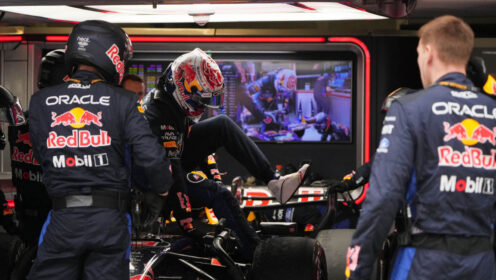
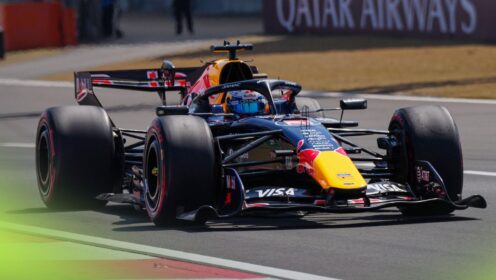
Loser: Red Bull
Questions were always going to be asked of a Red Bull in a post-Christian Horner world, a team that overhauled itself so dramatically over the second half of the F1 2025 season, alongside a significant brain drain of personnel – including the RB22’s chief designer, Craig Skinner.
The momentum of a design philosophy overseen by Adrian Newey has been ripped away with the regulations revolution, and Pierre Waché is now the captain at the helm, stepping into the limelight after years of questions over whether it’s been his or Newey’s magic touch that created the dominant cars of the ground-effect era.
The great reset of Red Bull appears to have largely been completed now, but the Chinese Grand Prix suggests that the team is no longer a front-running outfit and is facing a lengthy period of rebuild to get back to where it was.
Granted, sprint weekends haven’t been Red Bull’s greatest strength in recent years, but there were precious few positives to take away from the weekend in Shanghai, aside from how the new RBPT power units, against all expectations, appear to be of comparable performance to Mercedes and Ferrari at the very first time of asking.
Max Verstappen’s unshakeable position of disappointment in the new regulations is evident, and he has spoken of his enjoyment in working hard together with his team to try to take it on an upward curve of form, but how long will this positivity last if he has many weekends as frustrating as the one he just endured?
Reasonable qualifying positions proved academic as Verstappen struggled to get his car off the line in both the Sprint and the Grand Prix, resulting in a points-less finish in the Sprint, and leaving him with the unenviable task of trying to make progress after gambling on the soft tyre in the main race.
But progress Verstappen did, applying himself with his usual panache to regain multiple positions, only to fall back to 14th when the Safety Car was deployed almost instantly after his pit stop.
It was calamitous bad luck, but he put his head down again and fought back to sixth place, picking off the Alpines, but was powerless to do anything about Haas’ Oliver Bearman.
Verstappen was set to finish the race about a minute behind the race winner, but he never made it to the chequered flag as an ERS cooling issue stopped play.
For Isack Hadjar, he showed some of the youthful exuberance expected of a driver with little experience, losing control of his car on the opening lap while battling with Bearman; a potential points finish and battle with Verstappen went amiss as a consequence.
With Mercedes, Ferrari, and McLaren seemingly a step ahead, Red Bull was competing for the position of fourth-best team in China, against far lesser-resourced teams in Haas and Alpine.
As Uros Radovanovic’ analysis of the data from China shows, Red Bull’s biggest deficit at present is not on the power unit side, but on stability through high-speed corners that cost Verstappen an average of 1.7 seconds per lap.
Unusually, Laurent Mekies didn’t hold a media briefing that has been a post-race de rigueur for a Red Bull team boss for many years, with media only finding out that he had left for the airport while waiting for word on the timing of the expected session.
PlanetF1.com understands that this was down to logistics, as Mekies was delayed by a long debrief before needing to make an early flight, but the ad hoc nature of not holding the routine session suggests such time constraints could have stemmed from convenience rather than necessity.
After all, Mekies would likely have fielded some questions that he might not want to think about too much for now, such as why the performance of the car appears little better than that of the sister team’s, and what processes he’s putting in place to help accelerate improvement from this lower-than-usual baseline for Red Bull.
The constant development of the RB21 last year almost netted an unlikely title for Verstappen in what was an epic comeback, development that was of rapidly diminishing returns as the final races of the old regulations ticked by.
This cost to the 2026 programme was readily admitted by Mekies, who said it was important to ensure correlation between its simulations and wind tunnel data with the real world. That correlation does appear improved, but Waché explained to this writer during Bahrain testing that, while the issue is reduced with the new regulations regardless, it has not been fully eradicated, and won’t be until its new wind tunnel is online.
Mekies acknowledged that he was willing to “pay the price” for this continuation of development long past when the other frontrunners had switched to 2026, and that price is now being paid.
More from the Chinese Grand Prix
Chinese GP driver ratings: Antonelli shines, Hamilton impresses and Ocon falters
Chinese GP conclusions: Verstappen sabbatical fear, mixed Hamilton feelings, McLaren Powertrains
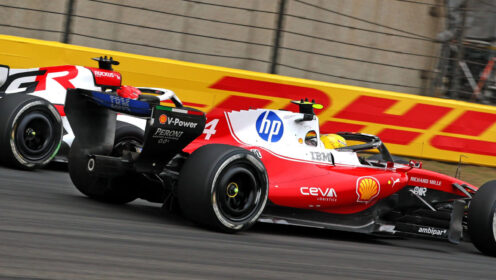
Winner: Ollie Bearman
He’s quickly making a habit of this, isn’t he?
Bearman was best of the rest behind the Mercedes and Ferrari drivers and, while there was some fortune in that McLaren was out of the equation, he had firmly rejected Max Verstappen’s advances up until the Dutch driver’s mechanical failure.
The British driver performed a miracle dodge on the opening lap when Isack Hadjar spun his Red Bull just a few metres in front of him, somehow avoiding having his right rear wheel tagged by the French driver’s wayward car as Bearman dived off the track to avoid a collision.
The Safety Car “nullified” that bit of bad luck, as Ayao Komatsu commented post-race, and Bearman was able to pick his way past Verstappen and, later, Esteban Ocon and Franco Colapinto, both of whom had yet to stop to shed their starting hard tyres.
“It was a great race, we couldn’t have asked for more, and I just want to keep pushing like this now,” Bearman said afterwards.
“On Lap 1, I was very unlucky with Hadjar spinning in front of me, and I thought our race was over. I was put back to P12 at that time.
“Luckily, the Safety Car came out at the right point for us when we needed to have that pace. We took that luck, and the car was very quick today. I’m super happy.”
A potential points position went begging for Ocon in the second car after a slower pit stop cycled him further back into the pack and, while racing Colapinto through the first sector, made an ill-judged move that ruined both of their races.
Ocon held his hands up for the mistake, and it was a clear step forward in pace for the French driver relative to Bearman.
Spare a thought for Esteban after his error, whose social media, and that of Haas, was instantly hit with a barrage of social media abuse from a minority of Colapinto fans enraged by the incident, prompting the Argentine driver’s management to issue a plea on social media not to send death threats.
It’s a situation that’s all too familiar for any driver who happens to get involved in any sort of incident with Colapinto, no matter how minor, and one would hope that the faction of his fanbase that lacks perspective, maturity and, indeed, common decency, will eventually learn what Formula 1 is actually all about.
Loser: Aston Martin and Honda
With so little time between Australia and China, it’s not surprising that there was little change in circumstances for the beleaguered Aston Martin and Honda.
There were some positive noises from Honda after Saturday’s Sprint race and qualifying, with the Japanese manufacturer expressing optimism that its vibration countermeasures were having some effect and that a target of a double finish in the Grand Prix itself was a realistic target.
But the race proved this was fruitless optimism, as Lance Stroll ground to a halt… the battery being the culprit. Just nine racing laps…
Fernando Alonso soldiered on, but his race came to a conclusion too. Not because of an actual technical issue, but because the vibrations were so uncomfortable that he was starting to lose sensation in his hands and feet.
Replays showed the extent of the problem. Not only was the shake through the chassis actually visible on the onboard camera, but Alonso was taking his hands off the wheel in order to attempt to bring back feeling into them.
Given how hardcore a racer Alonso is, one can only imagine just how debilitatingly uncomfortable the AMR26 must be to drive, and just how badly the ball has been dropped to create a car that is so fundamentally flawed.
While Honda undoubtedly plays its part in this fumble of gargantuan proportions, it cannot be solely placed upon its shoulders.
Compare the difference in attitudes between Adrian Newey’s firm pointing at Honda for its struggles, with how Andrea Stella is emphasising the collaborative trust his squad has in Mercedes, despite its performance and reliability taking a hit as a direct consequence of that relationship.
It’s not difficult to see this relationship crumbling rapidly, particularly with the timing of Honda’s home race in Japan coming up.
Newey is being tested to an extreme extent right from the off in his new career challenge, and, unless there’s some miracle cure or intervention on the horizon that is being kept under wraps, Aston Martin could struggle to even score a point this year, given the fact that even finishing a race right now seems a goal out of reach.
Newey’s claims that he and Aston Martin only became aware of Honda’s struggles in late 2025 only serve to raise the alarm even more: what was he, as managing technical partner, doing during the eight months between his start date in March ’25 and the alleged date of discovery in November? And can any of the problems be attributed to the power struggle between himself and Andy Cowell, perhaps distracting both?
Given Honda’s assertion that Newey requested very late changes in how the power unit would integrate into the chassis, had Cowell flagged up potential problems that Newey viewed as a mere nuisance? After all, it was November ’25 when Cowell was so firmly moved aside…
For a team that has invested so much in its infrastructure and built so much towards this regulation reset opportunity, the scale of this poor start is nothing short of inexcusable, but, as long as the drivers come to no harm, the only pain will be felt behind the walls of the Silverstone factory.
Winner: Alpine
Having sat through a year of misery in 2025 as Enstone focused on the opportunity of ’26, Pierre Gasly and Franco Colapinto are starting to get the pay-off.
Both Alpine drivers were solidly in the mix for strong points on Sunday, directly competing with Red Bull and Haas for the best of the rest position behind the leading teams.
Fifth place was possible for Gasly, whose restart after the Safety Cr was compromised when he didn’t have battery power available, leaving him powerless to keep Bearman behind him.
The ensuing squabbling with Verstappen then slowed Gasly sufficiently to give him a task to come back against Bearman, ultimately falling short.
For Colapinto, he scored a point for P10, but it could have been more had Ocon not misjudged a moment as the pair negotiated Turns 2 and 3.
There had been confident noises coming from the likes of Steve Nielsen and Dave Greenwood towards the end of 2025, having suggested the A526 might be a more potent weapon than last year’s.
Keeping up and competing with Red Bull probably was beyond their expectations, but China showed that there might be plenty of potential in its new car, and that the swap to Mercedes power might just have paid off.
Winner: F1 2026 regulations
I’ve been very negative about the F1 2026 regulations ever since the Australian Grand Prix weekend kicked off, given the realities of just how compromised the cars are from a power perspective.
That negativity doesn’t extend to the cars or the aero themselves… quite the opposite. The cars are visibly more agile and smaller, and the tremendous wheel-to-wheel battles we saw on Sunday proved the drivers are able to follow and fight each other in close proximity, lap after lap.
It was marvellously entertaining, but my doubts regarding the power unit regulations remain. While China was far less unnatural to watch, as the amount of lift and coast and superclipping was much reduced compared to Australia, it only served to illustrate further the potential of what might be possible if drivers were able to push on at all times.
One particular moment came early in the race when Hamilton and Russell came out of the final corner, with Hamilton’s rear-facing camera showing Russell powering past in an extreme display of speed disparity as he applied his boost button.
It was an overtake, sure, and it was all very exciting from a spectacle perspective, but it was, quite simply, pressing a button in a straight line that gave Russell that advantage. And, sure, it can also be said that it’s down to the driver’s respective deployments and where they’ve used their power already that gives them that tactical advantage, bringing in an element of skill – that skill being in management, rather than derring-do.
I hate to repeat the negative words that have circulated so much over the past 10 days, so I won’t, although you know which descriptors I refer to. Nor will I point to a legendary Nintendo property that is already quite boring to hear the drivers angrily compare it to.
But I’m a big believer that less is more, and the highest level of skills doesn’t necessarily translate into non-stop entertainment.
What came to mind while watching the Chinese Grand Prix was that F1 has moved away from being a two-hour movie with Oscar-winning pretensions and, instead, has become an episode of reality TV. Far more entertaining to watch in the moment, thanks to titillating thrills ala Love Island, but ultimately forgettable once consumed.
Compare that to the slow-burn thriller in which little in-the-moment excitement happens as the chess pieces fall into place over the first 90 minutes before an unforgettable crescendo… that’s the mark of prestige.
But, as a man pushing 40, the sport has evolved so far from my days as a teenager admiring Michael Schumacher execute a four-stop strategy of qualifying lap after qualifying lap on a hot Sunday afternoon at Magny-Cours, taking on a three-stopping Fernando Alonso in a race in which the two drivers were miles clear of everyone else. Pure strategy, pure speed, and… zero overtaking.
Newer fans would likely be bored to tears by a race of such comparative staidness but, not that long ago, it was peak excitement.
That version of the sport has vanished and, in its place, is an entity far more aware of its need to create entertainment and excitement to keep its new audience and, while it may not be to my exact personal tastes of what Formula 1 should be, the product created isn’t entirely rubbish either, just different.
In a heartbeat, I’d go back to a naturally aspirated or turbocharged V8 or V10, as what the next regulations are likely to be, but I don’t want to spend the next few years watching my favourite sport with a pit in my stomach about what it could, and should, have been.
Yes, the overly complex and unnecessary power unit regulations are letting down what could have been a huge win on the chassis side, and the driving dynamics have taken the sting out of the tail by prioritising straight-line power deployment rather than corner attack.
But China showed that there is at least some potential in this ruleset if the energy starvation can be reduced, which is likely to now be a priority as this formula develops.
Want to be the first to know exclusive information from the F1 paddock? Join our broadcast channel on WhatsApp to get the scoop on the latest developments from our team of accredited journalists.
You can also subscribe to the PlanetF1 YouTube channel for exclusive features, hear from our paddock journalists with stories from the heart of Formula 1 and much more!
Read next: Fred Vasseur admits Ferrari risked looking ‘completely stupid’ during Hamilton–Leclerc fight