
McLaren’s papaya rules under spotlight as Norris and Piastri telemetry emerges


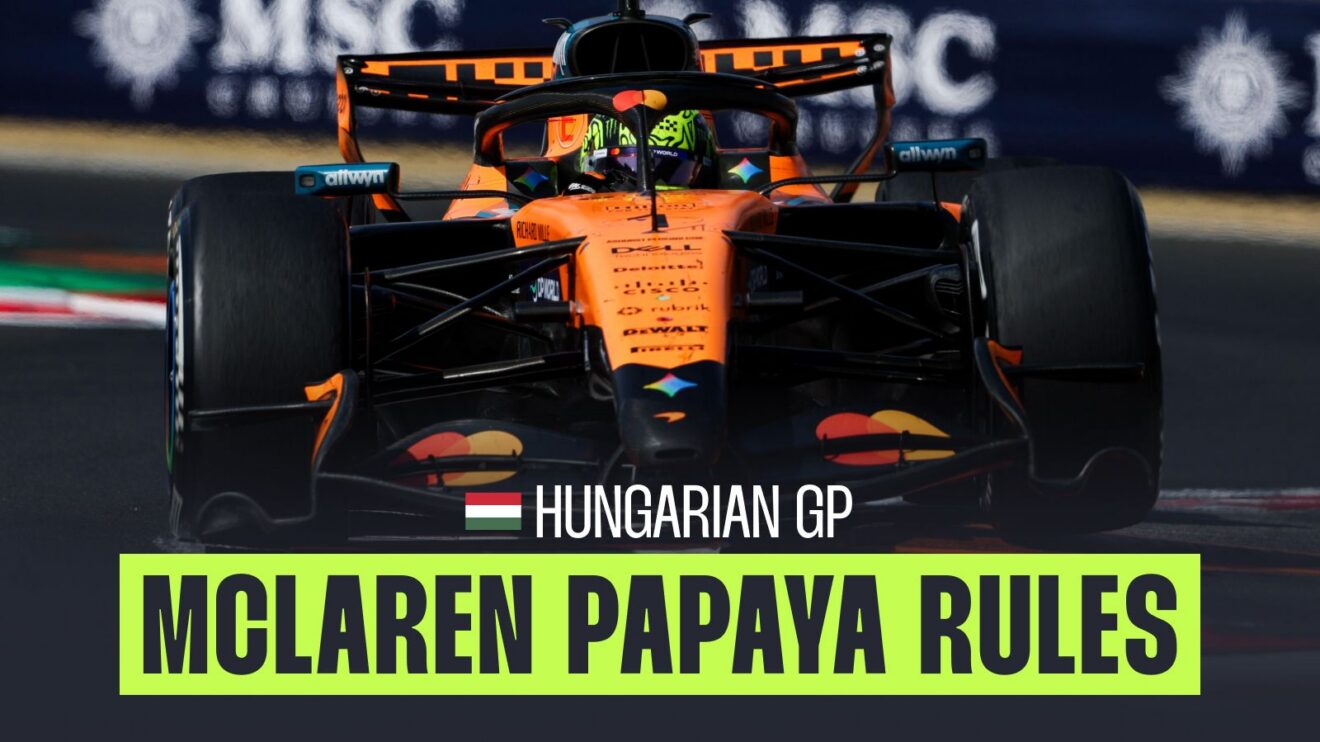
McLaren caused a stir with its papaya rules in Hungary
The first race of the season where McLaren has a realistic chance of victory, and it wasted no time in doing to – albeit in controversial circumstances.
Lando Norris delivered his first win as world champion in a race led by Oscar Piastri until he was driven into by a callous Carlos Sainz at a crucial moment. But what exactly happened? The truth lies in the telemetry.
McLaren strategy under spotlight after Norris Hungary win
Want more PlanetF1.com coverage? Add us as a preferred source on Google to your favourites list for news you can trust.
McLaren was the fastest team on track during the race at the Hungaroring and both Oscar Piastri and especially Lando Norris were untouchable in clean air. The victory was in their hands from the start of the race, but seemingly not with the driver on pole.
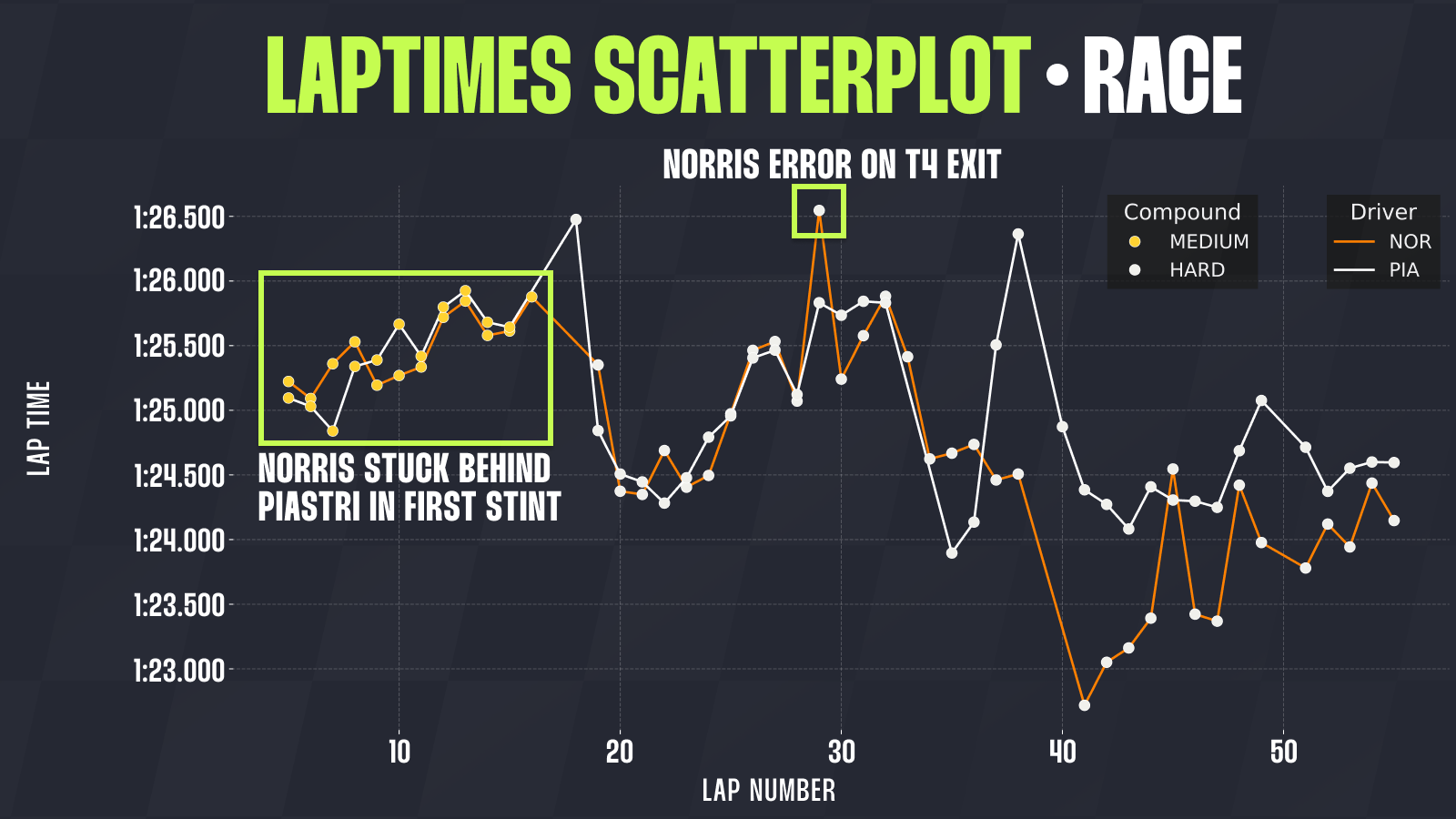
A mistake from Norris made on the first lap of the race at Turn 2, when he ran wide, cost him dearly. It opened the door for Piastri to take the lead, and the Briton was simply left stuck behind.
Throughout that first stint on the medium tyres, it was clear that Norris had the better pace, but in Hungary, running in dirty air makes overtaking extremely difficult.
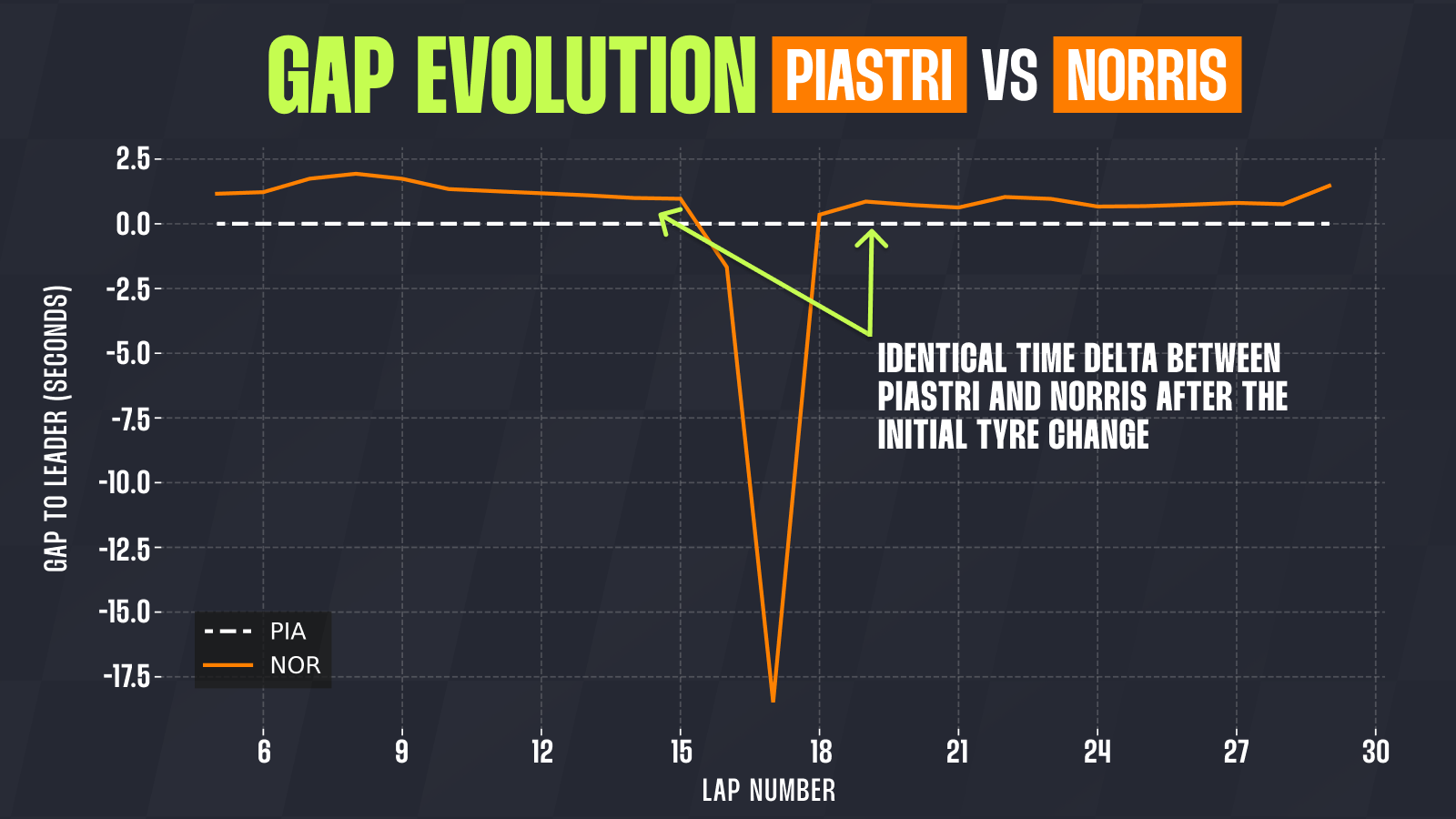
Thus, the F1 2025 world champion had no other option but to fall in line. Papaya rules give strategic priority to the driver leading on track, so after pit stops on laps 17 and 18, both drivers found themselves with the exact same gap as before, which remained consistently under one second in Piastri’s favour.
As the race progressed, Norris’s frustration grew and he made a mistake on lap 29, losing around 1.5 seconds.
Proof that Norris was indeed faster comes from the lap times on the very next lap, where the Briton made up half a second on his teammate.
This situation on track prompted McLaren to split the strategy. On lap 33 of the race, they brought Piastri in for a tyre change, giving Norris clean air and the opportunity to build a gap so that when he pitted, he could emerge ahead – provided he was fast enough, of course.
And that brings us to a very interesting moment.
With a clear track ahead, Norris instantly increased his pace by as much as one second, yet it was still not enough to build the required margin over Piastri, as we can see from the graph below. In his initial laps on the new hard tyres, Piastri remained the faster driver on track.
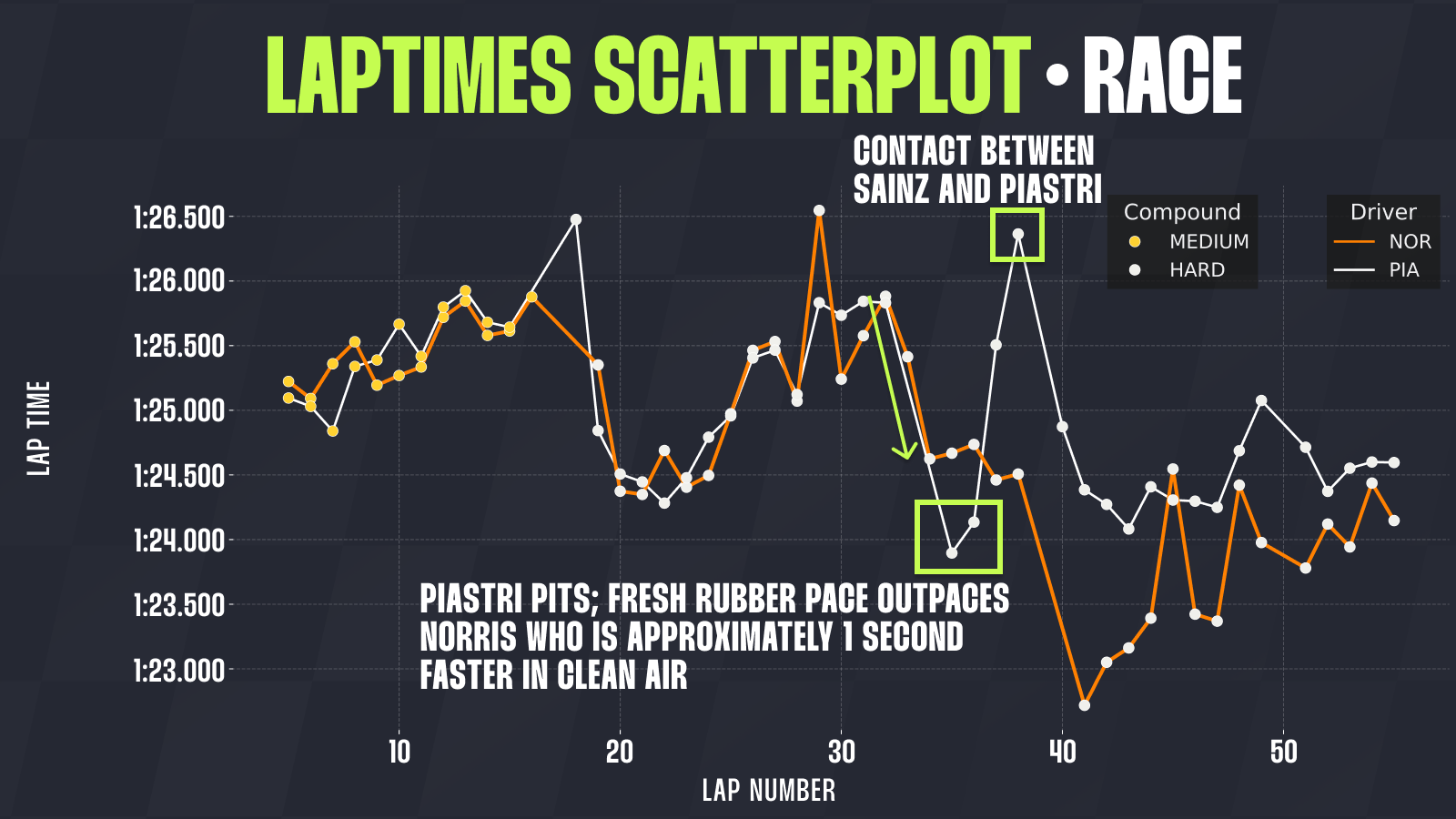
Right up until lap 38, when Carlos Sainz decided to get involved. Contact occurred between Sainz (who was a lap down) and Piastri, costing the Australian around two seconds.
At that moment, McLaren pulled the trigger and pitted Norris, after which he emerged just 0.7 seconds ahead of Piastri.
From then on, Piastri lost any chance of reclaiming the lead. Norris was significantly faster, and by the time Piastri retired from the race due to a gearbox failure (lap 56), Norris’s lead was over 12 seconds.
There is no doubt that Norris was the faster driver in clean air, but was this a fair way to strip Piastri of his chance to fight?
However, beyond that question, the bigger topic seems to be the way the McLaren team presented the situation.
Immediately after losing the position, we could hear Piastri’s engineer telling him that Sainz was to blame for the lost position – which is true only if we completely ignore the timing of Norris’s pit stop.
Did Lando have to pit on that exact lap? Absolutely not. He was extending his pace on track, and not a single parameter suggested that the stop had to be executed right then. Furthermore, all other drivers were far enough behind not to pose any threat to Norris or Piastri in any way.
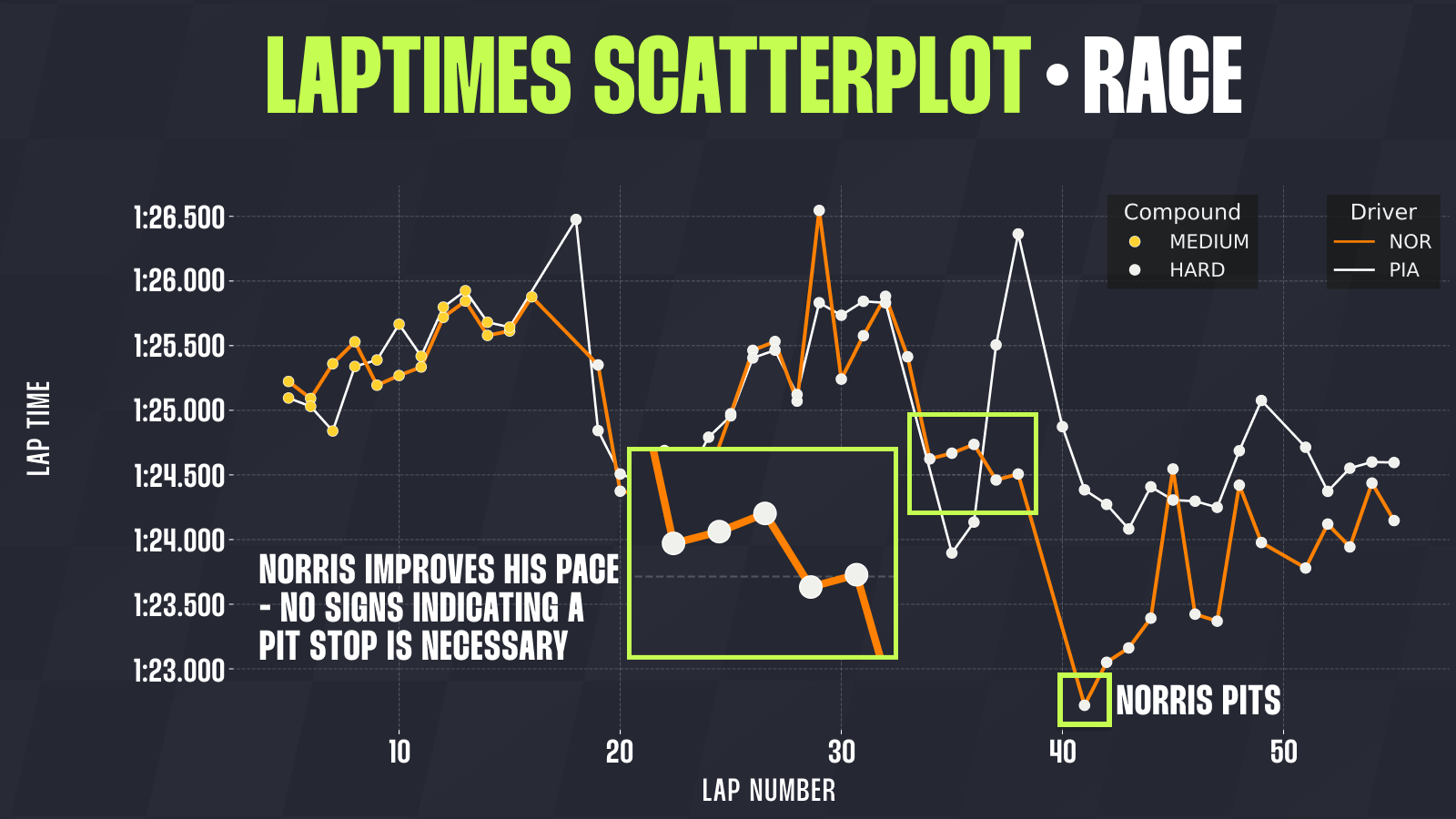
In other words, McLaren appeared to give the advantage to its faster driver. Earlier in the race it had tried to be fair, but the Sainz incident was beyond what the team deemed fell within the rights and wrongs of its papaya rules concept.
McLaren has its own way, its own rules that both drivers agree to, and that must be respected.
And to that point, Piastri himself stated after the race that team strategy was not the cause of losing the lead or the fight for victory. Whether that is truly the case we will never know, but the aforementioned telemetry data is right there for everyone to draw their own conclusions.
Want to be the first to know exclusive information from the F1 paddock? Join our broadcast channel on WhatsApp to get the scoop on the latest developments from our team of accredited journalists.
You can also subscribe to the PlanetF1 YouTube channel for exclusive features, hear from our paddock journalists with stories from the heart of Formula 1 and much more!
Read next: Lando Norris wins in Hungary after McLaren strategy twist, Hamilton penalised