

F1 uncovered: A final peek beneath the covers of the Alpine A525

Alpine has fallen to the bottom of the championship order this season, having shifted a great deal of their attention to next year’s campaign, with the A525 also carrying over much of its predecessor’s DNA.
However, that’s not to say there isn’t anything noteworthy or of interest, so let’s have a rummage about beneath the covers of the A525.
Fall from grace
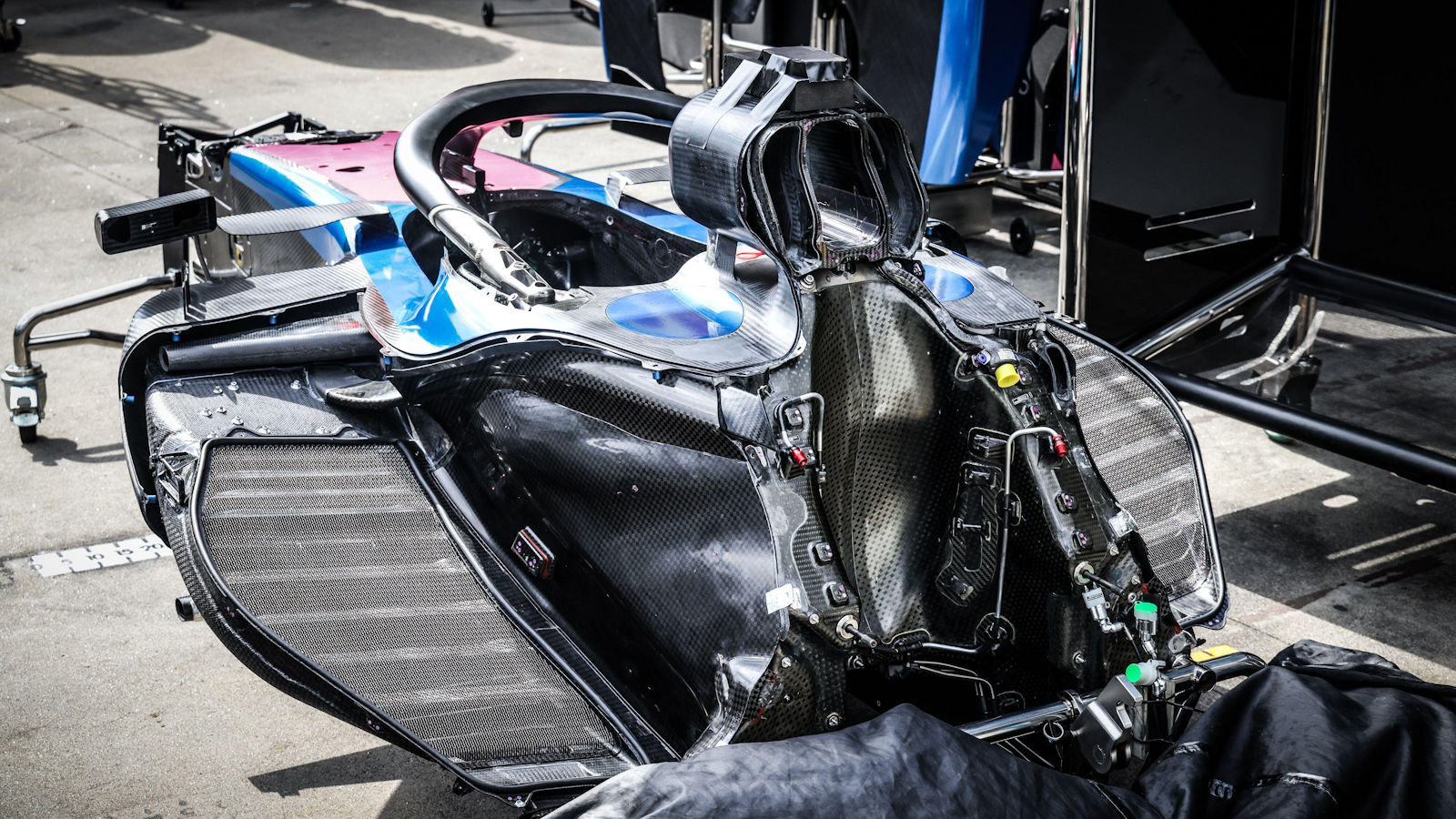
We got an insanely good view of the A525’s chassis at the start of the season, as the team left it unattended so it could be used by the marshals for extraction practice. This presented us with a unique opportunity to see how the powerunit would slide into the back of the chassis.
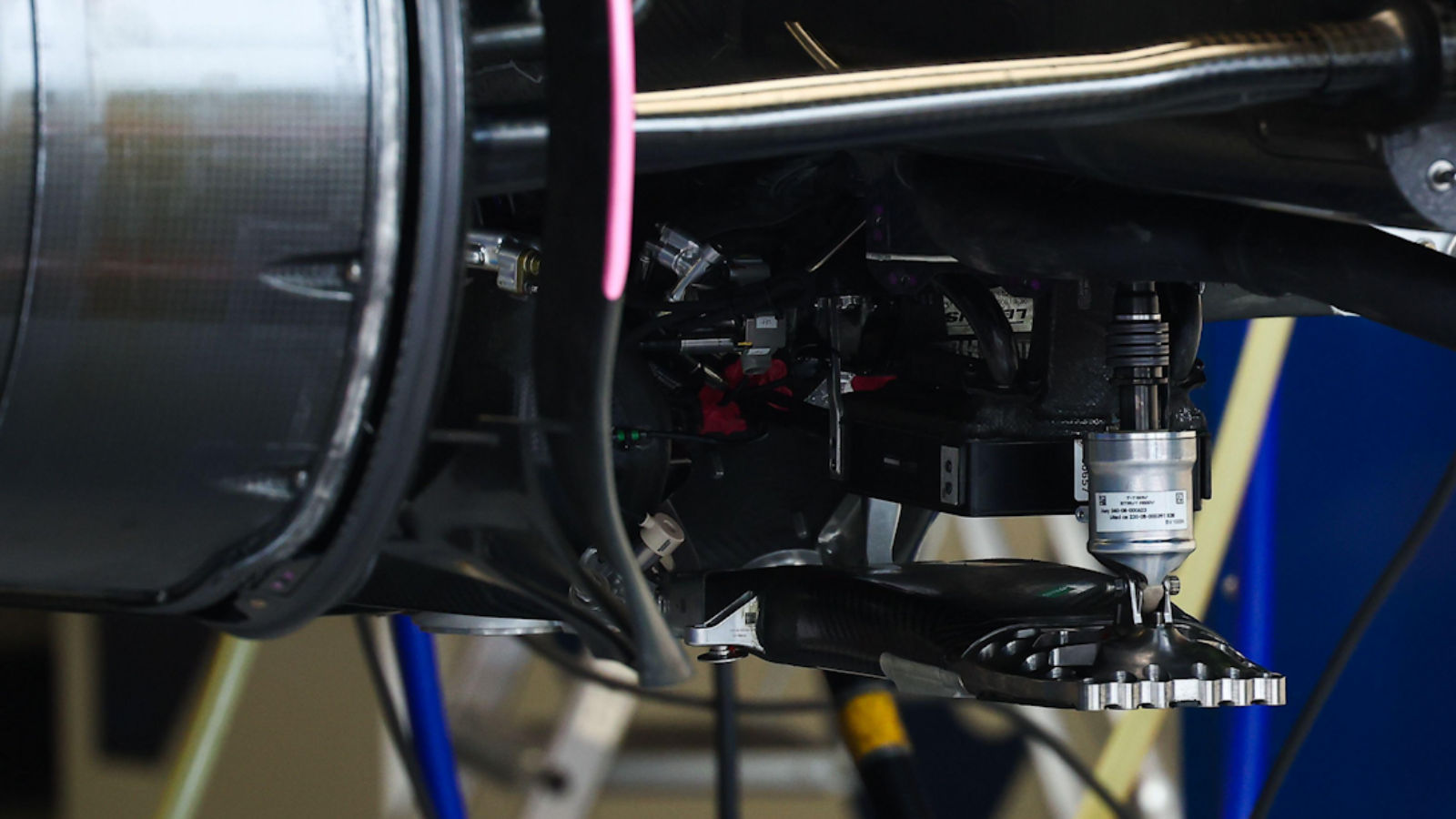
The Belleville sprung mechanism housed between the floor’s bib and the chassis.
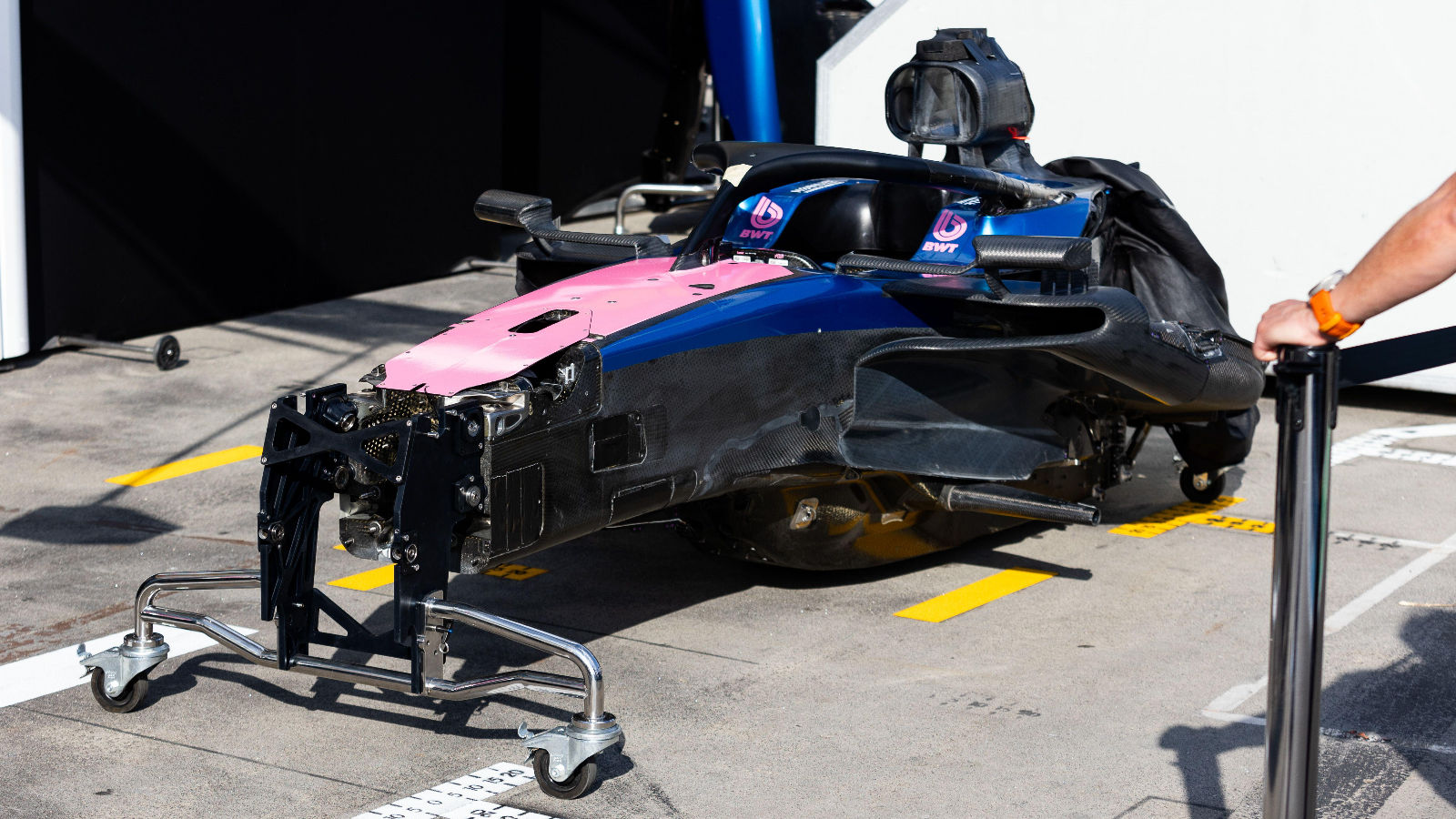
Another shot of the bare A525 spare chassis, showing off the position of the lower side impact structure and the P-shaped sidepod inlet.
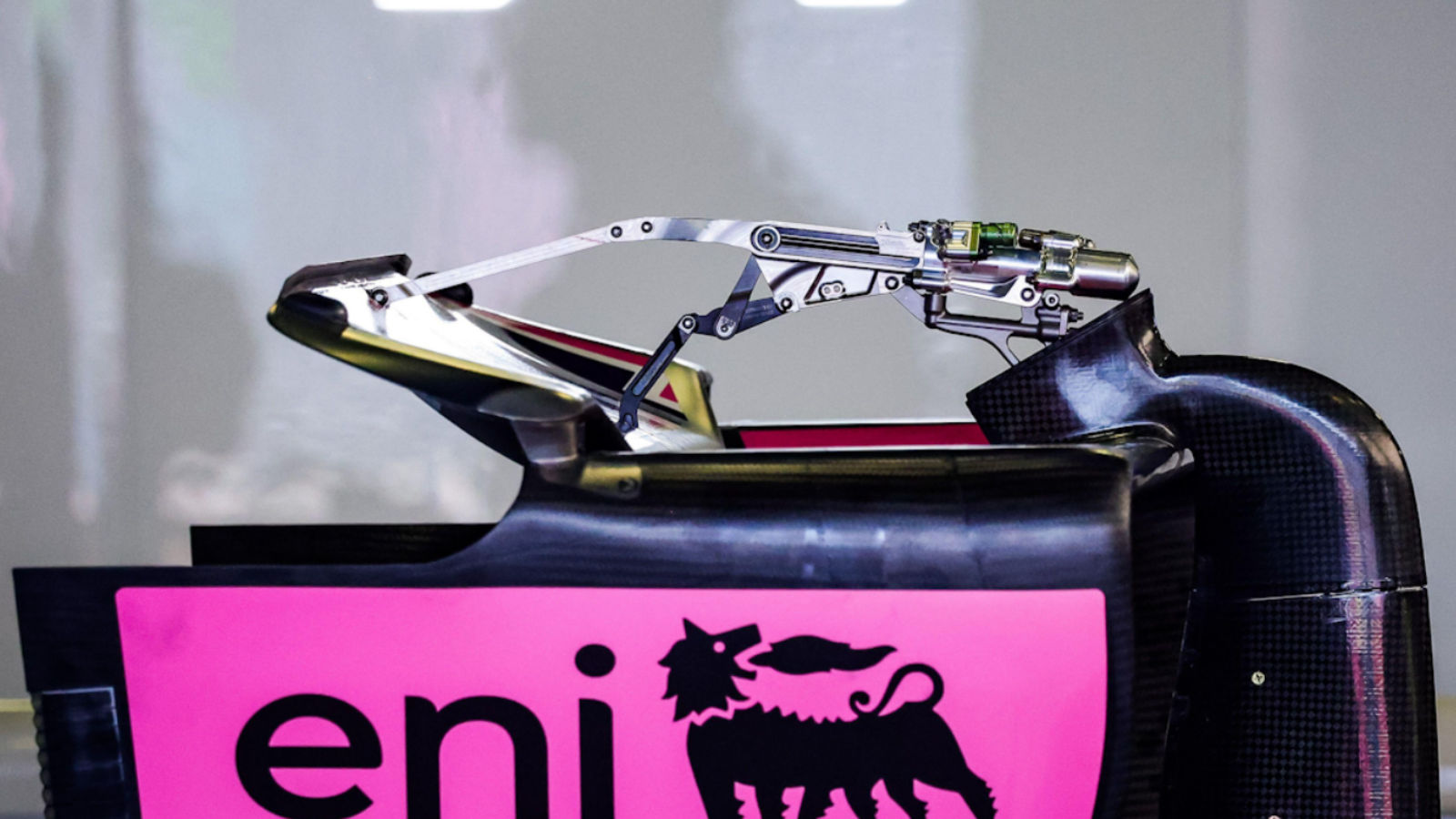
The Alpine A525’s DRS actuator mechanism is on show, as the pod has yet to be attached.
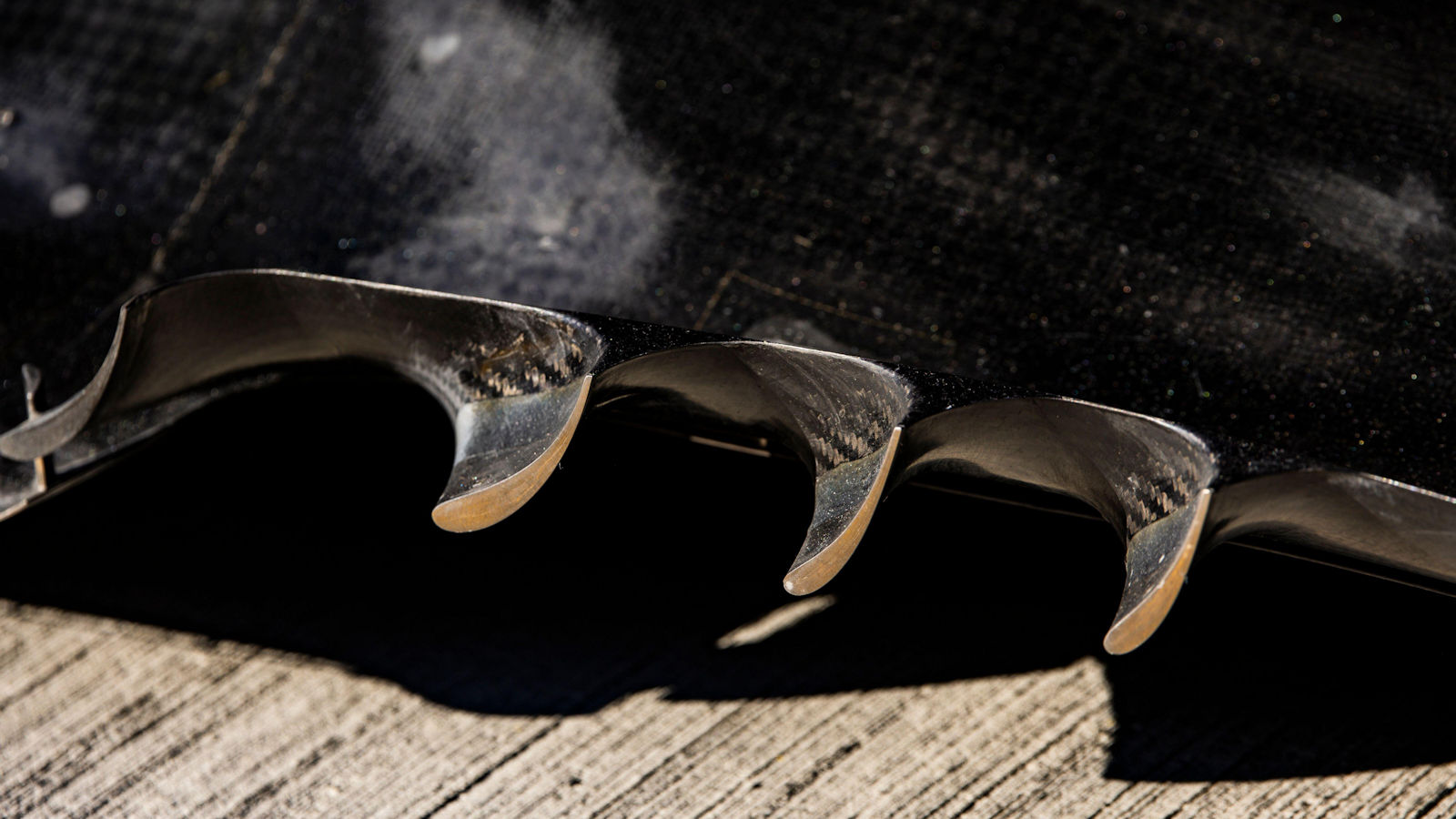
A close-up of the strakes that are upwardly swept on the inversely swept edge wing assembly.
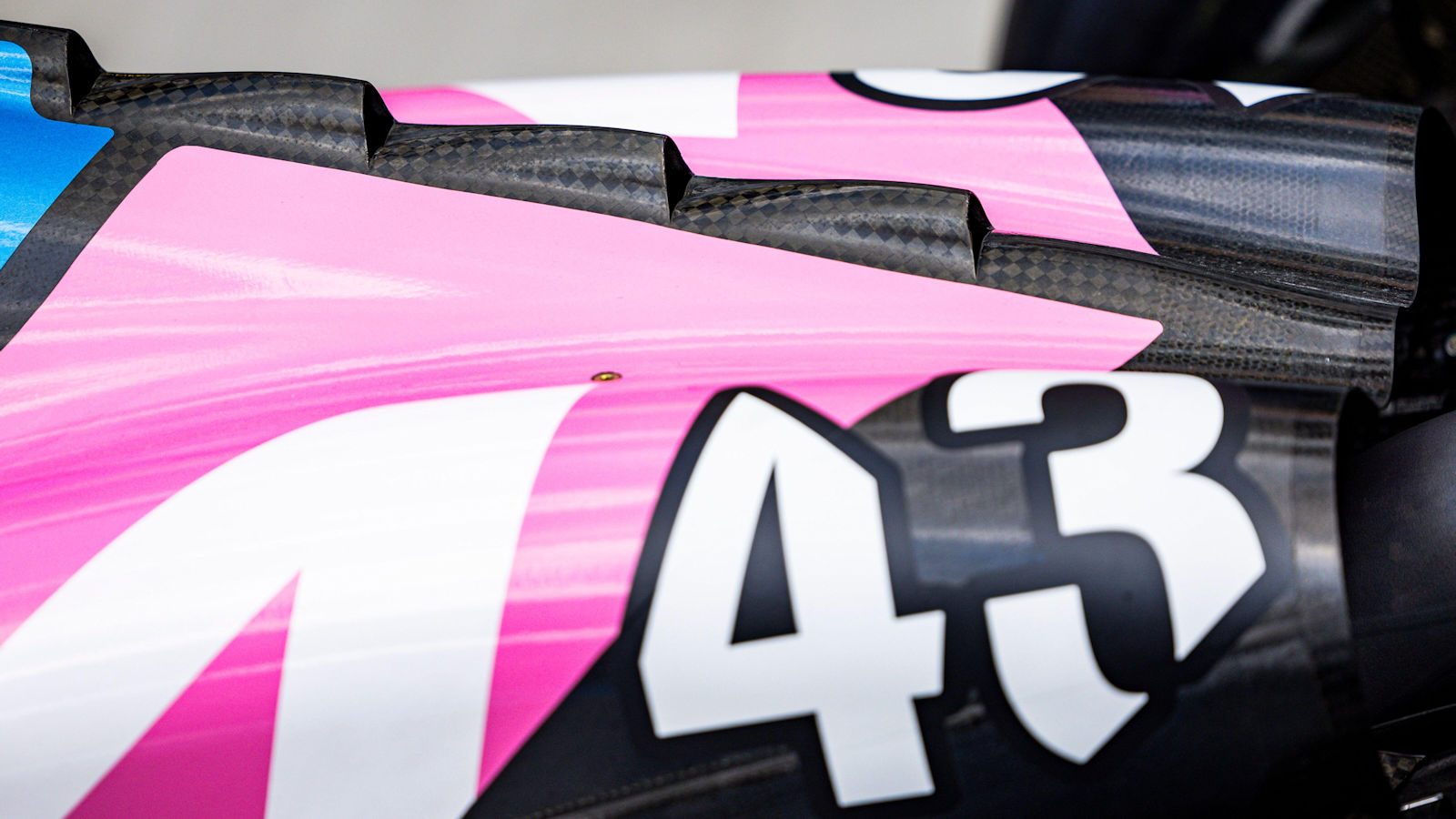
The small outlets found on the spine of the A525’s engine cover

A look at the exhaust manifold of the Renault powerunit used by Alpine in the foreground, whilst a floor support beam can be seen in the background.
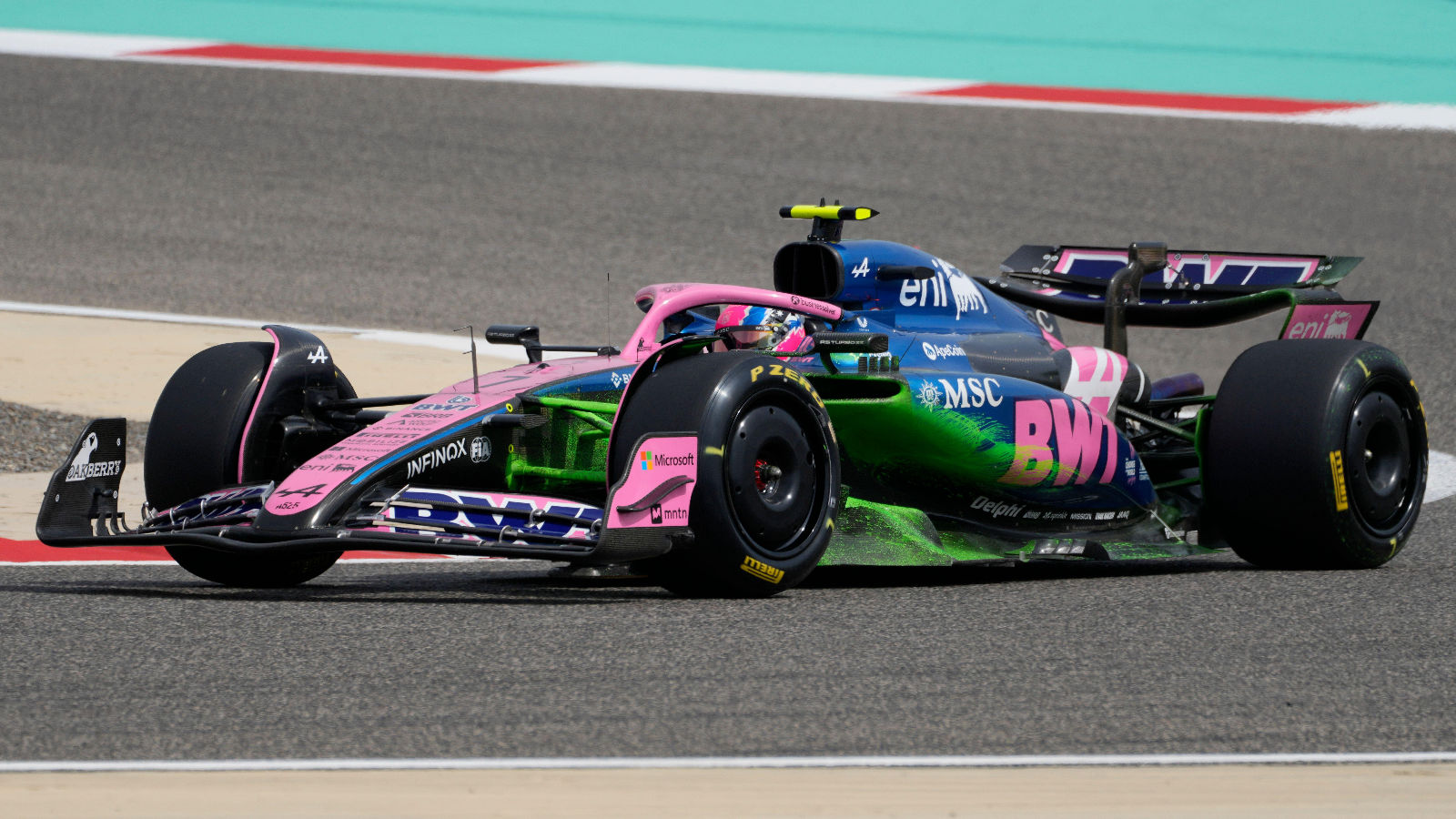
Flo-viz painted on the Alpine A525’s front suspension, floor and sidepods during pre-season testing to establish if the components are performing as anticipated.
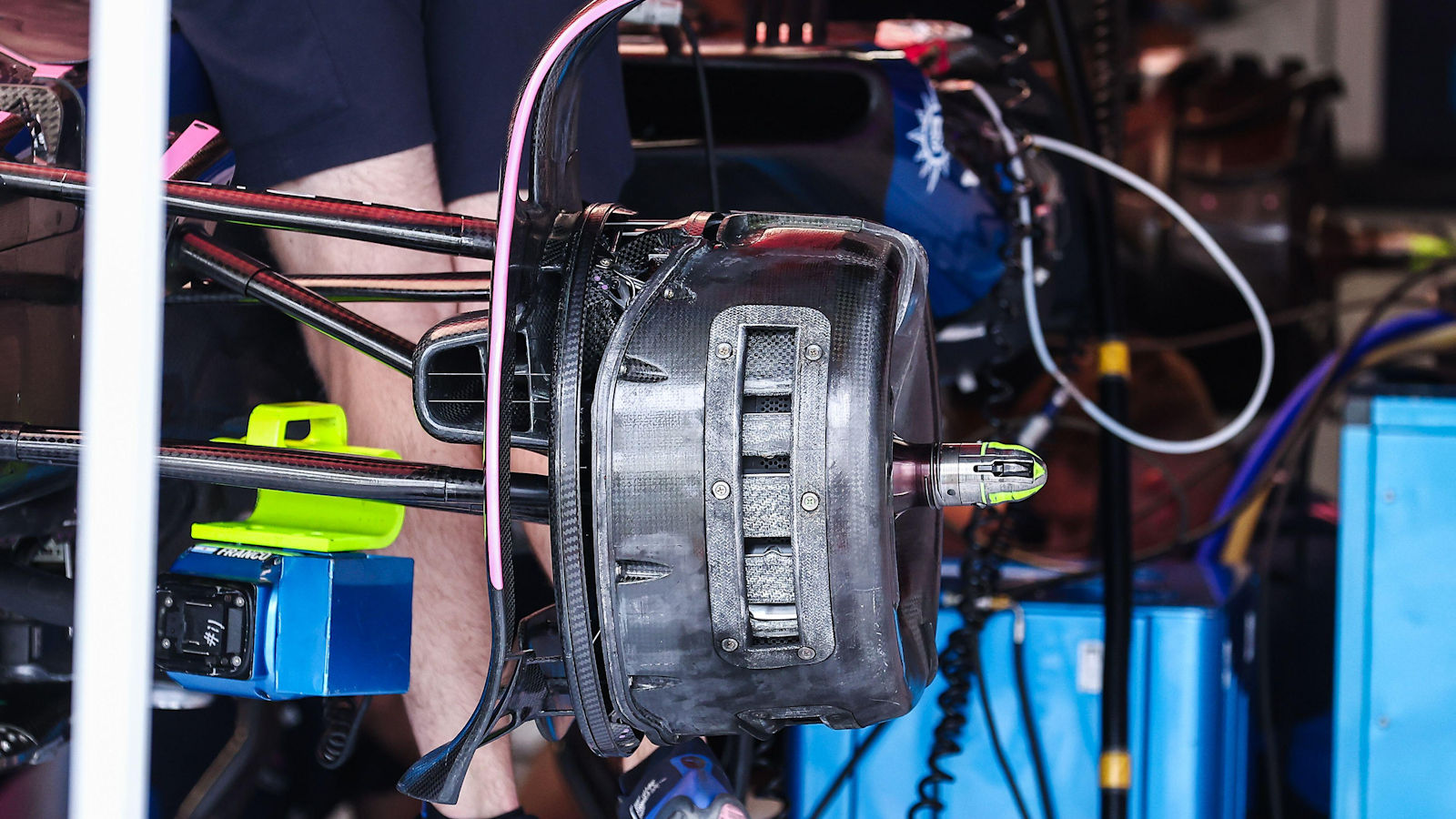
The inner drum of the front brake duct assembly, which has a window located around the brake disc that allows heat generated by it a means to escape through the caliper and into the void between this level of the drum nest and the outermost drum.
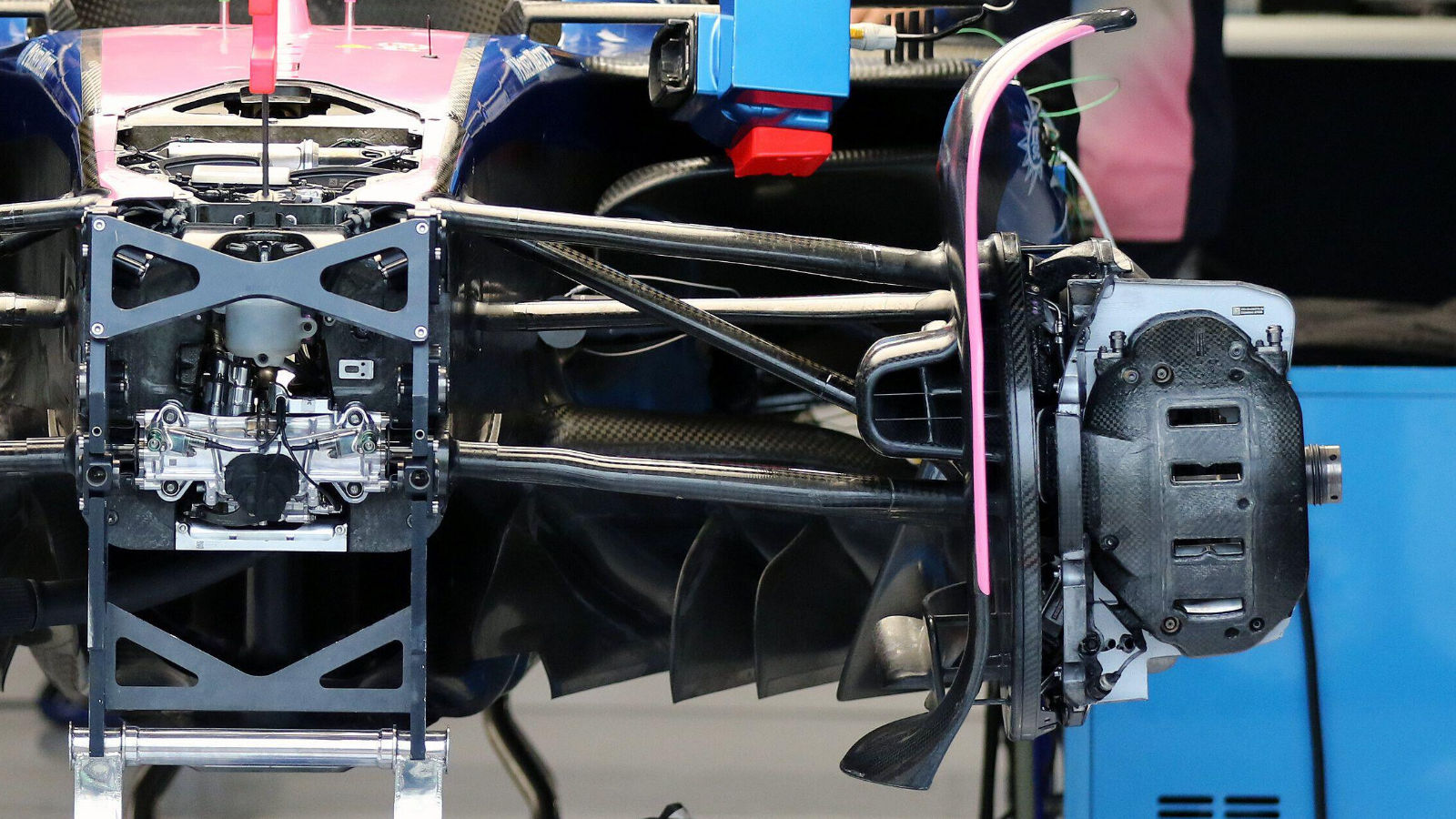
A look at the front brake duct assembly without the inner drum attached shows the caliper fairing, which itself has holes within to release heat through the various nesting layers.
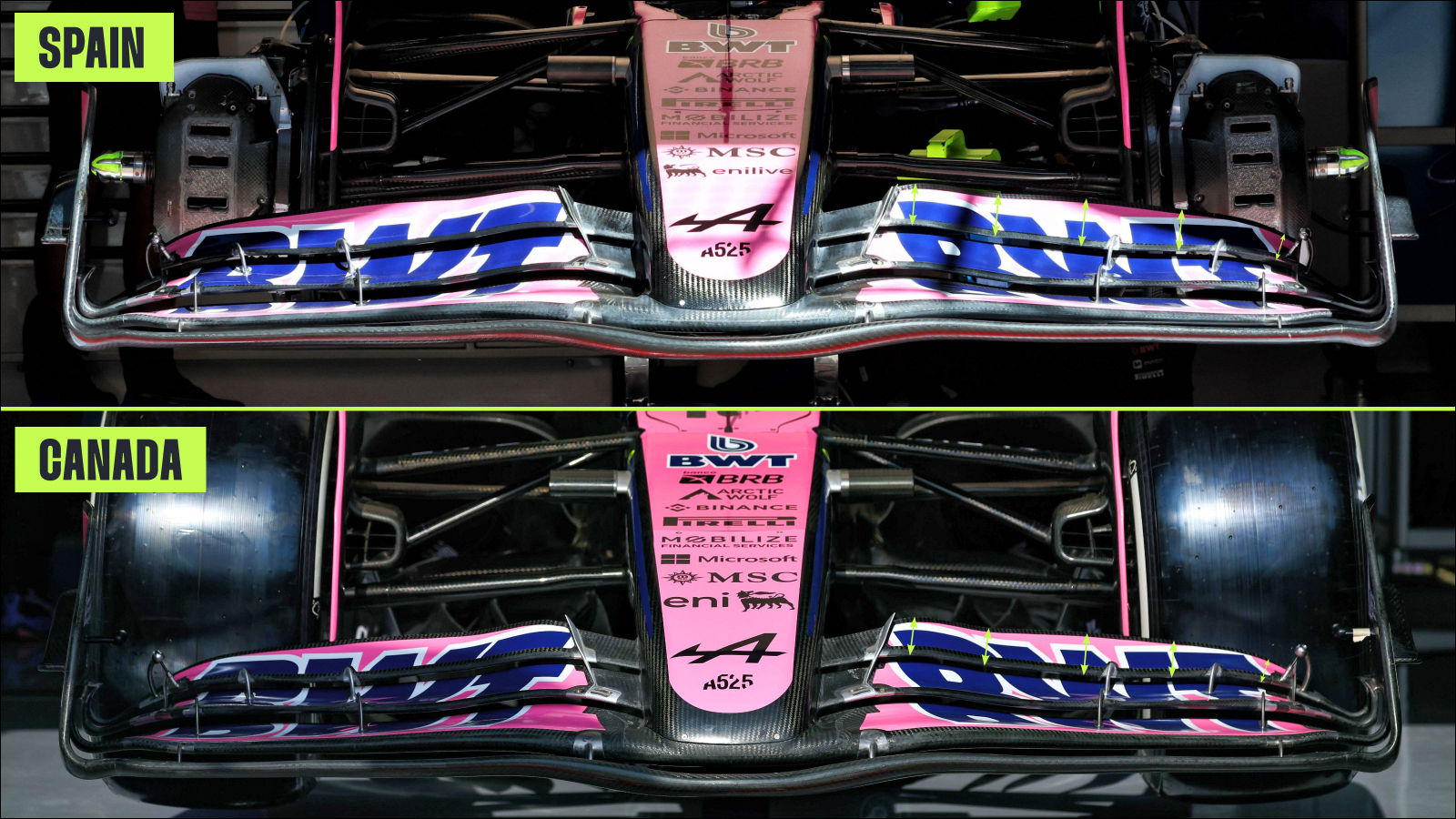
Alpine made changes to their front wing assembly at the Canadian Grand Prix, in which the height and shape of the flaps were adjusted to better serve the downforce level requirements of each circuit.
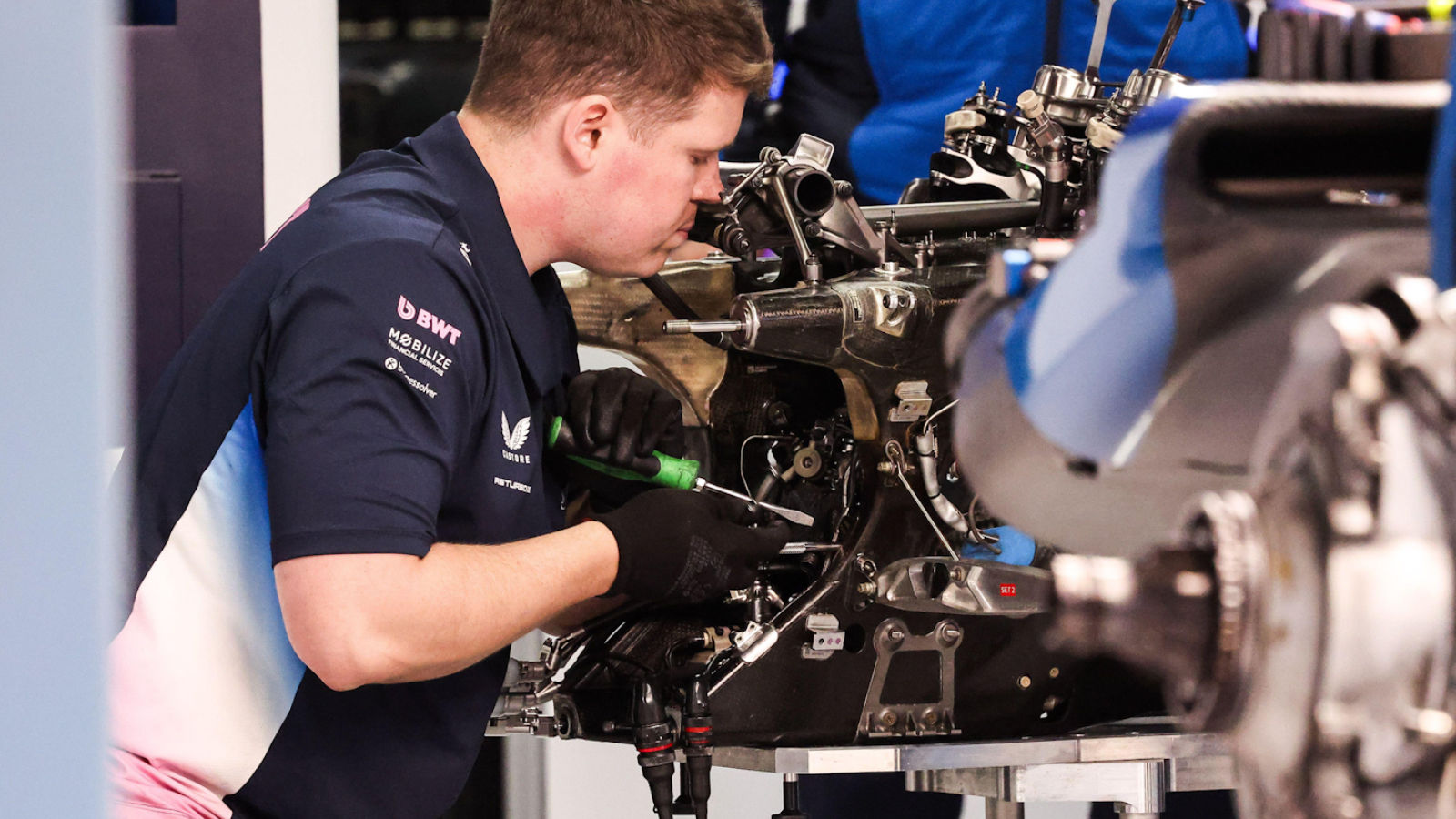
A mechanic works on the rear crash structure, gearbox and suspension unit for the A525, before it’s mounted onto the powerunit.
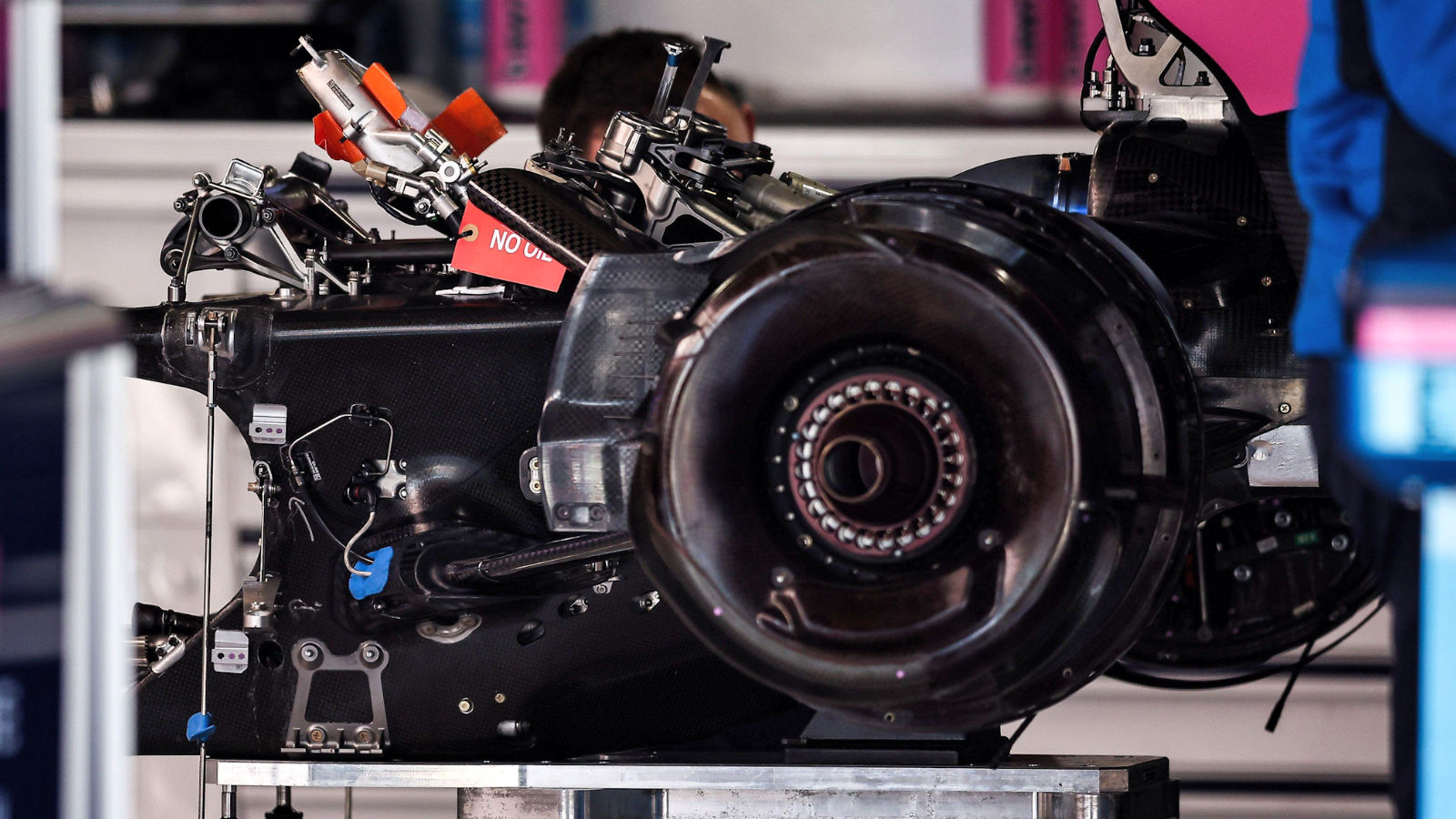
A side view of the rear crash structure, suspension and brakes from the A525
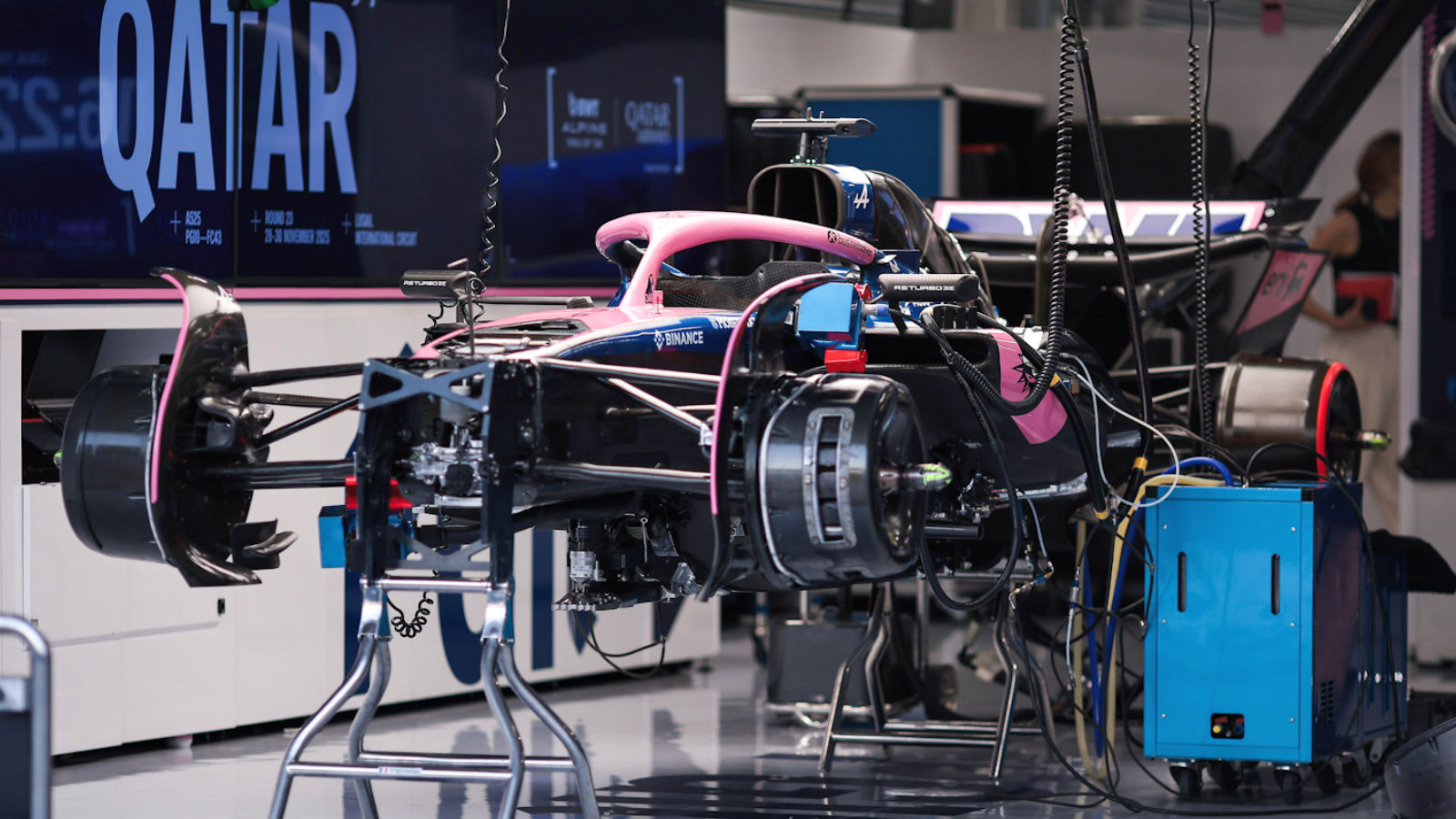
An overview of the A525 in a state of undress, as the car is prepared for action.
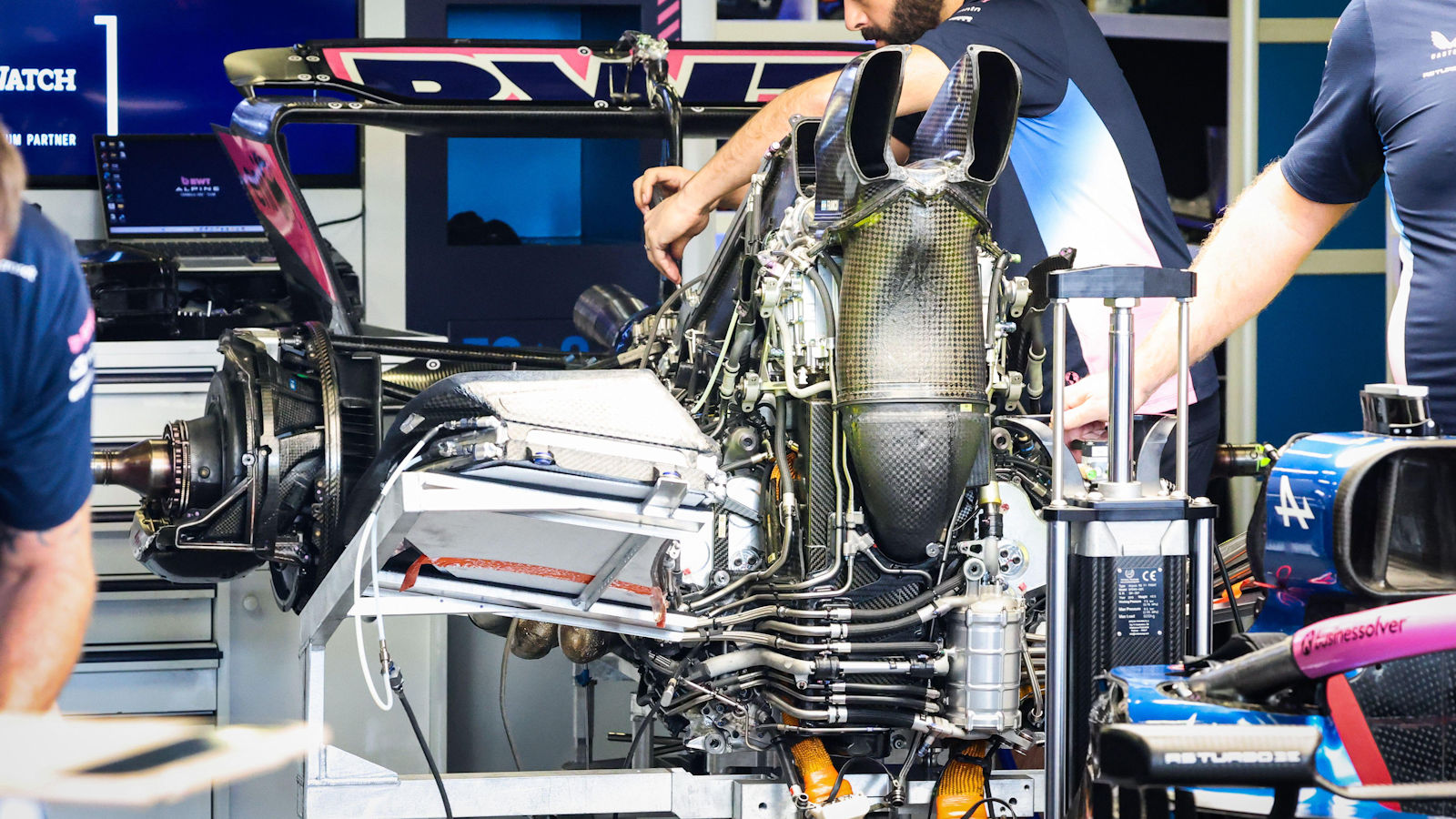
The front end of the Renault powerunit, with the periscope-style turbo inlet, fed from the roll hoop on show, along with the radiators, coolers and other ancillaries.
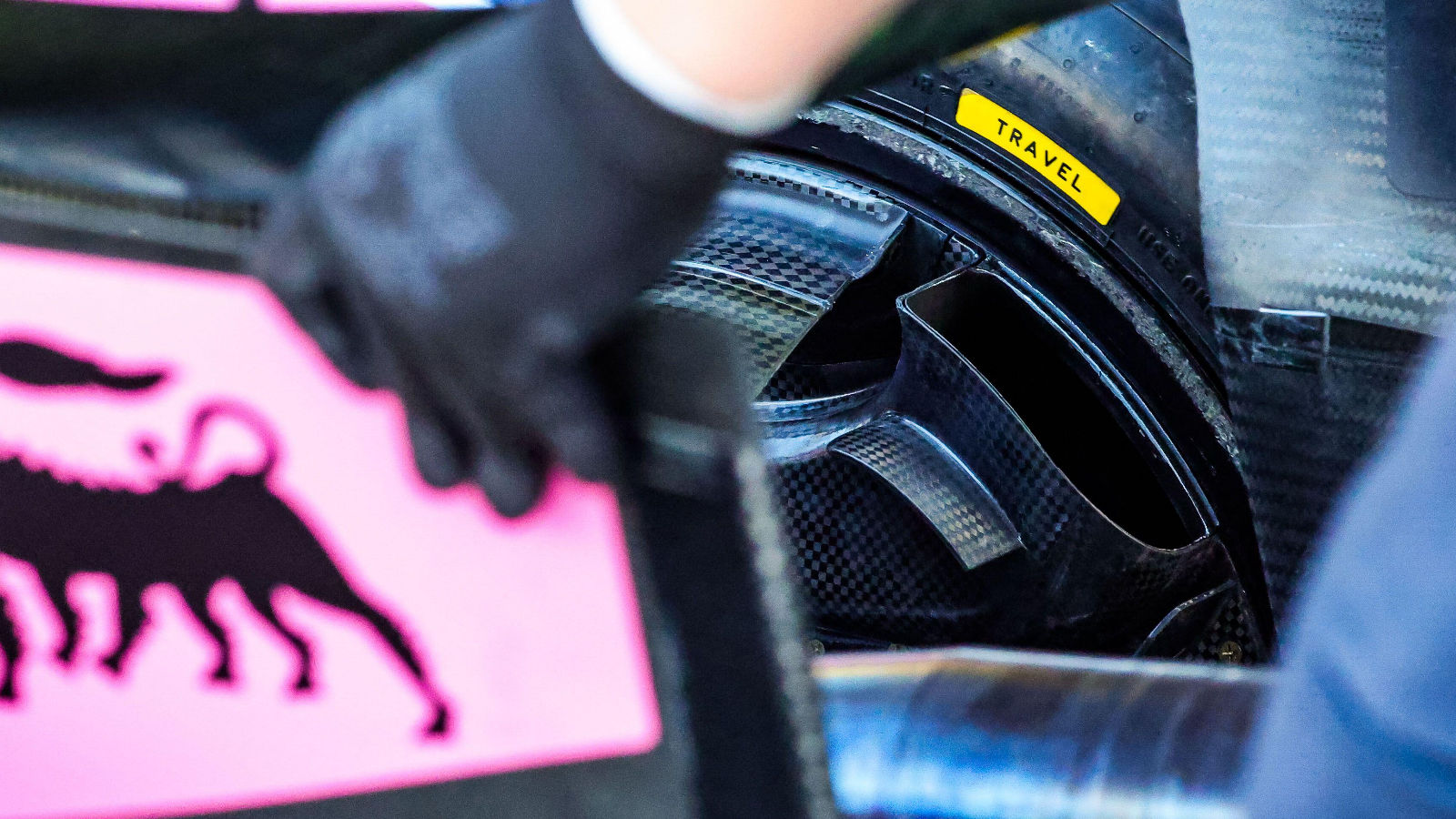
At the rear of the car a downwash winglet is mounted on the outer face of the rear-facing brake duct outlet.
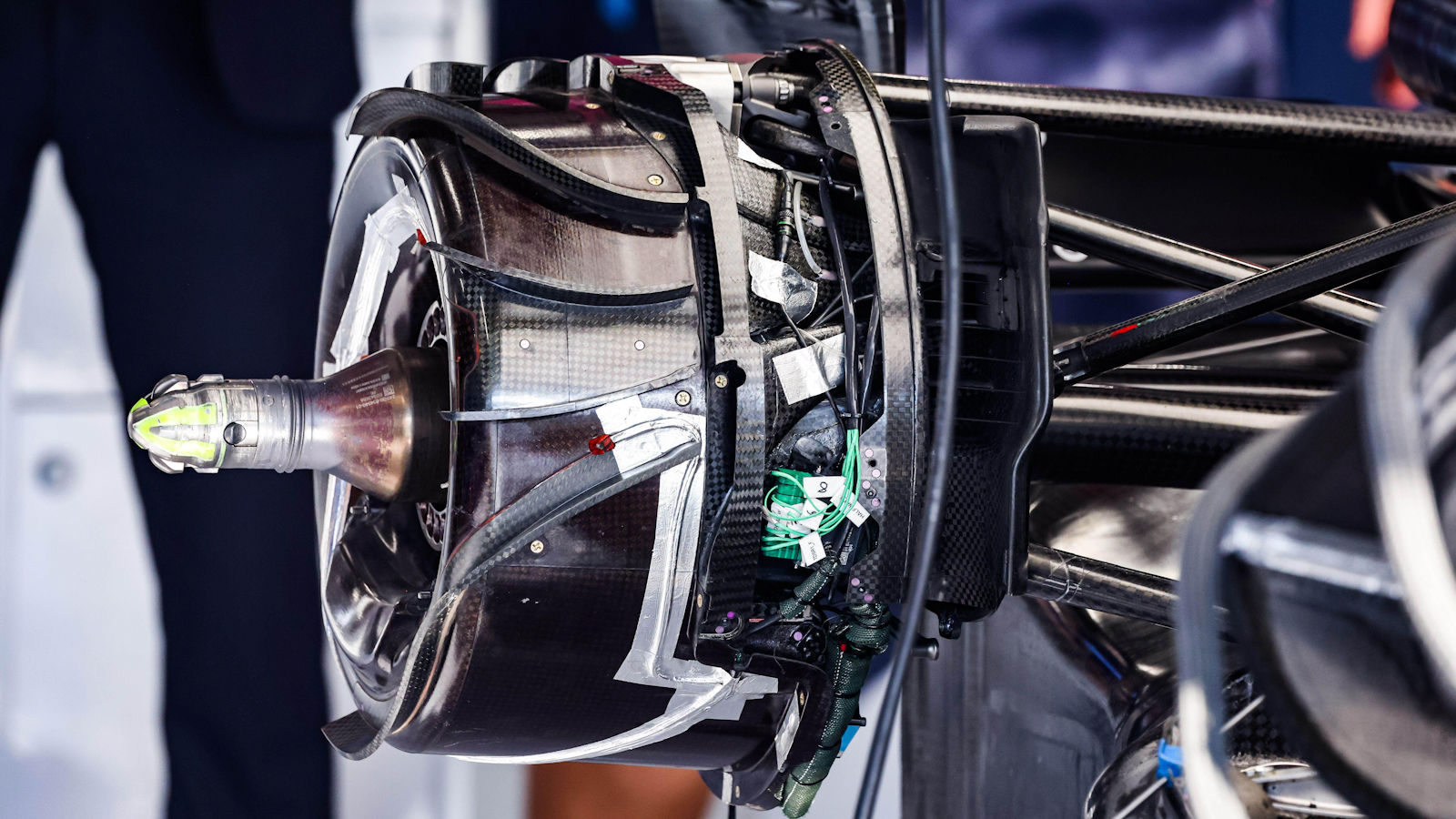
Numerous vanes are twisted around the inner fairing of the rear brake duct assembly, as cool air is dispersed not only to the brake components but is moved around the assembly as a means to cool the space between the brakes and wheel rims / tyres.
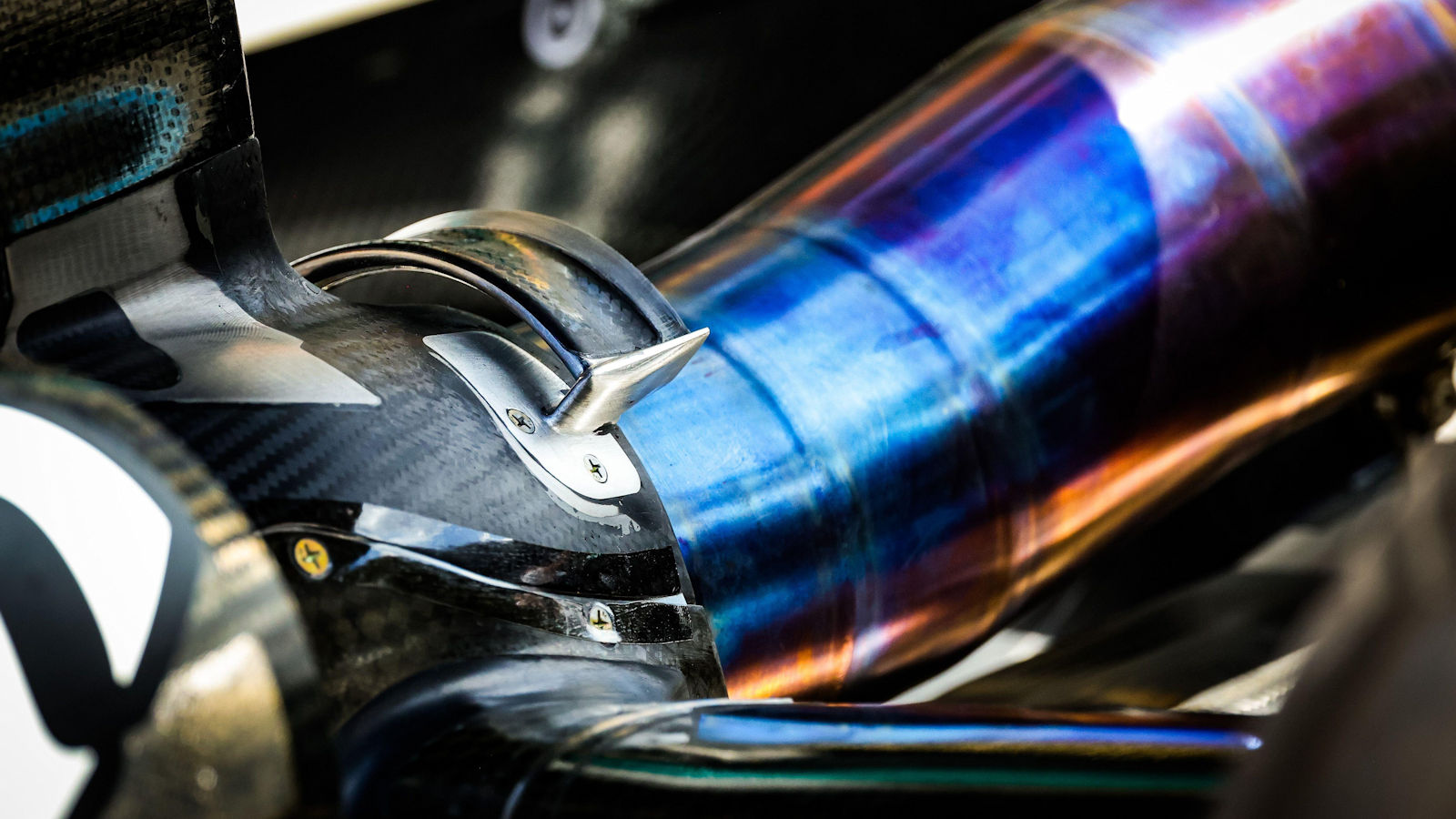
A small and unique detail mounted on the back of the rear wing support pylon is a mini-winglet, that matches the shape of the exhaust below.
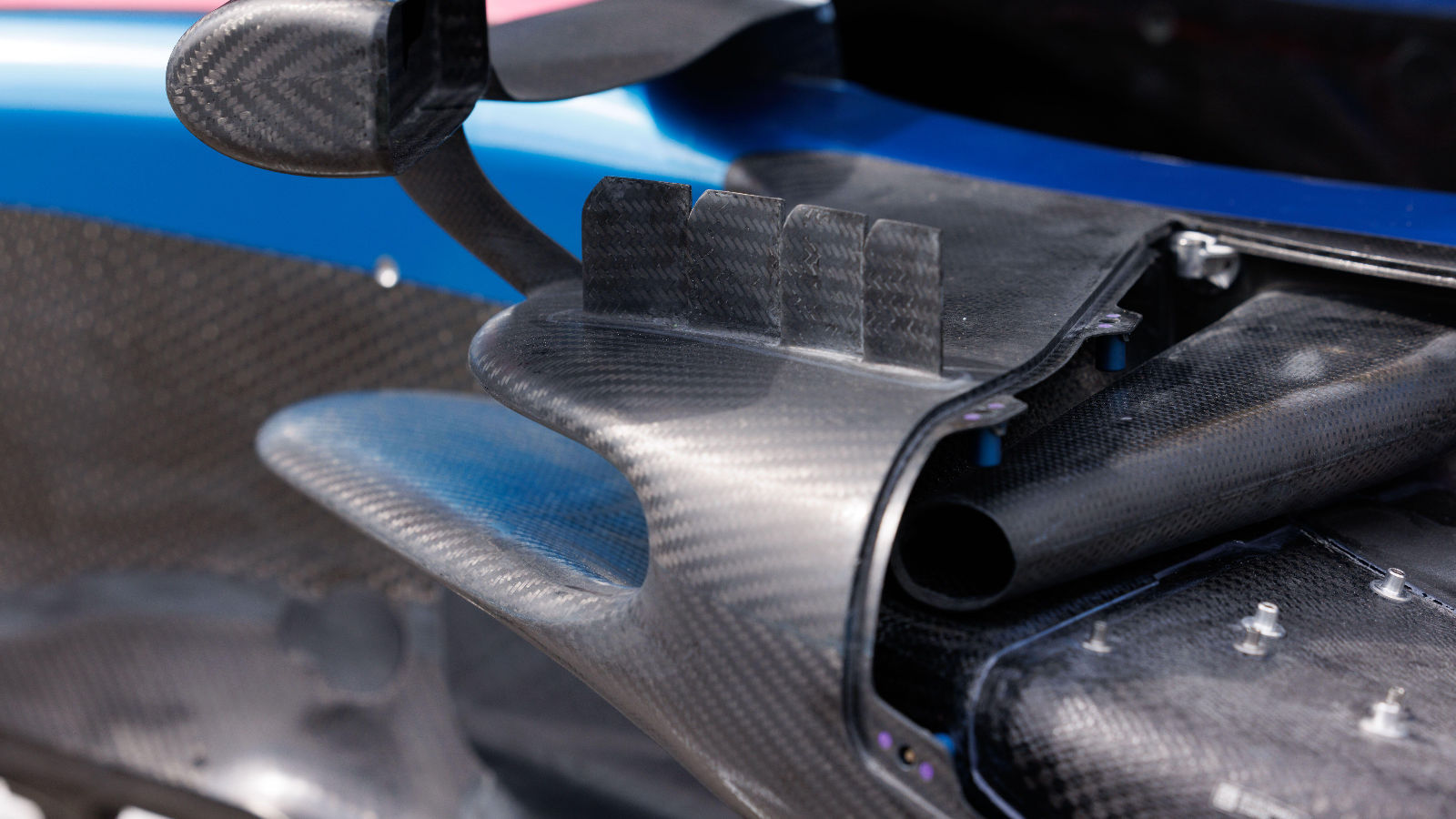
A close up of the inlet section of the sidepod, which houses the upper Side Impact Spar and has a quadruple winglet stashed away below the wing mirror.
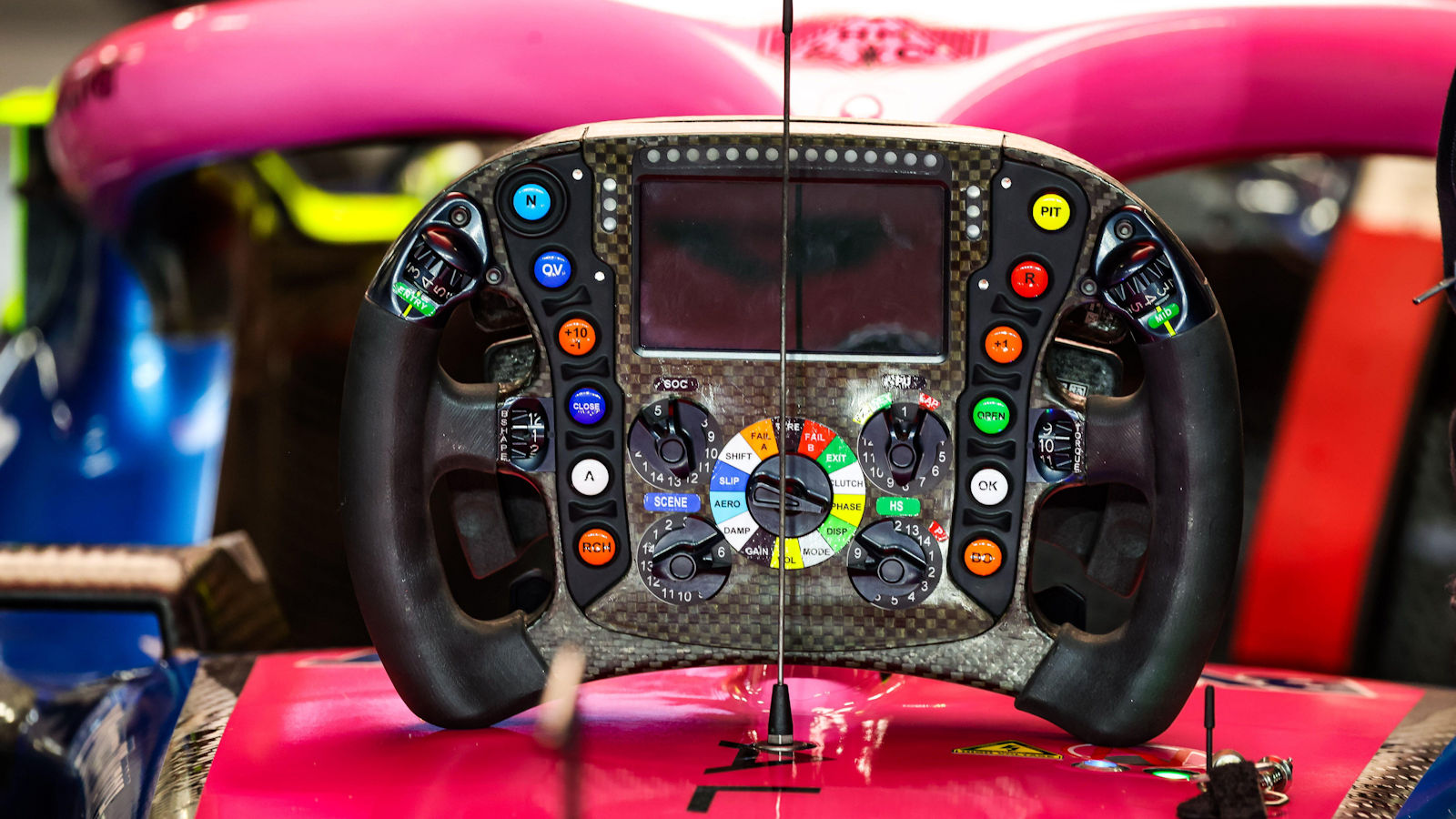
The Alpine A525’s steering wheel with the various rotaries, switches and buttons that control powerunit and chassis parameters.
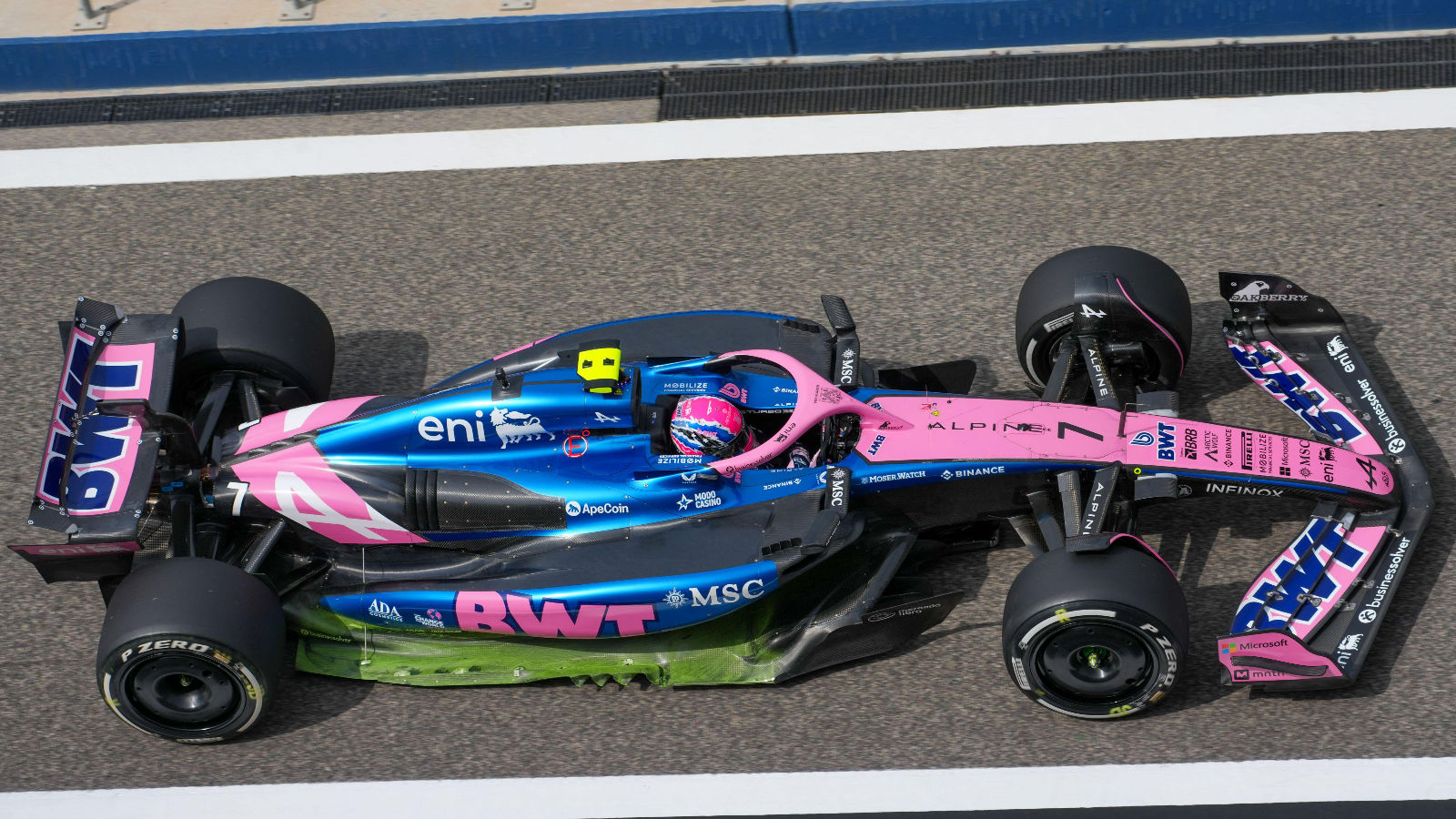
A top down overview of the Alpine A525, with flo-viz painted on the floor, as the team look to ascertain if the airflow here is performing as anticipated.
Read next: Revealed: What Toyota really wants to gain from its Haas F1 partnership


