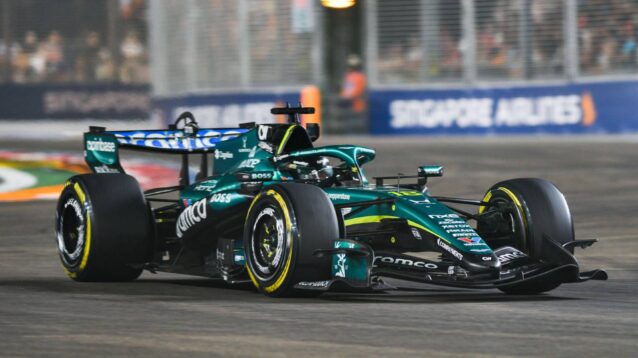

Aston Martin knew Mexico GP retirement was likely as Honda battles reliability issues
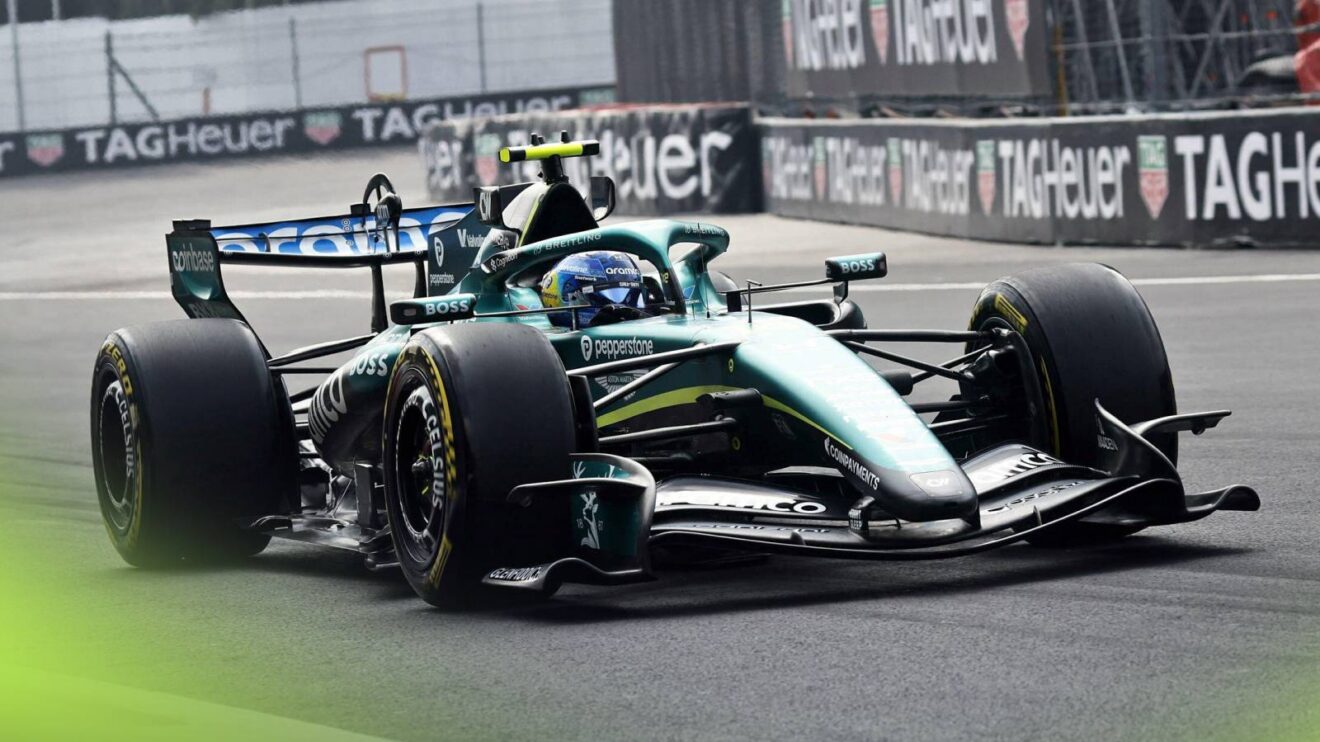
Aston Martin went into the Mexico City Grand Prix expecting a potential double retirement as Honda battled power unit reliability problems caused by the high-altitude conditions.
Lance Stroll and Fernando Alonso were both out of the race at the Autodromo Hermanos Rodriguez by Lap 7 due to issues related to the ERS cooling circuit on the Honda power unit.
Aston Martin expected Mexico GP double retirement amid Honda reliability crisis
Alonso’s retirement in the pits on Lap 5 came 24 hours after an MGU-K cooling problem during qualifying, which resulted in him starting from 17th on the grid.
The Spaniard had called into the pits on Lap 3, as had Lance Stroll, with Aston Martin attempting to get both drivers into clear air rather than circulating in traffic.
But the efforts proved futile, with their races coming to an end just a few minutes later. Stroll joined his teammate on the sidelines after coming to a halt out on track.
With Honda struggling for reliability in general during 2026, its power unit ERS cooling circuit proved particularly susceptible to overheating in the thinner air at altitude in Mexico City. At 2,240 metres, it is one of the highest major cities in the world.
Following the double retirement, Honda’s Shintaro Orihara shared some insight into the problems encountered in Mexico and looked ahead to the weekend in Brazil.
Honda reveals countermeasures after Aston Martin’s Mexico GP failures
“We have laps to the grid and, in quali, we have a tyre preparation lap,” Orihara said on Thursday in Brazil.
“We had the same lap in pre-practice, but in a different situation. So in that special circumstance, our engine behaved a little bit abnormally, not as expected, and we got some stress on our ERS cooling circuit from the engine.
“Then we got a failure on our MGU-K, which happened in quali and the race in special circumstances, and that’s because of the high-altitude Mexico condition.
“Then here, in Brazil, it is not as same as Mexico, but still high altitude side.
“So we brought some countermeasures for this event, not only on the hardware side but also on the software side, to improve our robustness in that condition.”
Orihara emphasised that the cooling circuit itself is a mechanical factor, rather than being linked to the car’s overall cooling configuration. This meant there was little that could be done to help the situation, although Aston Martin had still taken a gamble by pitting its drivers in an attempt to get them out of traffic.
He explained that the problem “didn’t directly link to traffic” but added: “Of course, that doesn’t help PU operation, but it’s not directly linked to the problem.”
Honda targets 2027 F1 power unit improvements after Mexico GP problems
With a curt Fernando Alonso on Saturday giving way to a more considered call for Honda to learn lessons from the weekend in Mexico, rather than giving in to his frustrations at travelling so far for such a short race, Orihara said vital lessons were being learned with every issue.
“That was also a hard race for the Honda side, and I understand how drivers were frustrated at that event,” he said.
“The learning point is again our engine: in some special circumstances, there is some lack of robustness.
“So we can always learn something from that type of problem, and we bring back the old problem to the factory side. How can we prevent that from happening again, and also in the future?
“At this moment, our factory is focusing on the 2027 power unit, but we can apply this experience to improve the robustness of next year’s engine.
“That was a tough race, but it will bring some experience into next year.”
Mike Krack explains why Aston Martin expected Mexico GP retirements
Sitting alongside Orihara for the Thursday media session, Aston Martin’s chief trackside officer Mike Krack confirmed that his team had gone into the race knowing that retirement was likely, and that they had become aware of the situation early in the weekend.
He revealed that various scenarios had been discussed with the drivers.
“I think you need to be realistic; when you prepare, you need to discuss what possibilities you have in the race,” he said.
“There are not many; there are a few. So we discussed together what could be the different levels of, yeah, call it levels of escalation.
“You know, if you have possibilities to go… the first one is obviously free air, but then you have also gear usage. Then you can also turn the power down.
“Yeah. So there are many options that you have to discuss that we have discussed, but we didn’t get that far.
“You have a list of options that you can pull, but we quickly realised that they were insufficient, and there’s nothing you can do then.”
Will Aston Martin face the same Honda reliability problems in Brazil?
With F1 racing in Brazil this weekend, Sao Paulo’s elevation of 800 metres is much lower than Mexico City’s, meaning Krack doesn’t believe the same issues will occur at Interlagos.
“I think when you come here, first of all, it’s much colder,” he said.
“It is at altitude, but it is not higher than Spa or Austria – they’re very similar, so I think a lot of these issues that we have seen, we will not see them here.”
Read Next: Alex Dunne keeping F1 dream alive with 2028 opportunities emerging