
Carlos Sainz picks out ‘huge’ F1 2026 performance indicator and ‘cannot wait’ for pre-season
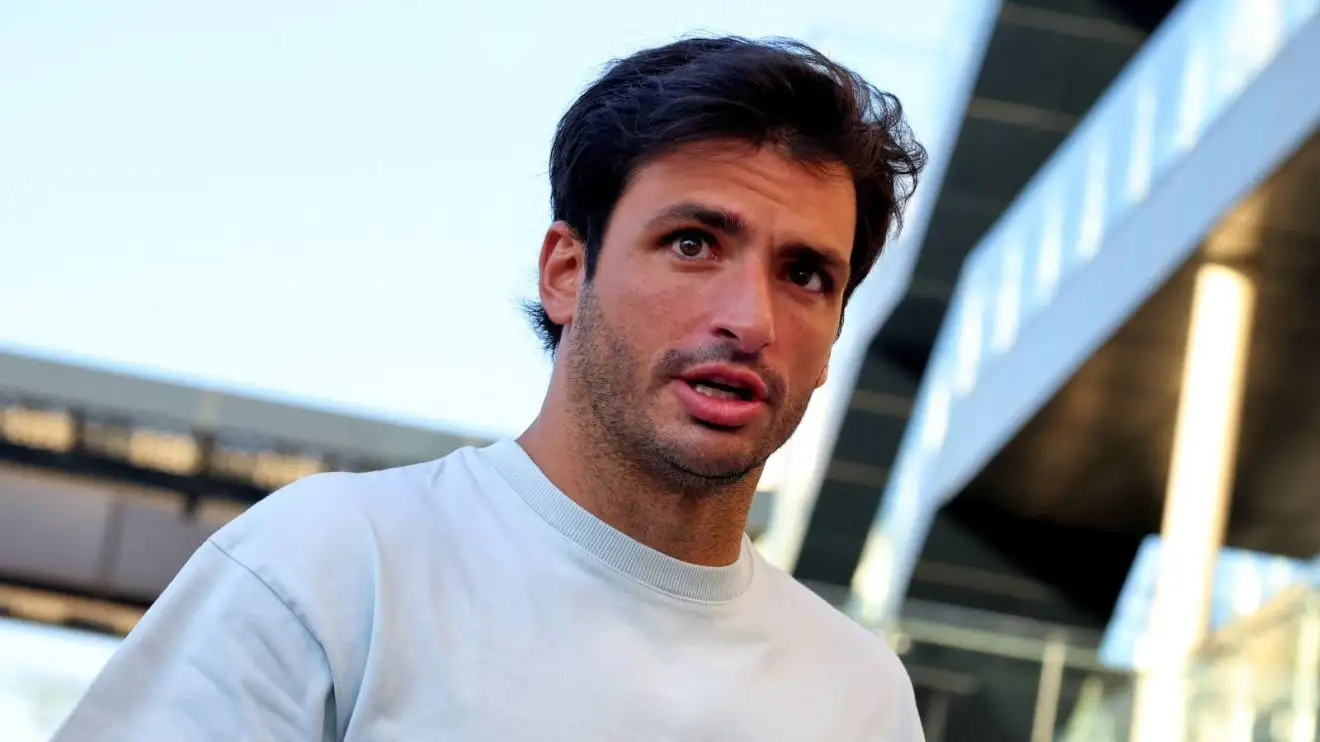
Carlos Sainz earned two podiums for Williams in his first season with the team.
Carlos Sainz said he “cannot wait” to have a say on the finer details on Williams’ F1 2026 challenger, but believes the team’s power unit could be a “huge thing” in terms of a performance differentiator.
Williams has a long-running customer power unit deal with Mercedes, with team principal James Vowles having been a longtime senior staff member with the Silver Arrows before taking on his role with Williams.
Carlos Sainz ‘cannot wait to have an influence’ on Williams’ F1 2026 car
Formula 1 is heading towards all-new regulations next season, with brand new power units and chassis coming to the grid in an enormous change for the entire field.
In what will be his sophomore season as a Williams driver, too, Sainz pointed out the importance that having the right power unit could have as work continues at pace to get cars ready for next season.
More than that, though, it will be the first time the 31-year-old has a say in the overall direction Williams will take with a new car, which gives plenty of potential for him and Alex Albon to have their input.
“First of all, I cannot wait to also have an influence on the design of the car,” Sainz told PlanetF1.com and other media in Abu Dhabi. “The setup philosophy, and the direction that the car can take into next year, and to make the drivers feel a bit more comfortable or a bit more at ease from the get go.
“From the baseline of the car that we put on track, I think we can do steps forward already on that side, but I think once the season starts, I think the driver is going to have more of an influence on software development with HPP [High Performance Powertrains], in this case, Mercedes.
More on F1 power units in 2026
Imminent Audi F1 milestone with F1 2026 engine set to burst into life
Explained: What are F1’s current power unit engine rules?
“I think the power unit is going to be a huge thing, and I think having two experienced drivers like Alex [Albon] and I think, in that sense, could help.
“Then when it comes to setup development, it’s more keep doing what we’ve done this year, and just have the effect of before the year, before we put the car on track, and then having the effect of during the year, how to make the car quicker.”
That said, however, Sainz joined Williams with the potential of it being a journey back to the front of Formula 1 after his departure from Ferrari.
The team enjoyed its best season in almost a decade, however, with Sainz taking two podiums as Williams earned fifth place in the Constructors’ Championship.
Despite the obvious improvements compared to recent seasons, however, the Spanish driver is keeping his hopes grounded as the team heads towards these regulation changes.
“I think next year is such a big change of regulations that I don’t plan to change my expectations too much, because it’s not like the new regulations give me any stronger feeling that we can do a step forward,” he explained.
“I think if the regulations would have been stable, given that we’ve done a few races this year where we’ve been two to four tenths off pole position and race pace, I would say this team, with another stable set of regulations, and having so clear now what the car’s weaknesses are and where we need to improve, and seeing the team capacity to improve them, I would feel more confident, let’s say, that we can keep doing these incremental steps in the next two or three years to get to the top.
“But the new set of regulations is such a reset for everyone, for all the engineers, for myself, that I don’t feel any more confident about it, because we could do it really well and put together a very good car for next year.
“But at the same time, very quickly, you can get it wrong, and you need to reset and find the right way that maybe another team has found a loophole or a direction that you never thought would be possible. So that’s why, for next year, I think we need to stay super focused and calm about our expectations.”
Additional reporting by Mat Coch and Thomas Maher
Read next: Why Red Bull 2.0 left no room for renegade Helmut Marko