

From winning F1 cars to military drones: How F1 tech arrived on the battlefield


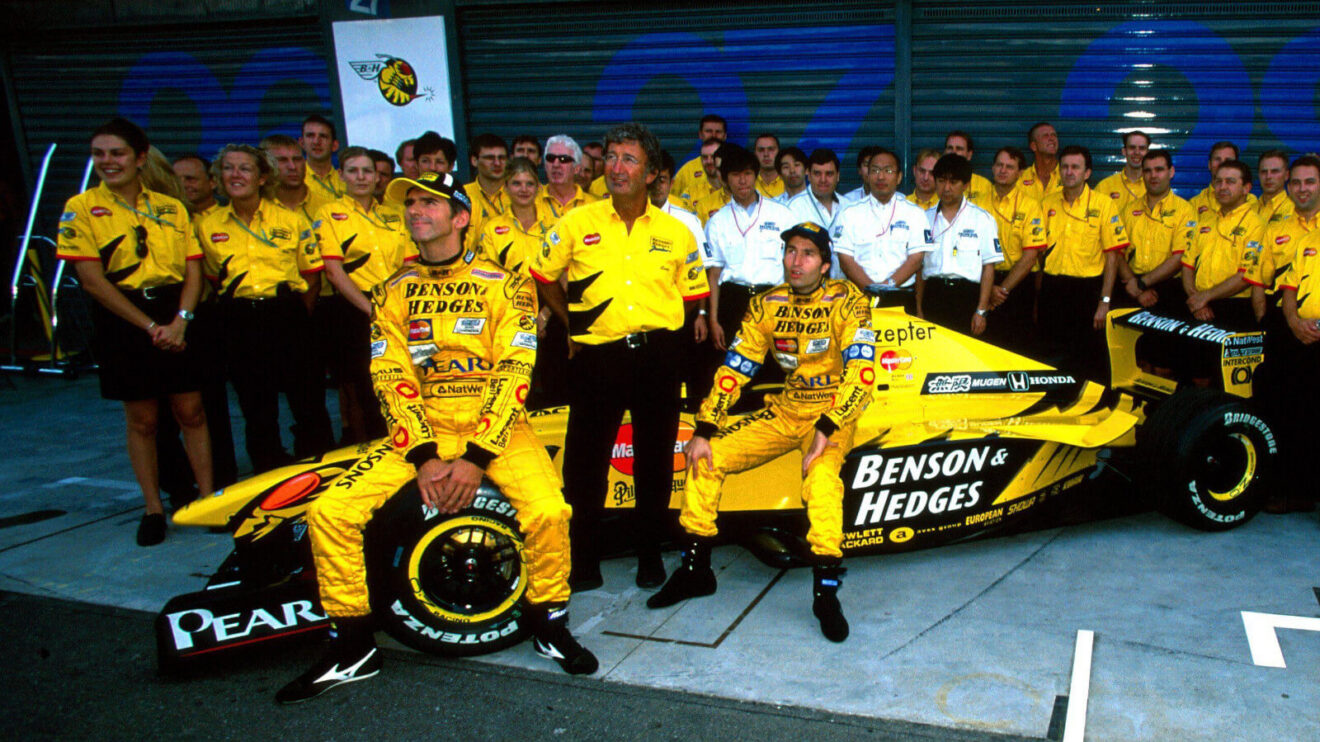
The 1999 race-winning Jordan Formula 1 team
Mike Gascoyne once built race-winning Formula 1 cars. Now the former Jordan technical chief is applying F1 technology to develop long-range military drones for the battlefield.
Gascoyne has an impressively long CV in Formula 1, having worked with McLaren, Sauber, Jordan, Renault, Toyota, Spyker, Force India and Team Lotus/Caterham.
Mike Gascoyne takes Formula 1 technology into defence sector
Want more PlanetF1.com coverage? Add us as a preferred source on Google to your favourites list for news you can trust
His most notable success as a Formula 1 designer was at Jordan when he was brought in by Eddie Jordan to replace Gary Anderson, and designed the team’s 1999 race-winning Jordan F1 car.
The 199 Benson & Hedges Jordan, which was powered by Honda, won the French and Belgian Grands Prix with the team finishing a career-high third in the Constructors’ Championship.
Swapping to Renault, Toyota, Spyker/Force India and then Team Lotus/Caterham, Gascoyne left the Formula 1 paddock in 2012.
But for over a decade, the Briton had dovetailed his Formula 1 commitments with his duties as owner and founder of MGI Motorsport, now MGI Engineering.
Focused on creating lightweight composite solutions with Formula 1 technology, Gascoyne’s MGI company is now making headlines for its long-range missiles.
The company is making autonomous drones that are not only faster but also lighter than competitors.
Added to that, MGI’s Tigershark and Skyshark drones also use F1 sensors to map the battlefield, providing the drones with backup should the GPS navigation systems be jammed.
Gascoyne told the Daily Mail: “Formula 1 is 25 years ahead, as an industry, as teams will spend any amount of money to get ahead.
“The UK is world-leading in F1 and in aerodynamics. So we are ideally placed to bring a depth of knowledge and technology to the defence sector.
“I’m proud of British engineering and excited about what we can bring to the battlefield.
“These long-range drones are not a million miles from a racing car, so a lot of the tech, materials and design have transferred seamlessly.”
MGI is one of three UK suppliers, alongside MBDA UK and Rotron Aerospace, that have been selected by the UK government to provide long-range strike capability missiles.
Formula 1 tech is also being used in hospitals in the UK with pit stop principles in play.
A partnership between the Ferrari F1 team and the Great Ormond Street Hospital in London asked the question ‘could our handovers be this precise?’
To turn this vision into reality, the hospital brought in Ferrari’s technical team to observe and provide insights with the verdict being a clear leader needed to be appointed, ie F1’s lollipop man, workflow and inefficiencies were identified, and a seven-page, step-by-step guide was created for patient handoffs.
The results led to a 42% reduction in technical errors, 49% fewer information omissions, and, most importantly, lives were saved.
Want to be the first to know exclusive information from the F1 paddock? Join our broadcast channel on WhatsApp to get the scoop on the latest developments from our team of accredited journalists.
You can also subscribe to the PlanetF1 YouTube channel for exclusive features, hear from our paddock journalists with stories from the heart of Formula 1 and much more!
Read next: Why banning MotoGP’s answer to Kimi Antonelli is the right call