

Mercedes improves F1 2026 race starts, but Ferrari remains the benchmark in Bahrain
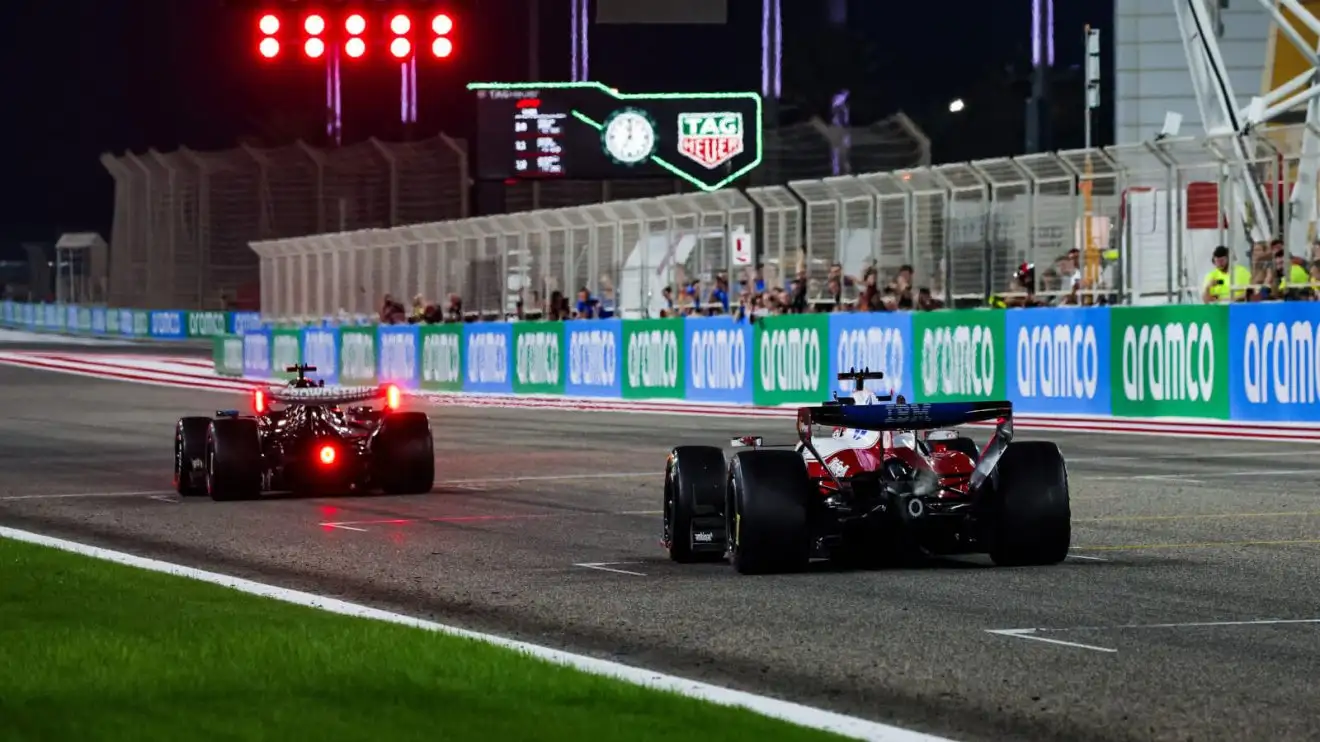
Mercedes and Ferrari practice starts
Mercedes made strides on its race starts during the final Bahrain test, but Ferrari’s blistering launches remain the benchmark, according to Kimi Antonelli.
From compression ratios to race starts, Formula 1’s new power units have dominated headlines throughout this year’s pre-season.
Mercedes makes progress on W17 starts, Ferrari still leads pre-season tests
Want more PlanetF1.com coverage? Add us as a preferred source on Google to your favourites list for news you can trust
While the compression ratio saga is set to be decided through an e-vote, with potential changes to the way it is measured coming into effect on 1 August, the FIA has already taken steps to avoid carnage off the line.
Motorsport’s governing body introduced a pre-warning to the start process on the final two days of testing, the drivers trailing it at the end of both sessions on Thursday and Friday.
Ferrari was still the clear winner.
Potentially running a smaller turbo than its rivals, as George Russell had previously suggested, the SF-26 has been quick off the line. The Ferrari drivers overtook Russell before Turn 1 in two of his practice starts off the grid – one of which saw the Mercedes driver start from pole with Lewis Hamilton in P11.
Russell eventually stayed ahead late on Friday, but he started from pole position with Charles Leclerc lining up P5 on the grid.
More on Ferrari’s race starts
Blistering Lewis Hamilton practice start adds more weight to Ferrari F1 2026 theory
Russell admits Mercedes ‘stumbling’ as W17 starts cause concern
Antonelli says Mercedes is making progress with its starts, but that there is still work to do before Formula 1 heads to Melbourne for the season-opening Australian Grand Prix.
“The Ferrari looked very strong, the power unit very strong on starts,” the Italian told PlanetF1.com and other media in Bahrain.
“But we made a lot of changes, and at the end, the start felt a lot stronger. Obviously we couldn’t test it properly on the grid.
“But it’s been a bit of a weak point for us, to be fair, and it’s just very complicated with the procedure, and just need to really get it right.
“But yeah, there’s a lot of work to do, but I think we made a good step forward.”
Another team that showed good launch pace off the line was the Ferrari-powered Haas team.
Both Esteban Ocon and Oliver Bearman made good getaways, although not quite on the pace with the Ferrari.
Ocon says that while it took Haas a bit of time to establish the right revs, the team is getting on top of its starts.
“In the beginning of the year, obviously we had our troubles doing starts,” he said. “It was not easy to get off the line, and not easy to find the pre-start rev. We sat on the grid for ages before we could finally go.
“Now I think we are in a much better place. I think this test we’ve improved the power unit, the way the boost comes in, etc. So it felt quite nice to get away and off the line. There are some things that we can still improve.
“But if we have improved, I guess the other manufacturers will be able to improve as well. So we need to see how this develops in Melbourne.”
Launches have emerged as a contentious issue this pre-season as the drivers are struggling to get their new F1 2026 power units into the ideal start configuration.
It stems from the removal of the MGU-H, which previously helped cover up turbo lag across the lower rev range, and without it, the cars are taking more time to prepare for launch.
The H was removed from the 2026 power units as part of the new engine formula.
Want to be the first to know exclusive information from the F1 paddock? Join our broadcast channel on WhatsApp to get the scoop on the latest developments from our team of accredited journalists.
You can also subscribe to the PlanetF1 YouTube channel for exclusive features, hear from our paddock journalists with stories from the heart of Formula 1 and much more!
Read next: F1 testing 2026: How each team performed over six days of running


