

Honda pushing F1 2026 rules to the limit amid loophole debate with ‘room for interpretation’
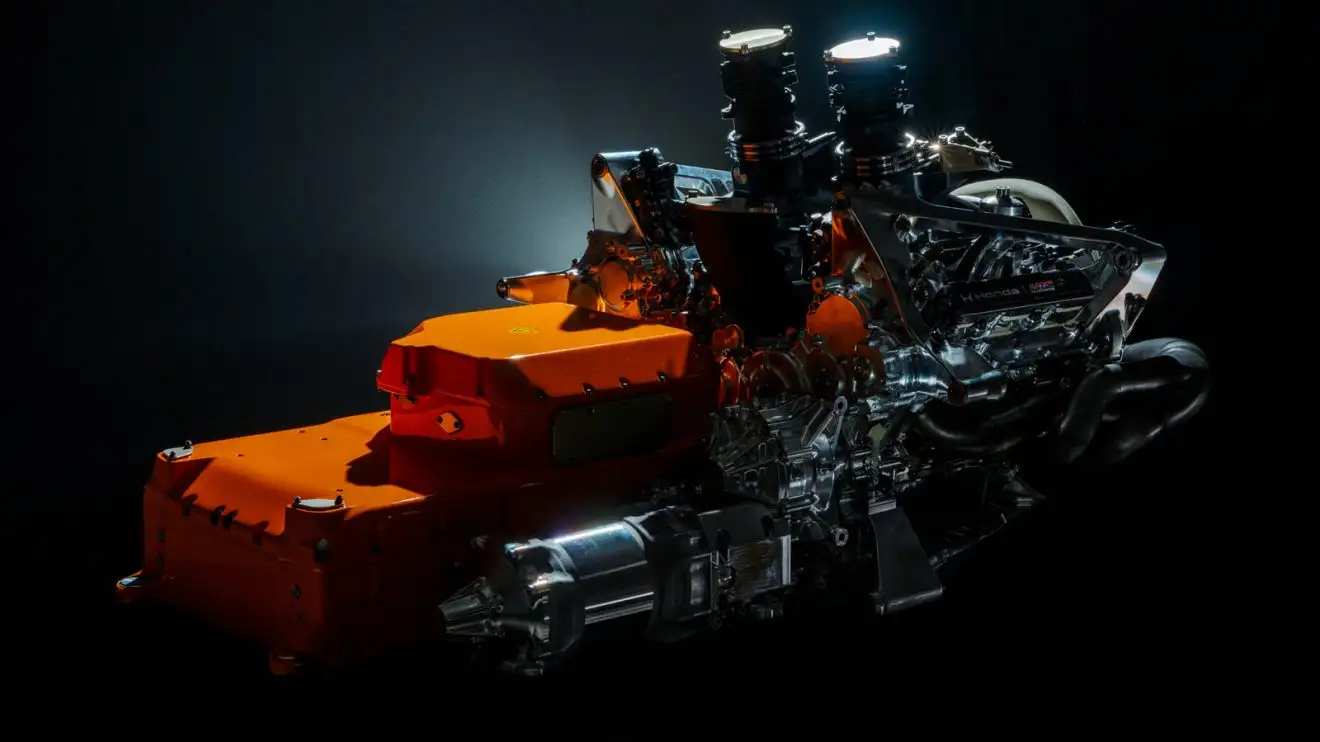
Honda's RA626H F1 2026 hybrid power unit.
Aston Martin’s Andy Cowell insists every F1 power unit manufacturer is pushing the limits of the regulations amid intrigue surrounding a potential compression ratio loophole being exploited by some.
Cowell and Koji Watanabe, President of Honda Racing Corporation, waded into discussions surrounding power unit compression ratios at the launch of its all-new F1 2026 engine in Japan, with the latter suggesting there are several areas of the regulations that need further discussion.
Honda and Aston Martin discuss F1 power unit regulations amid 2026 loophole debate
Want more PlanetF1.com coverage? Add us as a preferred source on Google to your favourites list for news you can trust.
Honda launched its all-new F1 2026 engine, dubbed the RA626H, in Tokyo on Tuesday as it switches its factory support to Aston Martin.
Team owner Lawrence Stroll shared the stage with Andy Cowell, Aston Martin’s chief strategy officer, Honda Racing president Watanabe, and Toshihiro Mibe, president and CEO of Honda.
The quartet spoke of the new relationship as the Japanese marque formally returns to F1 having been somewhat at arm’s length in the final years of its Red Bull partnership.
Honda’s engine launch comes against a backdrop of intrigue amid claims that two power unit manufacturers are exploiting regulations surrounding cylinder compression ratios.
More on F1 engines
F1 2026 uncovered: How Boost, Overtake, and sustainable fuel change the game
Explained: F1’s complex power unit upgrade system
It’s claimed that, since the defined 16:1 ratio is measured at ambient temperatures, it could be exploited once the engine heats up while on track.
That could lead to an increase in power and fuel efficiency, potentially offering a sizeable advantage at the start of a new regulation cycle.
“This year, as far as the new regulations, the interpretation of the regulation and the operations for it – so not just on this but also there are a lot of factors that need to come in discussion,” Watanabe said through a translator.
“There’s more to it. So we would like to keep them aside for now, but then we want to make it clear that we want to meet and comply to the regulations.”
“Regulations do not have everything listed very clearly,” he added.
“In the new regulations, we look into the possibility of the new technology for each of the different power units.
“There is a lot of room for interpretation as well, and this is also part of the race.
“For the FIA, it’s up to them to decide on whether it’s good or bad.
“For Honda, we have a lot of different ideas and we would like to discuss with the FIA to understand if our ideas are accepted or if it’s not okay.
“That’s how we’re going to proceed. We would always look to the FIA, to consult with them, on regulation related matters.”
A veteran of the sport, Cowell was part of the team which developed the all-conquering Mercedes power unit that dominated F1 at the birth of the hybrid era in 2014.
“There’s always a topic that bubbles up when new regulations come into place,” Cowell observed.
“Every competitor reads the regulations and pushes performance to the limit.
“Compression ratio is clearly a key thermal efficiency enabling aspect of an internal combustion engine, so you always push it to the limit.
“I’m sure every single power unit manufacturer is doing that.
“The FIA have the job to make sure that everybody interprets the regulations in a fair and equal way, which is what’s ongoing at the moment.”
Want to be the first to know exclusive information from the F1 paddock? Join our broadcast channel on WhatsApp to get the scoop on the latest developments from our team of accredited journalists.
You can also subscribe to the PlanetF1 YouTube channel for exclusive features, hear from our paddock journalists with stories from the heart of Formula 1 and much more!
Read Next: Honda RA626H F1 engine debuts as Aston Martin kick starts works team era


