
Inside Lewis Hamilton’s 2026 penalty record: FIA findings on six Ferrari incidents


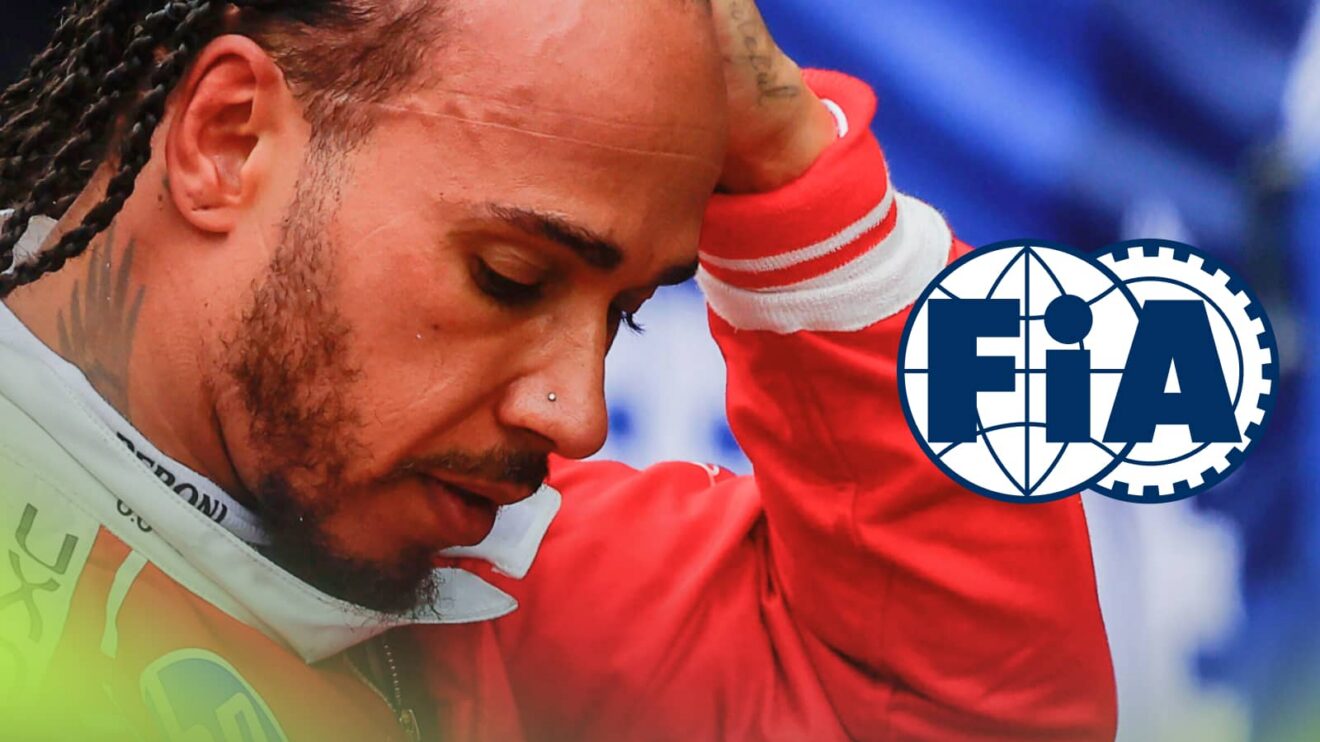
Lewis Hamilton has had a few run ins with the FIA over the course of his F1 career
Lewis Hamilton lamented that he cannot “catch a break” with the F1 stewards, and even blamed Ferrari for putting him in a position to earn a pit lane speeding penalty in Hungary.
But how many of those penalties fall on his shoulders, and how many were unjust? PlanetF1 takes a closer look at Hamilton’s F1 2026 infringements.
Lewis Hamilton’s ‘can’t catch a break’ penalties: Harsh or fair?
Want more PlanetF1.com coverage? Add us as a preferred source on Google to your favourites list for news you can trust.
Monaco GP: Controversial pit lane speeding penalty
Hamilton was handed a five-second time penalty for speeding in the pit lane during the Monaco Grand Prix.
But as the numbers added up, not the 0.1 km/h or the next 0.1 km/h, but the three, four, no five!, drivers penalised for the same infringement, it became evident that something was wrong.
The stewards ruled that “Car 44 exceeded the pit lane speed limit which is set at 60 km/h for this event by 0.1 km/h.
“It is noted that this is the standard penalty according to the F1 Regulations and penalty guideline scale, for exceeding the pit lane speed limit by less than 6 km/h.”
So be it. Hamilton served his penalty in a clever double-stack by Ferrari under a Safety Car and went on to finish the Grand Prix in second place. No harm, no foul.
However, it later emerged that the Briton was hard done by the stewards as Formula One Management (FOM), in charge of the timing beams in the pit lane, had not factored in changes to the placement of two barriers that opened the pit entry.
The changes allowed drivers to take a straighter line, which shortened the trajectory between the loops by 77 centimetres. It meant the drivers were fractionally quicker through the pit lane.
Hamilton and the others, barring Pierre Gasly who didn’t serve his penalty which opened the door for Alpine to successfully appeal, can count themselves unfortunate.
Verdict: Harsh
British GP: ’42 millimetres’ false start
Hamilton was pinged for a false start at the British Grand Prix where the Ferrari driver, having qualified third, ran second behind Charles Leclerc as the teammates overtook pole-sitter Kimi Antonelli off the line.
Hamilton, however, was then noted for a false start and received a five-second time penalty.
“Car 44 moved before the start signal was given,” read the stewards’ verdict.
“The Stewards determined that after the third red light was illuminated, and before the start signal was given, Car 44 moved. This was clearly visible on the on-board footage by reference to the yellow Pirelli lettering on the tyre, which rotated upwards and forwards before the lights were extinguished.
“The fact that the movement was limited does not negate the infringement. Any such movement in that interval constitutes a false start / moving before the start signal.
“The Stewards therefore find that Car 44 was in breach of Article B5.11.1.”
All of 42mm, Ferrari team boss Fred Vasseur was not impressed.
“The sensors say the car did not move on the grid. Then, it’s true that from the video you can see the little dot on the tyre move by just 42 millimetres, but it’s not my place to judge,” Vasseur told PlanetF1.com and other accredited media at Silverstone.
“I find it a harsh decision when the sensors do not detect movement. But on the other hand, the stewards do not comment on their decisions, so we have to accept it.”
Verdict: Fair
British GP: Yellow flag reprimand
That, though, was one of Hamilton’s two transgressions during his home race. The Briton was also noted for failing to slow for a single yellow flag at Turn 9 on Lap 38.
The yellow flags were waved when Nico Hulkenberg stopped on track at Turn 9. However, the yellow lights did not appear on either Hamilton’s steering wheel nor on the light panels as he entered the zone.
But the stewards still ruled that once the yellow appeared on his steering wheel display, and with the green panel illuminated before Turn 10, Hamilton did not make a clear enough reduction in speed.
The driver was given a reprimand, his first of three penalty-free reprimands for the season.
The stewards’ ruling read: “HAM entered the relevant sector before any yellow flag or yellow light panel was displayed, with no such indication present before Turn 9. The first light panel encountered after Turn 9 was displaying green immediately before Turn 10. The yellow indication on the steering wheel display only appeared once the driver was already on the straight towards Turn 10 and close to the end of the yellow flag zone.
“The evidence showed that there was no yellow light panel warning within the driver’s immediate field of vision and that the yellow indication on the steering wheel display remained visible for only a very short period. The Stewards were therefore satisfied that the time available for the driver to react to the yellow flag indication was very limited.
“The Stewards also accept that, immediately prior to entering the sector, HAM had been involved in an overtaking manoeuvre with VER and that the driver was expecting a counter attack. As a result, his attention remained directed to his mirrors for most of the straight towards Turn 10, rather than immediately towards the green light panel at the end of the sector.
“The Stewards took this into account when considering whether the visibility of the green light panel should itself have made it clear to the driver that he was still within a yellow flag zone.
“The Stewards nevertheless determine that, after the yellow had been displayed on the steering wheel display and the green light panel was illuminated immediately before Turn 10, HAM did not make a discernible reduction of speed and therefore did not fully comply with the requirements applicable under a single yellow flag.
“In determining the penalty, the Stewards took into account that HAM had entered the sector before the yellow was shown, that the yellow indication reached the driver only when he was already near the end of the sector, that the time and distance available to react were very limited, and that the driver’s attention had, for understandable reasons, been occupied by the immediately preceding battle with another car.”
Verdict: Harsh
Belgian GP: Colliding with his former Mercedes teammate
Formula 1’s stewards often take a racing-incident view on Lap 1 collisions, but that wasn’t the case at Spa when Hamilton pitched George Russell into a spin.
Hamilton lined up sixth on the Spa-Francorchamps grid with his former Mercedes teammate directly in front of him in fourth place.
Although Russell made a decent start and ran ahead of Hamilton, he had “no f**cking battery down the straight” and found himself under attack from Hamilton.
Racing for position, Hamilton understeered into Russell, the two made contact and Russell was out of the Grand Prix.
The stewards put the blame squarely on Hamilton’s shoulders, declaring: “Approaching Turn 5 on the opening lap, Car 63 attempted an overtake around the outside of Car 44 and had established sufficient overlap to be entitled to racing room. Car 44 remained on the inside.
“During the corner, Car 44 experienced understeer and, despite attempting to avoid Car 63 by applying corrective steering, made contact with the right-hand side of Car 63 with its left-front wheel. The Stewards determined that Car 63 remained within the available racing room and that the collision was caused by Car 44 being unable to maintain sufficient separation.”
While they accepted there were “several mitigating circumstances” and that Hamilton had made a “genuine attempt to avoid contact” and that the “collision resulted from a loss of front-end grip rather than from an aggressive or deliberate manoeuvre”, they ruled that “while Car 44 was wholly at fault for the collision, the Stewards consider that a 5-second Time Penalty, rather than the standard 10-second Time Penalty, is the appropriate penalty in accordance with the FIA Penalty Guidelines.”
Verdict: Fair
Hungarian GP: ‘Unnecessarily’ impeding
Hamilton was given a three-place grid drop for “unnecessarily impeding” Oscar Piastri during qualifying at the Hungarian Grand Prix.
On track in Q3 in the pole-position shoot-out, Hamilton got in the way of Piastri as the McLaren driver was on a hot lap. Piastri had to abort his lap and finished qualifying with only the fifth fastest time.
Hamilton was P2, but dropped to fifth when the penalty was applied.
The Briton reportedly told the stewards that Ferrari had not informed him of Piastri’s position until it was too late. Hamilton, though, remained on the racing line after his own hot lap and should’ve realised another fast car could be coming up behind him.
The stewards said he was in the wrong.
“At the approach to Turn 1, Car 44 was travelling at a significantly reduced speed on the racing line while Car 81 was approaching on a push lap,” read the verdict.
“The driver of Car 44 explained that he had just completed a fast lap and did not receive the team’s radio message regarding the approaching Car 81 until the latter was already in close proximity. He further stated that, due to the positioning of his car on the track, Car 81 was not visible in his mirrors.
“Car 81, which was on a push lap, was forced to take avoiding action by running wide and being obliged to abort the lap.
“Having examined the available evidence, the Stewards determined that Car 44 unnecessarily impeded Car 81 during qualifying. In accordance with the FIA F1 Regulations and the established penalty guidelines for this type of infringement in Qualifying, the Stewards impose a three-place grid penalty on the driver of Car 44.”
Verdict: Fair
Hungarian GP: Exceeding pit lane speed limit in Antonelli battle
Hamilton was given a five-second penalty for speeding in the pit lane during his third pit stop in Hungary. The Briton was 0.1 km/h over the 80 km/h limit.
Racing Kimi Antonelli to be third at the line in the fight for the final podium position at the Hungaroring, Hamilton exceeded the pit lane speed limit.
Hamilton pitted for a third time under a VSC and was in a race against the two-stopping Antonelli to see who came ahead.
But while Hamilton pulled ahead of Antonelli into Turn 1, the Mercedes driver bemoaned that he was ahead at the Safety Car line. Ferrari agreed, and Hamilton had to give the position back to his Mercedes successor.
Hamilton not only lost P3 to the Italian, but he was then pinged for exceeding the pit lane speed limit.
Under a breach of Article B1.6.3a.iii of the FIA F1 Regulations, the stewards revealed that “Car 44 exceeded the pit lane speed limit which is set at 80 km/h for this event by 0.1
km/h.”
Hamilton was given a five-second time penalty that dropped him from fourth in the classification to fifth.
Verdict: Fair
Overall verdict: Harsh 2: Fair 4
“Every opportunity that I give those stewards, every single time they give me a penalty!”
Then don’t give them opportunities!
If a driver does something wrong, he opens the door for a penalty or a reprimand, so expect one.
Hamilton cannot lament penalties for false starts, he moved on the line, pit lane speeding, he exceeded the limit, or crashing into another driver, he hit George.
Blocking other drivers in qualifying, also a no-no, no matter the reason.
Hamilton may feel hard done by with four penalties in three race weekends, but it really is simple: Don’t give the stewards the opportunities!
Want to be the first to know exclusive information from the F1 paddock? Join our broadcast channel on WhatsApp to get the scoop on the latest developments from our team of accredited journalists.
You can also subscribe to the PlanetF1 YouTube channel for exclusive features, hear from our paddock journalists with stories from the heart of Formula 1 and much more!
Read Next: Ferrari addresses Lewis Hamilton FIA penalties after ‘succession’ of race incidents