

McLaren hoping to be ‘proven correct’ in vital F1 2026 decision
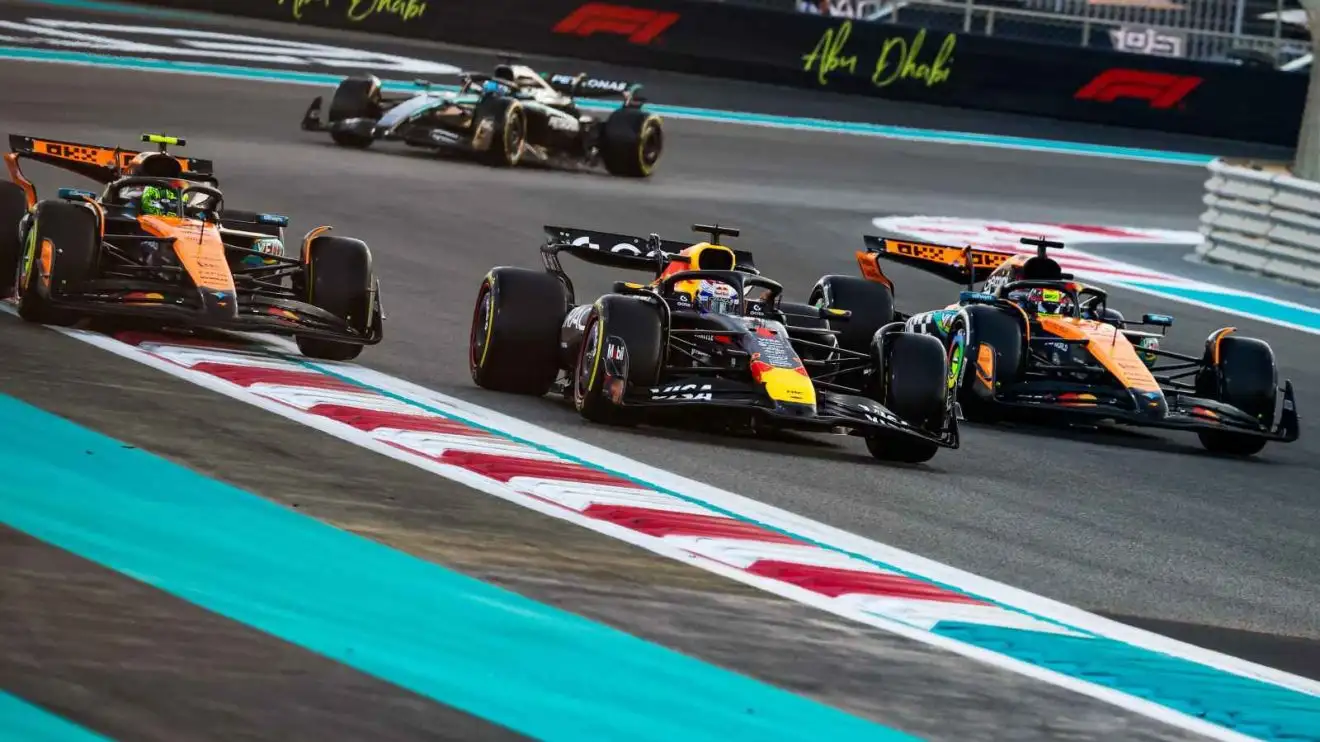
McLaren and Red Bull drivers went toe-to-toe at the season finale in Abu Dhabi.
McLaren engineering technical director Neil Houldey believes the team “made the right decision” in halting its 2025 development early.
While McLaren was eventually caught and arguably surpassed in performance in 2025 by Red Bull and Max Verstappen in particular, Lando Norris was able to win his first World Championship at the wheel of the MCL39.
McLaren hoping 2026 strategy to be ‘proven correct’ as Red Bull takes opposite approach
While Red Bull team principal Laurent Mekies confirmed his team had carried on upgrading the RB21 until late in the season, he previously explained that this approach was taken in part to establish working processes and unlock more performance, though he acknowledged the risk of having a negative impact in the early stages of Formula 1’s new regulations.
McLaren, meanwhile, switched its development focus early to prioritise the 2026 car, with Houldey explaining the team has been finding time in the simulator over a matter of weeks that would have been unlikely over the course of the season with the 2025 challenger, given the maturity of the regulations and closeness to outright performance ceiling McLaren had achieved.
With that early switch, then, one of McLaren’s technical directors is hoping that will pay dividends next season.
Asked if McLaren continuing to upgrade the MCL39 would have helped in 2025, Houldey told PlanetF1.com and others: “It would have made a bigger difference to next year.
“I think next year, if we’d have continued to develop the 2025 [car], we’d have gone into 2026 – although we don’t know where we’re going to go – we would certainly have gone in slower than we’re going to go in.
More on F1 power units in 2026
Imminent Audi F1 milestone with F1 2026 engine set to burst into life
Explained: What are F1’s current power unit engine rules?
“We were looking for milliseconds. Thirty milliseconds was a good upgrade at that point, the whole car was going to give us 0.1 of a second.
“So when you get to that sort of level, and you’re gaining that sort of time in weeks developing the ’26 [car], it was clear for us at the time.
“Other teams have continued their [2025] development. Certainly, Red Bull have made some great gains towards the end of the year.
“I still think we’ve made the right decision, and when we go into 2026, hopefully that’ll be proven correct.”
This is very much the opposite approach to how Red Bull chose to close out the season, having brought upgrades at some of the later rounds of the year as Verstappen closed down a significant gap to the McLaren duo to challenge for the title at the final race.
With Mekies admitting Red Bull could “pay the price” next season, Houldey is of the view that part of their rivals’ approach was how they were looking to go about working together.
He said of Red Bull: “I’m not sure how much has been through their car development – you have to ask them – and how much has actually been how they run the car.
“I think they found ways of exploiting their car that they didn’t have, and I just think we were already there. I think we were already taking that level of exploitation, and there wasn’t much to be had.
“But when we talk about rear ride height, when we talk about front ride height, we know there’s tenths in it, and there’s more in that than there was in developing the car further.”
Much has been made about potential performance targets up and down the grid as all-new cars come into play next season, with a potential shake-up in the running order to come.
Rather than overall goals, Houldey explained McLaren’s approach is to keep pushing forward, no matter where its 2026 challenger’s performance lies.
“It’s not the targets that are the most important thing. It’s about the way you work, the way you develop the car,” he explained.
“Okay, we know where we’d like to be, but more importantly, we’ll continue to work in the same manner that we’ve been working over these last three years.
“Therefore, you just keep going, keep pushing each other, keep working together in the tunnel, CFD, push, push. And at the end, you generate the performance that way, rather than looking at a target and trying to understand if you’re going to hit it.”
McLaren is one of four teams yet to unveil its F1 2026 car launch date, with the first pre-season test taking place from 26th January in Barcelona.
Read next: Honda ‘can’t live without F1’ as 2026 power unit reveal date set


