
Opinion: Has F1 lost its thrill with flawed 2026 regulations?
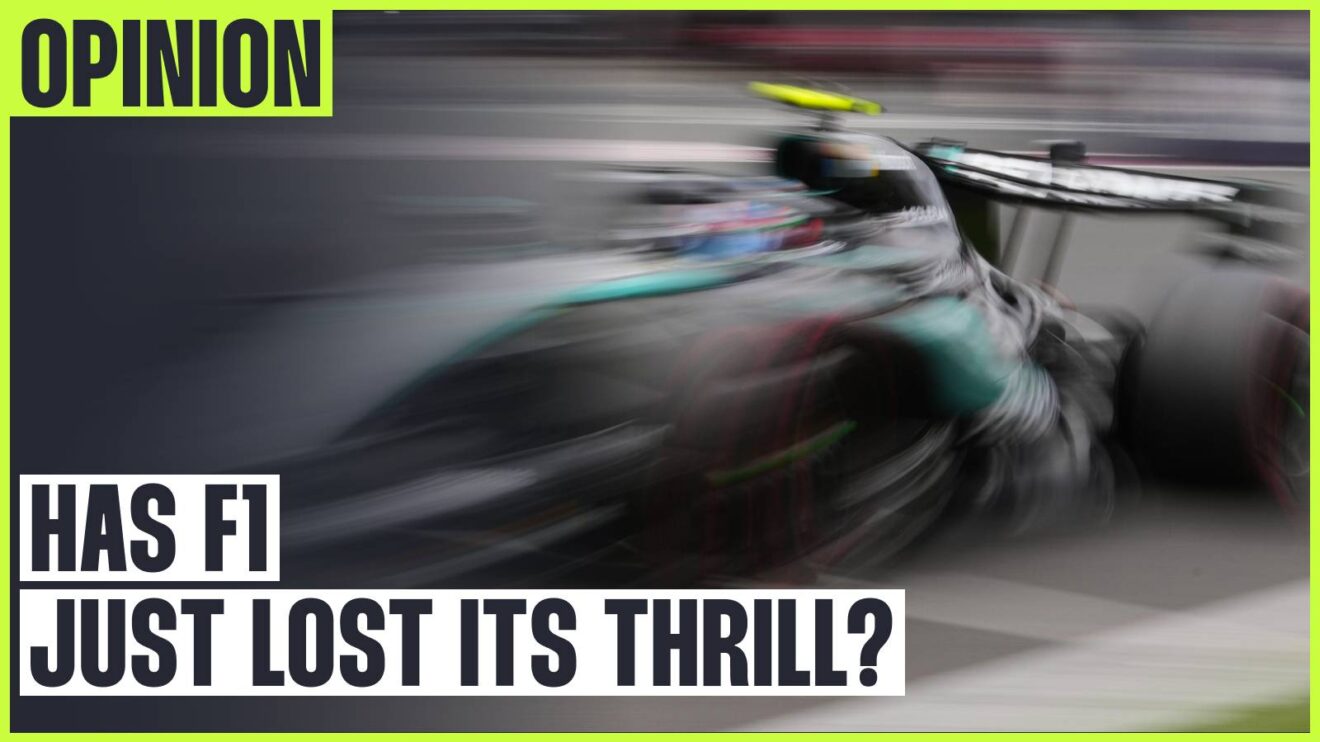
Have the new F1 2026 regulations taken away the thrill of the sport?
F1’s new era of regulations is off to a very rocky start, and there’s no quick and easy fix to rectify what may become apparent as a major blunder.
With the all-new F1 2026 regulations moving from the testing phase into a race weekend for the first time, the Australian Grand Prix has already exposed the major weaknesses that threaten to sap all the thrill of the sport away in one fell swoop.
Max Verstappen: F1 is ‘stuck with these regulations’
“I’m definitely not having fun, at all, with these cars. I mean, you can make up your mind, but I think, if you look at the onboard, you’ll see I’m right,” was four-time F1 World Champion Max Verstappen’s brutal assessment of the new regulations on Saturday afternoon.
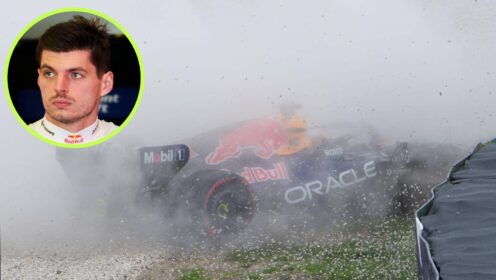
The Dutch driver had just crashed out of qualifying with some sort of unusual rear axle locking on his Red Bull, which hardly helped his mood, but Verstappen’s comments were no different from what he’d said during pre-season testing in Bahrain.
Verstappen had left the sport aghast with his damning verdict on the new regulations, stating that he felt they were “anti-racing” and lacking any sort of enjoyment for the driver.
This could have been seen as performatory, a stance moulded by fears of a lack of competitiveness with his new Red Bull, although he quickly shut down that train of thought.
“It needs to be fun to drive as well, I think, at this stage of my career. I mean, I am, of course, also exploring other things outside of Formula 1 to have fun at,” he said.
“I know that we’re stuck with this regulation for quite a while. So, yeah, let’s see.”
Lewis Hamilton has said he’s enjoying the cars overall, “really nice to drive”, but “just the power part” is letting the side down as it “doesn’t last”, with the drivers needing to drive through the final corner of the lap at a quarter throttle.
“It’s completely against what F1 is about, flat-out, full attack, and we’re lifting and coasting and stuff,” he said. “That element is not very good.”
The issue with the new regulations has been known about for some time: the power unit regulations were created first, rather than the chassis, with a change to create a near 50/50 split between the internal combustion engine and the electrical output of the hybrid system.
Given the desire not to have much of a laptime dip, the chassis regulations were worked around these complex PUs, resulting in the creation of a rulebook that former Red Bull boss Christian Horner warned risked the creation of “Frankenstein cars”.
Aesthetically, the new cars look great, and the challenge of the reduced downforce is most welcome, but it’s in the complex power unit rules that the new regulations could have fallen apart.
Lando Norris: ‘The 50/50 split doesn’t work’
During testing, I opined that Verstappen’s fears could be seen as premature, expressing optimism that the new rules would come good when the chips are down in a race weekend scenario.
But, after seeing the first competitive session of the year with the new cars, it’s perhaps even worse than Verstappen had suggested, and the display led one unnamed team boss to tell PlanetF1.com that the rules are “complete sh*t”.
While the cars themselves are enjoyable to watch through the corners, visibly more difficult to drive thanks to the reduced downforce, the rapid bleeding away of speed down the straights as the cars run out of energy, even on a full-blooded qualifying lap, turned what is usually the most visceral moment of an entire weekend into little more than a milquetoast display of resource management.
The argument can be made that resource management has always played a part in F1, but the fact is that no longer are drivers contained only by the laws of physics during their fastest laps of the weekend; their raw speed is kept well in check by the requirement to harvest energy in a manner that benefits the overall laptime, rather than balls-to-the-wall driving.
While F1 has always been an engineering competition, the new regulations threaten to remove the importance of the driver’s talent in terms of speed and, instead, reward those who are best at lifting off the throttle, rather than pushing down on it.
“There’s nothing that you can do,” Verstappen said of the restrictions of the new regulations, now that F1’s alarming new reality has been confirmed.
“You can only make it slower, and then, of course, you get a bit more of a normal speed trace, but it’s a slower speed trace.
“The formula is just not correct, and that is something that is a bit harder to change. But I think we need to.”
At a time when F1 and the FIA should be in a position to herald the triumph of the new rulebook, instead, the sport is battling to retain the interest of a fandom already overwhelmed by the intricacies of an overly complex yet, somehow, still underwhelming regulation set.
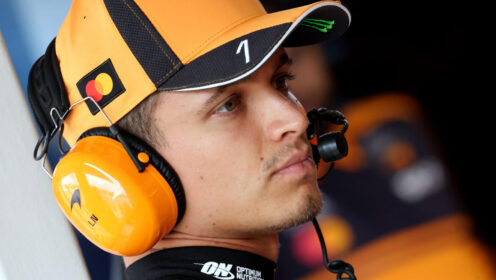
“I think everyone knows what the issues are,” Lando Norris said.
The British driver had been one of the few positive voices during Bahrain testing, having jested that Verstappen could “retire from F1” if he didn’t like the new rules. But the reigning World Champion was just as damning as his peer.
“It’s just the fact that it’s a 50-50 split, and it just doesn’t work. Straight mode means you’ve got a lot of other issues at hand,” he said.
“You decelerate so much before corners, you have to lift everywhere to make sure the [battery] pack’s at the top. If the pack’s too high, you’re also screwed. It’s just difficult, but it’s what we have. It doesn’t feel good as a driver, but I’m sure George [Russell] is smiling.
“We’ve come from the best cars ever made in Formula 1 and the nicest to drive to probably the worst. It sucks, but you have to live with it.”
More on the F1 2026 regulations
Norris blasts ‘worst’ F1 cars ever as 2026 battery rules frustrate drivers
Max Verstappen Melbourne crash explained as Red Bull driver blasts ‘not correct’ F1 regulations
Carlos Sainz: ‘It’s clear no one is happy’
With Mercedes starting the season showing the advantage many expected it would, it’s important to point out the exceptional engineering that has gone into creating these power units. There can be little argument that what Mercedes, Ferrari, Red Bull Powertrains, and Audi have created are jaw-dropping pieces of automotive brilliance, pushing the limits of what’s possible in the tight constraints of the rules.
However, the limitations of the regulations in the first place mean that the units, so potent and impressive in their peak performance, are a lame duck after just a few seconds as they are left, metaphorically, gasping and wheezing for air after just a few seconds.
Watching the cars punch out of corners like a ballistic missile is F1. Hearing the engine note drop as the revs sink halfway down a not particularly long straight, the car unable to maintain its own forward momentum, is very far from F1.
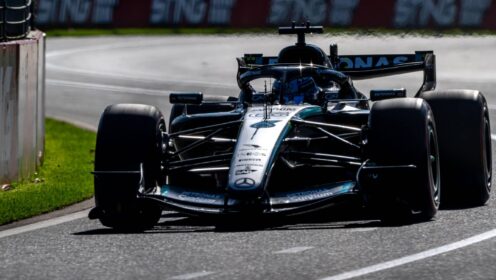
“I think once you get your head around it, it becomes like a new normal. Is that pure racing? No, probably not, but you get used to it, and it is race one,” said George Russell, the driver who appears most likely to benefit in the first year of these new regulations, given Mercedes’ apparent competitive edge.
“I know the FIA is going to be making some changes. I’ve been one of the drivers who didn’t want to judge everything too prematurely, and I think Melbourne’s probably going to be the worst track for these engines.”
Melbourne may be one of the worst examples for the new regulations, given the lack of opportunity for harvesting, but it begs the question of why regulations have been created that require the cars to be set loose on tracks with quite different characteristics than what they need to be at their full potential more often, forgetting that straights exist.
If it’s this eye-opening in Melbourne, how pathetic are the cars going to be when their horsepower essentially halves a quarter of the way down the long straights of Baku, Monza, Spa-Francorchamps, and Jeddah?
“I think all the criticisms that I’m going to do to the regulations, I’m going to try and keep constructive towards the FIA and FOM, and try not to belittle the sport too much,” Williams’ Carlos Sainz pointedly said on Saturday afternoon.
“Because, in the end, I think it’s self-harming to just keep the fans and the journalists if the drivers are overly negative about this set of regulations, I think then everyone goes in at it.
“I feel like the best forums to do so are in the driver’s briefing or in personal conversations with Stefano [Domenicali, F1 CEO] and the FIA.
“It’s clear that, so far, no one is happy, and the only thing we feel is that there seems to be a lot of plasters on top of another to try and solve the fundamental issue that I think this 50/50 hybrid system is giving us. A lot of headaches.”
Oscar Piastri: There are fundamental things ‘not easy to fix’
With the power units now homologated for 2026, with limited upgrade options over the next five years, Formula 1 as a sport looks backed into a corner. While operational sharpness will no doubt improve the situation somewhat, the lack of regeneration abilities means there’s only so much that can be done to keep the energy topped up.
In Bahrain testing, McLaren tested out an idea on the last day, changing superclip settings to a 350kW harvest to make the driving more natural and reducing the need for lift-and-coast.
But it’s six of one and half a dozen of the other, according to Oscar Piastri.
“At the moment, if you lift, you can harvest 250 kilowatts. So the super clip at 350 is the same as a lift,” he said.
“The only difference is that one of them, you’re actually off throttle and in control of it and, the other one, you’re at full throttle. I’m not sure it’s any more optimal.
“It’ll be better at different tracks. We’ll have different challenges at other tracks because the tracks are kind of in two categories at the moment, being energy-starved and energy-rich.
“There’s a problem with either of those things. But I think when you’re energy starved like this, it’s a lot more obvious to everyone watching.
“We were lifting and coasting three times a lap. We had two super clips through the lap, and, in some corners, we’ve got, effectively, 450 horsepower less. So it’s a massive challenge to get your head around. It’s tough for everyone.
“Certainly, the way you have to try and go faster is complex, so I don’t know. Clearly, the way you naturally want to go fast doesn’t work. It’s different.
“I think everyone can see the state of things. I think it will probably improve a bit. But, there are clearly some fundamental things that won’t be very easy to fix. I don’t really know what we can do.”
What can be done to improve the F1 2026 regulations situation?
With the engines now homologated and little development permitted to improve performance over the next five seasons, the scope for the situation to improve significantly is limited as the season goes on.
Many will point to how other regulation cycles have started in ignominious fashion, such as the introduction of the hybrid power units in the first place in 2014.
But the complaints of that time were of a different nature, rooted primarily in the lack of competitiveness of the season and the disparity created that appeared locked in by the existence of the engine token system.
The complaints of the drivers this time are more fundamental, taking aim at how the cars need to be driven, and it’s evident that, for a driver, there is little joy to be found from having to constantly watch the dashboard to see whether their battery has siphoned enough energy from the engine in order to make it down the next straight.
For F1 and the FIA, burying their heads in the sand about fan sentiment, who aren’t being sold a strong product by enthusiastic drivers being pushed to the limits of their abilities, would be unwise.
At a time when the sport would dearly love to be able to keep up the momentum of audience growth and the visibility of F1 in the mainstream, these new regulations appear to be a massive misstep.
The intent of these power unit regulations was to attract greater OEM participation amongst those seeking greater road relevance and, in that regard, they have been successful – the long-elusive Volkswagen Group finally committed, through the Audi brand, General Motors signed up for 2029, and Honda opted to return, while Red Bull became an autonomous manufacturer in its own right.
But what use will that success be if the sport itself devolves into insipid demonstration runs of cars that are, on the surface, still impressive in terms of laptime, but are utterly useless in terms of spectacle or racing zeal?
Haemorrhaging the fanbase would be an unjust reward for the painstaking work that has been put in over the past decade but, without changes, it’s a genuine risk.
At the end of the day, endless chat about energy deployment and management, overtakes occurring due to superclipping at different points, and watching drivers lift-and-coast their way around a track is not why most fans watch. It’s certainly not why I became a fan of the sport in the first place.
A potential solution would be to scrap the homologation rules and open up the development war on the PU front, similar to how the engine token system was abandoned 10 years ago. Given the existence of the power unit manufacturer’s budget cap, the addition of extra constrictions of windows of development makes little sense.
In January, RBPT technical director Ben Hodgkinson welcomed the idea of exactly such a war – and the removal of such developmental shackles could accelerate the manufacturer’s abilities to optimise energy harvesting and management.
After all, it’s the starvation of energy that’s the unpleasant aspect of the entire formula, not the outright abilities of the power unit or the chassis – both of which appear to be steps in the right direction overall.
The removal of the MGU-H, a critical part of the energy recovery system in the previous generation, has been a major factor in this starvation, a step that was made in order to help tempt recalcitrant manufacturers into the sport.
Another solution could be the introduction of front-axle regeneration, but this simply adds more weight and complexity to the cars.
It’s worth remembering that just six months ago, FIA President Mohammed Ben Sulayem appeared to recognise the implications of what was coming, gathering the power unit manufacturers together to evaluate the possibility of changing paths at the last minute, or at least introducing a new formula sooner than the 2030 timeframe.
But these talks were ultimately too late, and the path is set: there’s no clear way out for F1, at least, not without risking losing one or two OEMs.
While we, as fans, all need to hope that the regulations ultimately don’t prove as disastrous as the drivers have suggested after qualifying in Melbourne, a very clear picture could quickly form this year.
If the rules do prove terrible for the show, what’s the solution? Backtracking appears unlikely, but the implications in terms of viewership, stock price, and overall perception of the sport could take a serious hit.
And all for what? Keeping one or two OEM manufacturers, eager for increased electrification but wanting the visibility of F1 rather than Formula E, happy? If viable alternatives to fossil fuels weren’t possible, the pursuit of this formula would make sense but, in a year where sustainable fuels are introduced anyway, a much simpler and straightforward engine solution could have happened.
“For me, it could be nicer, the cars could be lighter, and we could have some nice engines with sustainable fuels,” Aston Martin’s Lance Stroll, another driver to have voiced his concerns last year, said.
“But I guess maybe we’re not so happy with the regulations at Aston, but probably Russell and Antonelli may be happy with the regulations now. So I think everyone has their opinion on it.
“But, yeah, it would just be nice, I think, to have some cars that sound good, a little bit less complicated, just more like normal good racing.
“We have the green fuel now. We can go racing on sustainable fuel, and we could have engines that sound really good, and light cars, and it’s a shame that, as a sport, we’re not doing that.”
What does appear evident is that the next engine formula will be more simplistic: likely to be a naturally aspirated V8 or V10, perhaps turbocharged, with sustainable fuels.
But the next formula isn’t set to arrive for half a decade. Will the alarm at the situation this year expedite the process? Can that be done without annoying the existing PUMs to the point of departure? And, more to the point, does the happiness of OEMs with the regulations matter if the sport haemorrhages its fanbase?
Want to be the first to know exclusive information from the F1 paddock? Join our broadcast channel on WhatsApp to get the scoop on the latest developments from our team of accredited journalists.
You can also subscribe to the PlanetF1 YouTube channel for exclusive features, hear from our paddock journalists with stories from the heart of Formula 1 and much more!
Read Next: F1 starting grid: What is the grid order for the 2026 Australian Grand Prix?