
Red Bull reveals how Miami breakthrough came from more than RB22 upgrades


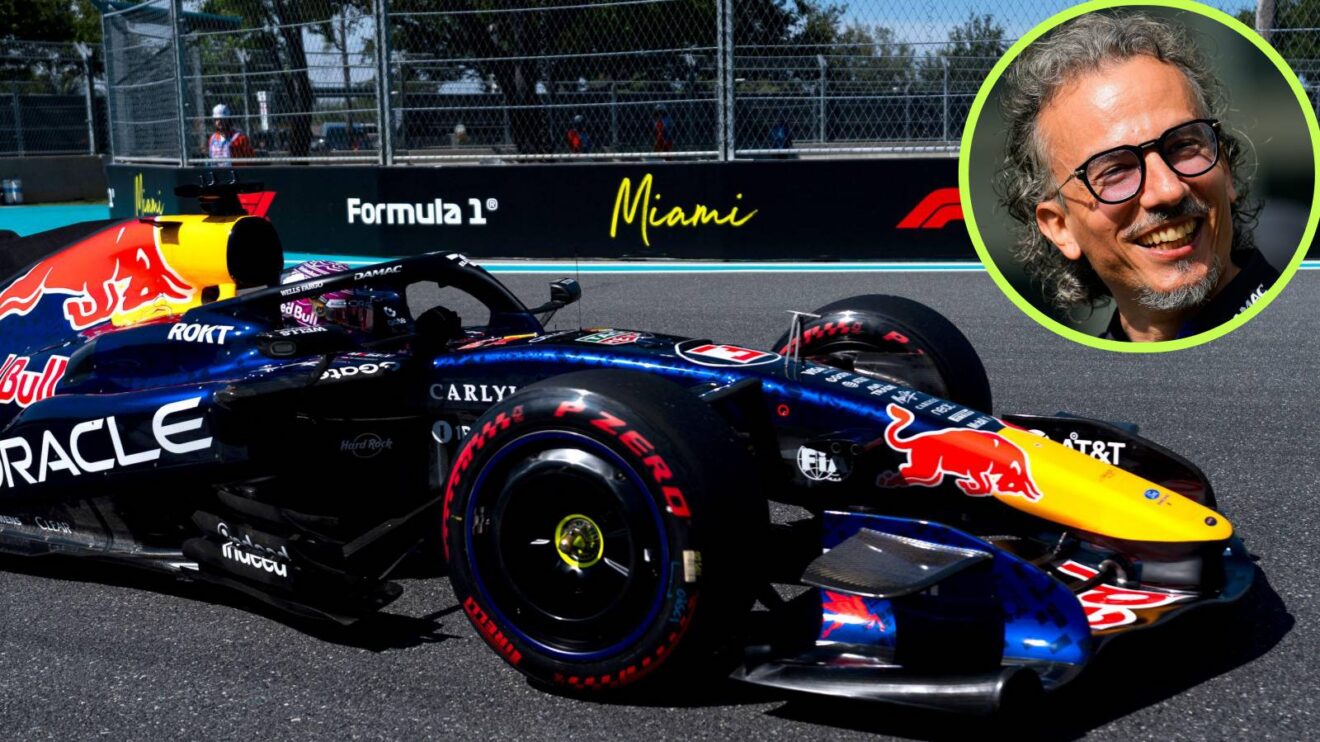
Red Bull made a significant step forward in Miami, but where did the gains mostly come from?
Red Bull’s return to competitiveness in Miami was eye-catching, but was it solely down to the upgrades brought to the RB22?
Max Verstappen lined up on the front row for Sunday’s Miami race and, while a mistake on the first lap meant he couldn’t fight for the win, it was evident Red Bull was far more competitive than it had been at any point during the first three race weekends of the year.
Laurent Mekies explains Red Bull’s Miami performance gains beyond upgrades
Want more PlanetF1.com coverage? Add us as a preferred source on Google to your favourites list for news you can trust.
Verstappen hadn’t been able to get anywhere near the podium positions in Australia, China, or Japan, but bounced back with a far stronger showing in Miami that coincided with a significant spate of upgrades rolled out after the five-week April break.
Amongst these changes were a rollout of Red Bull‘s own version of the ‘Macarena’ rotating rear wing, as well as revised front wing elements and endplates, front corner bodywork, revised floor bib surfaces with adaptations made to the engine cover and sidepod inlets to match and optimise with the floor, and the bodywork geometry and suspension fairings on the rear corner.
Added into the mix was a change to the steering system of the RB22 that Verstappen said he could feel tangible gains from, revealing that steering feel is something he’s been lacking since the start of the season, but with the changes made for Miami “there was laptime for sure” in the improvements.
Despite McLaren and Ferrari rolling out significant upgrades – Mercedes with more minor tweaks – Red Bull had clearly closed down a chunk of the significant pace deficit it had had through the opening phase of the season, with sources suggesting the gap had shrunk down to around six tenths from around 1.2-1.3 seconds.
Some of this gap could be down to the circuit characteristics themselves: Miami is a circuit with few high-speed sweeps, a weakness of the car that is not yet overcome.
Added to that is the feeling that the team’s long-standing correlation issues between the aged wind tunnel and the real world haven’t been overcome (and won’t be entirely until the new wind tunnel comes online).
This suggests that, in the balance between upgrades and refinement, a greater percentage of the performance gain in Miami came from addressing some of the package’s weaknesses rather than the new aerodynamic components.
Speaking to the media following the race in Miami, team boss Laurent Mekies smiled when asked by PlanetF1.com whether he could assess where the improvement had come from: unlocking the potential throughout operational refinement, or in the upgrades.
“I’m not sure I’m happy to go into that level of detail!” he laughed.
“But you have a good point, meaning that, if we have halved the difference compared to where we were, so if we took six tenths off the best competition… how much of that is normal evolution and how much of that is us sorting our issues out, it’s difficult to say.
“And we probably would not share that anyway!”
More on Red Bull in F1 2026
Red Bull welcomes V8 return as FIA forces engine shake-up timeline
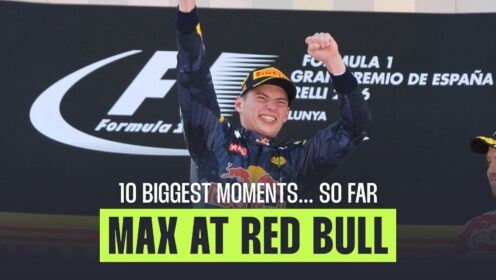
Max Verstappen’s 10 biggest Red Bull moments as huge milestone hit
However, revealingly, he did explain that the team had identified a need to be able to give the two drivers a car of more consistent feel.
“After Suzuka on Sunday night, we said, look, regardless of our performance deficit overall in terms of development, compared to where we were late last year, regardless of that, we do not give, at the moment, a consistent car to our drivers, a car they can push with confidence, lap to lap, corner to corner,” he said, explaining the need to give Verstappen and Isack Hadjar that confidence.
“That was most of the work that has been done in these five weeks’ break, in addition to the normal development.
“So yes, there is a split between the two, whatever the number, whatever the split is. But of course, it was tangible. It is lap time.
“We knew we were losing a serious amount of lap time with that lack of confidence that drivers would have in the car. So steering one was an aspect. We had quite a few other aspects as well, and we still have a few to sort out.”
Red Bull’s step forward saw McLaren team boss Andrea Stella assess the situation as now having the four leading teams now neck-and-neck with each other, with execution being the deciding factor.
Verstappen said it’s too early to include his team in that quartet: “We’re getting there. We’re not the same yet.”
Want to be the first to know exclusive information from the F1 paddock? Join our broadcast channel on WhatsApp to get the scoop on the latest developments from our team of accredited journalists.
You can also subscribe to the PlanetF1 YouTube channel for exclusive features, hear from our paddock journalists with stories from the heart of Formula 1 and much more!
Read next: Charles Leclerc sends Ferrari warning as rivals outdevelop SF-26 upgrades