
Toto Wolff: Mercedes will accept FIA e-vote outcome in F1 2026 compression ratio row
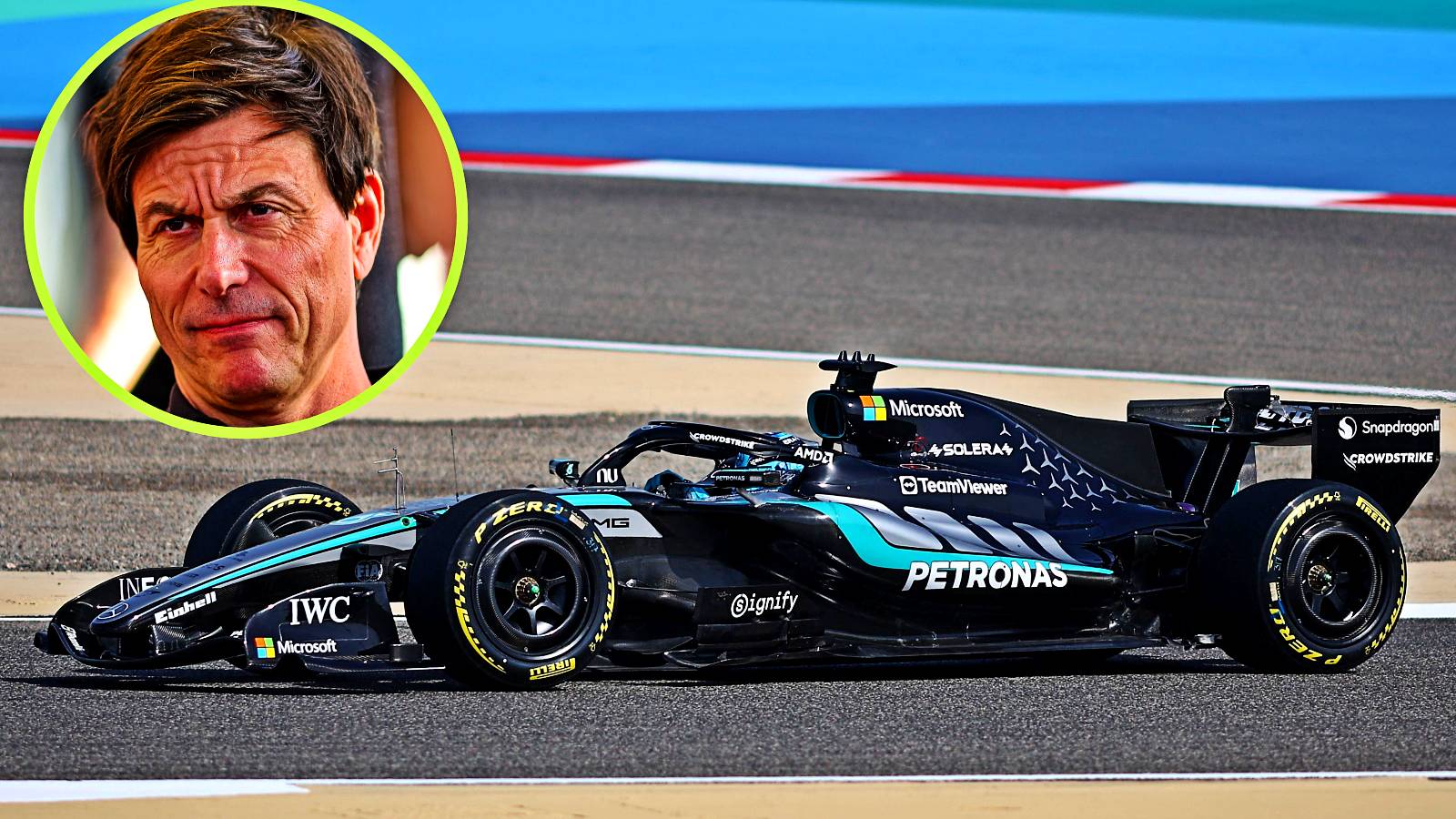
Mercedes could come out on the losing side of a critical vote regarding the engine regulations as other power manufacturers chase a tweak.
Toto Wolff will accept either outcome of the e-vote held by the FIA regarding the compression ratio issue that has been a contentious point throughout the winter.
Mercedes has been at the centre of speculation regarding its engine architecture throughout the F1 2026 pre-season, with the FIA holding an e-vote amongst the power unit manufacturers [PUMs] to determine the best path forward.
Toto Wolff: Mercedes wants to be a good citizen in F1
Want more PlanetF1.com coverage? Add us as a preferred source on Google to your favourites list for news you can trust
The topic of compression ratios has largely focused on Mercedes’ High-Performance Powertrains [HPP] over the past two months, with the issue arising as a result of a grey area left open in the technical regulations.
With compression ratios set at a maximum of 16:1 in the regulations, an update in the October 2025 iteration of the rules introduced a specific measurement protocol that stated the compression ratios would be measured at ambient temperatures.
Both Mercedes and Red Bull Powertrains [RBPT] were linked with finding ways to conform to the measurement at the test temperatures, but potentially exceeding this compression ratio limit while at operating temperatures, ie. while on track.
The performance benefit of this ranges, depending on the source, with Mercedes boss Toto Wolff suggesting it’s negligible to the point of only being two to three horsepower.
Red Bull’s Max Verstappen scoffed at these figures, suggesting after Wolff’s comments that the benefit is more along the lines of 20 to 30 horsepower.
With RBPT joining the other PUMs in voicing concerns to the FIA after the first Barcelona shakedown, it’s left Mercedes isolated in its position as the other four PUMs presented proposals to the Power Unit Advisory Committee [PUAC] to introduce a new hot-temperature compression ratio test.
This methodology has been put to an e-vote by the PUAC, with the FIA confirming a 10-day window to lodge the votes. With this window opening during the second Bahrain test, the deadline is February 28th, just one day before the engine homologation cut-off date.
The intent is to introduce the new compression ratio test from August 1 this year, with any non-compliant engines after this date being given permission by the FIA to make any necessary changes to ensure compliance.
To get the revised test ratified into the regulations, a supermajority following the votes of the seven PUAC members must be reached. Assuming the four PUMs vote in favour, this would mean they require the FIA and FOM to also vote the same way. Anything less than a 6-1 vote would mean the supermajority is not reached, although this wouldn’t rule out the possibility of protests against Mercedes once the F1 season begins.
The FIA’s single-seater director, Nikolas Tombazis, explained that there has never been any implication of any wrongdoing on Mercedes’ part, and rival PUMs have not publicly expressed any such sentiment. The grey area allegedly exploited by Mercedes could be seen as simply down to clever engineering and interpretation, with the other four PUMs reacting with alarm after not spotting the same opportunity.
For Mercedes, the outcome is irrelevant, with Wolff having previously ruled out any possibility of taking legal action should Mercedes find itself losing out in the vote.
“We said it all along that this looks like a storm in a teacup, the whole thing, and numbers were coming up that were… if these numbers had been true, absolutely we would understand why somebody would fight it,” he said during the second Bahrain pre-season test.
“But, eventually, it’s not worth the fight. It doesn’t change anything for us, whether we stay like this or whether we change to the new regulations, and that’s been a process.
“But we also want to be good citizens in the sport. Because it doesn’t make a big difference.”
More on the F1 2026 compression ratio saga
FIA launches e-vote on F1 2026 power unit compression ratio change
Why FIA has given power unit manufacturers August deadline in compression ratio saga
F1 compression ratio controversy explained ahead of key FIA vote
With Mercedes understood to have kept the FIA informed of its plans throughout the final months of preparations, Wolff had said that “philosophically”, he disagreed with how the FIA has been put under pressure by the other four PUMs, and this stance hadn’t changed by the end of testing.
“With a changed opinion, philosophically, you can disagree with it, because I believe regs are there to be made, and you keep the FIA close to you, and that’s how it should be,” he said.
“But, if you have four other PUs that are putting immense pressure on the FIA, at a certain stage, what choice do we have than not to play?
“We were pretty comfortable in even having a protest going on Friday in Melbourne, but is this what we want?
“Yeah, for me, either way works. Either we stay with the regulations as they are, or the e-vote goes ahead with the proposal that came from the FIA. Both are okay for us.”
Senior sources have indicated to PlanetF1.com that all five PUMs are currently likely to pass compression ratio tests, whether they be the current ambient checks or the proposed operational checks.
The most likely outcome of the e-vote is that the regulation change is made, meaning any affected PUM will only have until August 1 to run with its homologated design, although this doesn’t preclude the possibility of protests in the interim.
With Mercedes seemingly accepting of the outcome should the vote not go in its favour, the matter is likely to pass quite quickly, and Tombazis said the matter had been overblown relative to the potential performance gain on offer.
The FIA’s job, he said, is ensuring that, when topics such as this arise, the line between innovation and the intent of the regulations is kept intact.
“That’s where we need to be even-handed on this topic,” he said.
“We don’t want to stifle innovation. But when the regulations state that the parameter has to be below 16:1, it’s not a new combustion system we’re talking about. It’s something that specifically could perhaps increase.
“Now, as I state, I don’t think that we are anywhere near the levels of performance that were stated, and certainly there was no cheat or anything like that, or no allegation of anybody being illegal.
“It is just a matter of whether that was the intent of the regulation, and, as new regulations currently enforce, there will be this, but there will be other little topics that we will need to resolve going forward, and the approach will try to be even-handed.
“Each time that we follow something, I’m sure there will be people who are unhappy that we’re not acting soon enough, and there will be people who are unhappy that we are not letting things go by, and part of our job is to try to keep that on a sort of balanced way.
“People tend to usually remember when something isn’t exactly as they would please and forget when something goes in their way, and therefore that creates a degree of high emotion.”
Want to be the first to know exclusive information from the F1 paddock? Join our broadcast channel on WhatsApp to get the scoop on the latest developments from our team of accredited journalists.
You can also subscribe to the PlanetF1 YouTube channel for exclusive features, hear from our paddock journalists with stories from the heart of Formula 1 and much more!
Read Next: What’s really behind the plot to close off the F1 2026 engine loophole?