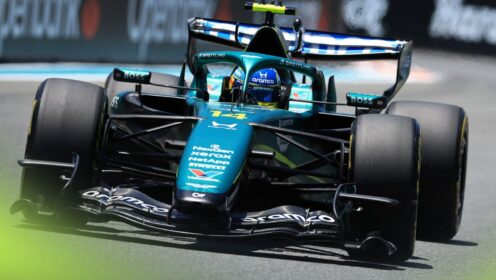

Why Aston Martin left an F1 car behind in Japan after Suzuka


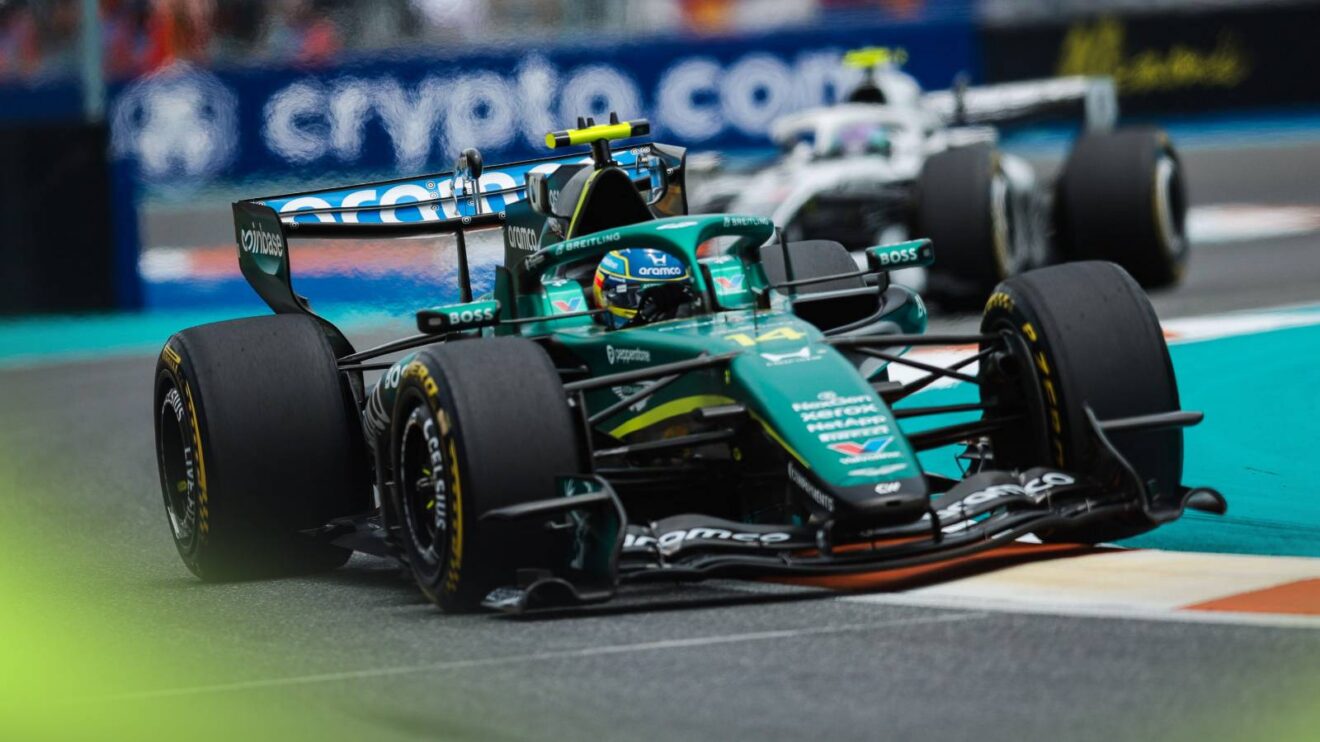
Aston Martin and Honda made a reliability breakthrough in Miami.
Aston Martin’s decision to leave a car behind in Japan in order to let Honda work on vibration countermeasures paid off with a significant improvement in Miami.
The Japanese manufacturer has succeeded in establishing a new reliability baseline after a troubled start to the season, but both AMR26 machines made it to the chequered flag at the Miami International Autodrome.
Aston Martin left its AMR26 in Japan for Honda vibration testing
Want more PlanetF1.com coverage? Add us as a preferred source on Google to your favourites list for news you can trust.
Indeed, it was a hugely encouraging weekend for the Silverstone-based squad, with reliability evident in both the Sprint race running and the Grand Prix, as Fernando Alonso raced to finish ahead of Sergio Perez’s Cadillac in both races.
The Spaniard pointed to his feeling after the Grand Prix that it is now the gearbox, rather than the power unit, which is Aston Martin‘s next priority of focus, as he confirmed a normal feeling from the car with vibrations having been eliminated.
“No issues,” he said. “Honestly, it was more the gearbox the whole weekend than the engine, so I don’t know the electronics or something.
“It was very weird on the downshifts and the upshifts, so not very well in control.
“So that’s the fix number one for Canada. I think with all these heavy braking in Canada, we need to improve the gearbox behaviour at the moment.”
The Miami Grand Prix was a weekend for Aston Martin to vet the changes made by Honda to introduce more definitive countermeasures to the harmonic resonance that has plagued reliability since the start of the season.
It’s for this reason that Aston Martin was the only team not to roll out with chassis or aerodynamic updates in Miami; not only are reliability fixes the primary focus, but changing the chassis or aero would also introduce another variable into the mix at a time when direct A/B comparisons are essential.
In Japan, Honda’s Koji Watanabe confirmed that the vibrations encountered through the power unit have not been encountered on its own test benches and, indeed, it’s only when mated to the Aston Martin chassis that the resonance becomes a component-destroying factor.
With the first three race weekends proving that small steps were working, a much bigger step has been achieved off the back of an unusual step from Aston Martin: the Silverstone-based squad simply left an AMR26 behind in Japan in order to allow Honda to bring it to its base in Sakura to work on countermeasures with the chassis itself through static tests.
“I think we are happy with it, and I think our partner wants to do more,” Aston Martin’s Mike Krack said of the steps made for Miami, speaking at a press conference with Honda’s Shintaro Orihara.
“We left one of the race cars in Sakura for some dyno testing. Honda is obviously a huge company. They have a lot of experience in how to analyse these things, much more than a racing team has.
“So I think a lot of Honda experts were involved. The fact that we could leave a car there helped us to mitigate some of the issues that we were having.
“The transmission path is something that you only have with the real race car. So, from that point of view, I think it allowed us to work on the interfaces, basically, and our partner obviously could work on the origin of the whole thing. So I’m quite happy with the result.”
Orihara replied, “After the Japanese Grand Prix, I mentioned HRC and Aston Martin worked very hard to bring countermeasures here.
“We confirmed that they are working well. And also, I’ll say the drivers have given us positive comments, which is good progress for Aston Martin and Honda. Good progress.
“We have completed the full race distance and also the Sprint race distance without any major reliability issues. That is good progress.”
Asked whether the measures apply to the chassis or the power unit, Orihara said, “It’s a combination. So vibrations have been coming from energy from vibration into the chassis side and then transferring to the power unit.
“We needed countermeasures from both sides, but we combined them into one countermeasure, and that works very well, I would say.
“Aston Martin and Honda have worked very hard and closely together and then found a solution, from both sides.”
More on Aston Martin and Honda
Fernando Alonso identifies Aston Martin’s ‘number one fix’ after Miami GP
Aston Martin Miami no-upgrade call explained as bigger package teased
This step in reliability was also made on a weekend where the regulation changes related to energy management were a key focus: while the headline figure of 8.0mJ harvestable energy remained in place for Miami, the superclipping rate was increased to 350kW from the previous 250.
There had been speculation that Honda’s power unit wasn’t capable of this higher rate, although sources have dismissed this concern as being a fabrication, although Orihara declined to answer this question when it was put to him in a media session on Thursday.
With the long-strived-for baseline of reliability now apparently accomplished, the focus will now expand to starting to develop an understanding of the true performance capabilities of the power unit.
“The next focus point we can focus on to optimise our data setting for energy management and also driveability,” Orihara said.
“There is still a lot of room to improve on our power unit, but that’s the next step for us.”
With Aston Martin-Honda now seemingly in a position to start being able to assume being able to rack up the mileage it’s been lacking since the very start of on-track running in Barcelona in late January, Krack said the team is now actively learning, rather than firefighting.
“Every lap you do, you learn,” he said.
“We also need to keep in mind that we are massively behind in terms of laps from the beginning of the season.
“So I think the fact that you can race each other because you have the reliability, and also the fact that you can race with a competitor, gives you additional information and gives you something to improve your package for the races to come.
“You must not forget the tyres in that context as well. If you do not run, you have no experience with how the tyres behave in different conditions.
“We have seen in the Sprint that we have taken a different choice [Aston Martin was an outlier in choosing the soft tyre]. I think it was a good choice.
“I think today [Sunday], we have made good choices on the tyres. But you have to learn that, and if you learn that, you can make your own choices; it would be easy to just do the same as everybody does, and your car doesn’t work like that.
“So, from that point of view, I think with the learnings we have achieved over the weekend, we can develop the car, the package and the collaboration.”
Orihara agreed, saying, “We gathered a lot of data, and we found a lot of interesting things in our data, so we can analyse energy management.
“Also, we saw interesting behaviour in such a warm function on power and drivability, so we can gather all the data, and we can improve our energy management strategy and also drivability, especially here, warm conditions, high humidity, which gives us good experience to improve our drivability.”
Want to be the first to know exclusive information from the F1 paddock? Join our broadcast channel on WhatsApp to get the scoop on the latest developments from our team of accredited journalists.
You can also subscribe to the PlanetF1 YouTube channel for exclusive features, hear from our paddock journalists with stories from the heart of Formula 1 and much more!
Read Next: Allan McNish reveals why Mattia Binotto’s Audi call was a ‘no-brainer’