

F1 uncovered: Getting under the skin of the Aston Martin AMR25

The early promise shown by Aston Martin at the start of this regulation set faded quickly, as they caught and overtook them with bigger leaps in performance being found.
And, whilst Aston Martin continued to develop their car during 2025, they clearly committed more of their resources to next year’s challenger in an effort to get a head start on their rivals.
Back and forth
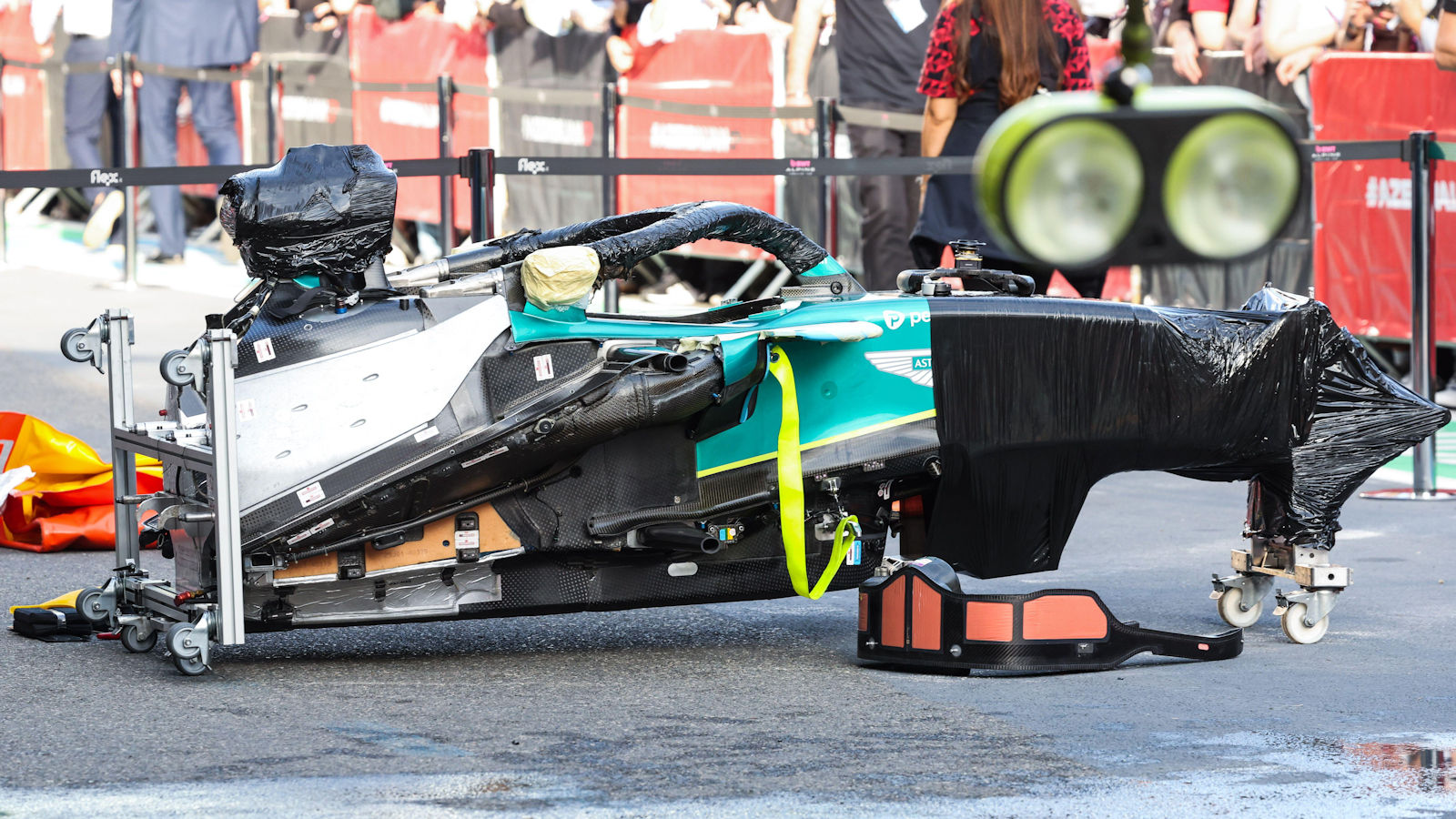
Aston Martin provided their spare chassis for use by the marshals and extraction practice but did leave less of the chassis exposed than some of their rivals had in the past.
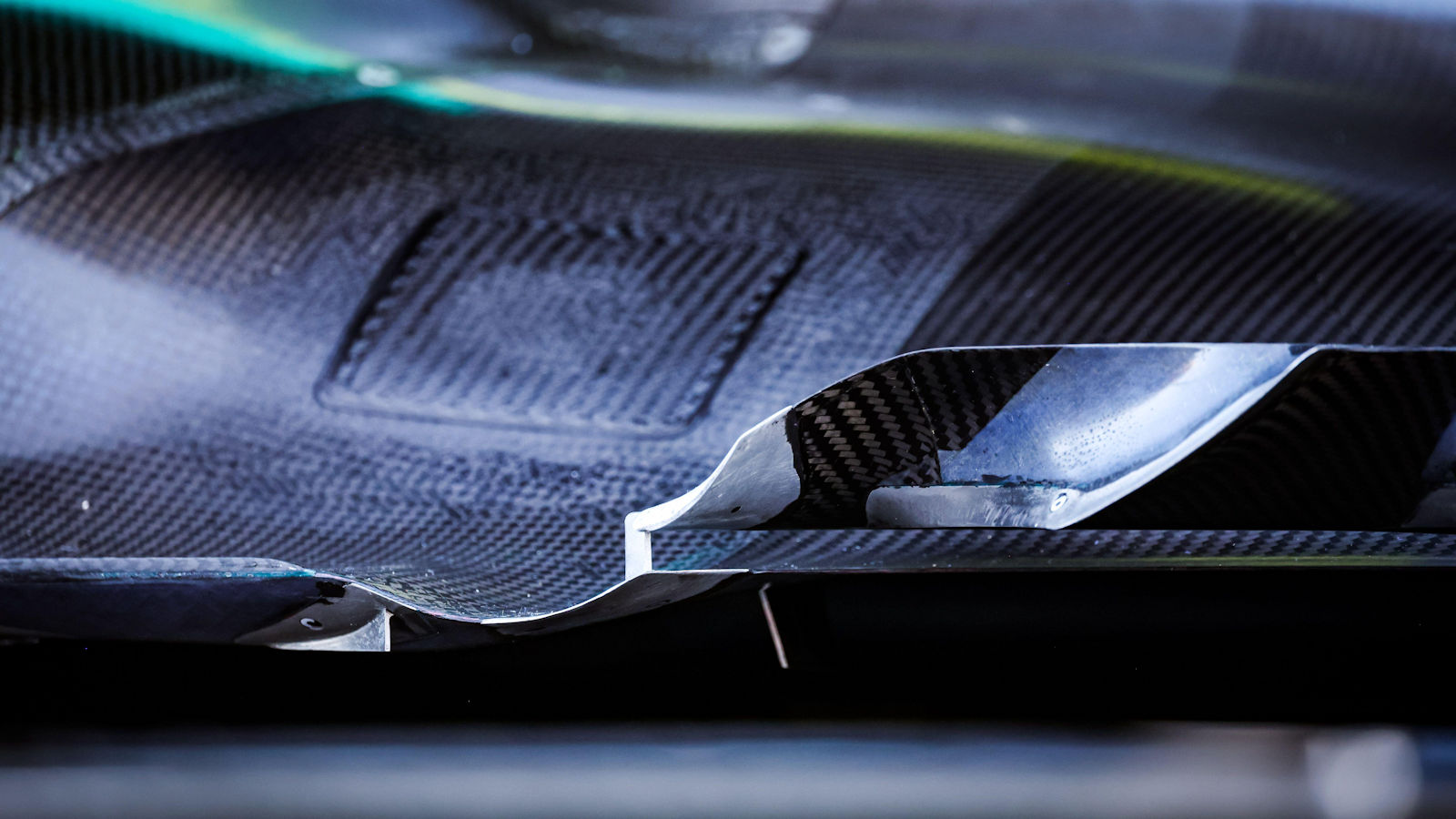
A close up of the floor and front section of the edge wing on the Aston Martin AMR25.
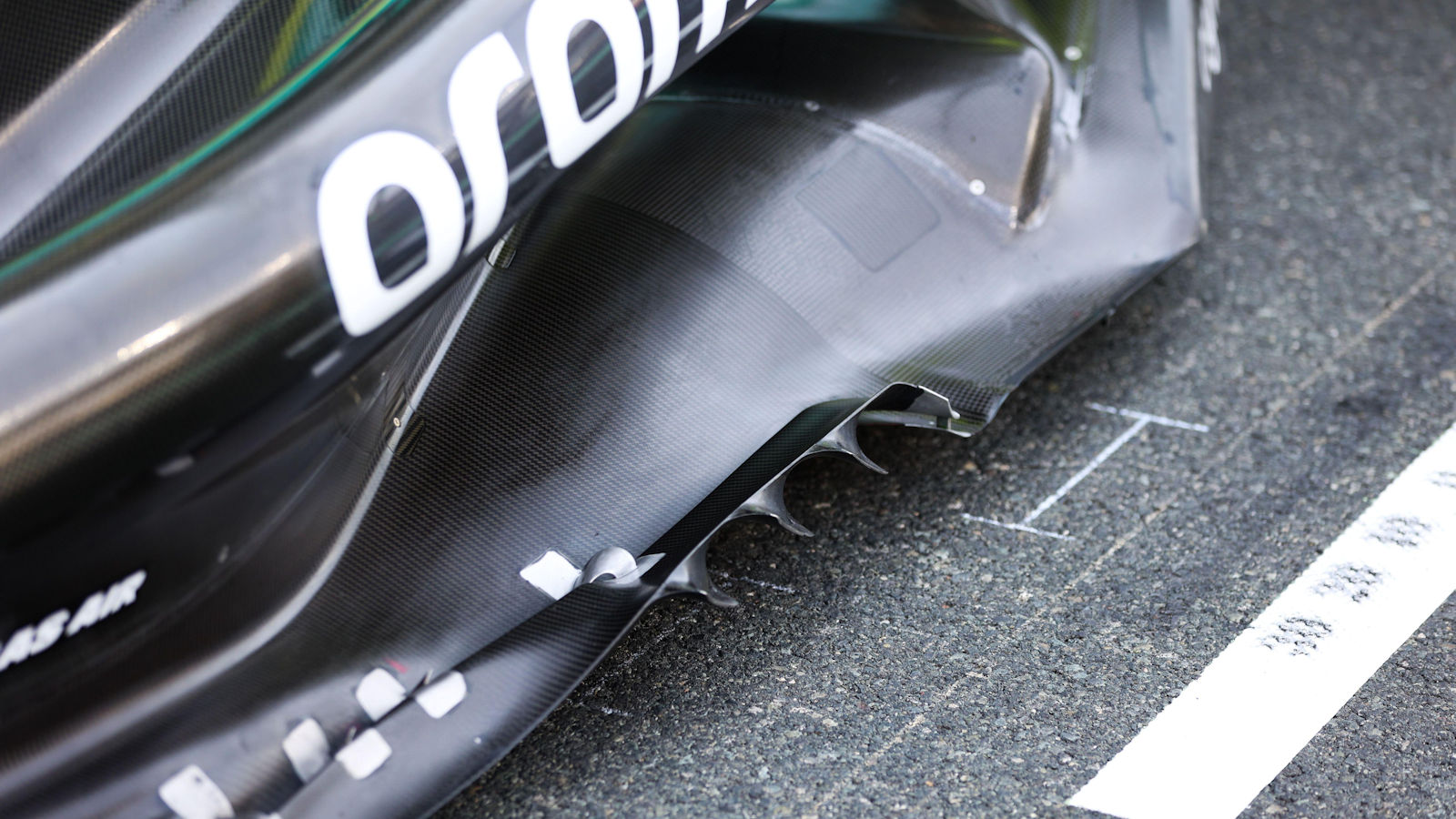
A top-down overview showing how twisted the edge wing is over the course of its length, with the forwardmost section upswept and lined with vanes that control how the airflow and vortices move around that section.
Want more PlanetF1.com coverage? Add us as a preferred source on Google to your favourites list for news you can trust.
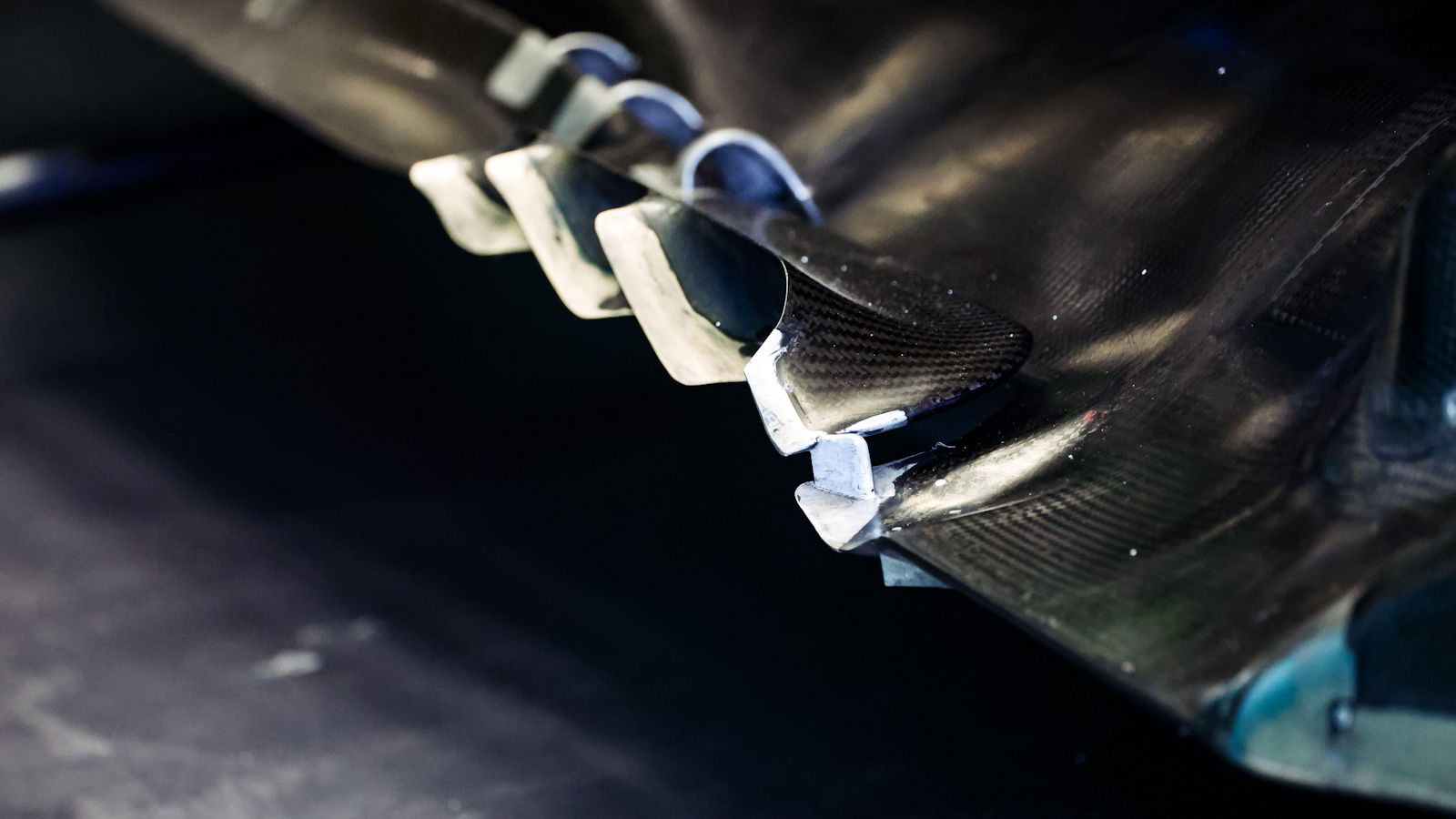
A more traditional view of the upswept and vane lined forward section of the edge wing.
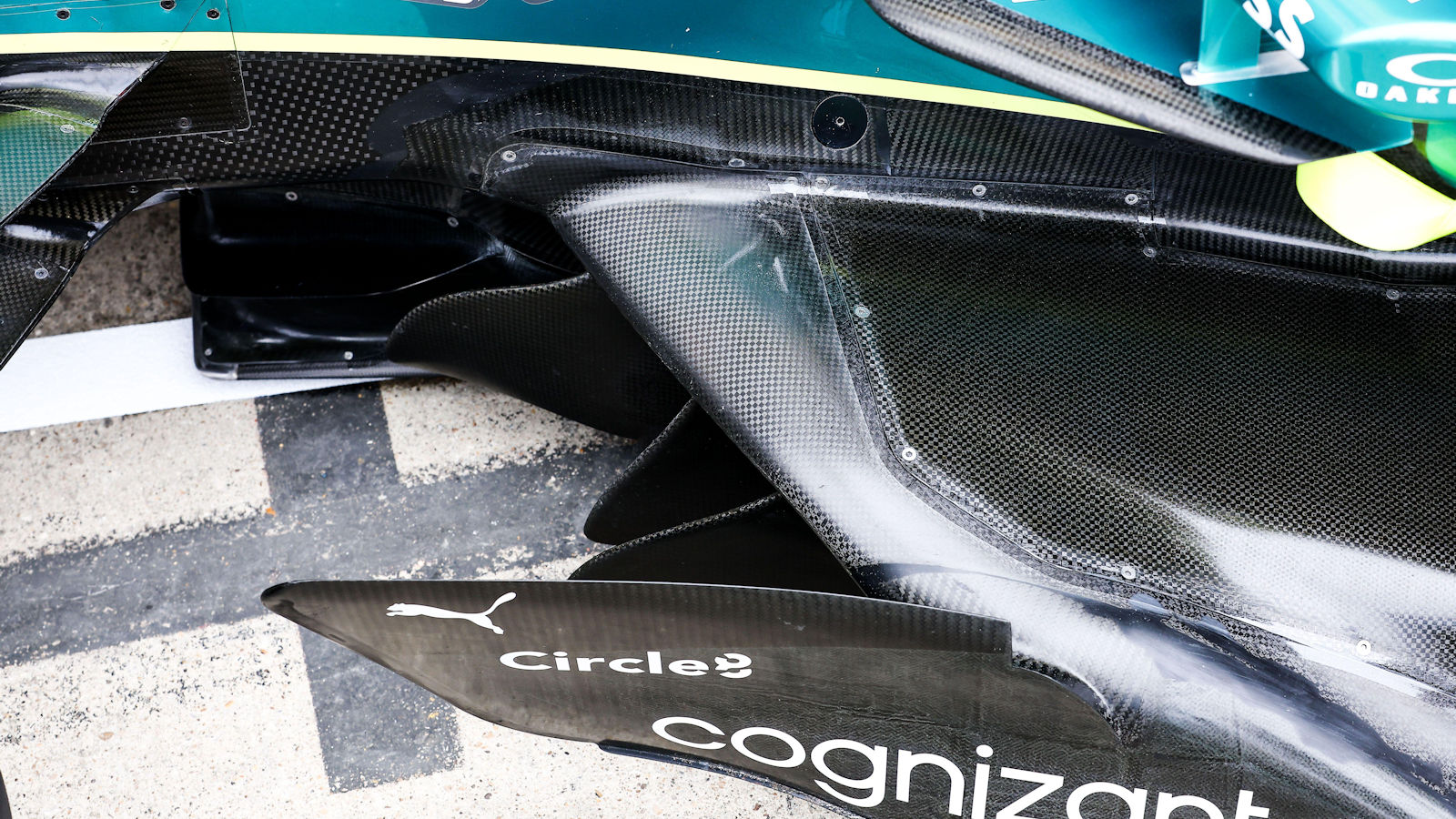
A great overview of the floor fences from above, showing that they’re not just all aligned in the same way.
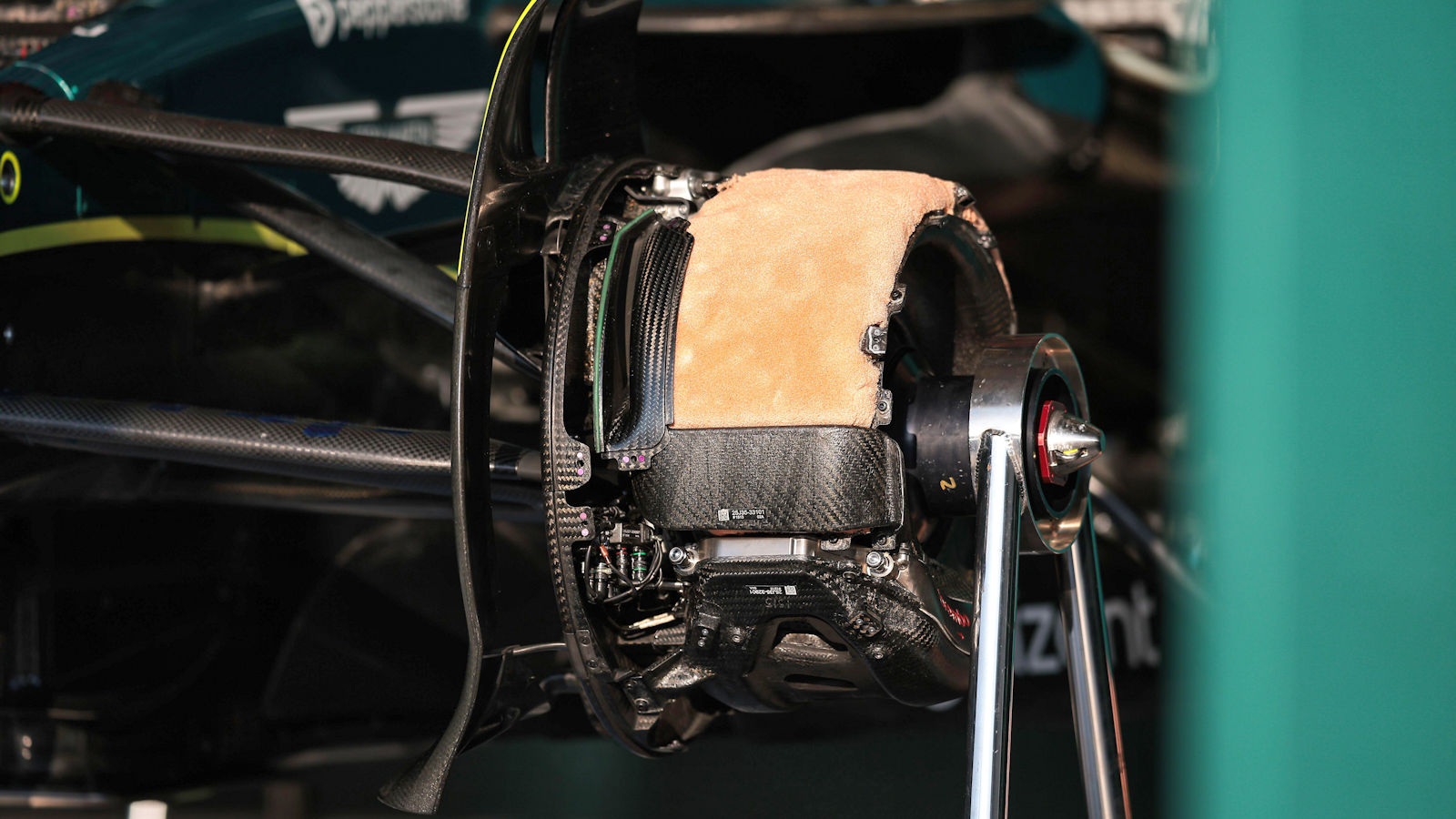
A look at the internal fairings used to enclose the brake disc and caliper, altering how temperature transfers between them, the wheel rim and as a byproduct has an impact on the tyres bulk temperature.

Introduced at the Spanish Grand Prix and later abandoned, was a redesigned flap and endplate juncture for the AMR25. The newer solution utilised an additional horizontal spar that enabled the semi-detached flap layout to be adjusted and pushed further inboard, also altering the outwash being generated.
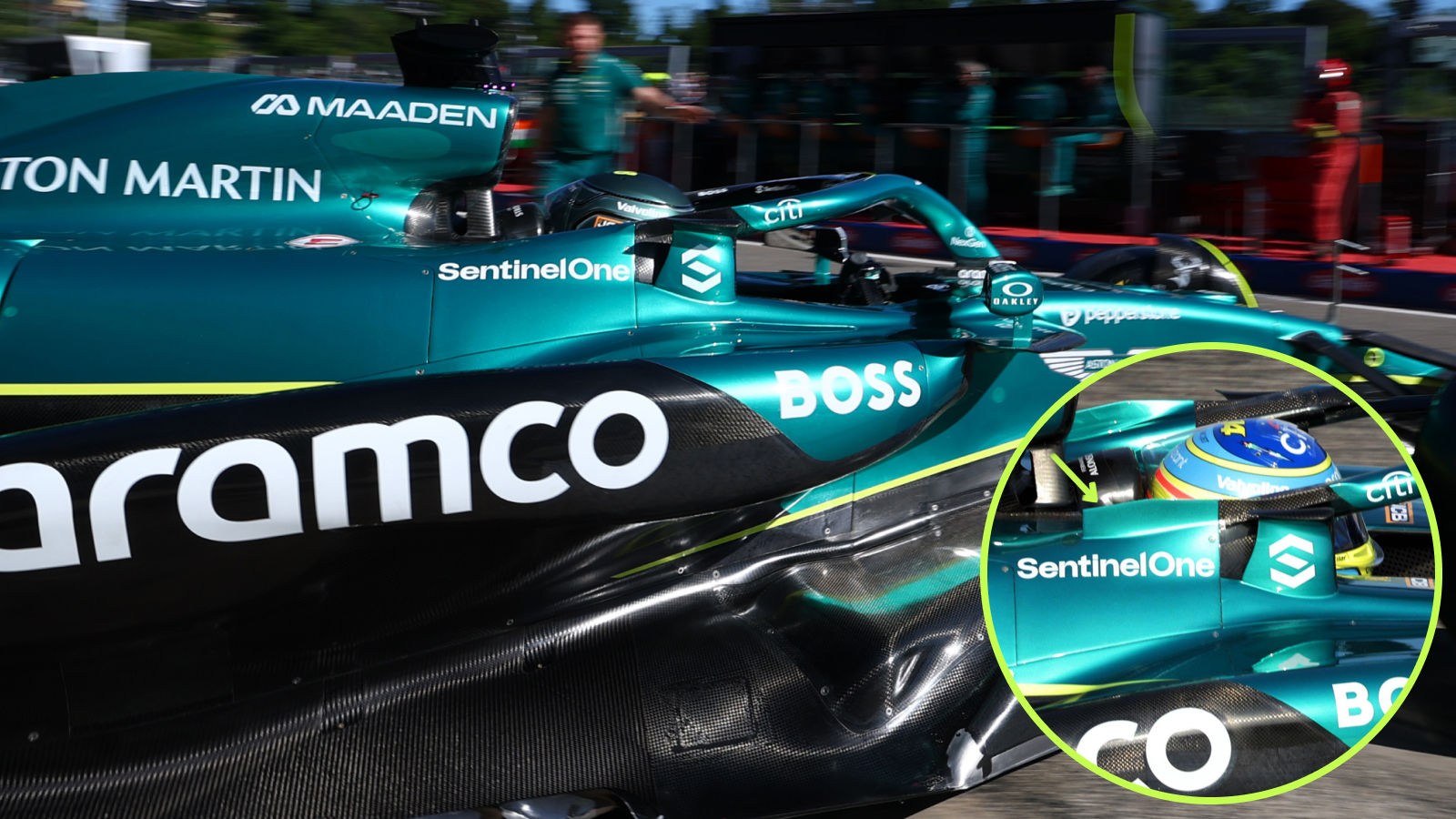
Aston Martin made some changes to their halo winglet arrangement as part of a larger update package at Imola.
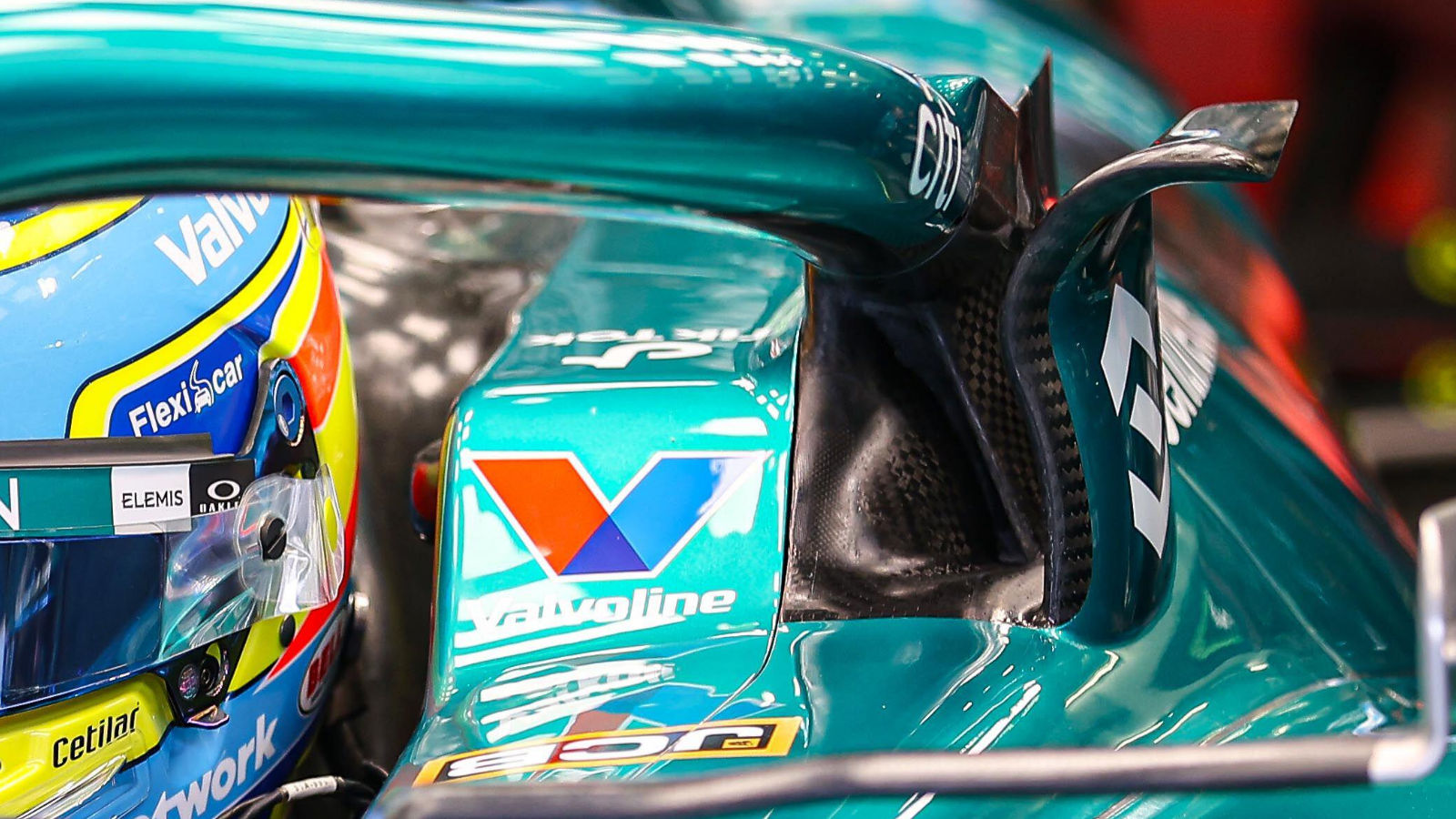
Aston Martin came up with a unique solution for some of the aerodynamic inefficiencies created by the halo and how it’s mounted to the chassis, with an inlet added to the front face.
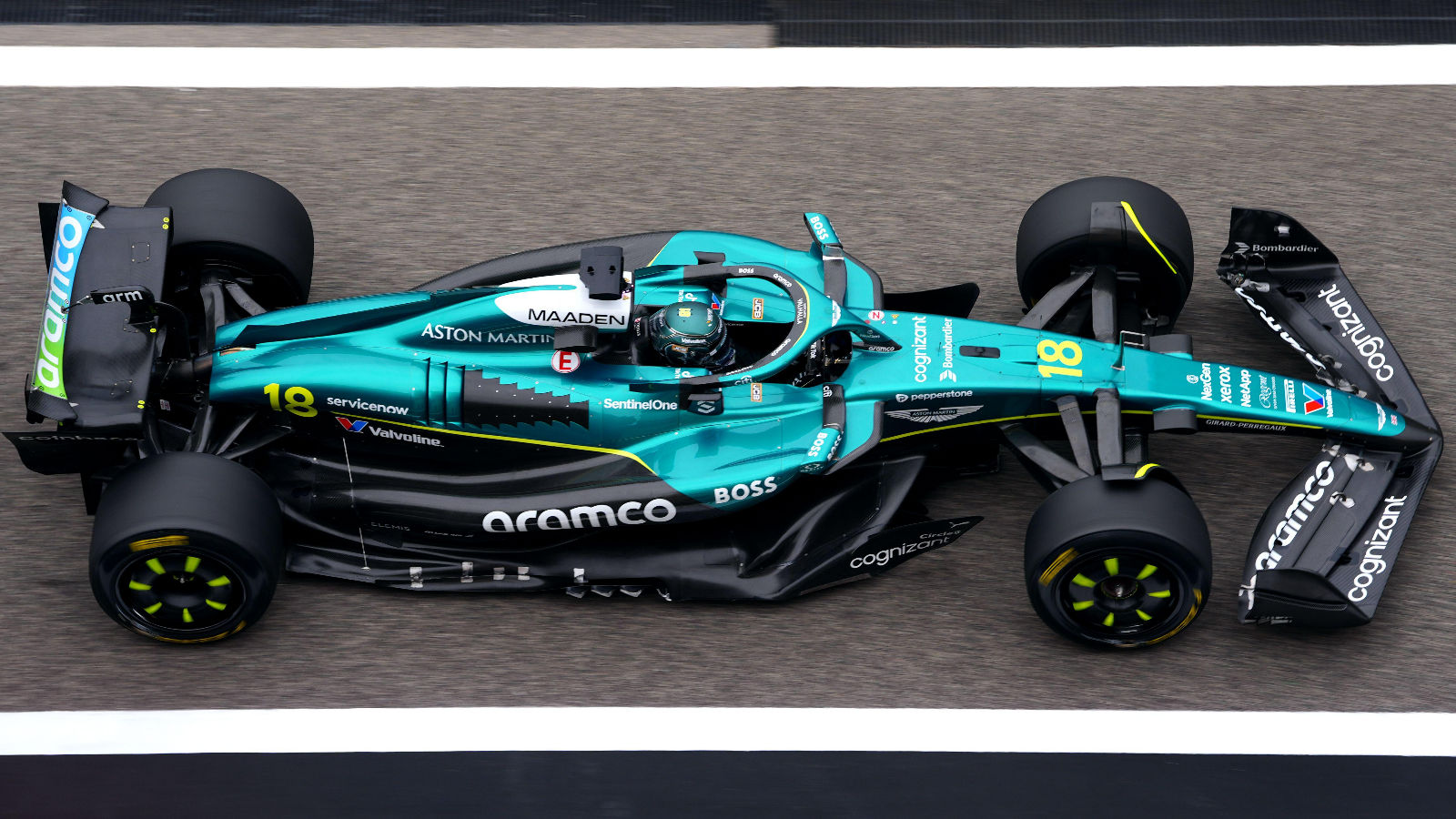
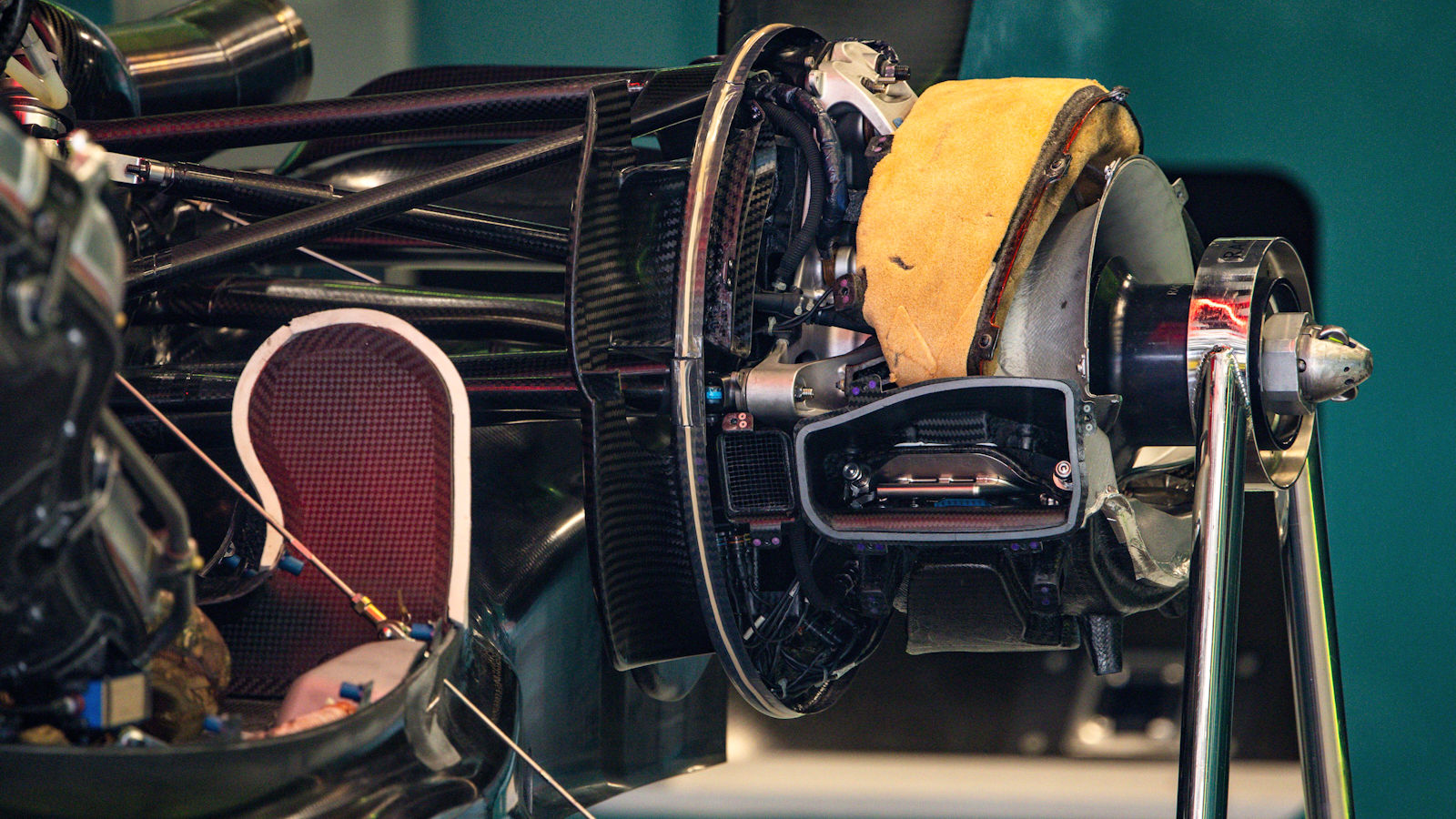
A look at the fairings surrounding the rear brake disc and caliper on the AMR25 without all of the pipework in place allows us to see how the caliper is fed cool air.

A multiple winglet arrangement is mounted on the AMR25’s rear brake duct outlet, whilst another sits ahead of it and combines with the shape made by the outboard section of the wishbone ahead of it.

An overview of the rear crash structure, suspension and brakes on the AMR25 as it’s prepared on the stand away from the car.

The rear wing assembly on the AMR25 without the upper flap in place provides us with a view of the tip section’s profile and the DRS actuator as the pod has yet to be installed.
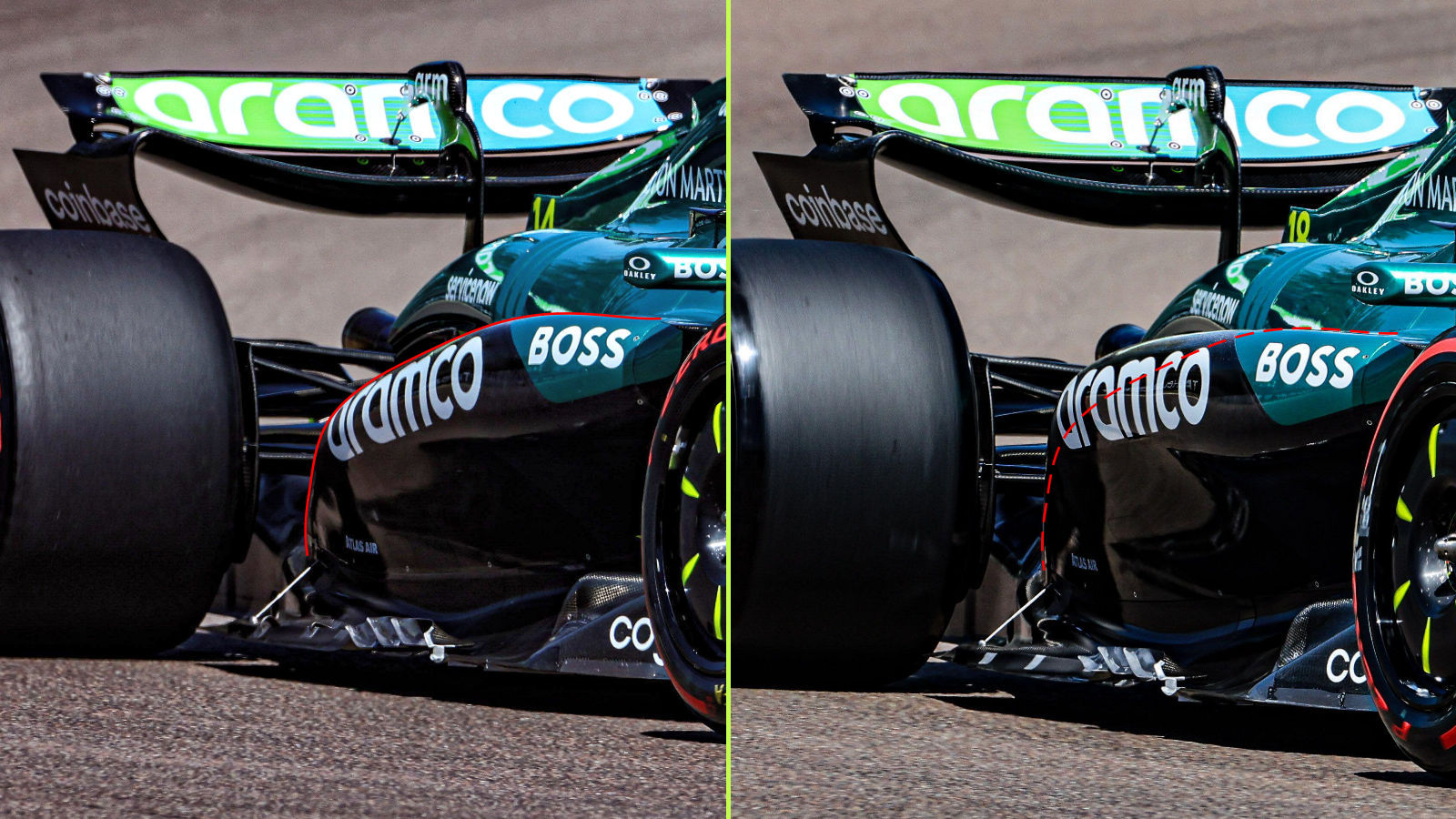
A comparison showing the difference in the sidepod bodywork that was introduced at the British Grand Prix, with the length of the downwash section increased.
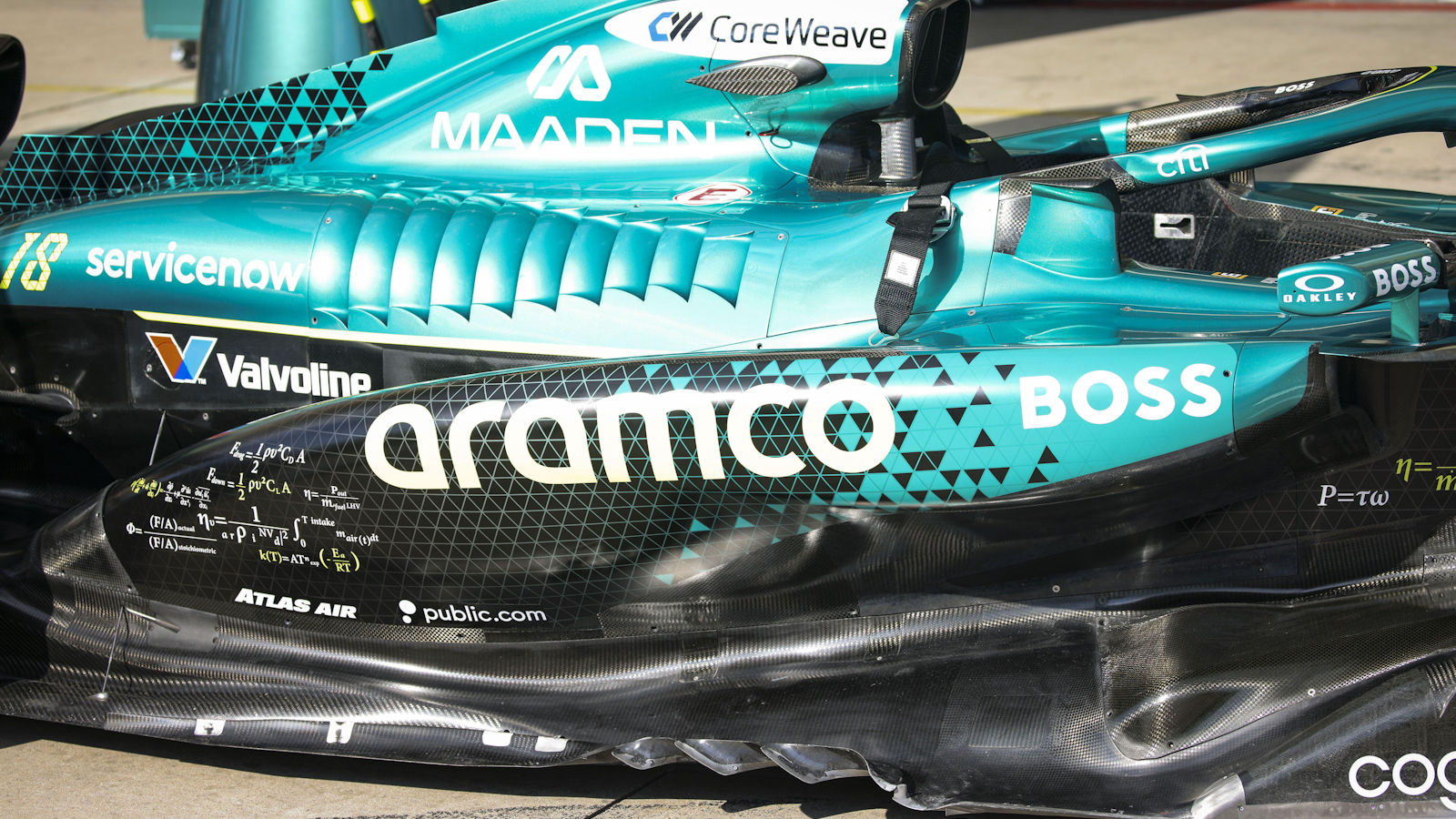
An overview of the AMR25’s sidepod and engine cover bodywork, along with the floor beside.
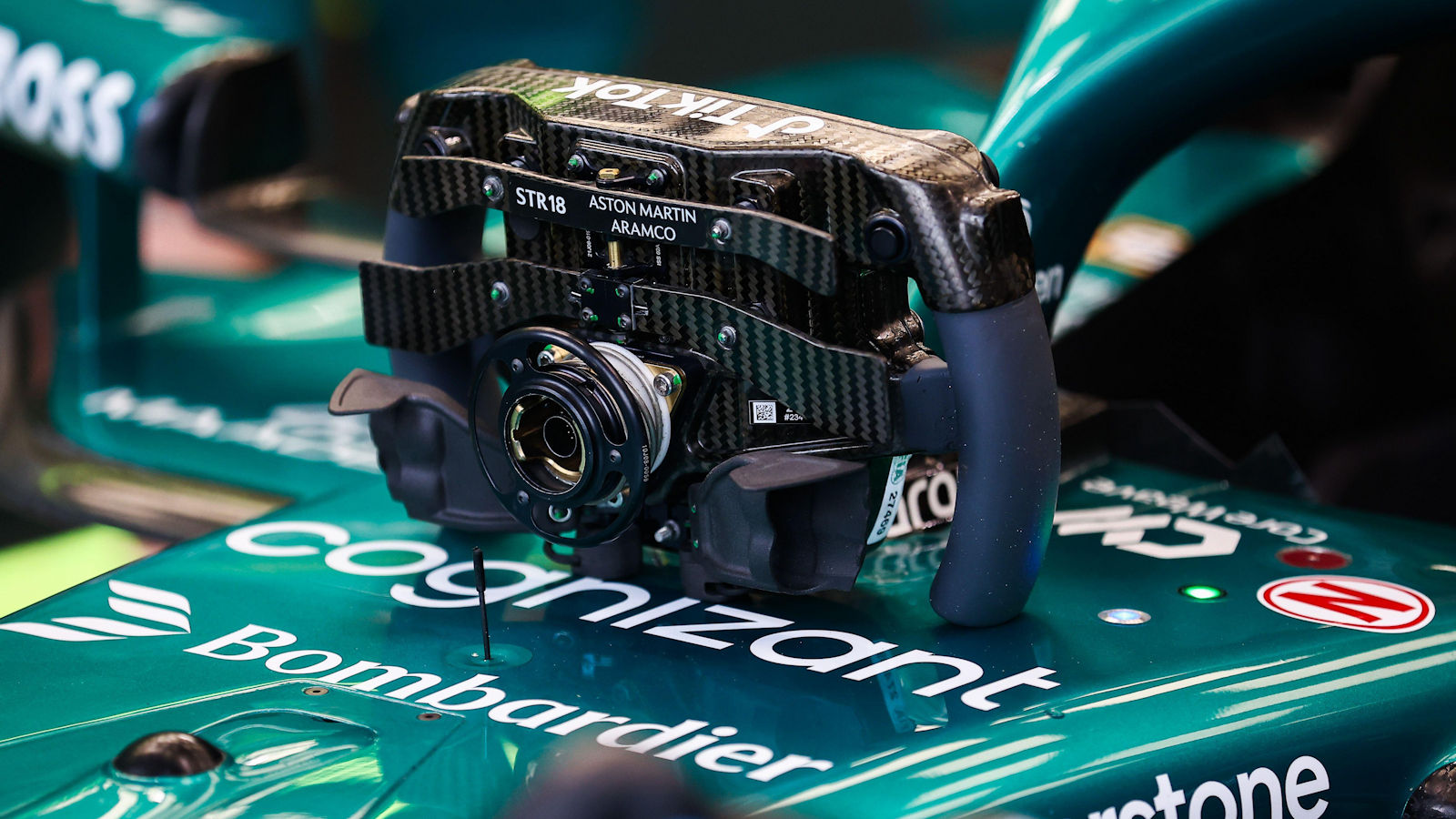
The back of the AMR25’s steering wheel, with the clutch and gear selector paddles visible.
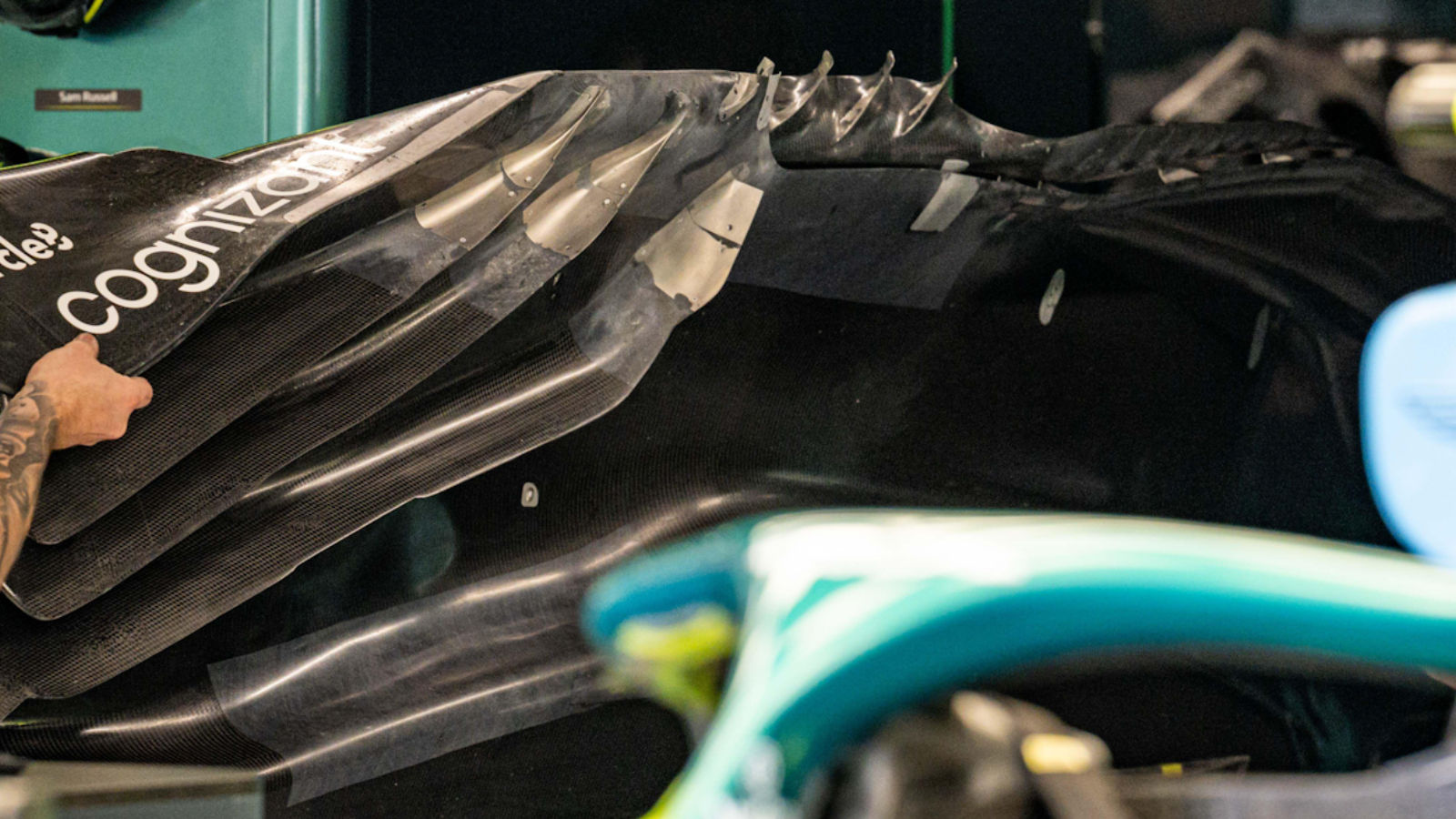
An excellent shot of the AMR25’s underfloor, showing the complexity of the fence geometry and how there’s more vanes on the underside of the edge wing at the rear of the assembly.

As part of an overhaul, Aston Martin made changes to their diffuser in Imola, with the vertical baffle in the central section previously utilised (inset) removed.
Read next: F1 uncovered: Under the skin of the Racing Bulls VCARB02


