
Charles Leclerc’s costly Barcelona crash explained by one revealing data point


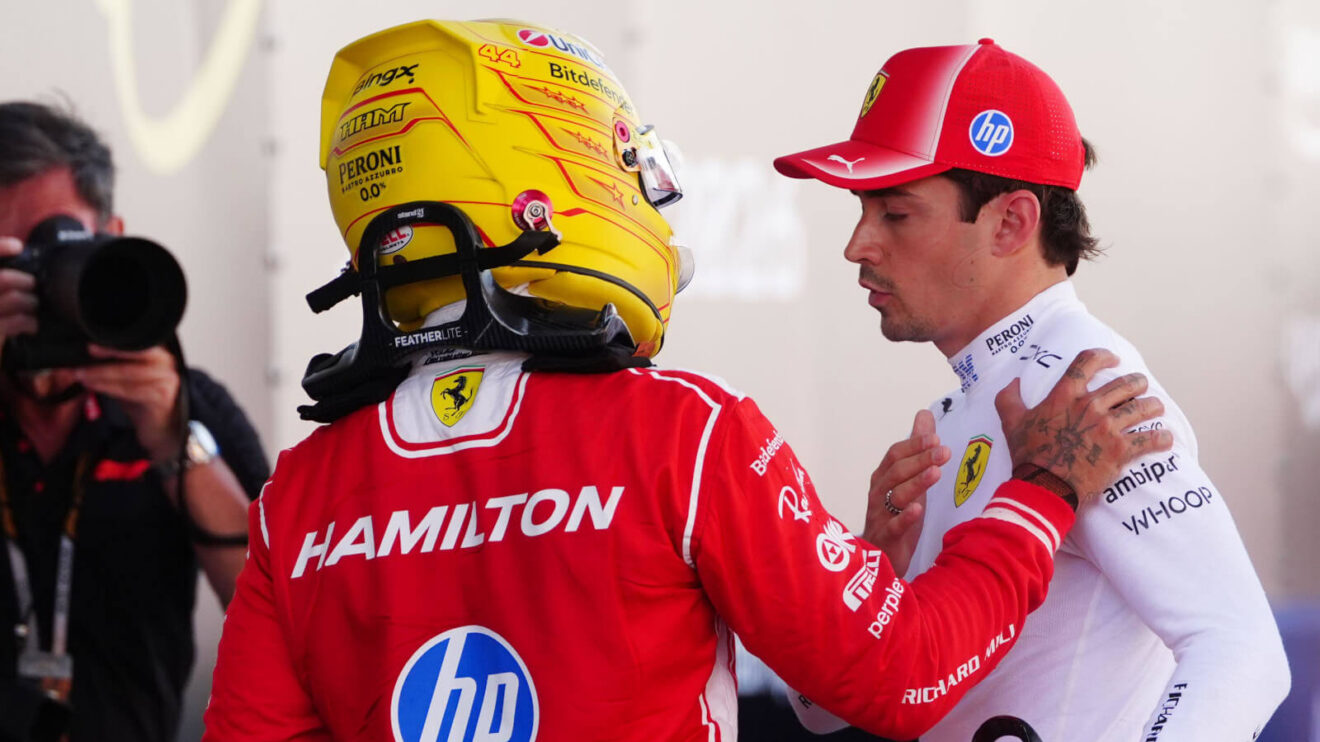
Charles Leclerc crashed out of qualifying at the Barcelona GP
For the second consecutive weekend, Charles Leclerc’s qualifying hopes ended in the barriers, and the data reveals exactly why his Barcelona crash happened.
This time, Leclerc’s error appeared hasty and inexperienced, and the data behind the incident reveals exactly why.
Charles Leclerc Barcelona crash analysis reveals key Turn 4 error
Want more PlanetF1.com coverage? Add us as a preferred source on Google to your favourites list for news you can trust
Following a weekend to forget for Charles Leclerc in Monaco, Ferrari arrived in Barcelona just a week later armed with a major upgrade package. The new aerodynamic components were aimed at bringing additional stability through the corners – a trait that is highly critical at a circuit like Barcelona.
The data from the opening free practice sessions indicated that progress had indeed been made. Even if the outright lap times didn’t immediately show it, Ferrari was highly competitive across all corner profiles on the track, leading the field in some sections and sitting right behind Mercedes in others.
However, the primary hurdle they faced was engine power, which bled lap time along almost every straight.
The graph below, displaying the fastest laps from FP2, confirms this deficit. We can observe just how much top speed Leclerc lacks in the sections between Turn 3 and Turn 4, between Turn 13 and Turn 14, and onto the start-finish straight. The only straight where the Ferrari drivers looked competitive was the Turn 9 to Turn 10 section, but they had to pay a heavy price for this by deploying a lift-and-coast prior to Turn 5 and Turn 7.
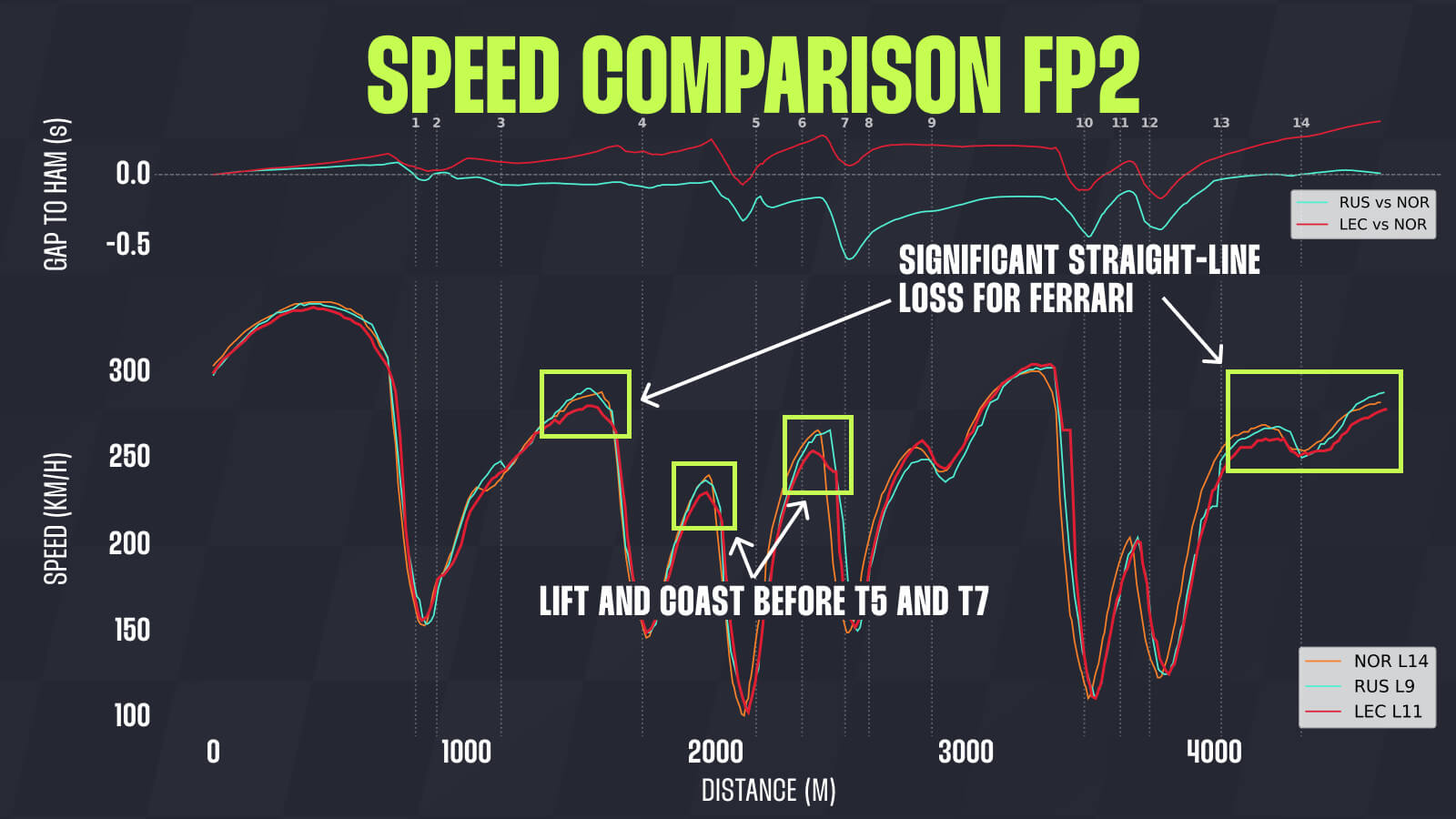
Almost identical characteristics were visible during the opening two segments of qualifying. The exit of Turn 14 onto the main straight was the single biggest area of loss for both Leclerc and Hamilton. At that moment, it appeared highly unlikely that Ferrari could challenge for the front row, and securing a single car on the second row would have been a strong result, considering both the McLaren and Mercedes drivers were quicker.
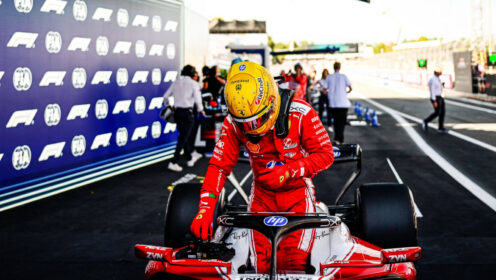
However, Charles Leclerc managed to throw that opportunity out of the window with a mistake at Turn 4 on his very first flying lap, ending his session in the wall for the second weekend running.
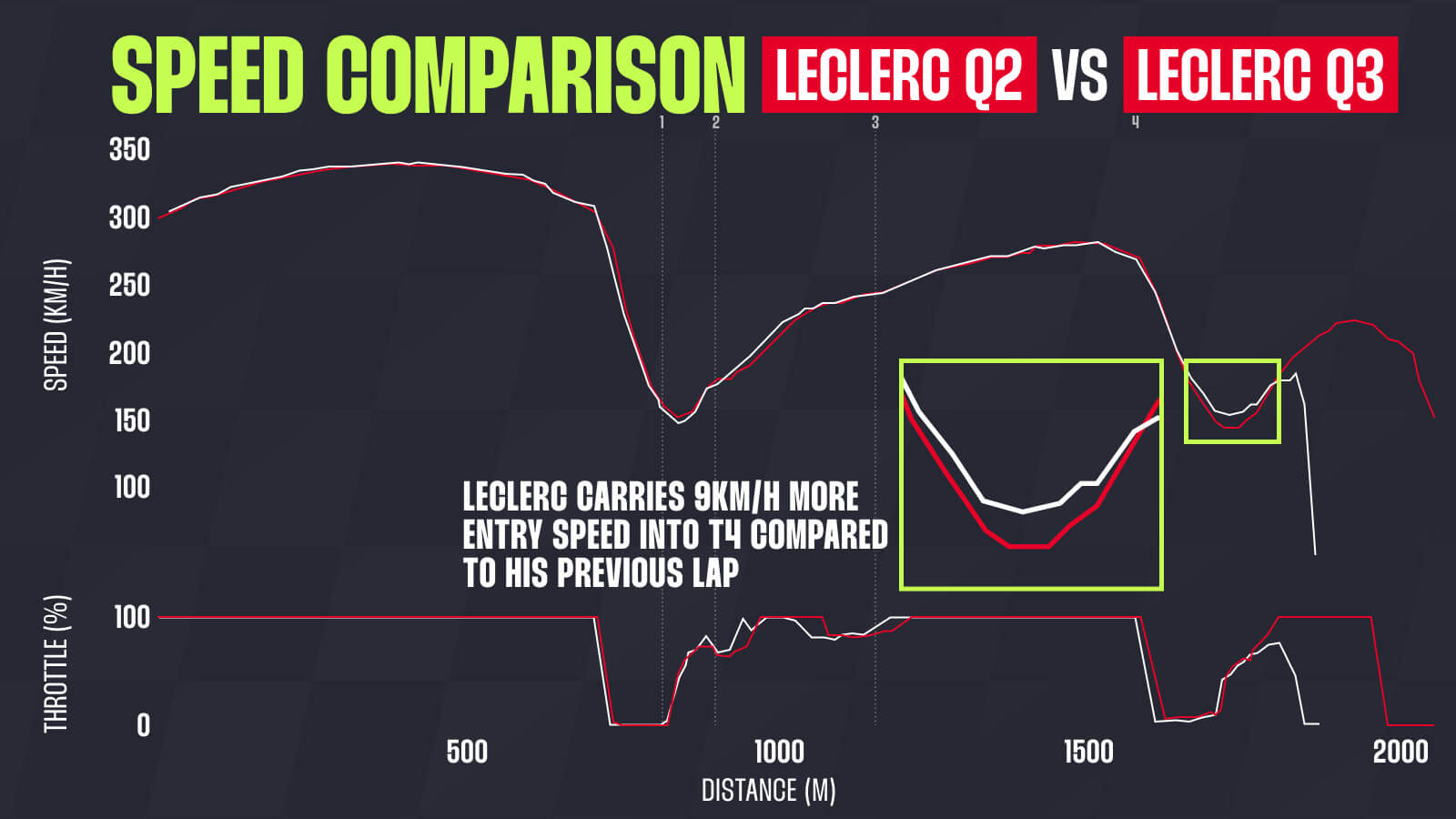
Leclerc entered Turn 4 9 km/h faster than on his previous benchmark lap, as illustrated in the graph below. This induced a loss of rear grip at the apex, which he attempted to catch with a steering correction. However, the snap washed him out onto the dirty section of the track, where he completely lost grip, making a recovery impossible.
This was a clear driver error born out of excessive risk-taking. But why did Leclerc feel the need to carry so much more speed into Turn 4?
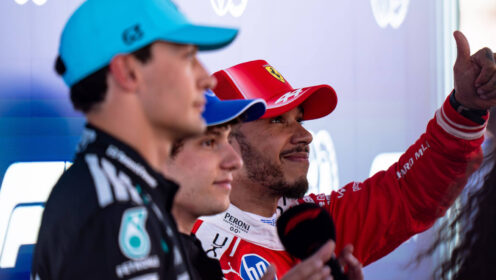
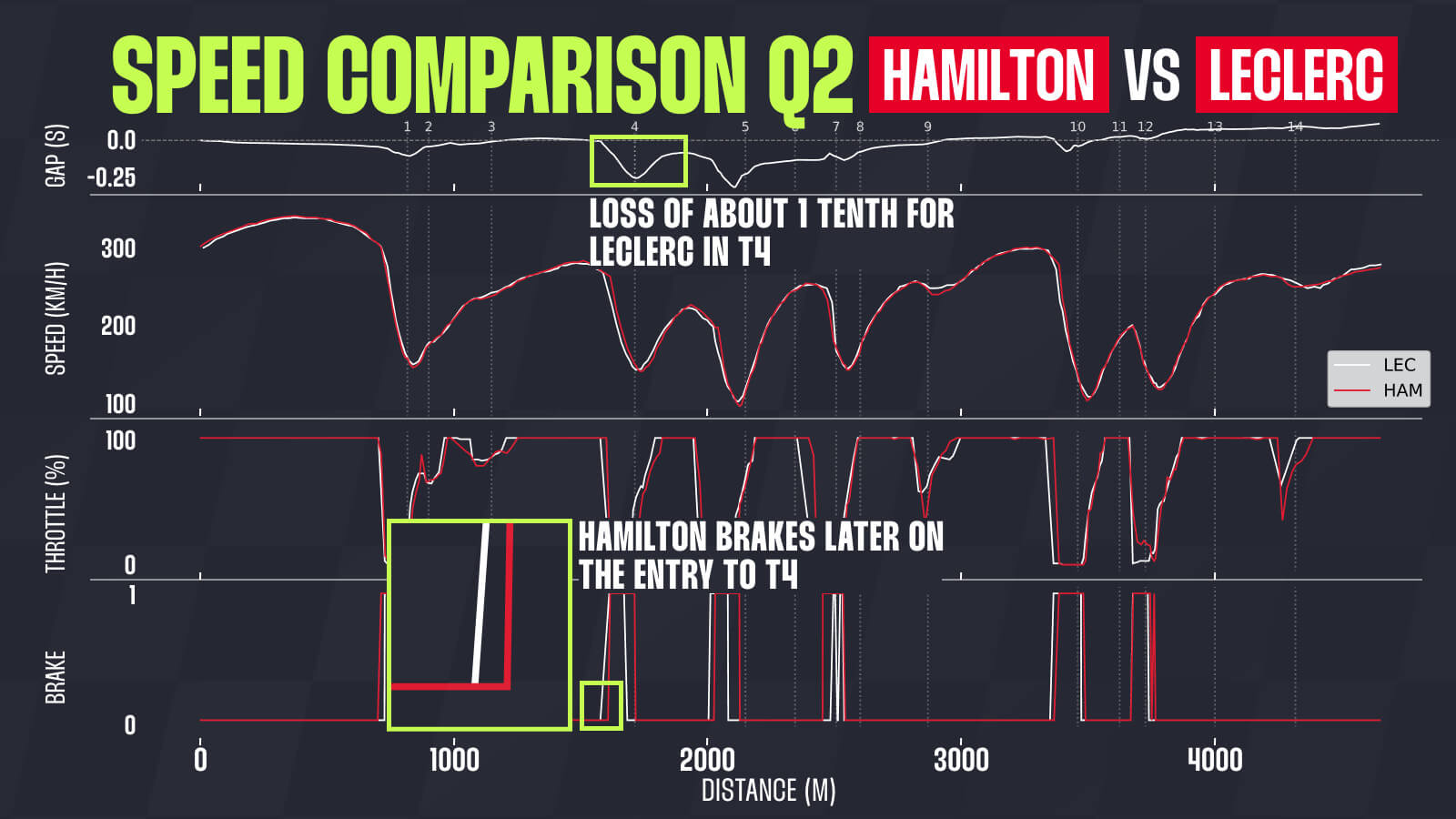
If we compare Leclerc’s and Hamilton’s fastest laps from Q2, we can see that Lewis was noticeably quicker through Turn 4. The Briton braked later here and managed to pick up a full hundredth of a second through this single corner.
Leclerc was undoubtedly aware of this data point prior to Q3 and knew exactly where a significant margin for improvement lay on the table.
As we learned after the session, both drivers ran similar mechanical setups, which gave the Monegasque the confidence to attempt an extra push in this section of the circuit.
The question that must be asked is why Leclerc felt the need to risk so much on his very first flying lap of Q3, at a point in the session when he had yet to post a lap on the timing board.
This “all or nothing” approach stripped away his chances in Monaco, and the exact same error was repeated just a weekend later – only this time with even greater consequences for his grid position.
More from qualifying at the Barcelona Grand Prix
Russell rebounds as Leclerc suffers: Barcelona qualifying winners and losers
F1 starting grid: Russell on pole as Barcelona GP grid order forms
A strong point of comparison is Lando Norris, who lost his opening flying lap as a direct result of Leclerc’s accident and the ensuing red flag. Following qualifying, Norris stated that he had to be far more cautious on his final attempt because he simply did not have the room to take the risks he typically would have pursued on a second Q3 run.
It seems that currently, Leclerc’s toughest opponent is himself, and the hope is that he can execute a mental reset ahead of tomorrow’s race.
What he can take solace in, however, is the performance and development trajectory of the car, which is definitively moving in the correct direction. At this stage, the only missing link separating Ferrari from a race victory is purely additional engine power.
Want to be the first to know exclusive information from the F1 paddock? Join our broadcast channel on WhatsApp to get the scoop on the latest developments from our team of accredited journalists.
You can also subscribe to the PlanetF1 YouTube channel for exclusive features, hear from our paddock journalists with stories from the heart of Formula 1 and much more!
Read next: Charles Leclerc ‘ashamed’ after heavy Barcelona crash ruins pole bid