
Do Fernando Alonso’s Aston Martin comments stand up to scrutiny?


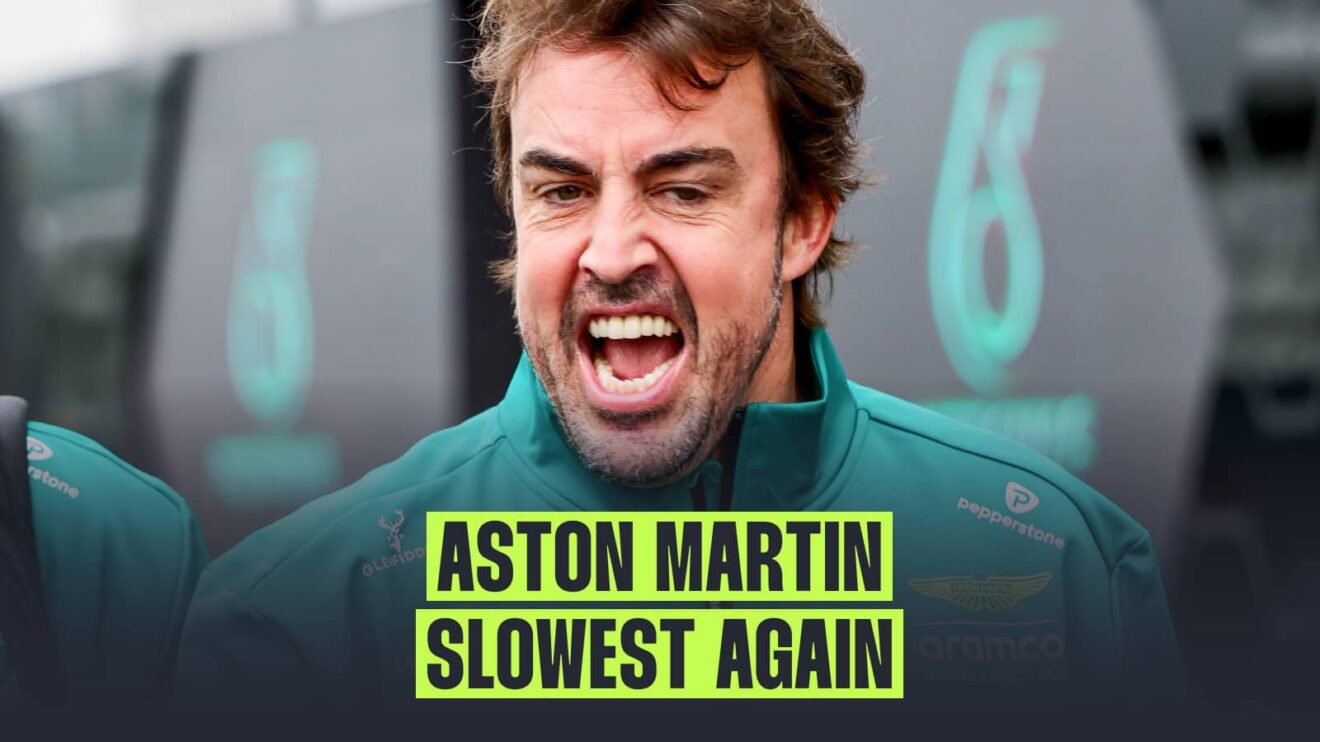
With rival teams bringing upgrades, Aston Martin has been slowest of all in qualifying at the last three races
Despite finishing qualifying down in 21st place for the Austrian Grand Prix, a full second adrift of Sergio Perez in the Cadillac, Fernando Alonso ended the session on a positive note.
He told Aston Martin over team radio: “That was a good lap. Not what we want, but not too far. Not too far. We’re getting closer.”
Fernando Alonso finds positives after Aston Martin qualifying showing
Want more PlanetF1.com coverage? Add us as a preferred source on Google to your favourites list for news you can trust
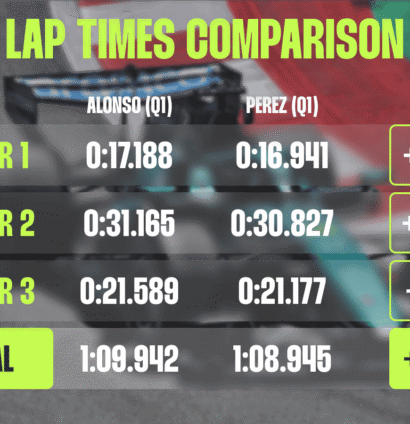
Does Alonso’s comments that Aston Martin is getting closer stand up to scrutiny? Let’s dive into the telemetry data behind the slowest team on the grid and find out exactly how Aston Martin wound up a massive second slower than Cadillac.
Without a doubt, the biggest disappointment of the 2026 season so far is Aston Martin.
Together with the most popular name in F1 engineering, Adrian Newey, and Honda as factory power unit partner, this team showed immense promise ahead of the F1 2026 season.
However, the reality on track has turned out to be completely different.
At the very start of the season, Aston Martin struggled primarily to log meaningful track time.
Severe vibrations, caused by a highly specific packaging design where the energy store (battery) and the internal combustion engine were rigidly bolted together, were so intense that driver health was briefly called into question.
Yet this was merely one of many deep-rooted issues plaguing the car.
The Miami Grand Prix, the fourth round of the calendar, stands as the only race this season where the team managed to bring both cars across the finish line.
During qualifying in Austria, Alonso was 3.7 seconds slower than the pole position time – an astronomical deficit considering the Red Bull Ring features one of the shortest laps on the calendar.
Extrapolating that same percentage gap to a track like Spa-Francorchamps in Belgium would mean being off the pace by five seconds.
Comparing Alonso’s data directly to Perez reveals just how massive the deficit is, particularly on the straights.
On the main start-finish straight alone, Perez holds an 18 km/h top-speed advantage.
This is a pattern that repeats every single weekend, with Aston Martin consistently logging the lowest trap speeds in the field, further highlighting the severity of the team’s drag and deployment issues.
The only areas where Alonso managed to look competitive were the slowest corners on the track, Turn 3 and Turn 4.
In these zones, his apex speed matched that of the Cadillac driver, while he simultaneously managed to brake significantly later on entry.
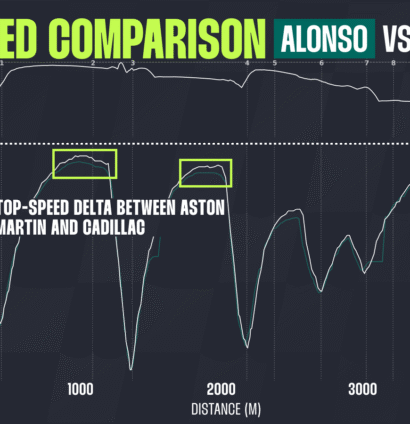

Aside from these minor cornering details, there is not a single performance metric that paints a positive picture for the squad.
So where exactly is Alonso finding this optimism?
Following such a catastrophic start to the campaign, the team was forced to take drastic measures, deciding to completely pivot to a B-spec version of the car.
This overhauled machine is scheduled to debut during the European summer swing, highly likely at the Belgian Grand Prix.
Until then, there will be zero technical upgrades brought to the current challenger, nor will the team invest any further development resources into the existing chassis.
This strategic development freeze is the primary reason why the performance delta between Aston Martin and the rest of the field appears so massive right now, but it is also the driving force behind Alonso’s post-qualifying outlook.
It is believed that by combining a revised power unit packaging layout, aggressive weight reduction and complete overhauls to the chassis and aerodynamics, the B-spec car could unlock 2.3s of lap time.
Naturally, these figures remain theoretical projections; while a step forward is guaranteed, it is highly unlikely to be an immediate silver bullet.
However, the new iteration brings something far more vital: a stable baseline that allows the engineers a predictable platform for future development.
Aston Martin must look beyond the current season and shift focus toward next year.
Having a functional car that can be consistently upgraded and tested on track provides the engineering team with indispensable data and experience.
What remains to be seen is just how drastic Aston Martin’s redesign will be, and exactly what their upcoming challenger will be capable of achieving on track.
Want to be the first to know exclusive information from the F1 paddock? Join our broadcast channel on WhatsApp to get the scoop on the latest developments from our team of accredited journalists.
You can also subscribe to the PlanetF1 YouTube channel for exclusive features, hear from our paddock journalists with stories from the heart of Formula 1 and much more!
Read next: George Russell data settles Austrian GP yellow flag debate