
George Russell data settles Austrian GP yellow flag debate


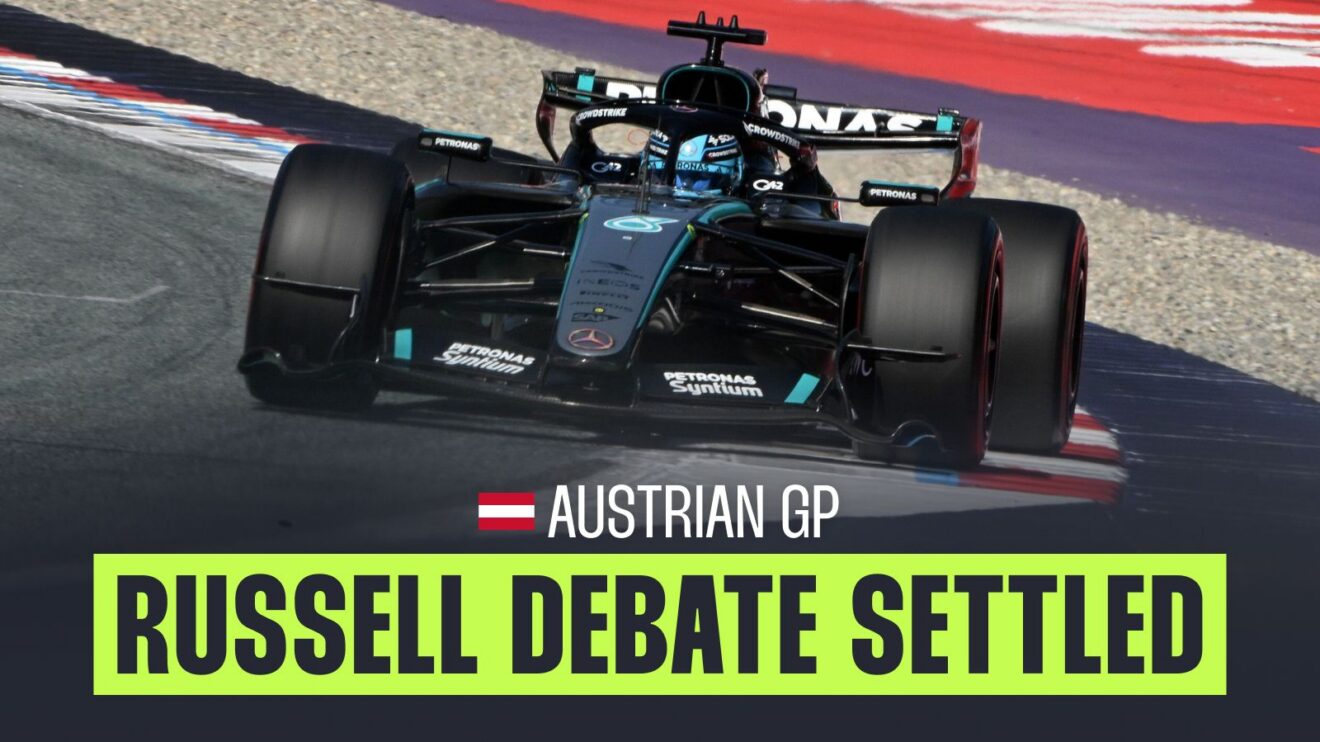
George Russell's Austria telemetry settles the yellow flag debate
Finishing his lap with Max Verstappen still in the wall at the penultimate corner of the Red Bull Ring, George Russell claimed a highly crucial pole position – especially given Kimi Antonelli’s dominance so far this season.
The stewards ruled that Russell slowed down sufficiently and navigated Turn 9 in a safe manner. However, let’s take a look at what the telemetry data reveals. Exactly how much did Russell lift, and how much time did it cost him?
True George Russell lift revealed in Austria telemetry data
Want more PlanetF1.com coverage? Add us as a preferred source on Google to your favourites list for news you can trust.
Not for the first time at the Austrian circuit, the very end of the qualifying session was disrupted by an incident in the final corners, affecting all drivers who were on a flying lap at that moment. This time, Max Verstappen ended up in the wall following an unusual incident of a technical nature.
This triggered a single yellow flag. 22 seconds later, double yellow flags were waved, meaning all subsequent drivers had to abort their laps and pass through this section of the track safely. On the other hand, regulations state that under a single yellow flag, you must slow down but do not have to completely abandon the lap.
However, the rule lacks a clearly defined metric for exactly how much you need to decelerate or lift off the throttle – leaving that assessment entirely up to the stewards.
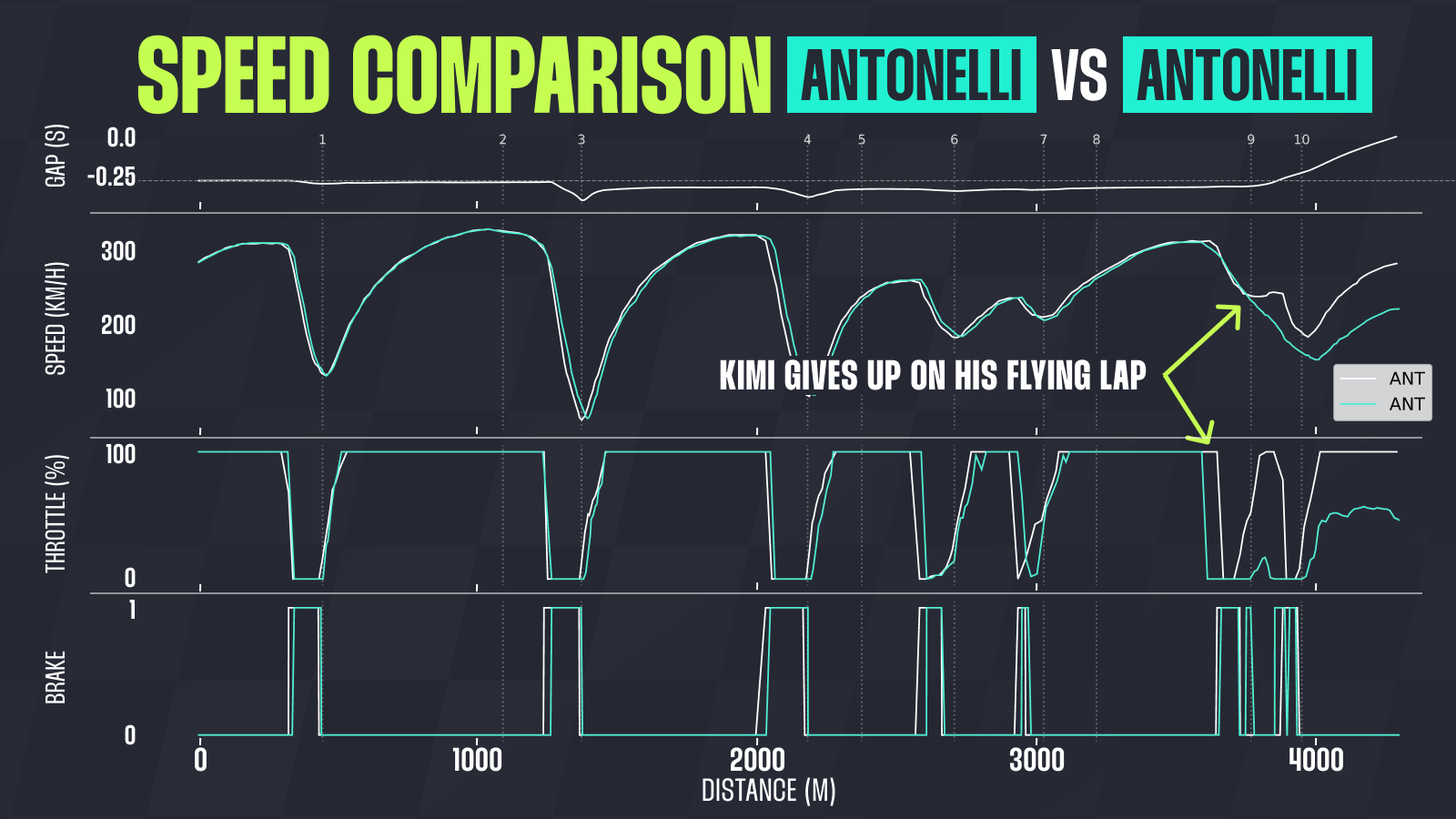
It was precisely within this single yellow flag window (which raises further questions regarding safety and race control decisions) that both Antonelli and Russell passed through. While the Italian was the one to abort his lap, Russell pushed on to secure pole position.
Although it initially appeared that the lap should be deleted since it was set while another driver was in the wall next to a high-speed corner, Russell did nothing illegal, at least according to the stewards’ judgment.
He did lift off the throttle and slow down sufficiently for it to be clearly visible in the data, but at the same time, he did it carefully enough not to compromise his lap too heavily.
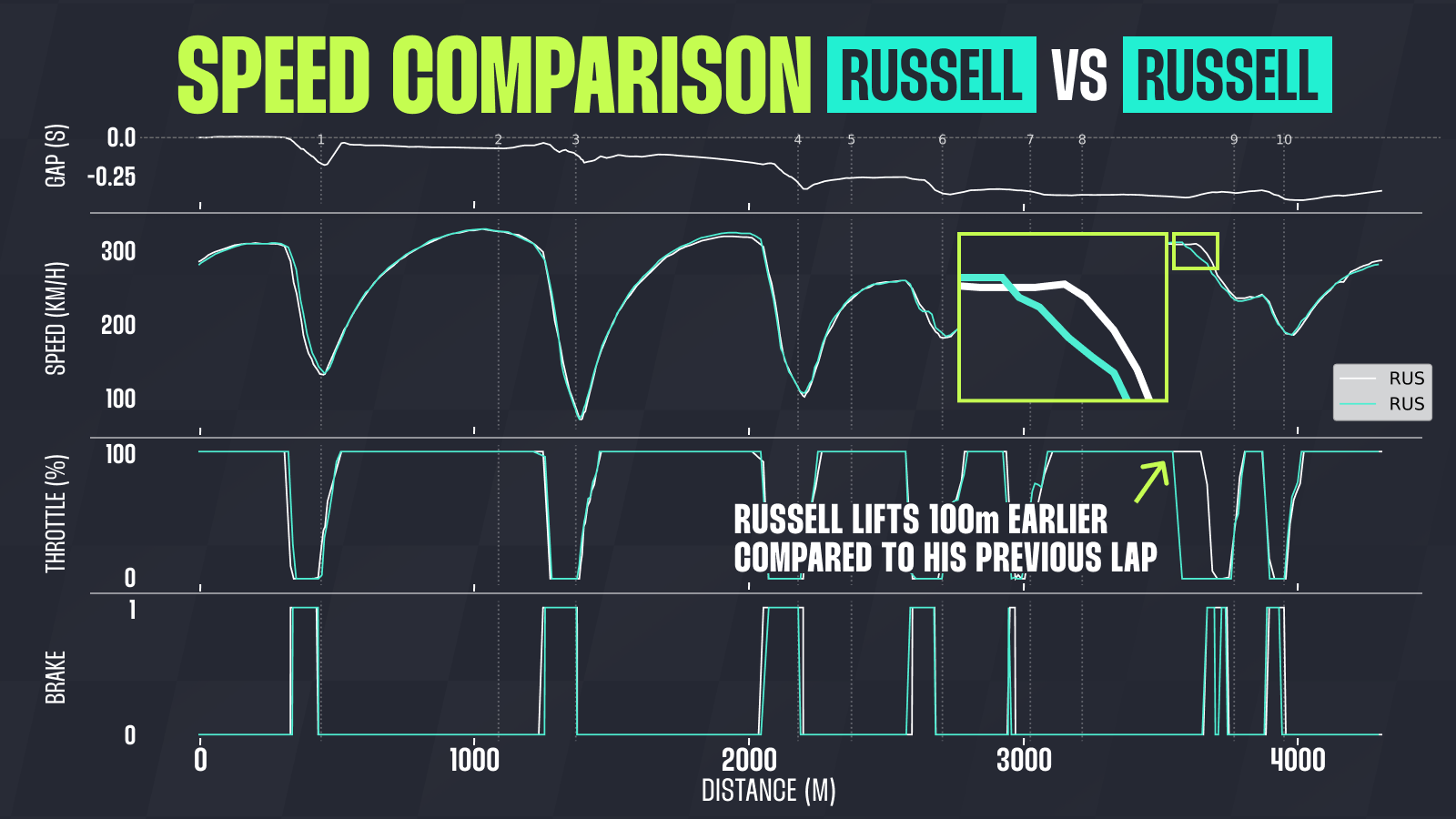
Looking at the telemetry chart below, we can see that Russell lifted about 100 meters earlier compared to his first flying lap in Q3, which is highlighted in white on the graph. After that, once he got back on the power at the exit of T9, Russell resumed driving at maximum pace.
A closer look at the data shows that due to this earlier lift, Russell lost a mere 0.08 seconds – not even a full tenth of a second.
With such a minor time penalty, the Mercedes driver comfortably held onto his pole position, which was built on an excellent performance across the rest of the lap. In the end, his advantage was 0.236 seconds over second-placed Leclerc, which is a substantial margin given the very short Red Bull Ring.
In addition to his brilliant driving, Russell must be credited for his situational awareness. He saw the single yellow flag displayed, knew he wasn’t required to abandon the lap, and minimised the time penalty he had to pay while doing just enough to satisfy the stewards that he had lifted.
His experience and quick thinking gave him the upper hand this time over his teammate, who now faces a tougher task during Sunday’s race.
However, the question remains: what could Kimi Antonelli have achieved had he not aborted his lap, and could he have challenged Russell for pole?
The data indicates that Russell was faster in the first and middle sectors, holding an advantage of roughly 0.14 seconds over Antonelli up until Turn 9. He found this time in Turns 1 and 4, where he managed to carry better apex speed.
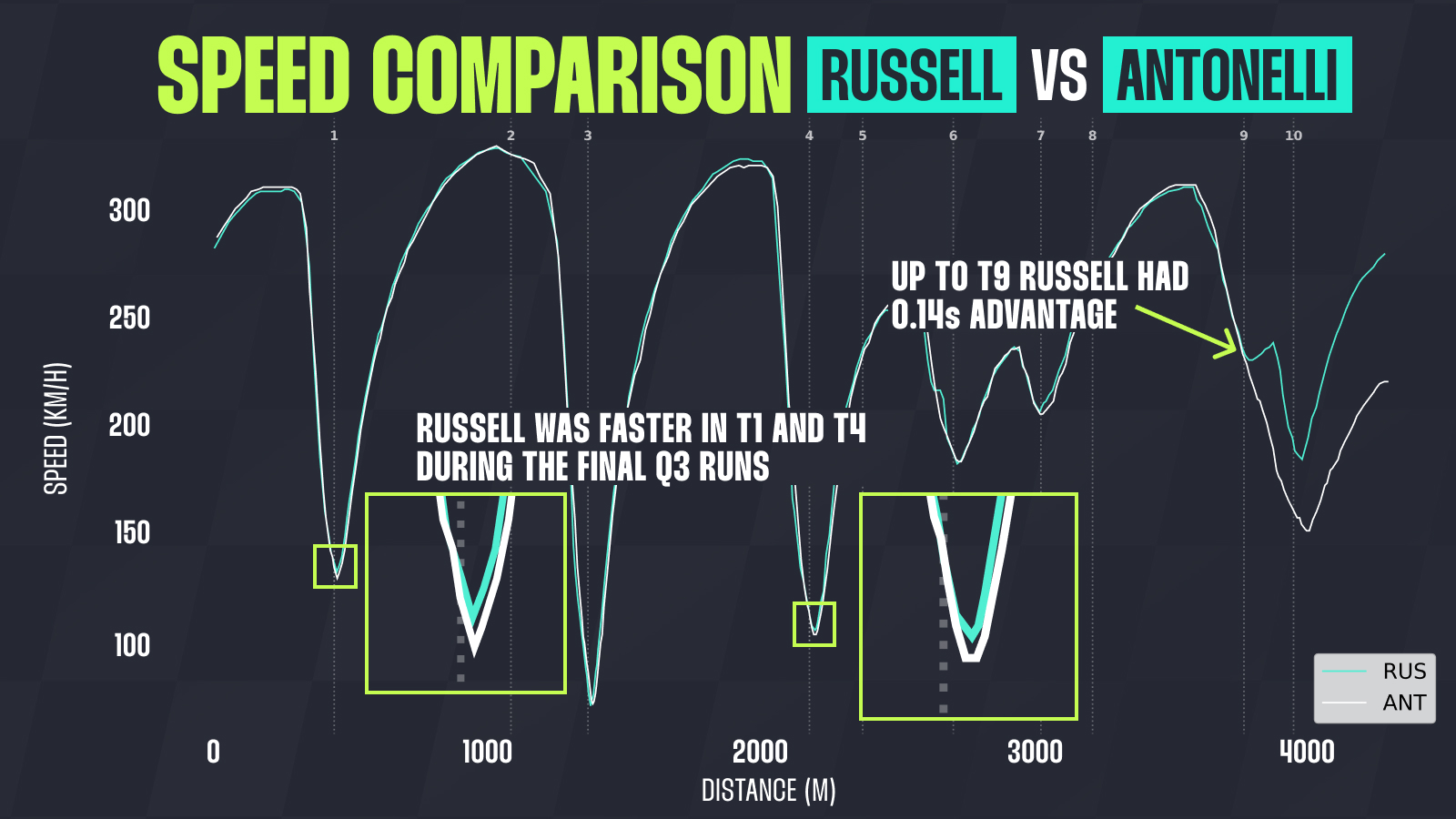
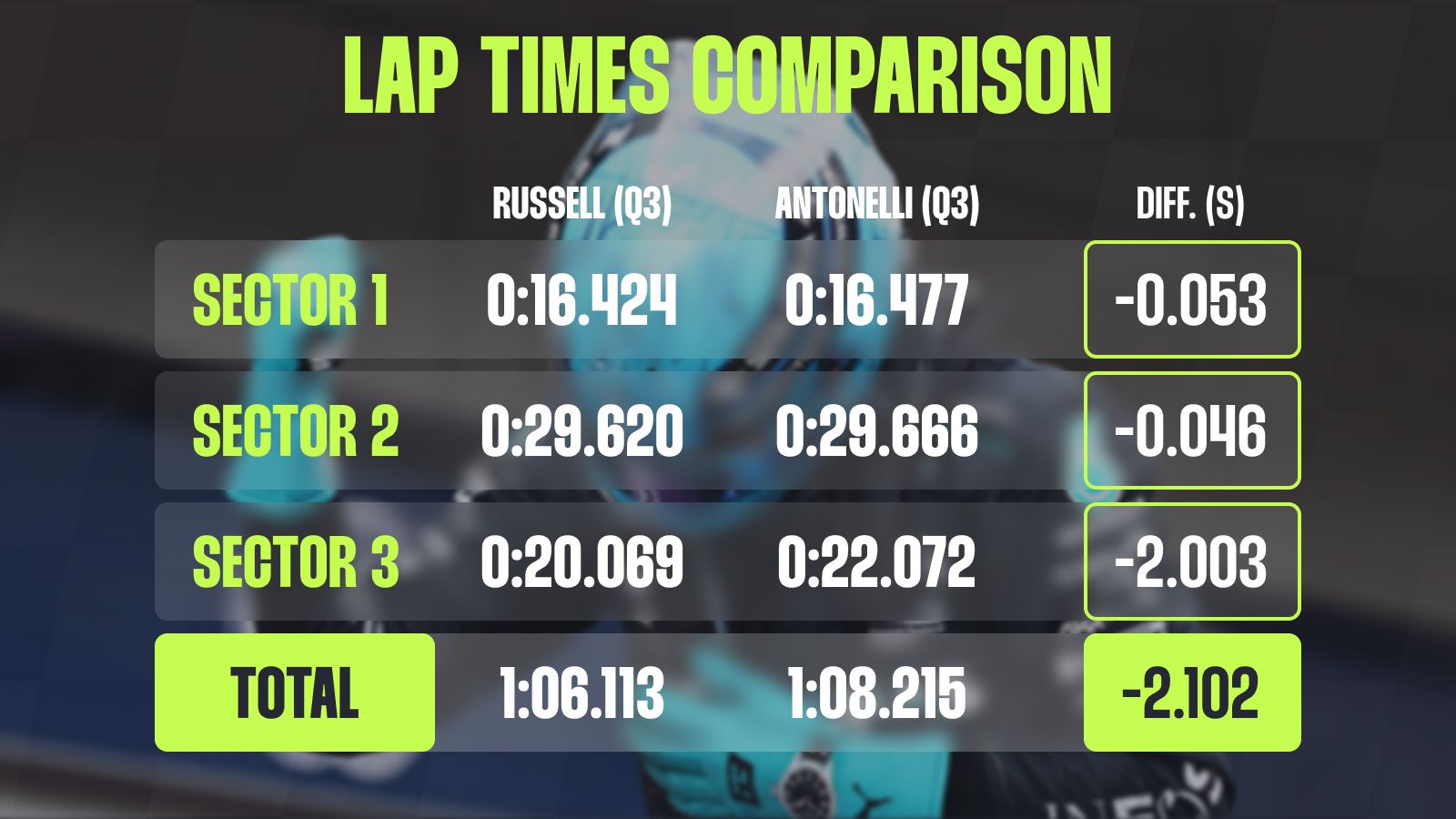
In other words, Antonelli would almost certainly have finished behind Russell even if he had managed the situation the same way. Instead, his decision to play it safe cost him two positions, dropping him behind two quick Ferraris.
More on George Russell from PlanetF1.com
FIA makes George Russell decision after Verstappen Austrian GP crash
Untelevised Antonelli team radio emerges after Russell sets Austrian GP pole
Judging by free practice data, Antonelli will definitely possess strong race pace, and on a track where overtaking is relatively accessible, that will play to his advantage.
What remains to be seen is how big of a gap Russell can build before Antonelli clears the Ferrari drivers. If the season so far has shown us anything, it’s that if Antonelli smells an opportunity to pass Russell, we are in for some spectacular on-track racing.
Want to be the first to know exclusive information from the F1 paddock? Join our broadcast channel on WhatsApp to get the scoop on the latest developments from our team of accredited journalists.
You can also subscribe to the PlanetF1 YouTube channel for exclusive features, hear from our paddock journalists with stories from the heart of Formula 1 and much more!
Read next: Antonelli calls for review after Max Verstappen crash triggers yellow flag confusion