
Antonelli calls for review after Max Verstappen crash triggers yellow flag confusion


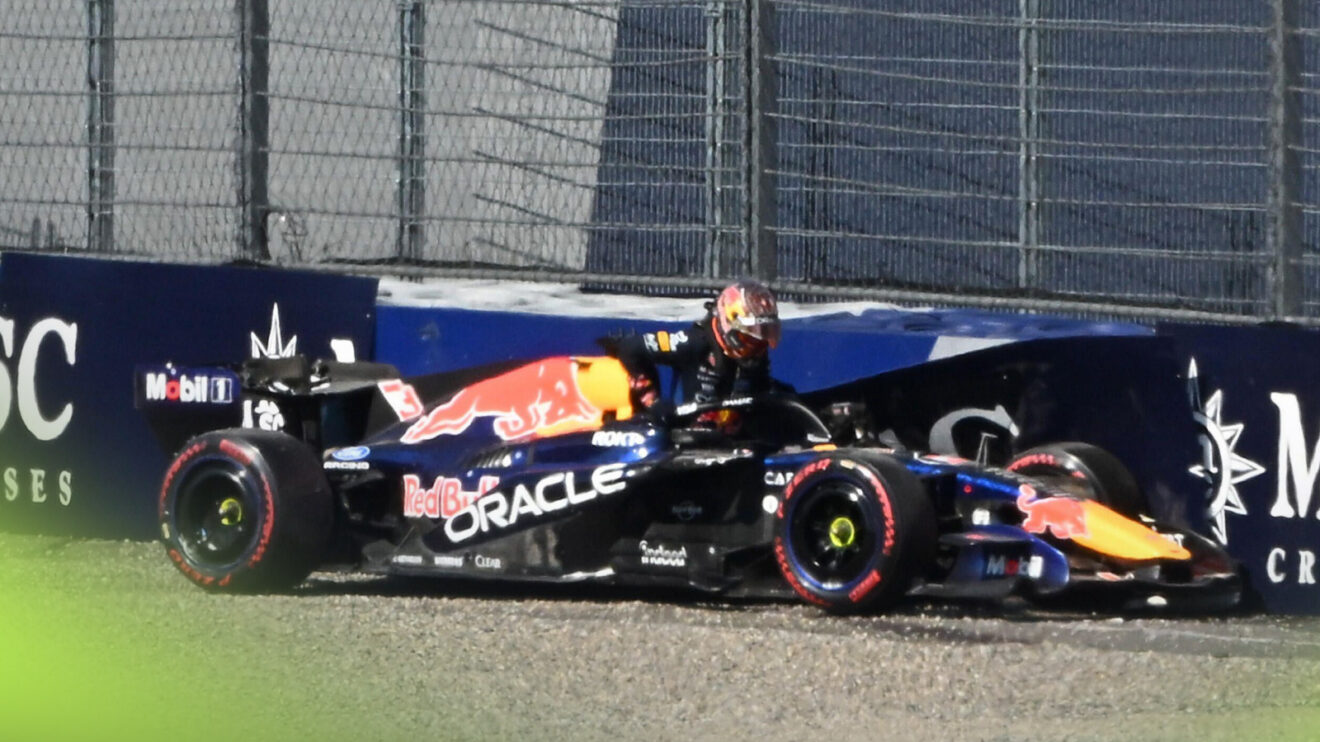
Max Verstappen triggered yellow flags as he crashed out of qualifying for the Austrian GP.
Mercedes driver Kimi Antonelli believes Max Verstappen crashing at the end of Austrian Grand Prix qualifying warranted a double yellow flag situation to force all drivers to abort their runs.
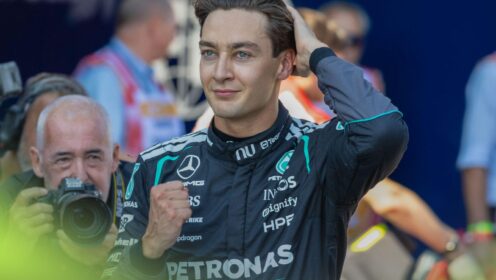
The Italian driver backed off from his final Q3 run after seeing yellow flags, resulting in a fourth-place finish as George Russell improved his lap time despite the yellow flag.
Kimi Antonelli questions FIA yellow flag decision after Max Verstappen crash
Want more PlanetF1.com coverage? Add us as a preferred source on Google to your favourites list for news you can trust.
Verstappen crashed late in Q3 to draw yellow flags on the approach to Turn 9 but, crucially, were only initially single yellow flag.
Single yellow flags mean a driver must lift, but does not need to abort the lap.
But having heard “yellow, yellow” over team radio and seeing marshals at the side of the track waving a yellow flag, Antonelli did back off from his final run.
Yet Mercedes teammate Russell did not and, while he lifted at the apex of Turn 9, improved enough to take pole position ahead of the two Ferrari drivers, while Antonelli wound up in fourth.
“Probably, I don’t know, I saw wrong, and I just saw two flags instead of one, and I aborted,” a downbeat Antonelli said.
“Also it was hard to see because there was the sun in the face, and I looked at the marshal, because I think the panel went yellow, but of course you don’t know if it’s a single or double, so I looked at the marshal, and it was hard to see, and I just saw double yellow instead of one, and I just aborted completely.”
The championship leader reckoned he would have wound up a tenth off the pace of Russell, claiming a front-row start, and said he was “confused” by the fact the track didn’t go double yellow, given the circumstances.
“There was a car in the wall in a fast corner,” he said.
“So I think, in this situation, I don’t know why it didn’t go double yellow straight away because it’s a super-quick corner, and if you go off at the same time, it can end up very badly.
“So a bit confusing, but it is what it is.”
More from the Austrian GP
FIA makes George Russell decision after Verstappen Austrian GP crash
McLaren reveals why ‘Macarena’ rear wing test was abandoned in Austria
Asked by PlanetF1.com whether the situation merited a full red flag, which would also have had the net effect of causing all the driver’s current laps to be cancelled, Antonelli said he reckoned the situation warranted a closer look.
“I think double yellows would have been enough, because you just need to abort the lap, but for sure it is something that needs to be reviewed,” he explained.
“Especially when it happens in a high-speed corner. If it’s a slow speed, still single yellow can be okay, but fast corner, it should be double yellow straightaway.”
With Russell’s lap standing after a short period of consideration by the FIA stewards, the British driver explained that his final lap had been “unbelievable” – meaning he could afford the lift and still claim pole position.
“I got that yellow flag in the single yellow in the last sector, but I did a 100-metre lift, lost a huge amount of time, and still… I don’t have the answer for sure,” he said of his pace.
“I’ve been looking with my team where it came from, but it felt very, very sweet.”
“It is a corner where you can see quite a lot, and I did a huge lift, and I was going to assess the situation as soon as I got to the corner, if you know the car was there, but, as it was a single yellow, I was pretty confident there was no danger.
“As soon as I turned into the corner, I already saw the green up ahead, I actually thought the car had continued, because I didn’t see the car at all, it was so far off the track.
“I didn’t see the car whatsoever, and it was only when I saw the replay afterwards, I saw it was well off into the wall, so yeah, I was glad common sense prevailed there.”
Pushed on whether he believed the single yellow flag was the right call in retrospect, given Russell’s position on the Grand Prix Drivers’ Association which is a major advocate for the safety of all competitors and participants, the British driver said he agreed with the decisions.
“It was correct, because a double yellow is immediate danger, you’ll never go and lift 100 metres before a corner or lifting off with a single yellow, you’re never going to lose control of the car,” he said.
“Verstappen, the only reason he was in the wall that far away is because he attacked and lost the car.
“So, I think the single yellow was correct. I think I did everything right to be very much under control, and it’s very different story to a double.”
Want to be the first to know exclusive information from the F1 paddock? Join our broadcast channel on WhatsApp to get the scoop on the latest developments from our team of accredited journalists.
You can also subscribe to the PlanetF1 YouTube channel for exclusive features, hear from our paddock journalists with stories from the heart of Formula 1 and much more!
Read next: F1 starting grid: Russell snatches pole amid yellow flag drama