

Ferrari’s Barcelona breakthrough exposed as Austria pace collapses on telemetry data


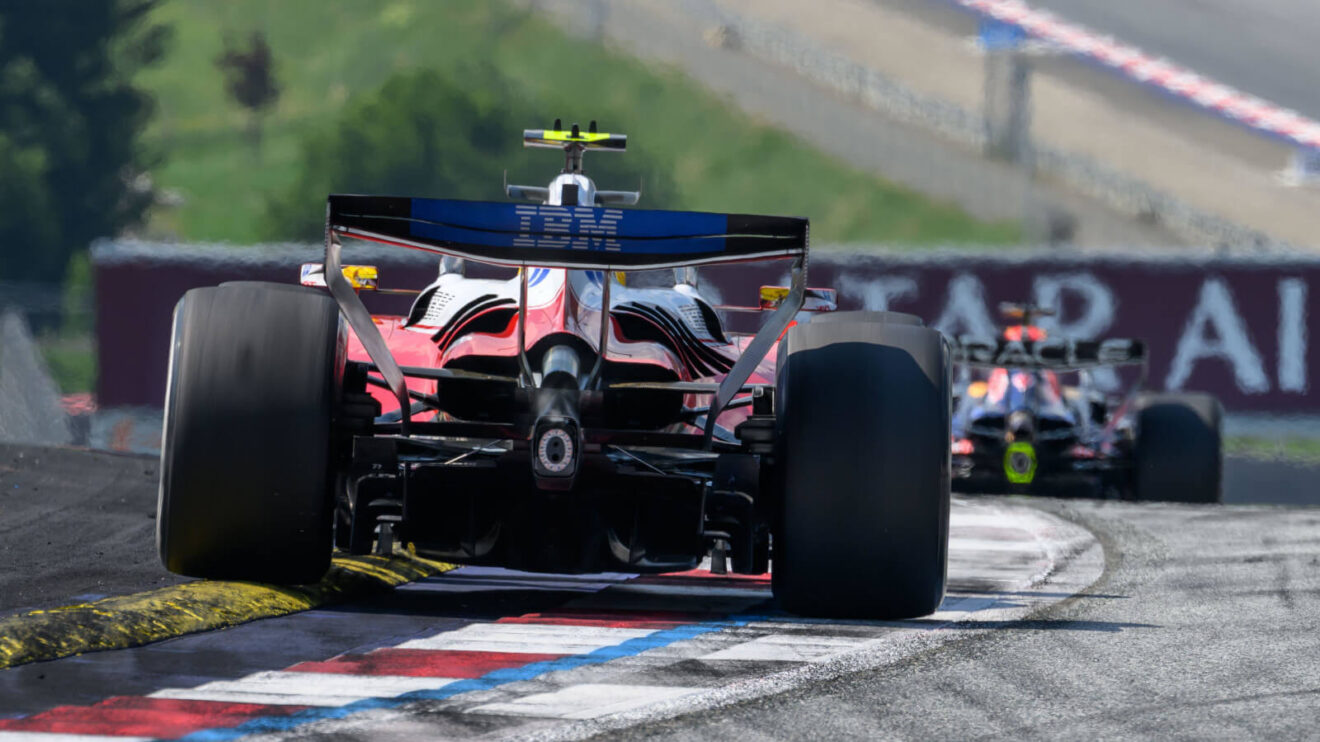
Lewis Hamilton chasing Max Verstappen at the Red Bull Ring
After a breakthrough weekend in Barcelona, where Lewis Hamilton secured his first Ferrari victory, expectations were high heading into Austria — but the reality told a very different story.
It seems the upgraded power unit didn’t help, so let’s dive into the telemetry data and discover why Ferrari was so slow in Austria.
Ferrari telemetry exposes Austria slump
Want more PlanetF1.com coverage? Add us as a preferred source on Google to your favourites list for news you can trust
The spectacular race in Barcelona put great expectations from fans onto Ferrari’s shoulders, which was only heightened by the fact that the team brought a new power unit to Austria – a component that had been characterized as the biggest culprit behind Ferrari’s weaker pace.
However, the Barcelona circuit and the Red Bull Ring are two completely different tracks with completely different characteristics. Namely, race pace in Barcelona is largely determined by the degradation you experience on the front-left tyre. Your strategy depends on it; if it is in good condition, you continue the race, and when it wears out, you pit for a change.
On the other hand, the track in Austria is not as extreme on tyres, the braking zones are much heavier, and the lap is much shorter. The air is thinner due to the altitude, which affects not only engine and brake cooling completely differently, but also tyre temperatures.
Analysis from the Austrian Grand Prix
Austrian GP conclusions: Desperate Russell, Verstappen future, Newey’s Aston vision
Austrian GP 2026 driver ratings: Hamilton challenge fades as Verstappen ups the ante
We could already sense that Ferrari was struggling during free practices. However, the team was testing the new power unit, so at the time we couldn’t be certain about the validity of the data. Both Ferrari drivers were losing over half a second per lap just on the straights, but it was still expected that this deficit would drop on Saturday and Sunday.
And during qualifying, it did drop. Although both Hamilton and Leclerc were still lagging behind, they made up time in the corners and generally looked very fast, securing P2 and P3 ahead of the race start.
Unfortunately, we only saw how far behind the Maranello team realistically was in terms of pace once the race started.
By overtaking Leclerc, Hamilton established himself as the faster side of the team and, at least during the first five laps, as the only driver who would rival Russell. But already on lap 6, there was a sudden drop in pace (about half a second), which can also be seen on the graph below.
The role of main rival to Russell was quickly taken over by Verstappen, while Hamilton decided to try something with a different strategy.
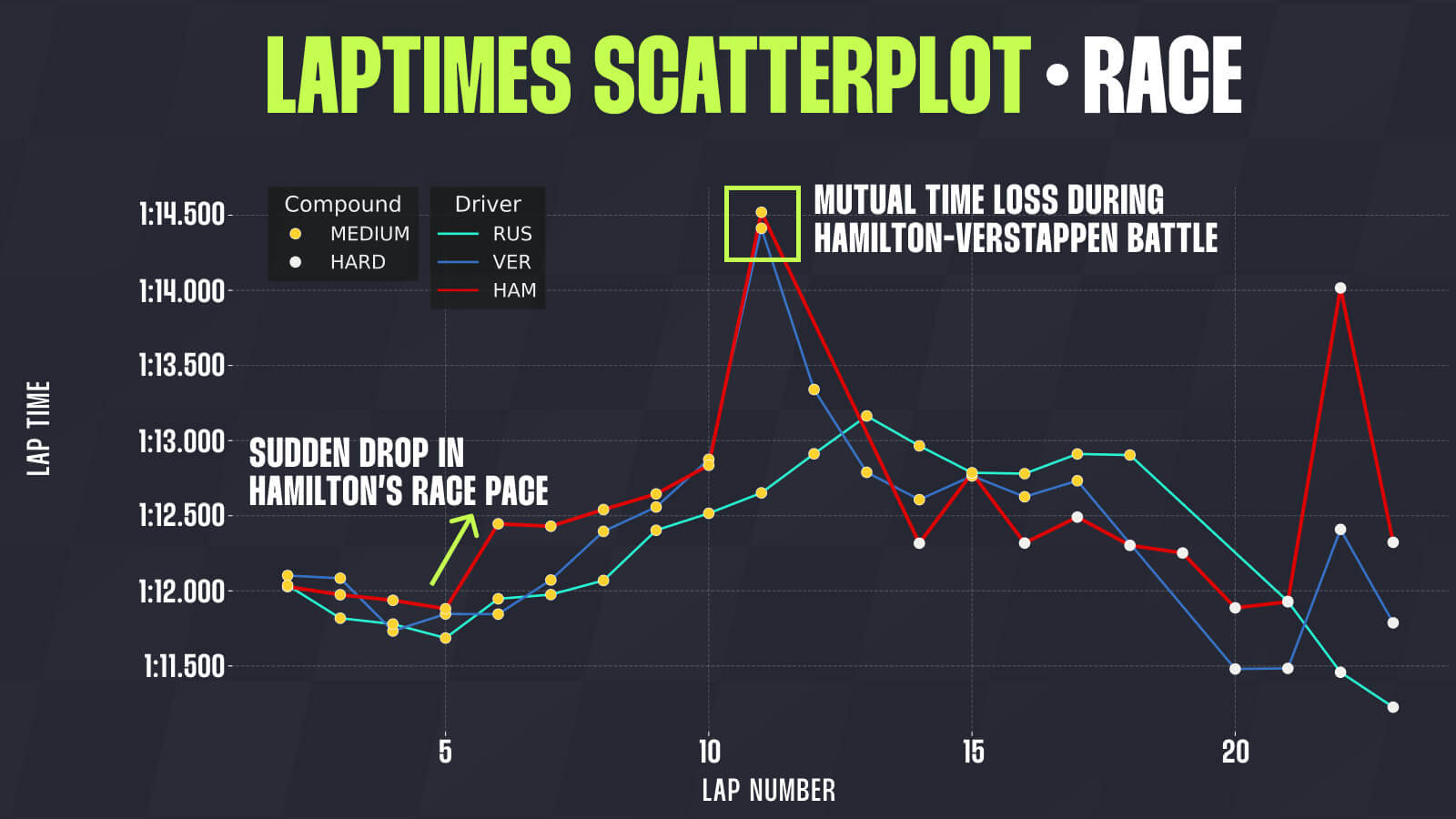
And this was definitely a positive decision – when the pace is lacking, why not try something with an alternative strategy. In Barcelona, it paid off (with the difference being that the pace back then was genuinely good, so a different strategy yielded positive results).
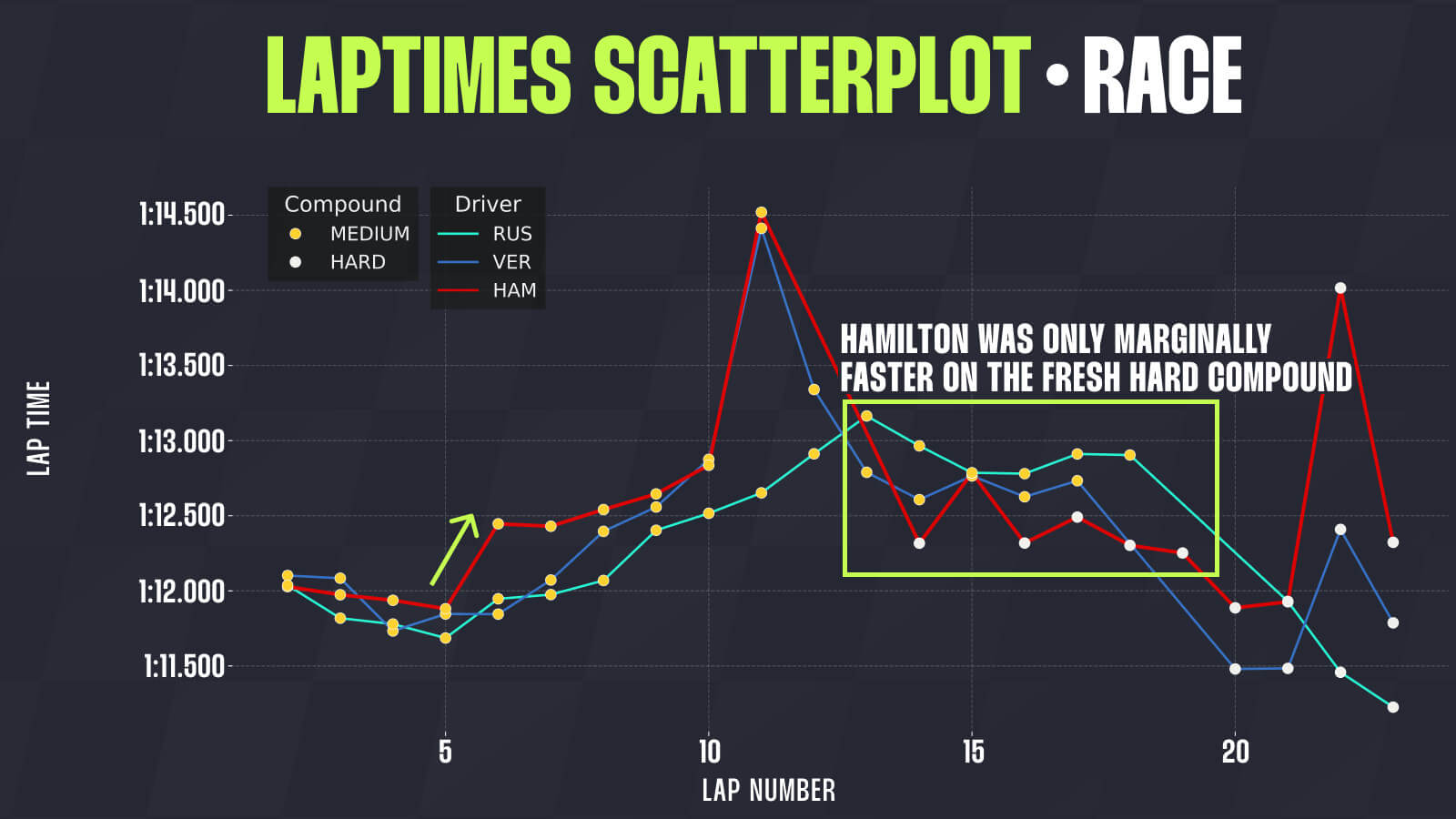
Proof that other teams were aware that Lewis was not a realistic threat can be seen in the fact that after his early pit stop on lap 12, none of the others reacted; instead, they drove their own race, even though they knew the undercut in Austria was very dangerous.
On the new hard tyres, Hamilton was only a fraction faster than Russell and Verstappen. With this undercut, the Briton did reclaim his position relative to Max, but he also lost it again just three laps after.
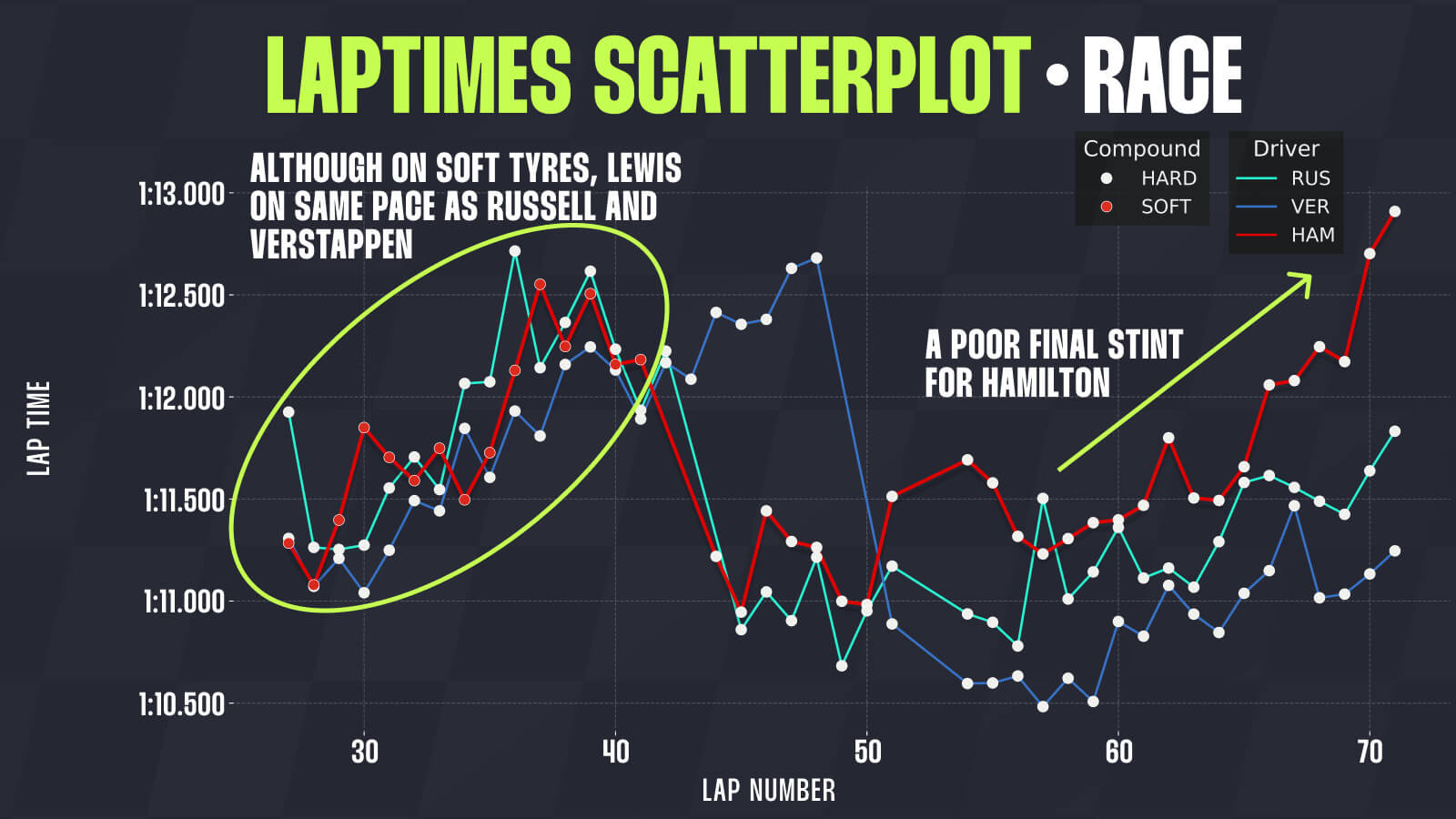
We saw the continuation of Ferrari’s alternative strategy on lap 25 when the retirement of Sainz’s car triggered a VSC. Lewis was the only one to take advantage of the cheaper pit stop, after which he switched to the soft tyres, which was indeed risky and a bit of a strange choice considering the high degradation in Austria.
The Briton gained absolutely nothing from this move, only a loss of time. The pace was slower than expected for the soft tyres, while an additional pit stop cost him a position to Piastri as well.
But why was Ferrari so slow?
The reason is, of course, a combination of several factors, but one of the main ones is the lack of power on the straights. Both drivers lost a significant amount of time here, on all tyre compounds, as can be seen below. A deficit existed on every straight, compared to Mercedes as well as to Red Bull.
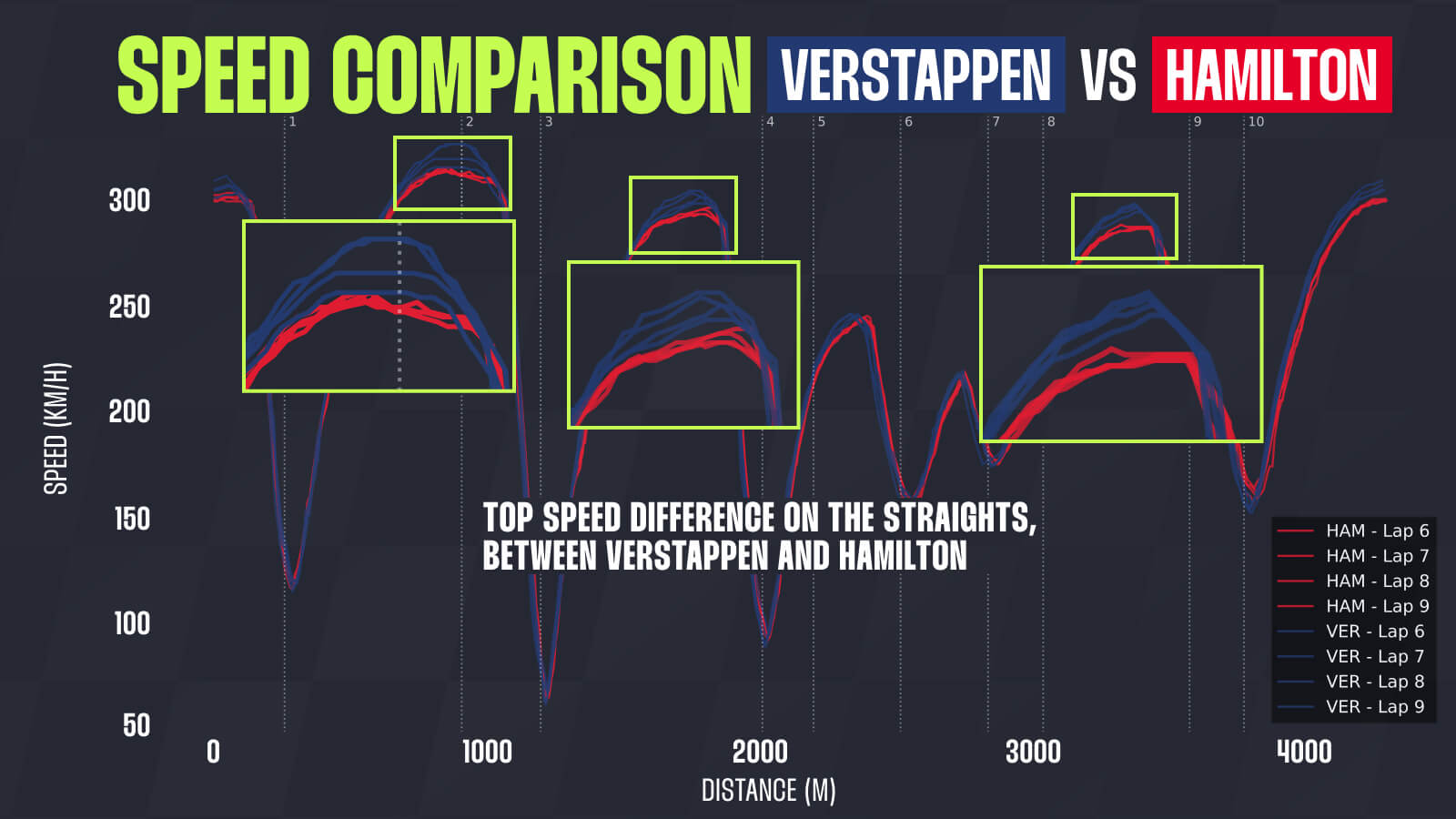
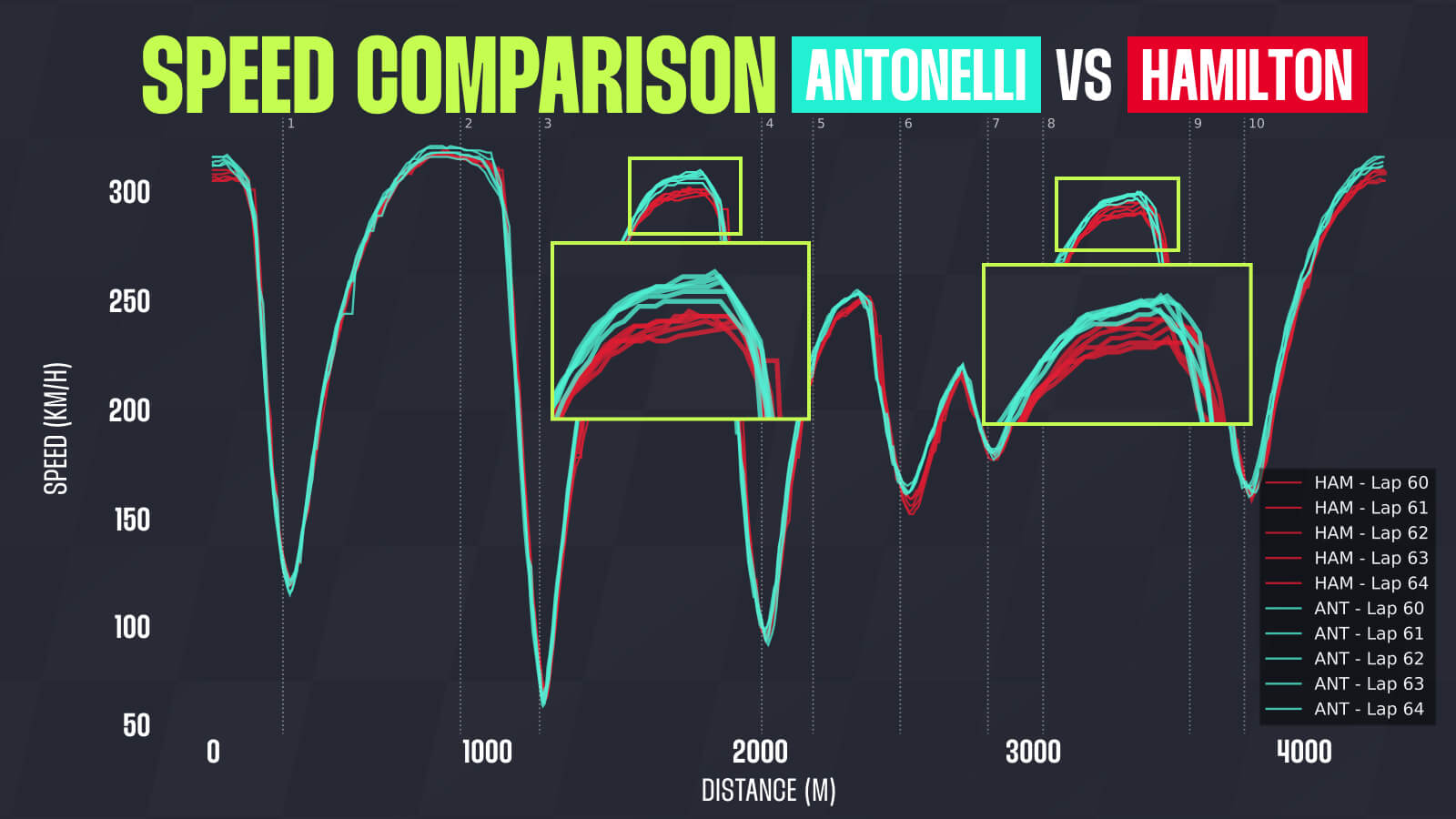
In addition to that, it is obvious that the car balance was not the best. The rear-axle issues that existed throughout the entire season returned. The extra wheel spin only increased tyre temperatures, and though degradation was generally high, it was even higher for Ferrari.
The new upgrades that the Maranello squad brought to Barcelona are certainly positive, but seemingly not as much as we thought – the characteristics of the track in Spain simply managed to mask them well.
How competitive Ferrari will be in Silverstone remains to be seen. What we can expect is that they will be faster than in Austria, but the lack of horsepower will definitely be visible once again.
Want to be the first to know exclusive information from the F1 paddock? Join our broadcast channel on WhatsApp to get the scoop on the latest developments from our team of accredited journalists.
You can also subscribe to the PlanetF1 YouTube channel for exclusive features, hear from our paddock journalists with stories from the heart of Formula 1 and much more!
Read next: Max Verstappen data settles Austrian GP strategy debate