
Max Verstappen data settles Austrian GP strategy debate


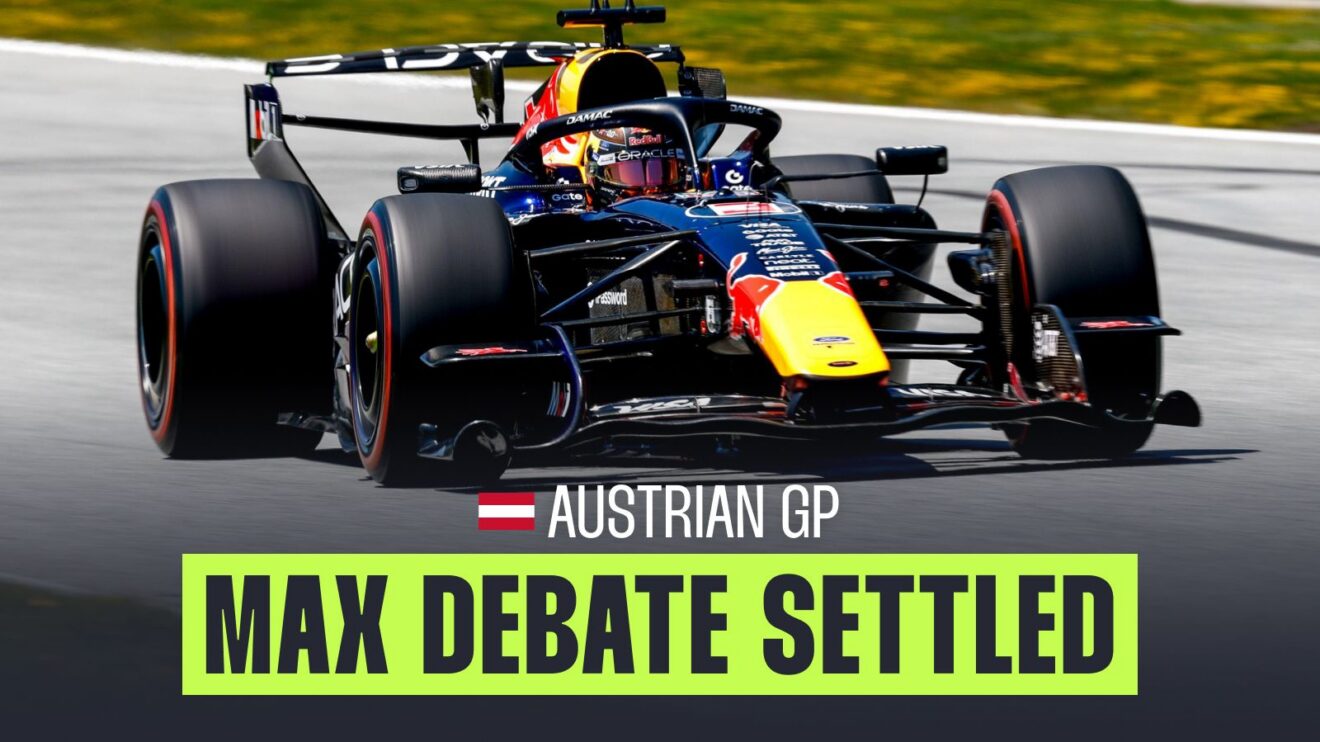
Did Red Bull maximise the chances of a Max Verstappen win in Austria?
A heavily upgraded Red Bull and Max Verstappen showed exceptional race pace in Austria, much better than expected, making them the only real threat to Mercedes.
Right up until the last pit stop, Verstappen was in Russell’s mirrors, after which the team decided to stay longer on track and delay the attack for the win until the very end of the race. Whether this was the right decision by Red Bull and whether Verstappen could have won otherwise, we reveal with the help of telemetry data.
Red Bull strategy underdelivers for Max Verstappen
Want more PlanetF1.com coverage? Add us as a preferred source on Google to your favourites list for news you can trust.
Red Bull brought their largest upgrade package so far to Austria. The positive result was visible already during free practice and later in qualifying, which ultimately ended infamously for the four-time world champion due to a loss of the rear axle when entering the fast Turn 9.
As a consequence, Max started the race from fifth, admitting himself that he never suspected he would be fighting for the top step of the podium.
Max started the race brilliantly – with a very nice move into Turn 4, he managed to overtake both Kimi Antonelli and Charles Leclerc, finding himself in pursuit of his old rival, Lewis Hamilton.
We watched a fantastic battle between the two of them on Lap 11 of the race, which took us back to 2021. It is incredible how the friction between the two of them can be felt even behind the screen.
Moreover, during the battle Verstappen lost a lot of time relative to Russell, about 1.5 seconds in just one lap. However, unlike Hamilton who used up his tyres and went into the pits a lap later, Verstappen stayed on track and unlocked a very good pace. With practically clean air ahead, the Red Bull driver was faster than the race leader as well.
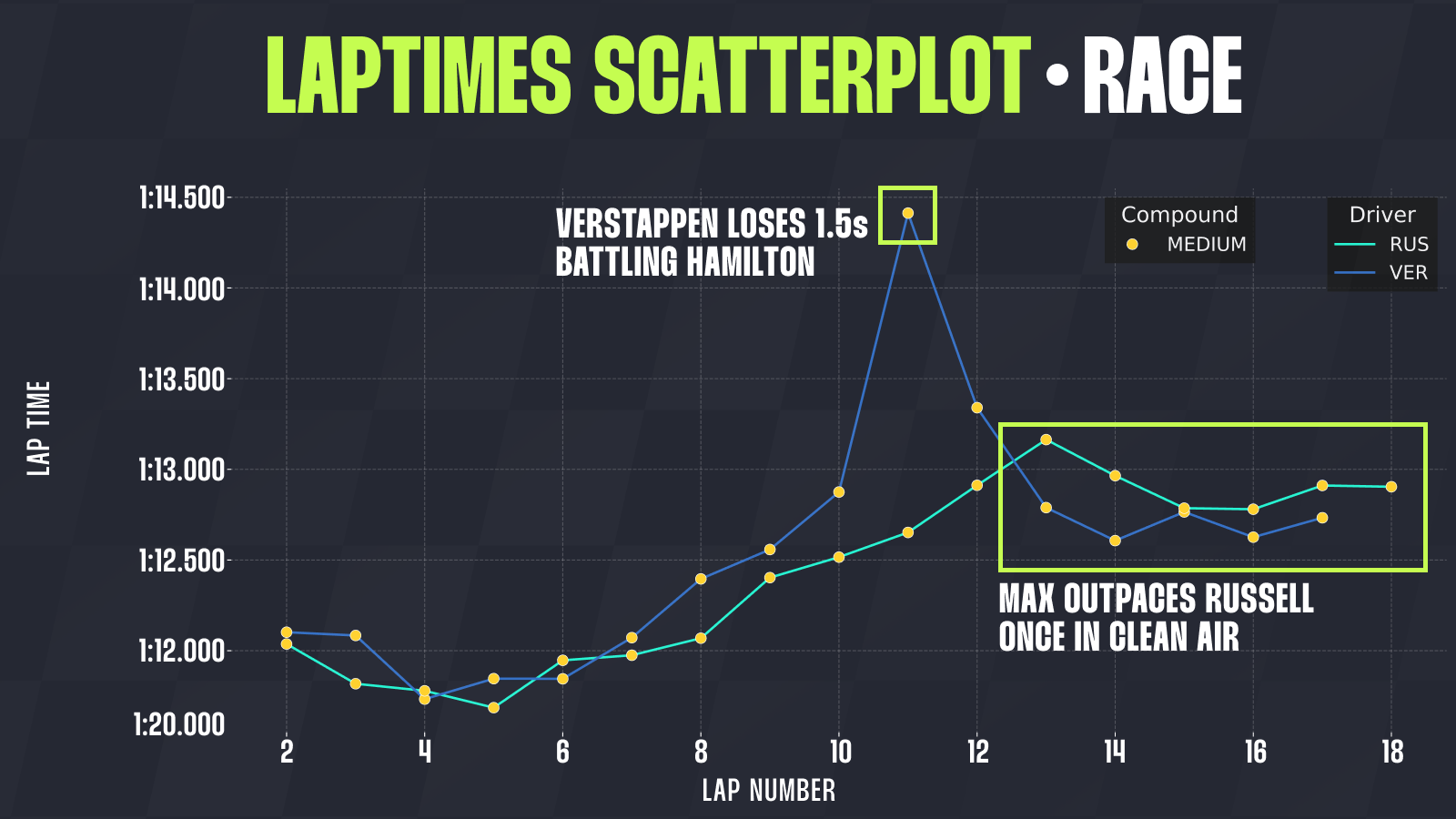
By Lap 19, the gap dropped to five seconds and the team tried to reduce this deficit with an undercut. Mercedes and Russell covered this move and pitted immediately a lap later, but Max still made up about 2 seconds, just by making his pit stop one lap earlier.
Similar to Barcelona, high temperatures and high tyre degradation make the undercut a very dangerous move.
In the second stint, the story from the beginning of the race practically repeats itself. Verstappen finds himself behind Hamilton, losing time in a battle with him while Russell increases the gap in the meantime, which Max will reduce after he overtakes Lewis and finds himself in clean air.
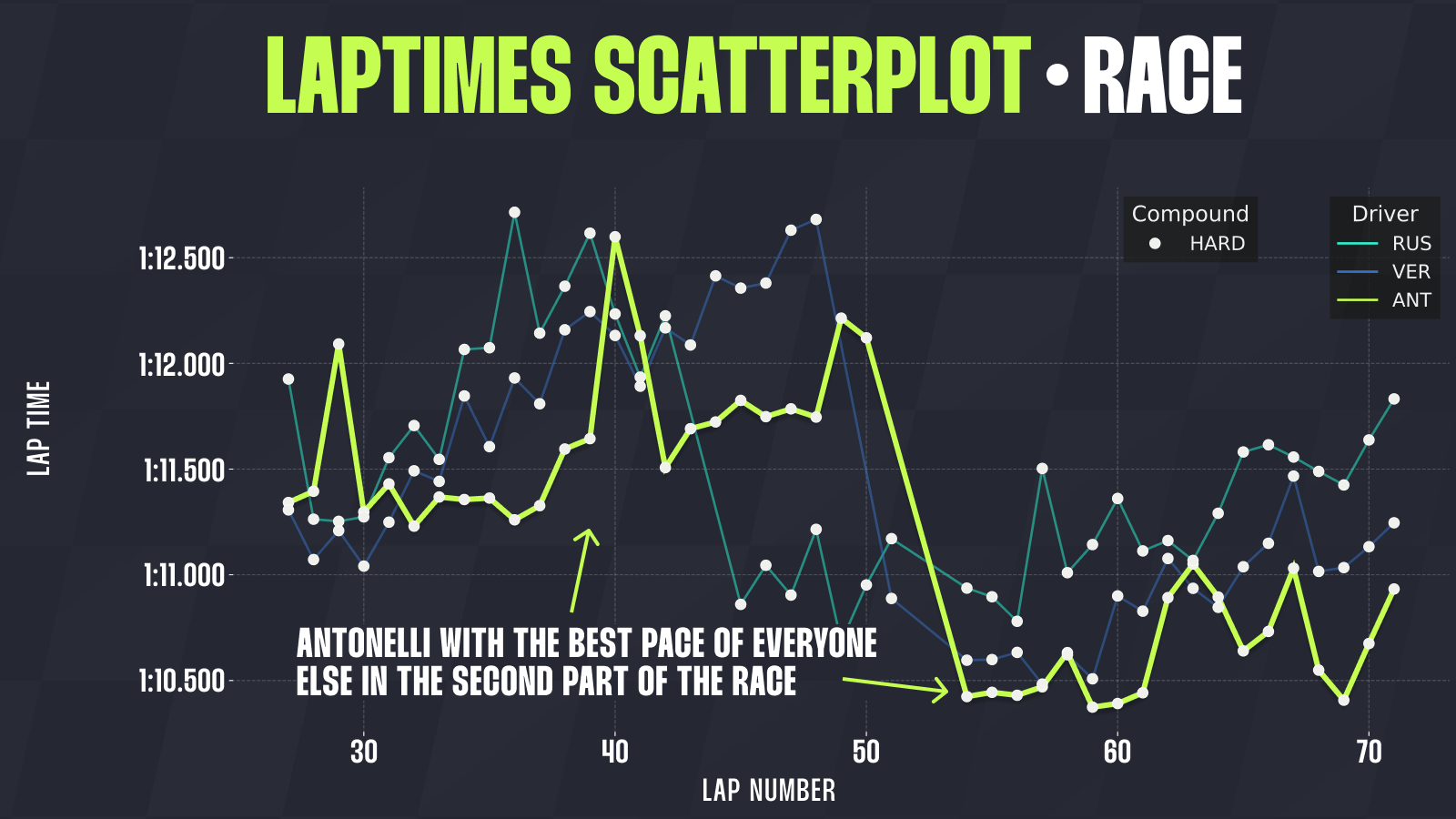
This time, the pace Max had was even better compared to Russell, which can also be seen on the graph below. On average in this stint, Max was 0.15 seconds per lap faster than the Briton.
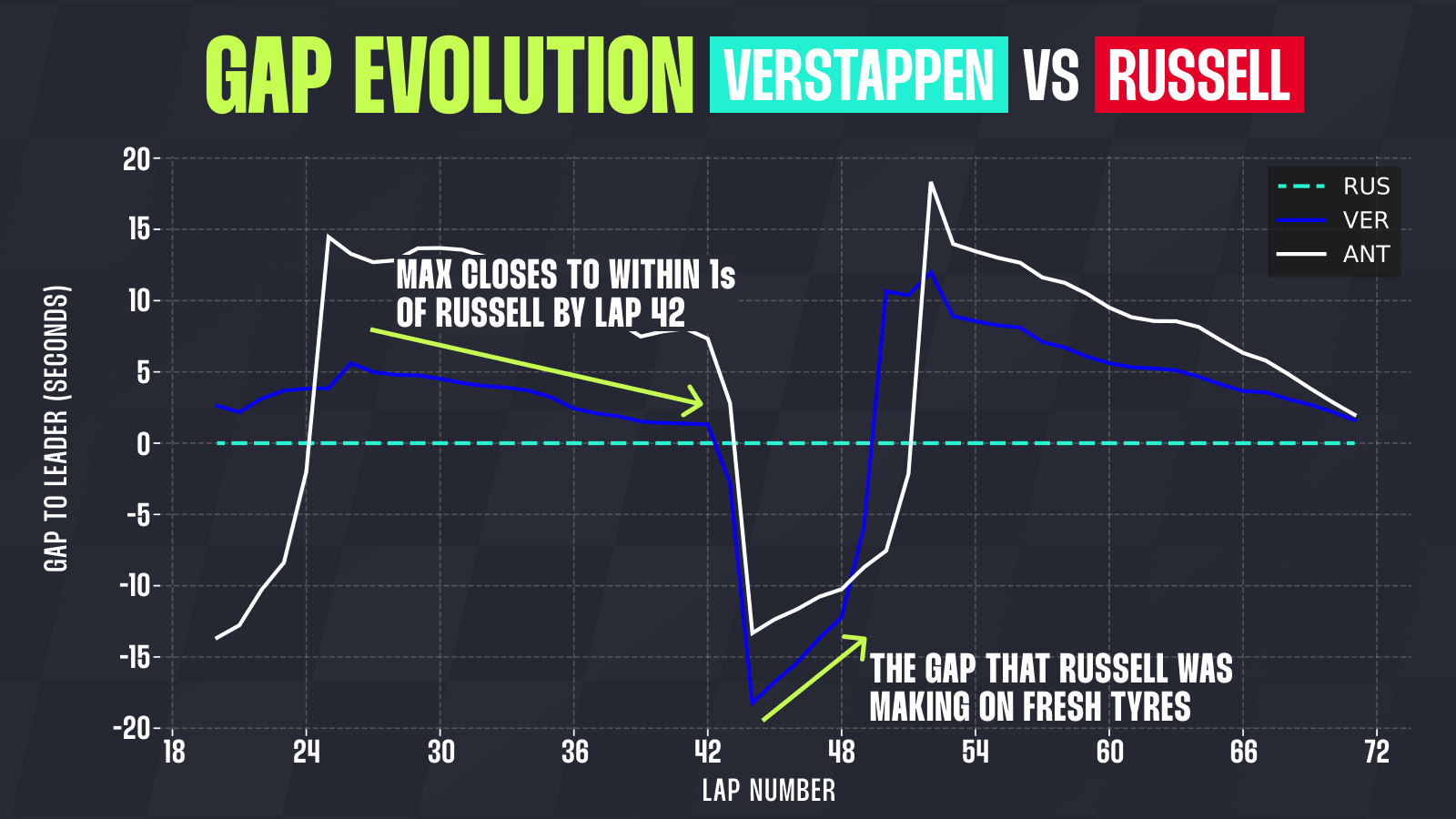
On Lap 42, he found himself within one second of the deficit, forcing George to go for his second change earlier than his team planned. On the other hand, Red Bull chooses a different strategy and leaves Max on track for an additional six laps.
From this perspective, it is very easy to say that Red Bull made a mistake considering that Verstappen did not manage to get the win, despite the faster pace. The reason for this decision will be much clearer if we introduce Antonelli into the whole story, who was actually the fastest of the three drivers.
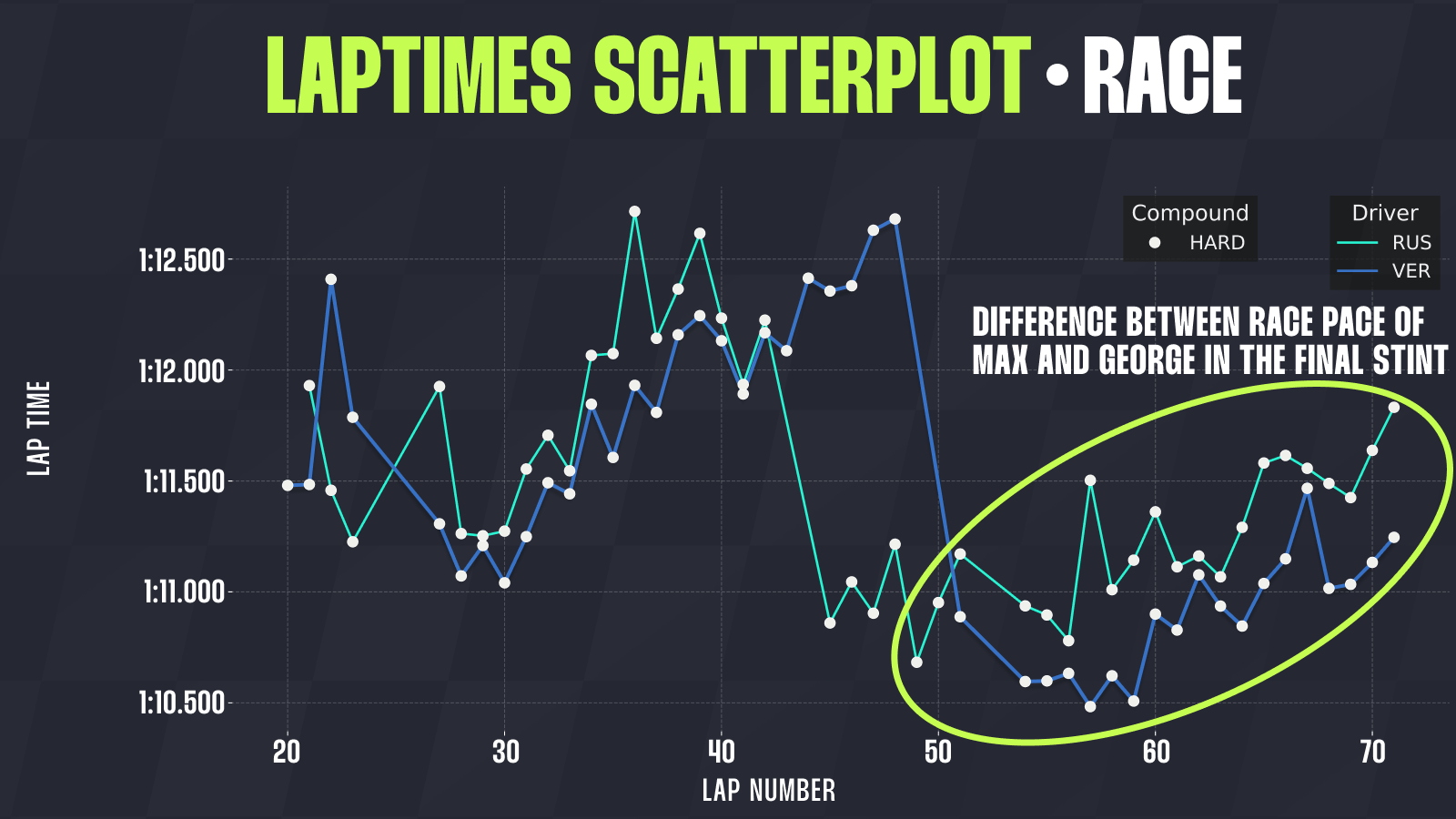
Antonelli was a rocket during this period from Lap 25 to 50 of the race. He was on a level above in terms of pace compared to both drivers, but he was also on five laps fresher tyres.
Red Bull knew that Antonelli was a big threat, so after Russell went into the pit stop, they practically had two options: either to follow Russell with the risk that if they failed to overtake him, they would lose to Antonelli, or simply extend the stint and defend against Antonelli that way, while simultaneously trying to beat Russell at the very end of the race.
It is almost certain that Red Bull underestimated Verstappen and his car when it came to tyre degradation – they expected worse degradation, thinking that a fight with Russell was not realistic if both drivers were on equally worn tyres.
Probably the ideal tactic would have been to go for the second pit stop two to three laps earlier. And the very end of the race showed us that if we had an additional three to four laps, we would almost certainly get a battle for the win between three drivers.
More on Max Verstappen from PlanetF1.com
Lewis Hamilton makes feelings clear on Verstappen ‘clear penalty’ call
Untelevised Max Verstappen radio reveals Russell yellow flag quip
Even in an ideal scenario, it is very difficult to say whether Max would have managed to emerge on P1. It would be very difficult to overtake Russell for sure. However, what can be confirmed is that they would certainly have had a better chance.
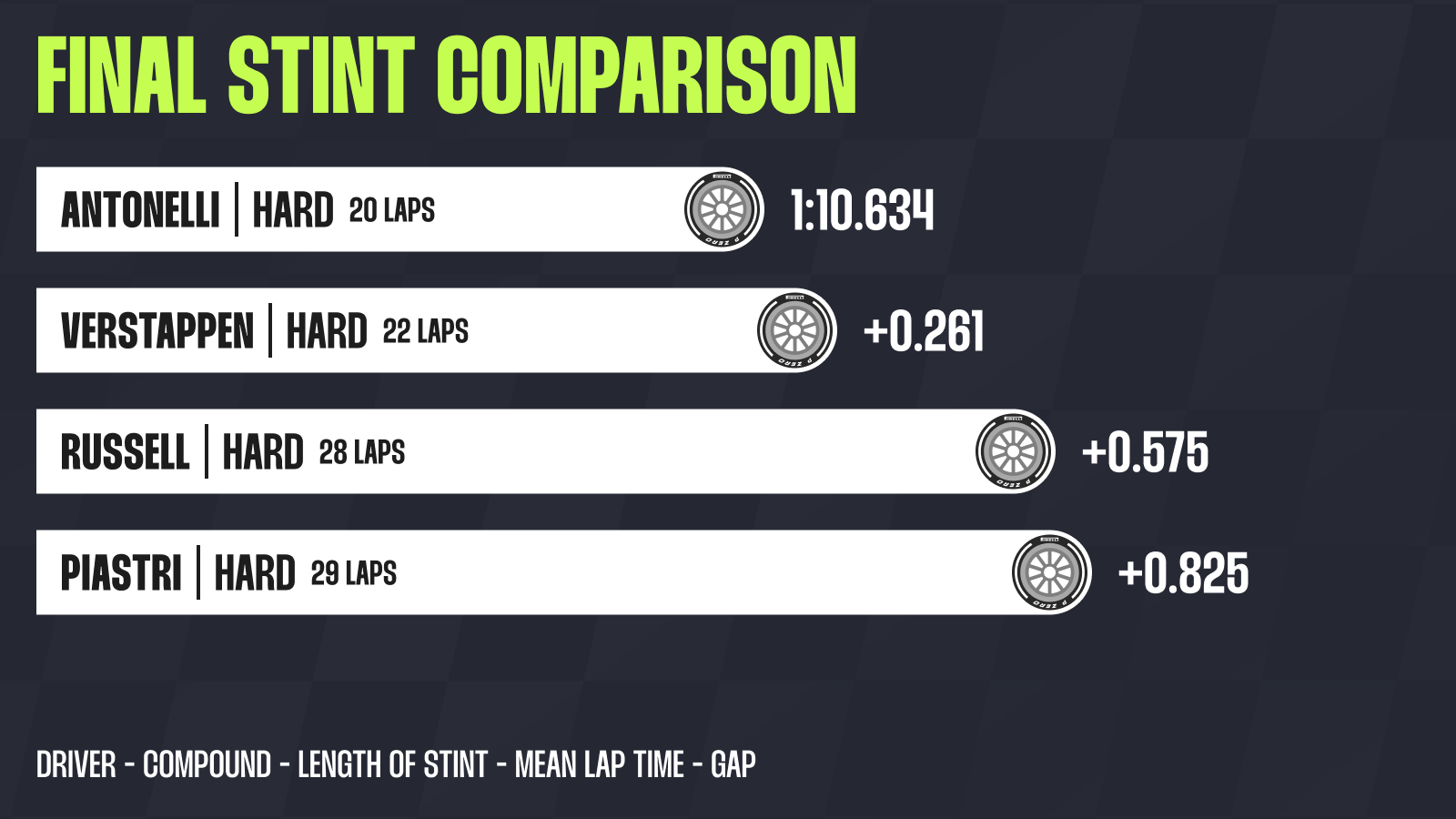
However, what they were definitely right about was the incredible pace of Antonelli. The data from the last stint on the hard tyres tells us that the Italian was faster by almost 0.6 seconds per lap compared to Russell, and 0.26 seconds compared to Verstappen.
After everything, it was definitely a positive weekend for the Red Bull team, which showed that with the new upgrades, they can absolutely race against Mercedes and the other top teams. With Verstappen in the mix for the win, we definitely get a new and more interesting dimension of racing.
Want to be the first to know exclusive information from the F1 paddock? Join our broadcast channel on WhatsApp to get the scoop on the latest developments from our team of accredited journalists.
You can also subscribe to the PlanetF1 YouTube channel for exclusive features, hear from our paddock journalists with stories from the heart of Formula 1 and much more!
Read next – Austrian GP: Russell wins, Lewis Hamilton ‘clear penalty’ Verstappen call ignored