
Ferrari strategy call scrutinised as Russell leads Mercedes 1-2 in Australia


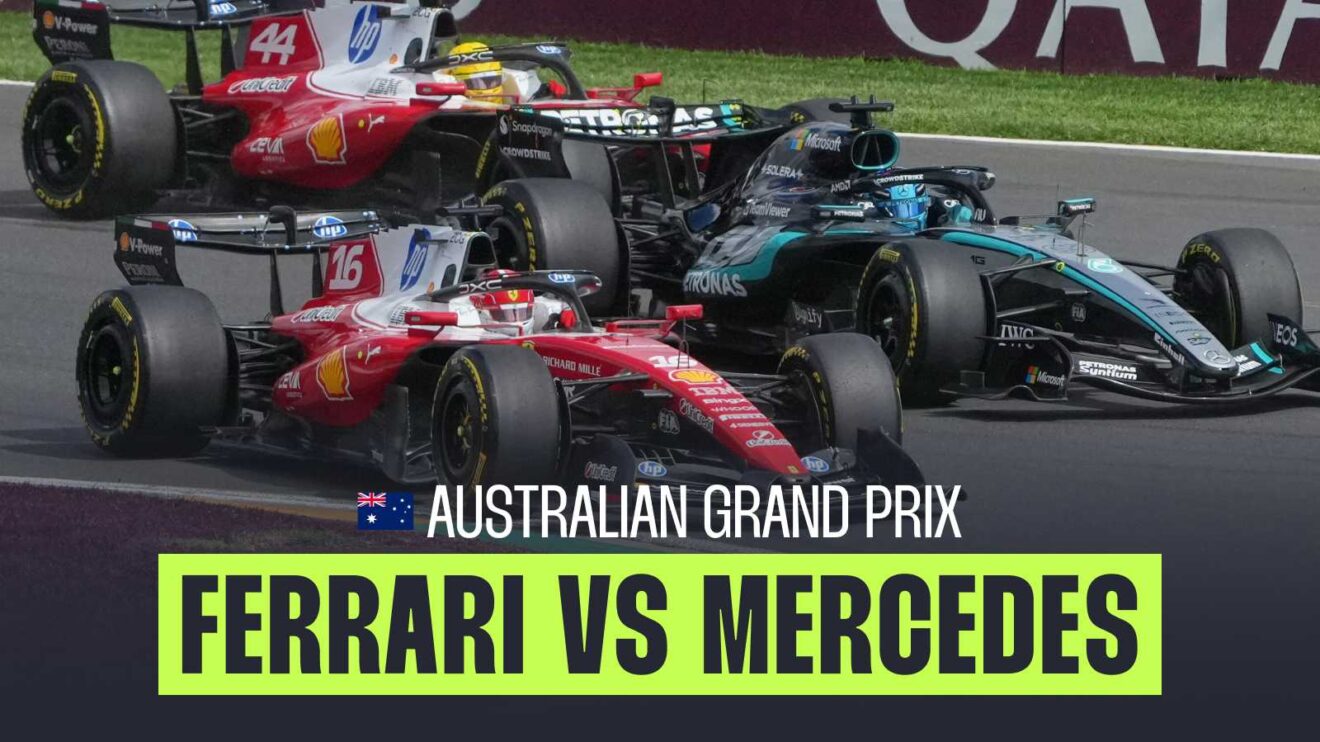
Ferrari did not stop when Mercedes did in VSC conditions. How much of an impact did that have?
George Russell kicked off the 2026 campaign in clinical fashion by clinching victory in Australia, with his teammate slotting in right behind for a Silver Arrows 1-2.
The Ferrari duo were breathing down their necks, but despite a solid result, there’s a nagging sense that the Scuderia could have made the race far more interesting until the very end, had they not tripped up on the pit wall. Should Ferrari have pulled their drivers in during the VSC, and what sort of difference would that have made?
Ferrari strategy decision analysed after George Russell wins Australian Grand Prix
Want more PlanetF1.com coverage? Add us as a preferred source on Google to your favourites list for news you can trust.
After a somewhat underwhelming qualifying in Melbourne, it didn’t look like Ferrari would find it easy to join the hunt for victory in Sunday’s race – certainly not with both cars. However, it took very little time for the Italian outfit to prove us wrong.
Pre-season testing suspicions were vindicated as Ferrari enjoyed a stellar getaway. Leclerc surged into the lead after T1, capitalising on a bad start from Antonelli who was ahead of him. Meanwhile, Hamilton made the most of the gap left by Oscar Piastri, quickly finding himself in P3 within the opening laps.
What followed was a truly gripping tug-of-war for the lead between Leclerc and Russell – a real yoyo effect in terms of positioning and battery deployment. Even though it’s early days, we’ve caught a glimpse of how racing in this new era can look, and it’s rather interesting.
Leclerc emerged as the initial victor from this scrap, proving that Ferrari absolutely has the on-track pace to match that mighty Mercedes PU.
But by lap 11, a mechanical error forced Hadjar out, triggering a Virtual Safety Car. Mercedes reacted instantly, double-stacking their drivers to fit Hard tyres, while Hamilton and Leclerc opted to stay out on their Mediums.
Once the VSC ended, the Mercedes pace was nothing short of blistering. Russell was eating into the lead, gaining 0.7 seconds per lap on Hamilton and a staggering 0.9 seconds on Leclerc.

A second VSC on lap 18 gave the Ferrari pit wall a nice opportunity to rectify their previous call. However, the engineers presumably gambled that sticking to their pre-race strategy offered a better path.
Did this decision cost them a legitimate shot at the top step? The telemetry suggests it did, although a win would still have been far from a guaranteed thing.
In the heat of a Safety Car period when split-second decisions are paramount, the hardest place to be is in the lead. For this reason, leaving Leclerc out after the first VSC was perfectly defensible.
But why not split the strategy then, as Hamilton pointedly suggested over the radio?
We’ll likely never get a straight answer to that, but the data tells a story. One potential explanation is that Ferrari overestimated the longevity of the Medium compound. It’s highly probable they wanted to stick to their “Plan A” simulations which showed the best results, while simultaneously betting that the Mercedes duo would eventually need another trip to the pits.
More from the Australian Grand Prix
2026 Australian Grand Prix – F1 results (Albert Park)
Australian GP: Russell leads Mercedes 1-2 after Ferrari VSC gamble fails Leclerc
Leclerc eventually dove in on lap 25, followed by Hamilton on lap 28 – just as he could see Russell filling his mirrors. By that point, the strategy was set in stone.
From a one-second lead and P1, Leclerc found himself 16 seconds adrift of Russell post-pit stop.
But with Ferrari now on rubber 15 laps fresher, they surely clawed back some ground, right? The telemetry paints a rather different picture.
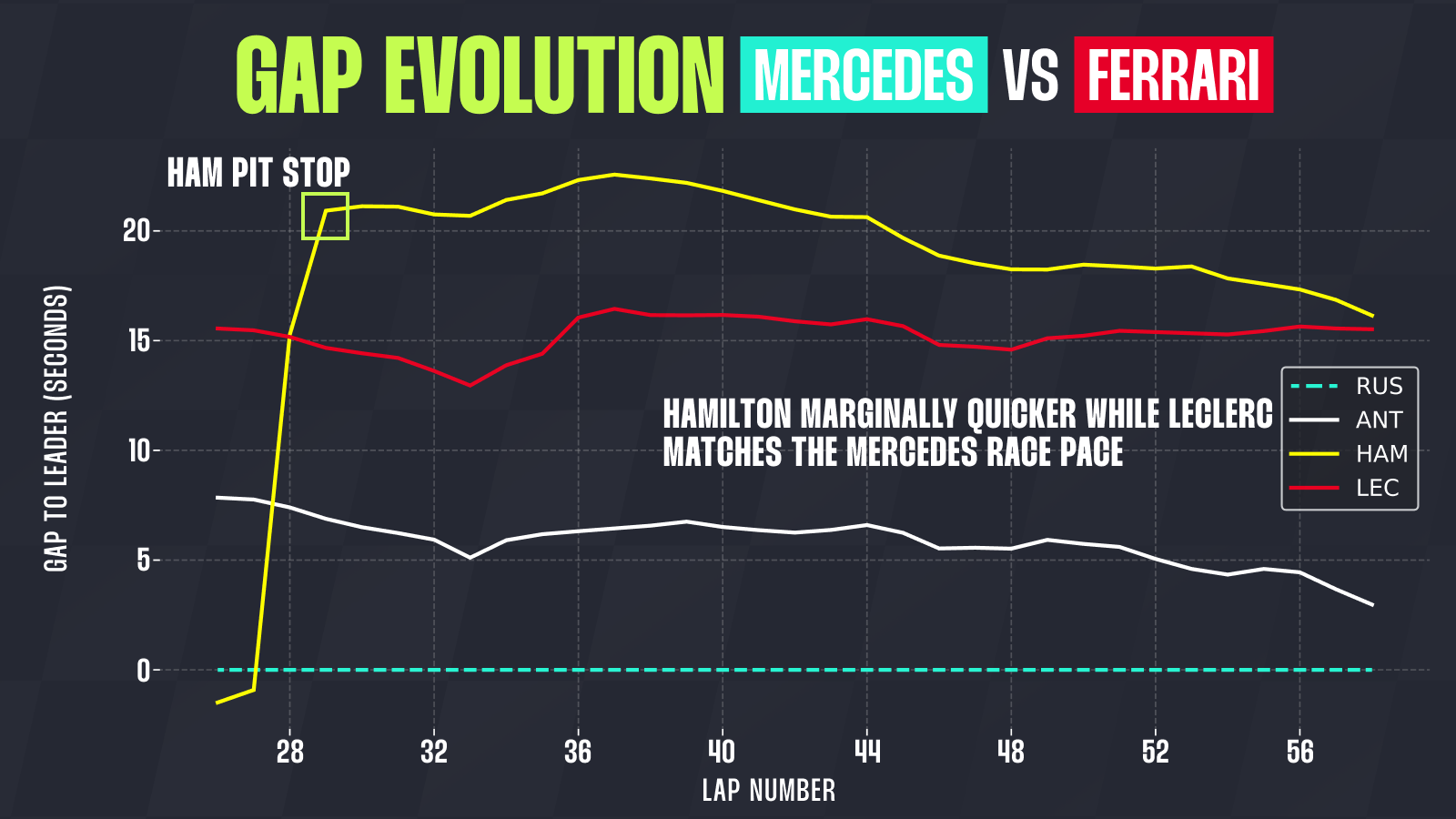

The graph above illustrates the gaps during the second half of the race. Hamilton was the quickest of the top four, trimming a 21-second gap down to 16 by the chequered flag.
Conversely, Leclerc was stuck 15 seconds back and simply couldn’t make any progress – finishing the race right at that margin.
Analyzing the pace of the second stint, Leclerc was actually the slowest of the lead quartet, despite his stint being 13 laps shorter than those of Russell and Antonelli.
From this, we can conclude that the Mercedes pace on the Hard tyre was exceptional. The fact that the Hard tyres were more durable and faster than expected certainly played into their hands.
With that in mind, a Ferrari victory would have been a tall order regardless. Russell was in a league of his own, and the chances of them matching his second-half pace were slim at best.
However, we shouldn’t overlook Kimi Antonelli. He had the toughest start of the four and at one point fell behind Lindblad and Hadjar. He was the primary beneficiary of Ferrari’s strategic lapse; otherwise, his podium hopes would have looked far more precarious.
Ultimately, Ferrari had a positive weekend in spite of the mistakes. After a grueling previous season, it’s refreshing to see them back on the podium and in the thick of the fight, even if only briefly.
We can expect their performance to ramp up as the season progresses, particularly on circuits with heavier braking zones where energy harvesting is easier – which should chip away at the current advantage held by the Mercedes system.
Want to be the first to know exclusive information from the F1 paddock? Join our broadcast channel on WhatsApp to get the scoop on the latest developments from our team of accredited journalists.
You can also subscribe to the PlanetF1 YouTube channel for exclusive features, hear from our paddock journalists with stories from the heart of Formula 1 and much more!
Read next: Oscar Piastri reveals ‘not insignificant’ factor behind heartbreaking Australian GP crash