
How Kimi Antonelli turned the tables on George Russell in Barcelona


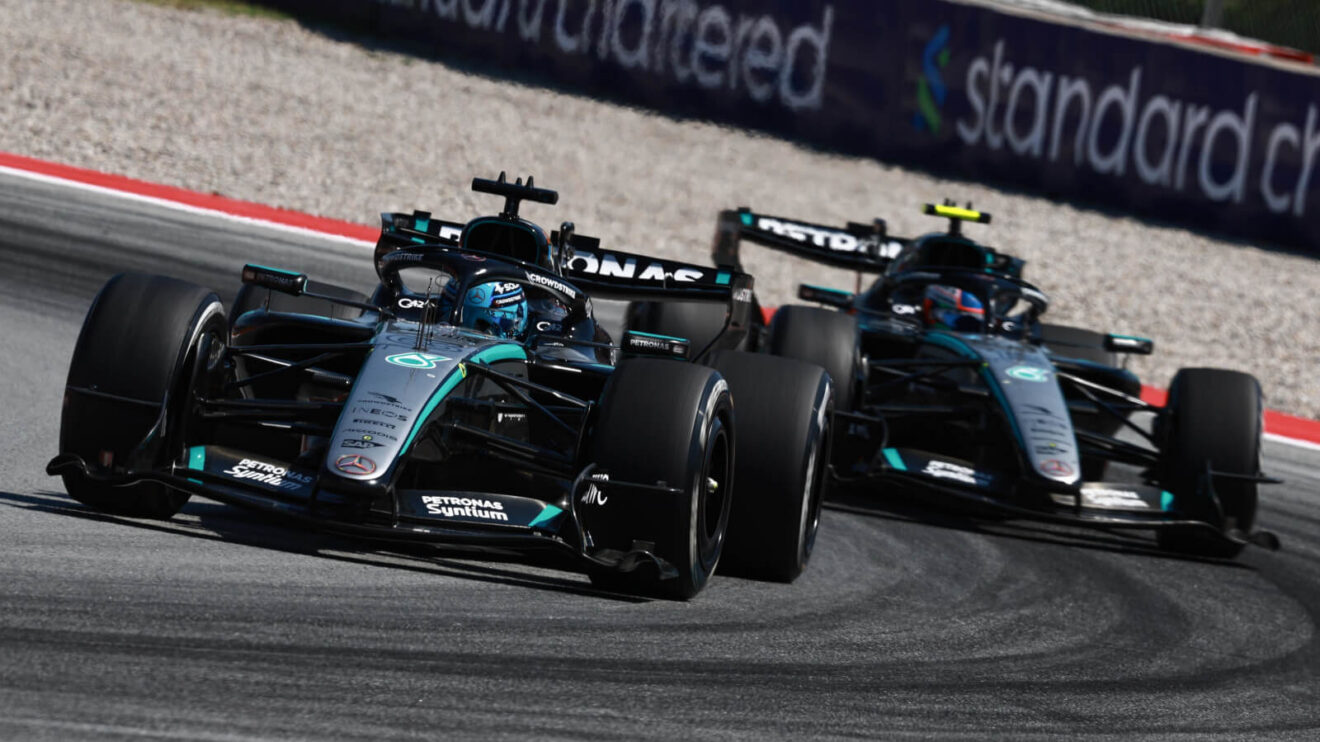
Kimi Antonelli challenged, and passed, George Russell in Barcelona before his DNF
Although he didn’t finish the race the way he wanted, Kimi Antonelli beat George Russell on track once again at the Barcelona Grand Prix.
We uncover how he managed it and why Kimi was faster in the second half of the race using telemetry data.
Kimi Antonelli vs George Russell: Barcelona race pace analysis
Want more PlanetF1.com coverage? Add us as a preferred source on Google to your favourites list for news you can trust
Throughout the entire race weekend, George Russell had been the faster Mercedes driver on track. The first free practice session, which Kimi Antonelli sat out, only heightened the young Italian’s uncertainty, leaving him struggling to find the correct car balance during the subsequent practice sessions.
Russell is the type of driver who relies on a smooth and precise style, whereas Antonelli leans toward a more aggressive approach – a trait that did him no favours through the long, sweeping corners of the Barcelona circuit.
These characteristics also persisted during the opening laps of the Grand Prix. From the data, we can see that Kimi’s opening stint on the medium compound was slower, as he failed to dial in a competitive rhythm.
By Lap 13, when George headed into the pits for his first stop, Antonelli already trailed the leader by five seconds. The fact that his teammate was ahead compromised him further, as George held the strategic priority.
As we’ve observed, the undercut in Barcelona proved incredibly potent due to severe tyre degradation, with drivers losing roughly 2.0 seconds just by pitting one lap later.
Consequently, that five-second deficit ballooned into a 7-second gap.
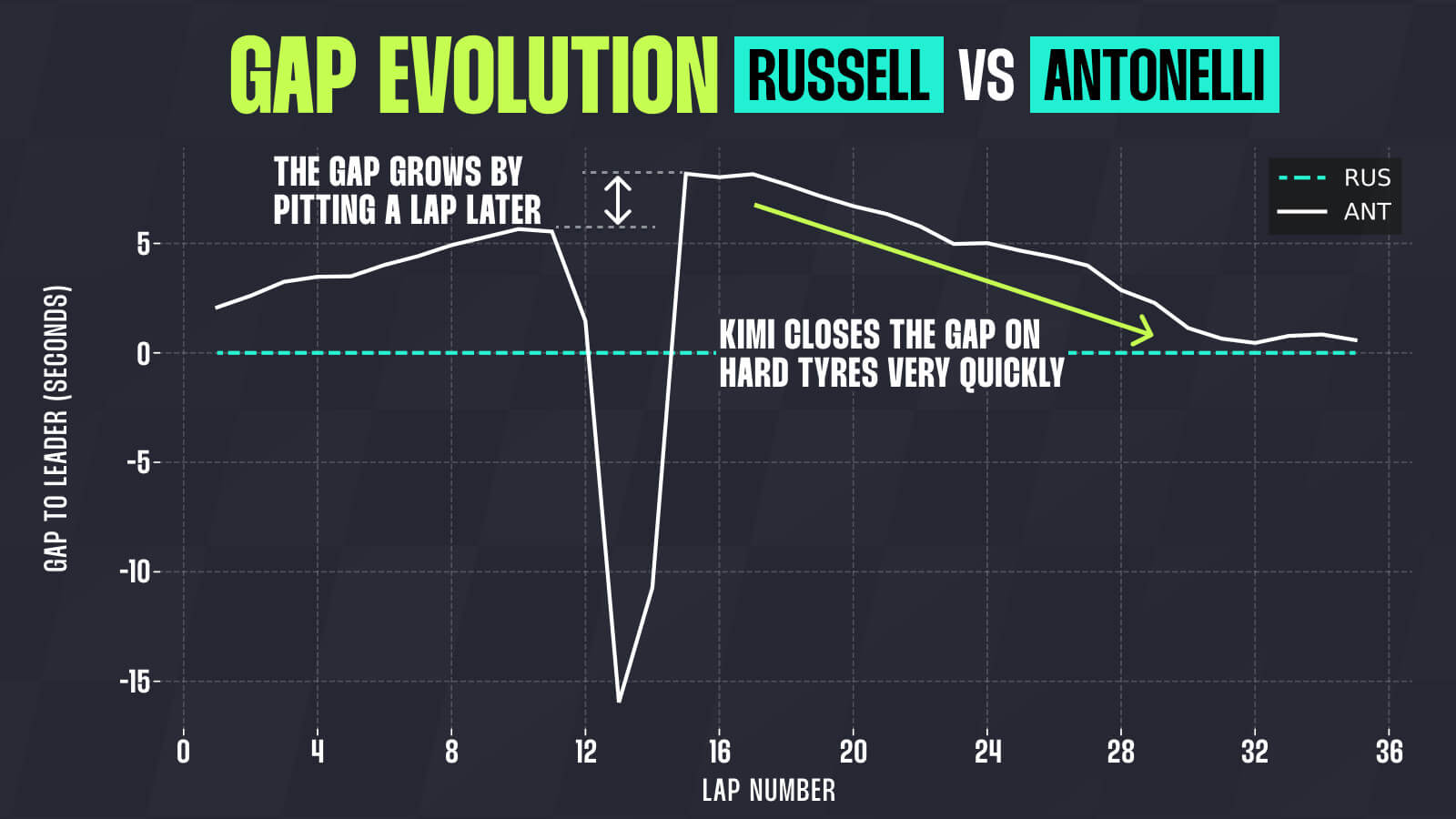
However, the narrative shifted dramatically after the switch to the hard compound. Now, it was Antonelli who found his groove, and his deficit began to melt away rapidly.
In the second stint, the Italian was 0.38 seconds per lap faster on average. Remarkably, between Laps 28 and 31 alone, he shaved 3.4 seconds off the gap, bringing himself squarely into striking distance.
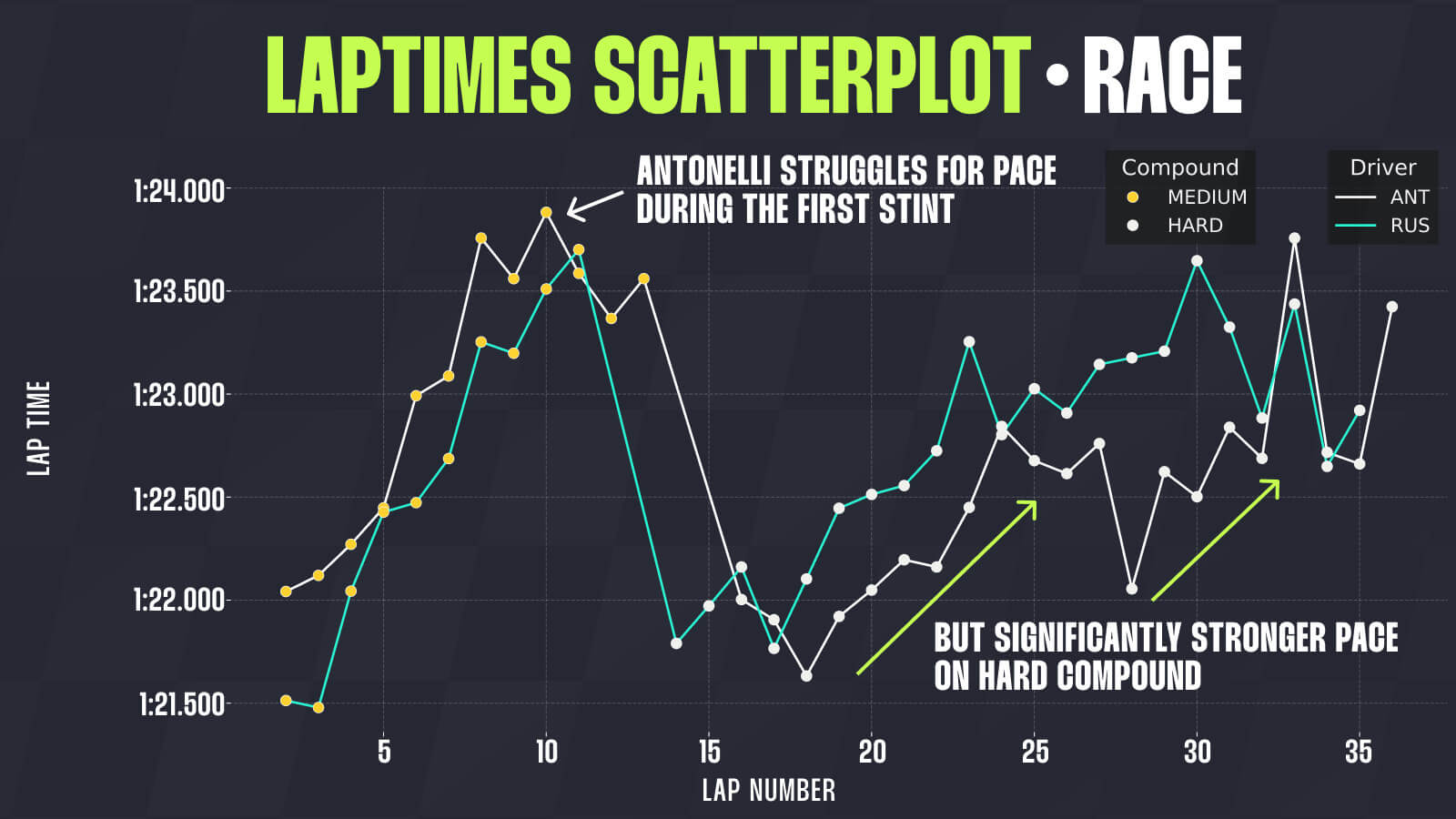
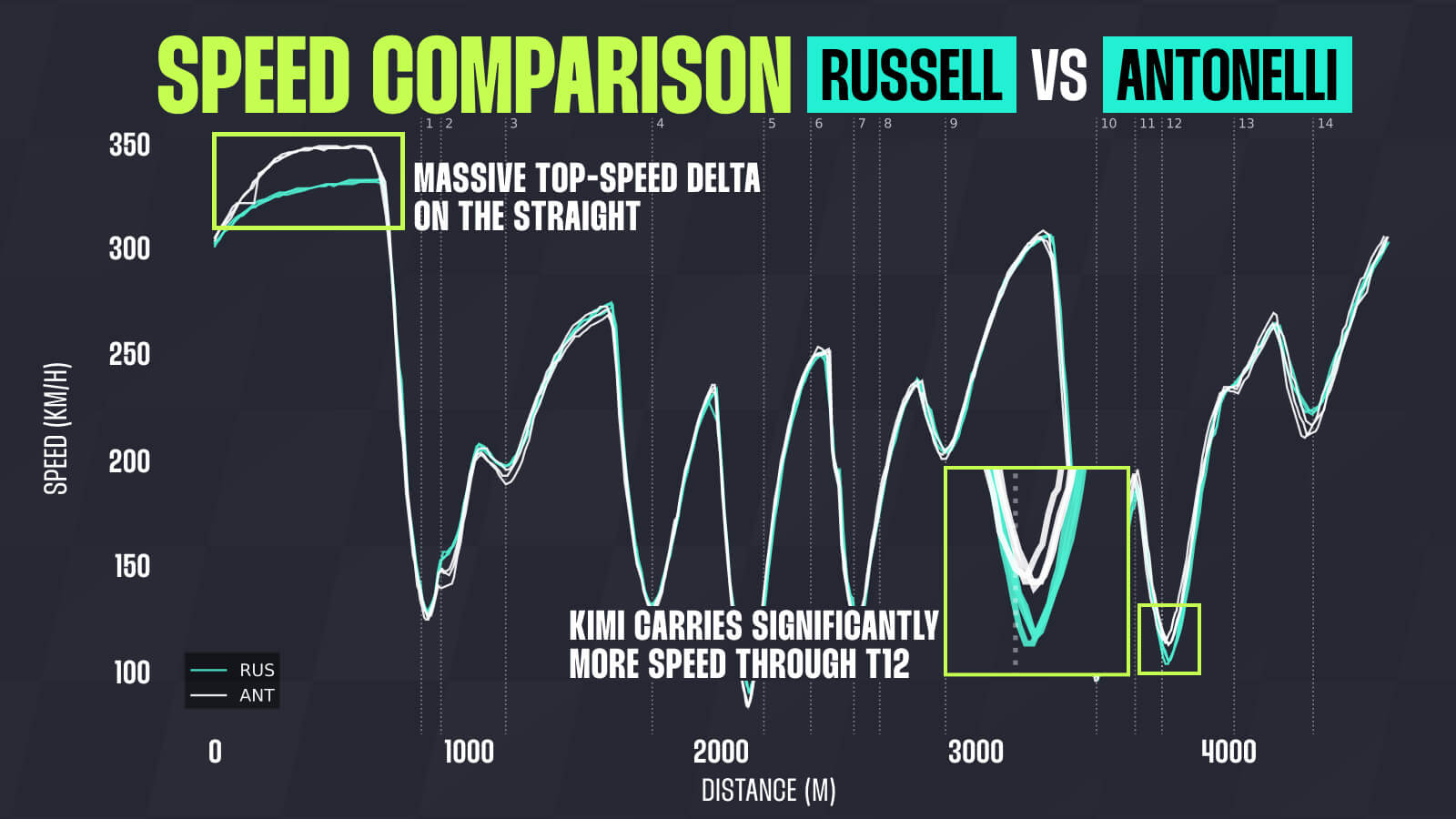
During this phase of the race, Kimi reaped his advantages in the slowest corners of the track, particularly in Turns 1, 10, and 12. His best overtaking opportunity arrived on Lap 33, but Russell defended his position expertly. Shortly after, we heard Peter Bonnington remind the young driver that his real race was with Norris behind him and that Russell would be pitting very shortly.
Following their pit stops on Laps 38 and 39 respectively, the delta between the two drivers climbed back up to 2.5 seconds due to the aforementioned undercut effect – but not for long.
Antonelli closed the gap once more, finding his prime overtaking opportunity on Lap 61, which he successfully converted to take the position from his teammate. Looking at the telemetry from that lap and the few preceding it, we can clearly see the massive top-speed differential generated by overtake mode and the slipstream down the main start-finish straight.
Additionally, notice Turn 12, where Antonelli was consistently faster, as well as his approach to the final corner. He slows the car down earlier here, and despite a slower apex speed, he gets on the throttle sooner. This allows him to build a rapid top-speed advantage down the straight.
Following the overtake, Kimi needed just a single lap to pull a 1.5-second cushion, confirming that his pace in the second half of the race was vastly superior to his teammate’s. Had it not been for a technical failure with the battery that forced his retirement, Kimi would have almost certainly maintained P2 until the chequered flag.
However, lady luck was not on his side this time. The silver lining from his perspective is that Russell ultimately failed to fully capitalize on the misfortune, considering he only finished the race in second place.
Despite the lost points, the on-track pass executed by Antonelli left the distinct impression that he was the stronger driver of the pairing when it mattered most. He refused to let the momentum swing back into Russell’s corner, ensuring that the immense confidence he had built over the last five races remains firmly on his side.
Want to be the first to know exclusive information from the F1 paddock? Join our broadcast channel on WhatsApp to get the scoop on the latest developments from our team of accredited journalists.
You can also subscribe to the PlanetF1 YouTube channel for exclusive features, hear from our paddock journalists with stories from the heart of Formula 1 and much more!
Read next: The data behind Lewis Hamilton’s first Ferrari win as VSC debate settled