
Barcelona GP conclusions: Lewis Hamilton rediscovered, hidden Russell defeat, new Leclerc crisis


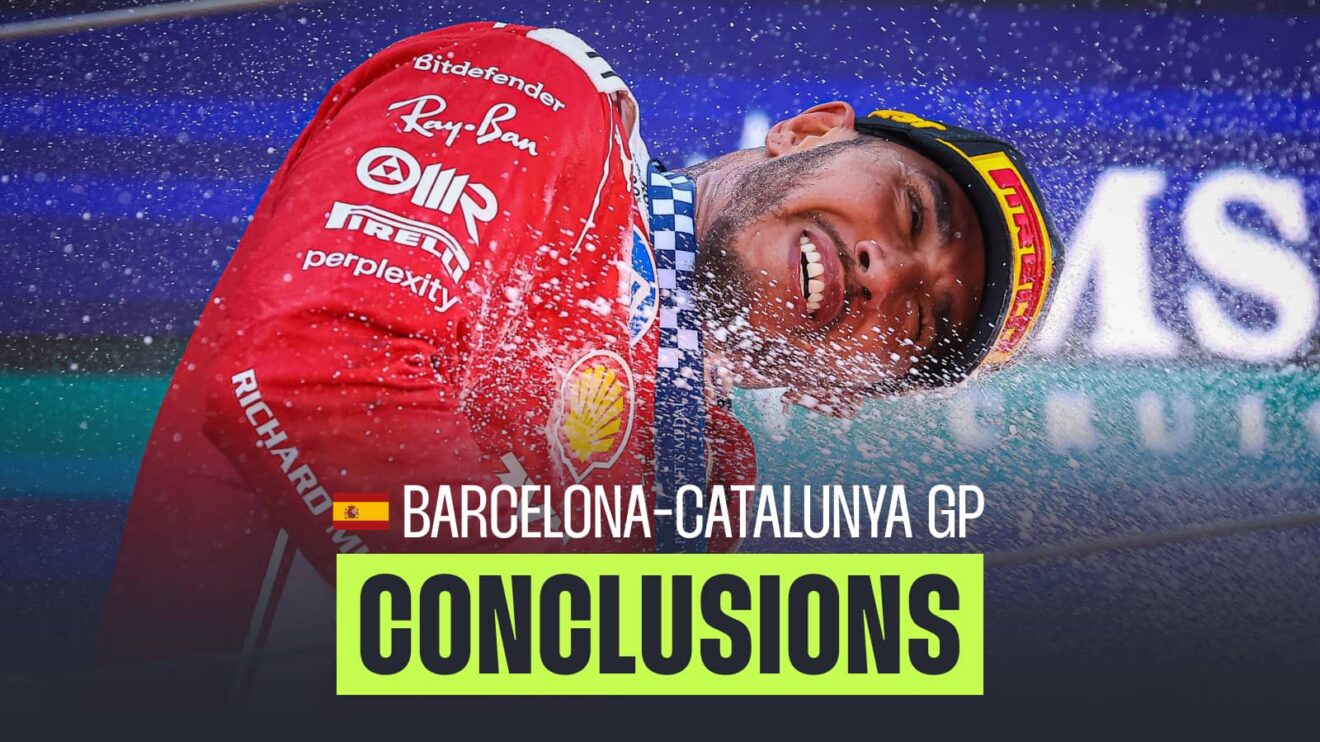
Lewis Hamilton claimed his first victory for Ferrari in Barcelona
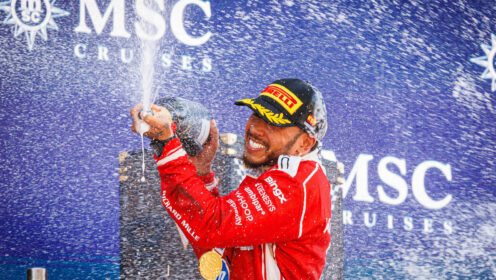
Ferrari driver Lewis Hamilton claimed his first win of the F1 2026 season at the Barcelona Grand Prix.
Hamilton ended a two-year winless streak with a record-extending 106th victory, with Mercedes’ George Russell second and Lando Norris third for McLaren. Here are our conclusions from Spain…
Lewis Hamilton has just remembered who he is
Want more PlanetF1.com coverage? Add us as a preferred source on Google to your favourites list for news you can trust
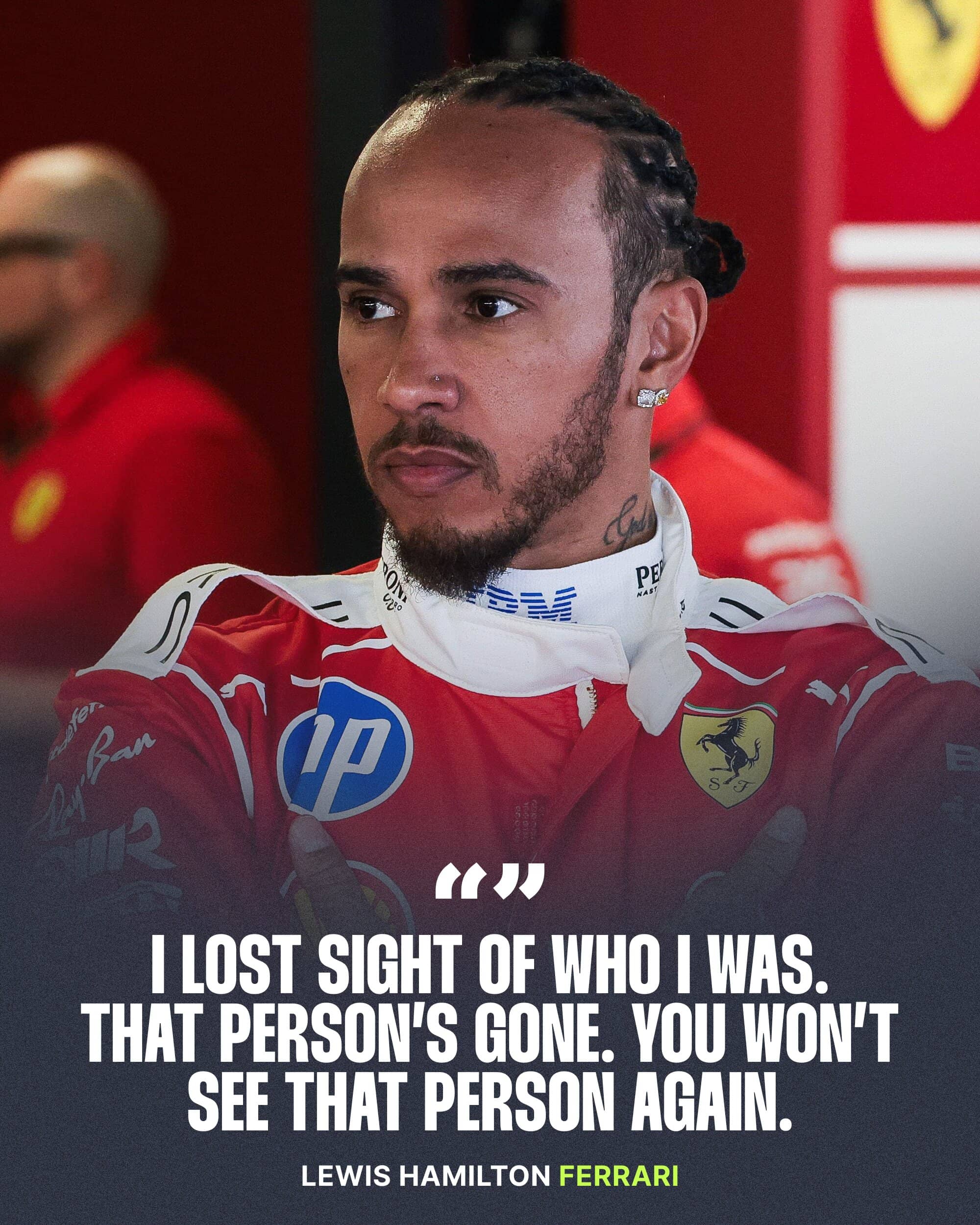
Lewis Hamilton has spoken a lot this year about his mission to, as he puts it, “remember who I am.”
An interesting turn of phrase, the implication being that the last few years – not just his first season with Ferrari in 2025 but the period stretching all the way back to the trauma of Abu Dhabi 2021 – had in some way changed him.
Not merely a lack of results, but a loss of identity. A different driver, yes, but perhaps a different man too.
Where once he oozed confidence and certainty, like all the truly great drivers, suddenly even he found himself needing some convincing.
Is it the car that’s the problem here? Or – gulp – might it be me?
It has been an ongoing process this season, this gradual journey of self-rediscovery helped by a steady stream of podiums in the most effective machinery he has had this side of 2021.
Yet it wasn’t until around halfway through Sunday’s Barcelona Grand Prix that everything finally clicked back into place.
The moment came on Lap 34 when Lewis, with energy in his voice once again, asked his race engineer Carlo Santi if he was catching the Mercedes cars of George Russell and Kimi Antonelli ahead.
“You are catching really well,” came the reply. “Keep pushing, keep pushing.”
A sniff.
That’s all it was. But sometimes that’s all it takes.
That’s all a competitor of this intensity needs to hear for those old instincts to start firing up again.
Suddenly Lewis was back in 2018, managing his tyres to perfection in a fashion that defined some of his greatest victories for Mercedes – only this time in red rather than silver.
That has been the essence of Hamilton’s much-improved 2026: replicating some of what he had at Mercedes in his new surroundings.
Hamilton’s famous ‘documents’ became a running joke in 2025 when his semi-regular efforts to improve matters at Ferrari – taking a hands-on approach in a way he never had before – had no discernible impact.
Yet there have been signs this year that he is now being listened to and is shaping both the team and the car around him.
His bond with Santi – whom he tellingly described as the ‘Italian Bono’ in Monaco last week – has been a happy accident given that his current race engineer was initially expected to be only a stop-gap solution at the start of 2026.
See also his switch from Brembo to Carbone Industrie brake discs earlier this season, Lewis preferring the increased stopping power of the latter over the better feel of the former.
It is one thing for Hamilton to request a switch to the same braking materials he used at Mercedes, though; quite another for Fred Vasseur to commit to a change to the relationship with one of Ferrari’s most loyal suppliers for the sake of a single driver.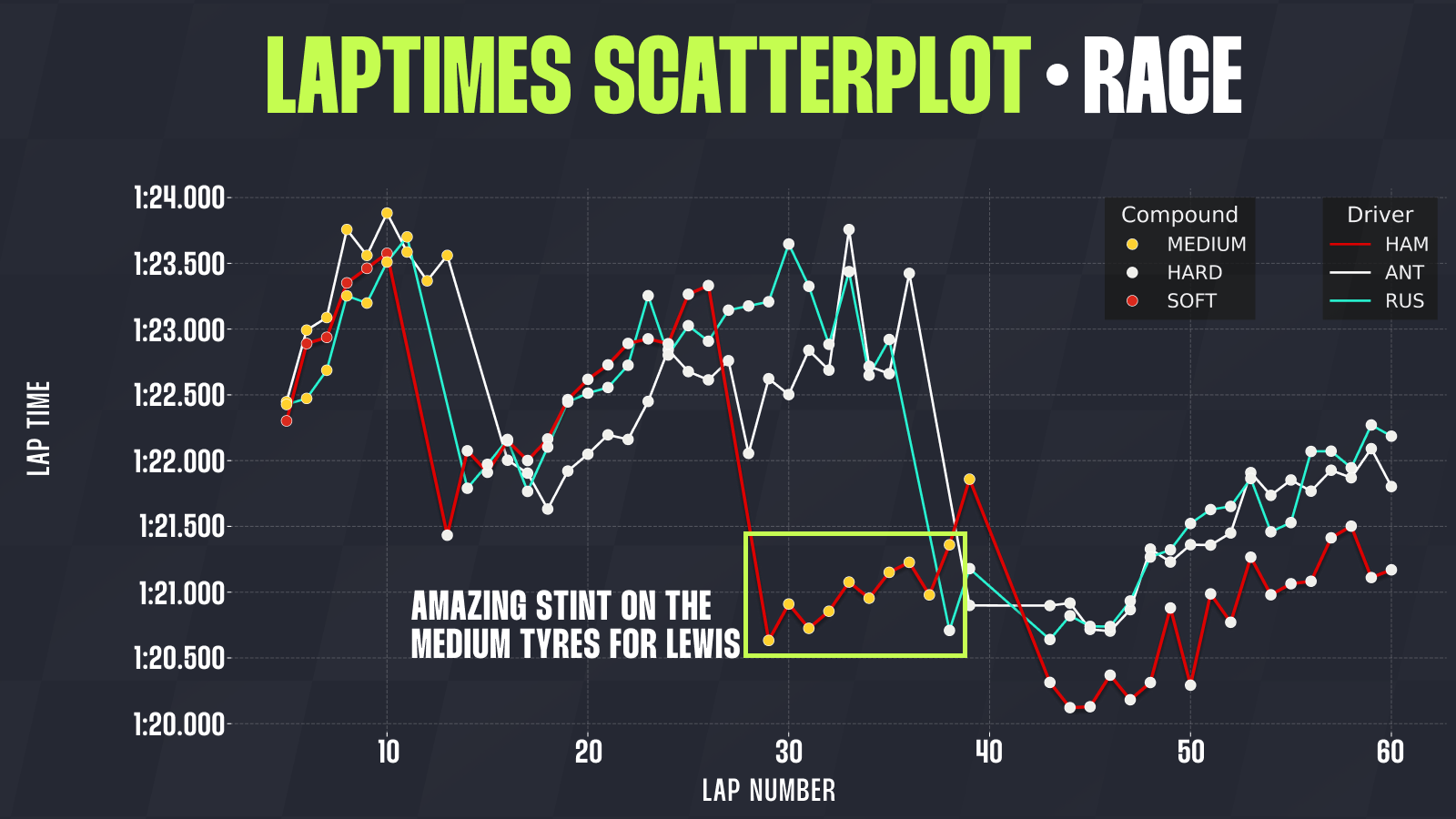
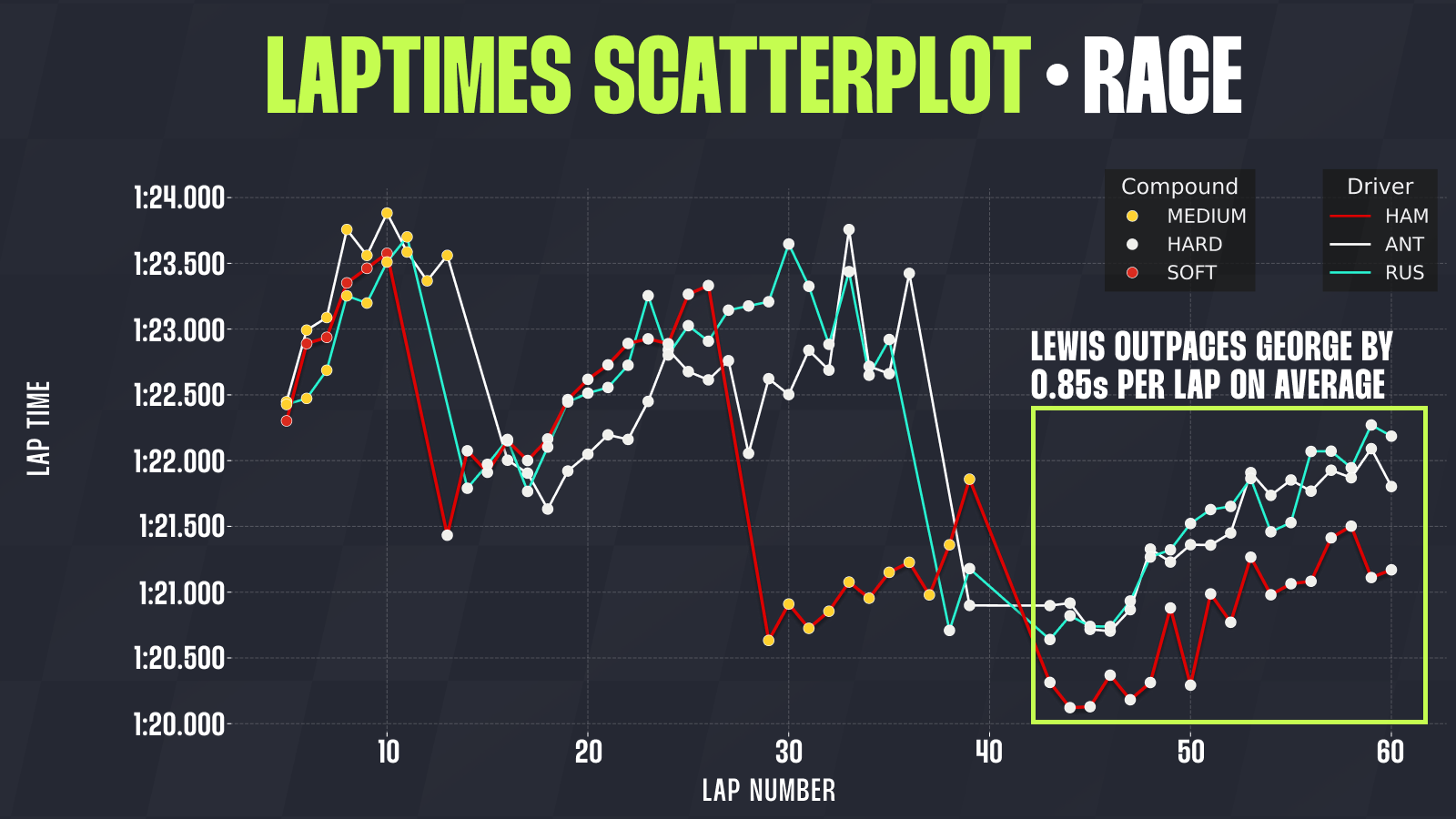
This change was a bigger deal than it first appeared, yet that Vasseur was prepared to make it happen was a reflection of Ferrari’s commitment to making a success of its partnership with Hamilton even after the events of last year.
There were moments in 2025 when it seemed that team and driver were already sick of the sight of each other, that Hamilton’s continued presence was just another source of stress in a team already exposed to enough pressure.
Rather than coasting through a difficult second season before the inevitable parting of ways, however, Ferrari and Hamilton have gradually learned to live with each other.
And look at him – look at them – now.
Whatever was lying dormant inside him for the last four years has been reactivated.
The doubts he harboured have now burned away.
Lewis Hamilton has just remembered who he is.
George Russell is still unconvincing
As the races tick by, increasingly it seems likely that the F1 2026 title will ultimately be decided by the reliability of the Mercedes power unit.
Which is particularly handy for George Russell, because if it were decided on performance alone he would be in big trouble.
After the disasters of Miami and Monaco either side of his retirement in Canada, this was generally an improved weekend for Russell.
Yet still he managed to be unconvincing, still struggling to recapture the groove he had with the W17 – “I like this car, I like this engine,” he so memorably (and, it now appears, prematurely) put it over team radio – at the opening race of 2026 in Australia three months ago.
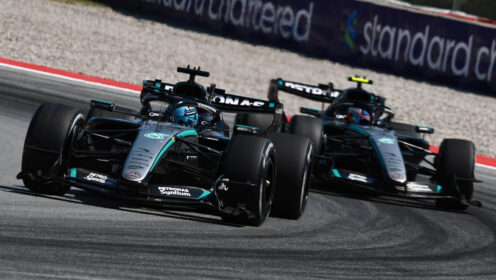
Even when starting from pole position in Barcelona, with Kimi Antonelli two places back on the grid, still he found himself behind the other Mercedes within sight of the chequered flag on Sunday.
Still he could not quite shake him off.
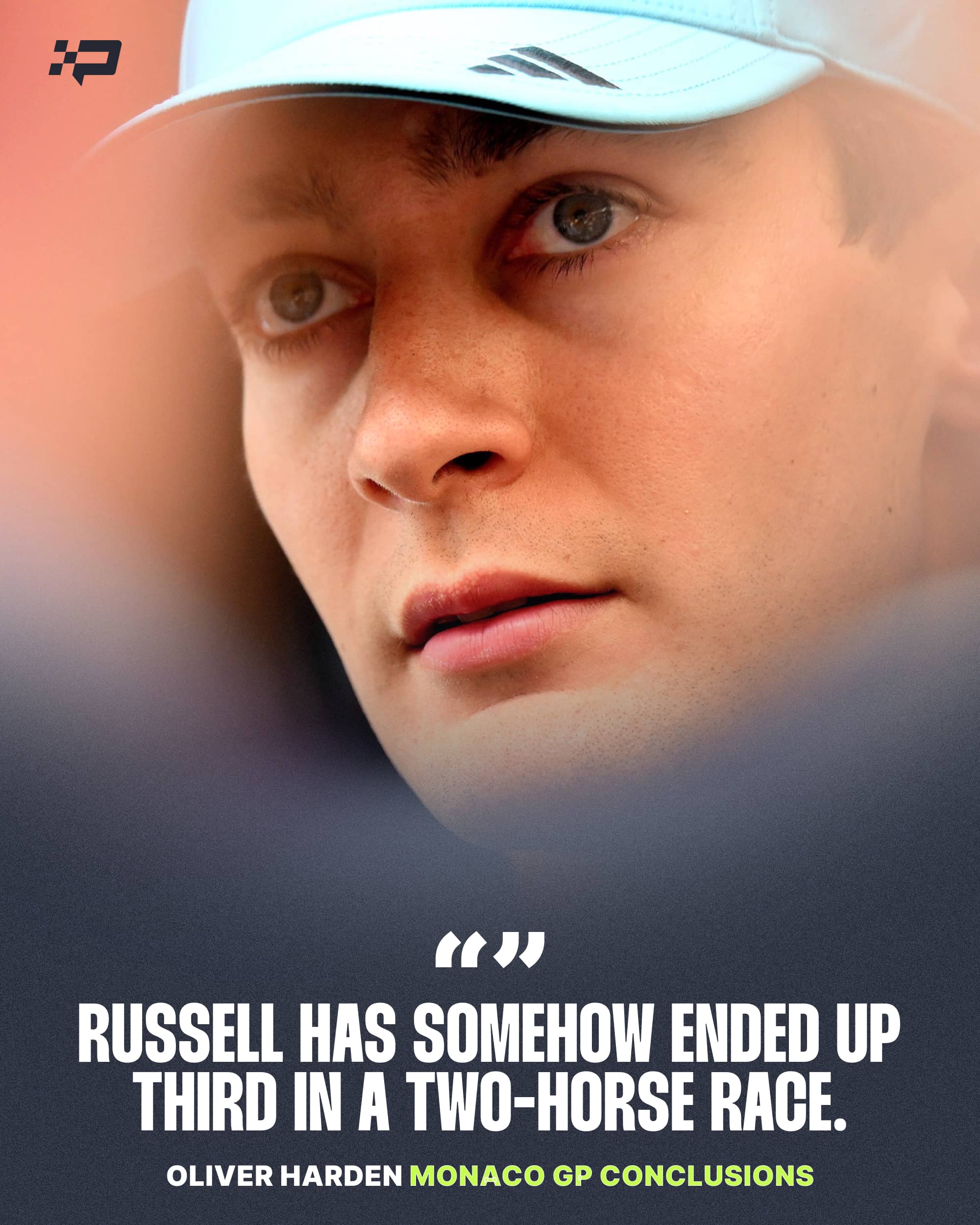
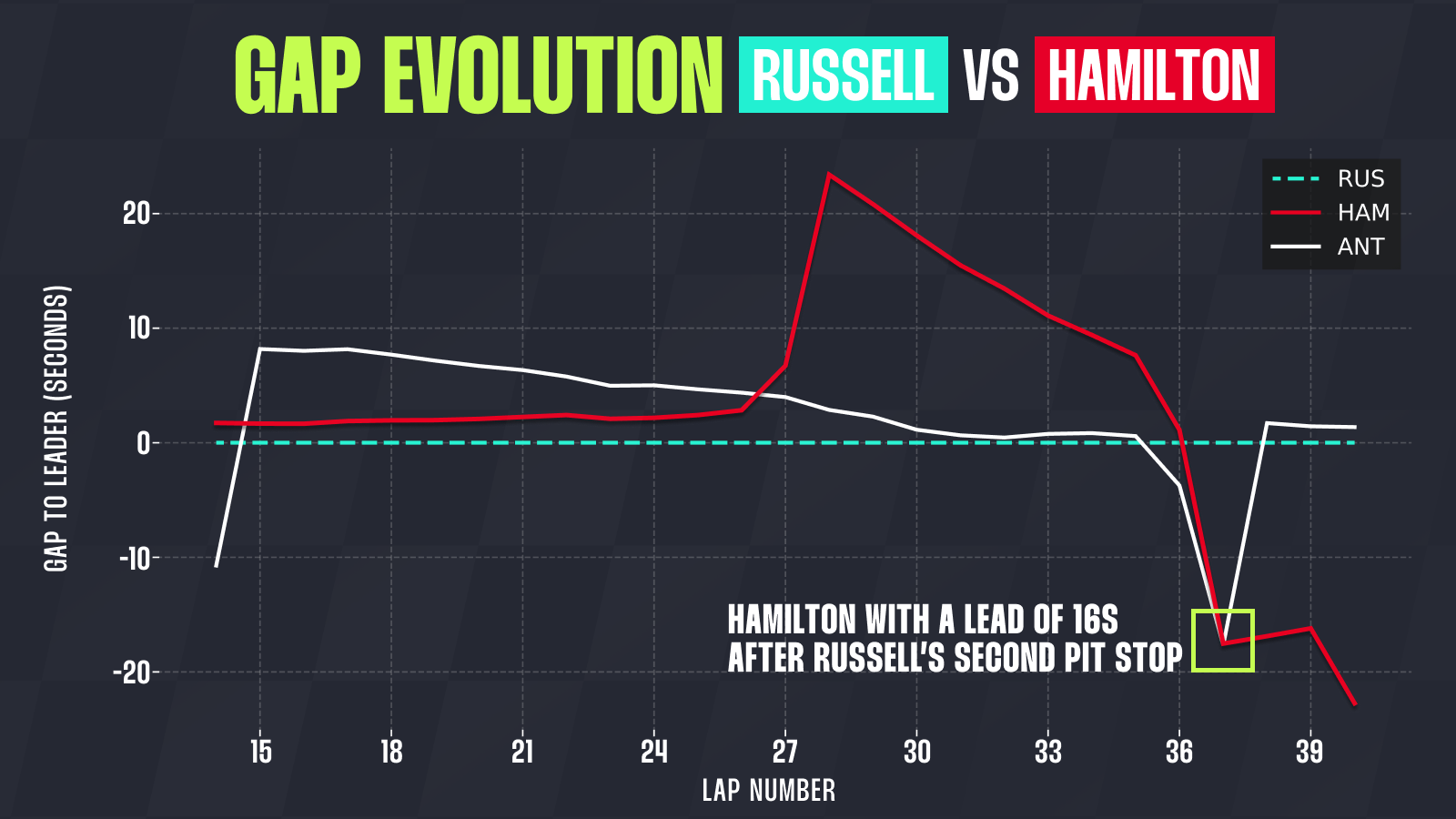
Russell’s regression on race day was quite likely related to his treatment of the tyres – and the resulting overheating and sliding – on a hot, high-deg afternoon, not helped by Hamilton’s early stop convincing Mercedes to respond and extend his final two stints.
And as he was quick – almost too quick – to point out in Miami, George is not exactly a lover of low-grip situations.
Neither, for that matter, is Oscar Piastri, whose struggles with low grip – well documented in the aftermath of last year’s United States and Mexican grands prix – were once again exposed in Barcelona (35 seconds adrift of the sister McLaren of Lando Norris at the finish).
Honestly?
It never sat quite right that Piastri and McLaren turned to that excuse in late 2025, effectively writing off two crucial weekends at the climax of a title battle.
Russell’s attempts to do the same over recent weeks do not wash now either, not when the answer invariably lies in the driver’s own technique and how effectively he uses the tyres.
Why do the likes of Antonelli and Norris seem to cope perfectly well in these situations – in the same car, remember – where Russell and Piastri struggle so badly?
Purely because their driving styles offer a wider palette with which to operate.
They are simply more agile and better equipped to perform in a broader range of conditions.
So when drivers like Russell and Piastri speak of disliking low grip, what they really mean to say is that as drivers they are – how to put this politely? – limited, or at least less versatile, compared to their teammates.
Conclusions recap: How the F1 2026 season has unfolded
Monaco GP conclusions: Mini Max, no Russell sympathy, Hamilton mystery
Canadian GP conclusions: Seeds of Mercedes discontent, British bias, embracing unpredictability
Norris’s inherent advantage over Piastri ultimately told in 2025, Lando taking a giant step towards a maiden world championship in Mexico on a weekend Oscar’s low-grip gremlins rendered him defenceless precisely when he couldn’t afford to be so.
Russell will face the same fate this season unless he can address the shortcomings in his technique currently being exposed on a near-weekly basis by Antonelli.
So even though Kimi took an 18-point hit from his teammate on Sunday, he could head back to the paddock satisfied that he had notched another little victory over George.
Charles Leclerc has lost his way (again)
Charles Leclerc has been here before.
And that’s the problem really: he’s been here too many times before.
He comes here – down the bottom of the pit of despair – every couple of years or so.
For such a gifted driver – and there is nobody you miss watching more over the winter break each year than Charles – it is astonishing how often he finds himself experiencing these mini-crises.
The most memorable episode came around this time in 2023 when, a few weeks after crashing twice at the same corner in Miami, Leclerc qualified 19th out of 20 cars in Barcelona.
In his calls for a deep investigation into the chassis, it did not seem to occur to him what really happened: on an unseasonably cold weekend in Spain, Carlos Sainz’s spikier, more aggressive inputs were far more useful for generating the all-important tyre temperature Charles could not.
At the next race in Canada a few weeks later, Leclerc was humiliatingly forced to admit that an analysis of his car had found… no problems whatsoever.
The lack of introspection (at least publicly) by someone normally so self-critical revealed a driver who, however briefly, had lost his way.
Three years on, it is happening again.
This time it is the brakes – specifically the consequences of Lewis Hamilton’s switch to Carbone Industrie brake discs – messing with his mind.
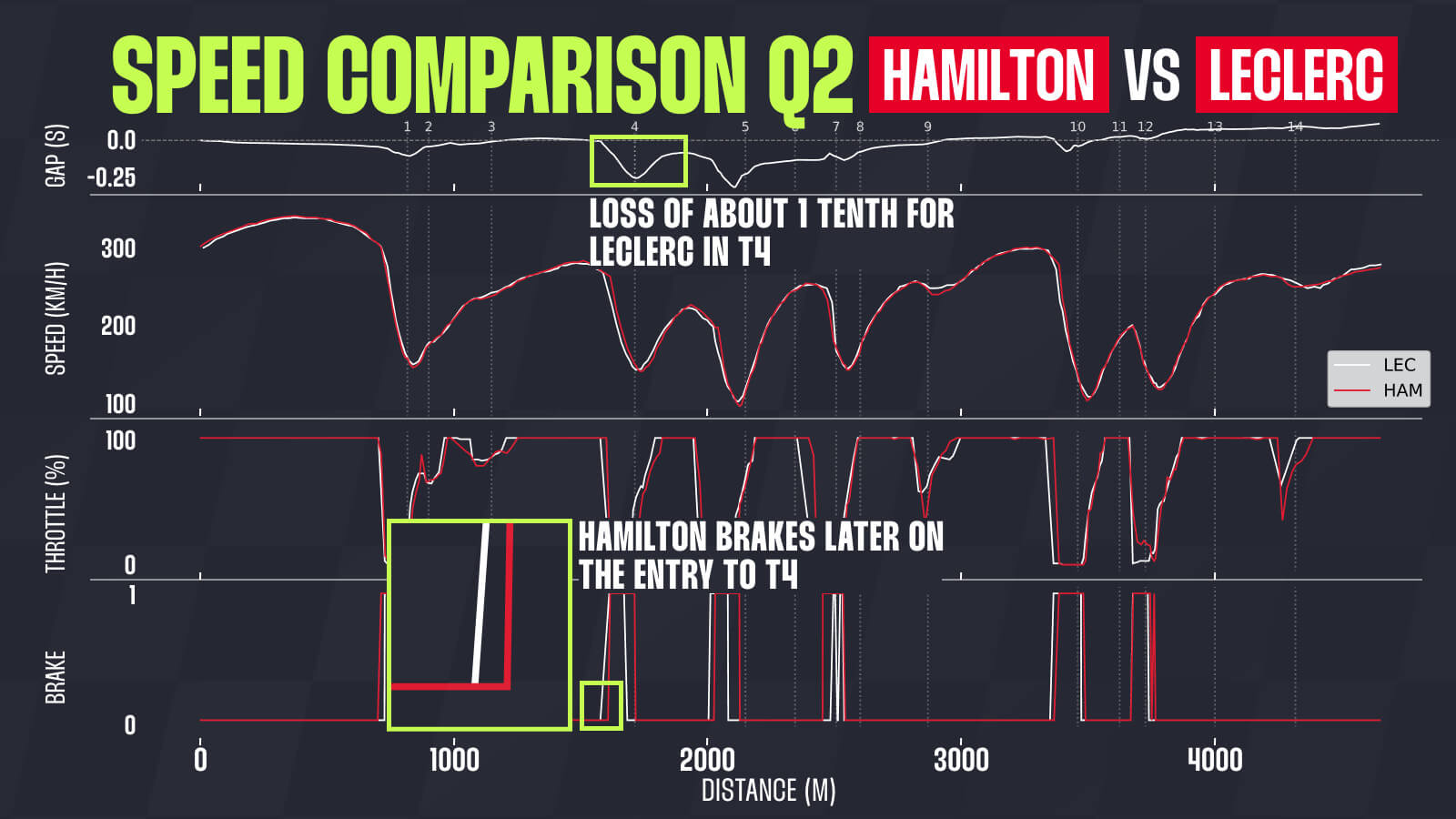
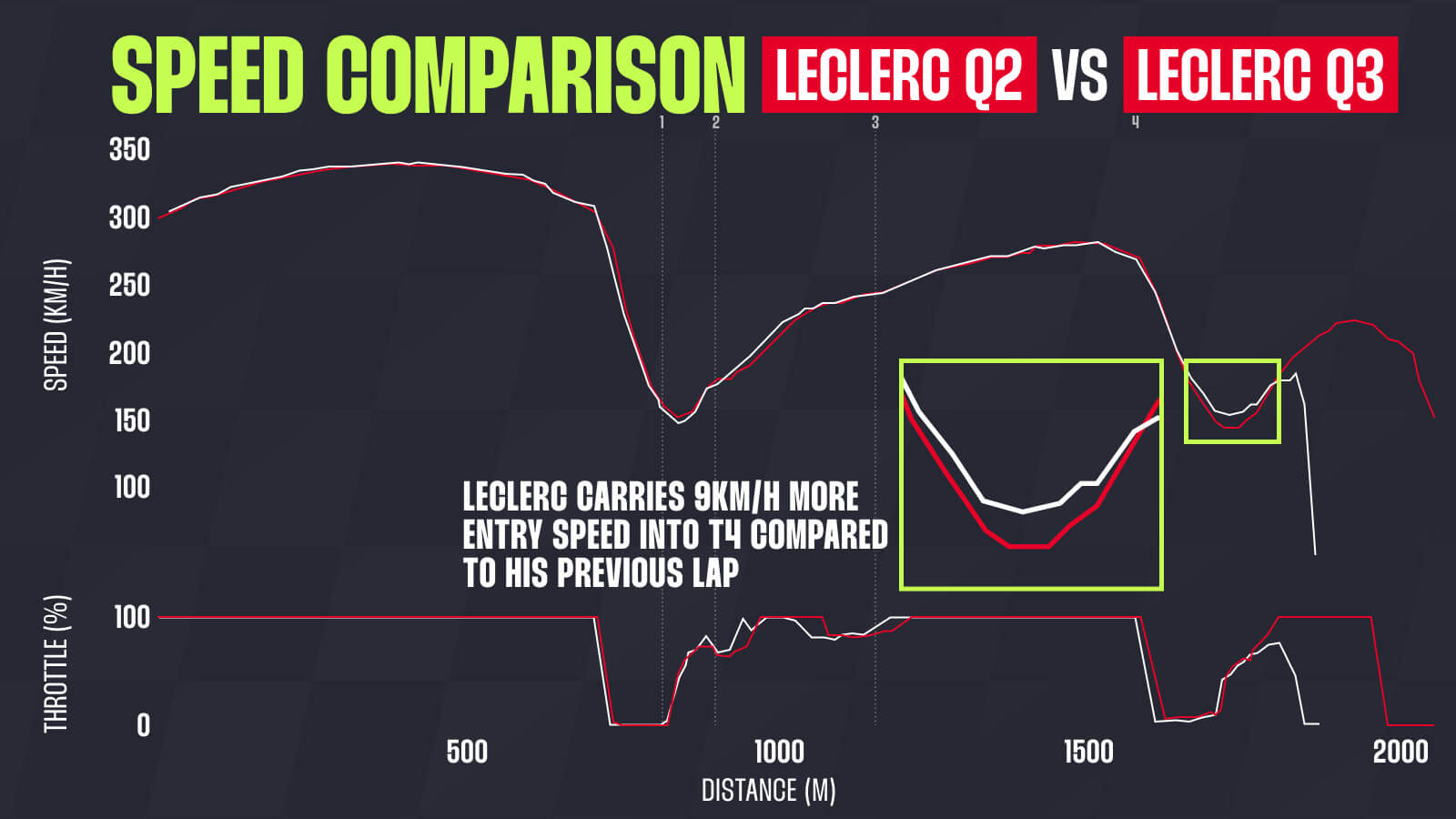
It is these patchy periods – when Leclerc gets emotional and frustrated and starts making mistakes and hitting barriers left, right and centre – that continue to prevent him from rising to the consistently exceptional level of, say, Max Verstappen.
It is often said that drivers are products of their environment – Charles would probably be capable of the results Max had achieved over recent years in a more settled, calmer, Red Bull-esque team – but almost certainly there is a career-momentum element to these intermittent dips too.
One of the more eye-opening statistics over recent weeks is that Kimi Antonelli already sits just three behind Leclerc’s total of F1 victories (eight) despite claiming his maiden win as recently as March 15.
As such, Ferrari’s underachievement over the course of Leclerc’s tenure has likely had a direct impact on his own personal development.
Rather than growing ever stronger with the sort of sustained success Antonelli has enjoyed recently, Leclerc has found himself standing still for some time – with no further progression possible until Ferrari produces a car consistently capable of winning.
And what is it people say about standing still in Formula 1 again?
Ah, yes: you end up going backwards.
Put another way, if a man hits a glass ceiling for long enough without success, every so often he will end up with a headache.
Here we find Charles Leclerc in mid-2026.
Fernando Alonso missed his best chance of a happy ending in 2023
As omens go, it was not a particularly promising one for Fernando Alonso and Aston Martin.
Moments before the AMR26 was finally unveiled back in February, a poignant piece of music – Final Ascent by Hans Zimmer – began to play.
It is one you might recognise from No Time To Die, the most recently released James Bond movie.
In the film, the track is heard when an ageing, cursed Bond realises that there is no escape from the remote island this time. It is too late.
So he accepts his fate, looks to the sky and – spoiler alert – is blown to smithereens as a shower of missiles rains down on him.
No, the hero does not always land on his feet. A happy ending is not always achievable.
It has since transpired that, like Bond, Alonso was already aware of what was coming his way when Aston Martin’s 2026 car launch reached its climax.
Adrian Newey revealed in March that the team first became aware of the true extent of Honda’s flawed preparations for 2026 in November last year.
That realisation extinguished Alonso’s last hope of the happy ending he had always dreamed of.
There would be no final flourish behind the wheel of the Newey-designed car he always craved.
No 33rd grand prix victory. No third world championship.
From that moment, in fact, the remainder of Alonso’s F1 career has been less about chasing a dream and more about managing an exit.
So it was no great surprise that he was linked to yet another return to Alpine over the Barcelona Grand Prix weekend.
Multiple sources have told PlanetF1.com that Flavio Briatore, Fernando’s long-serving manager, and incoming title sponsor Gucci are pushing hard to sign Alonso for 2027.
It would make sense for all involved given that Enstone is – has always been – the place Alonso runs to when his options elsewhere are limited or unappealing.
With his 45th birthday next month, the Aston Martin-Honda partnership will almost certainly take more time to reach its potential than Alonso has left to give.
A quick hit in a Mercedes-powered Alpine, by contrast, would give him exactly what he needs right now with everything thrown at the short term.
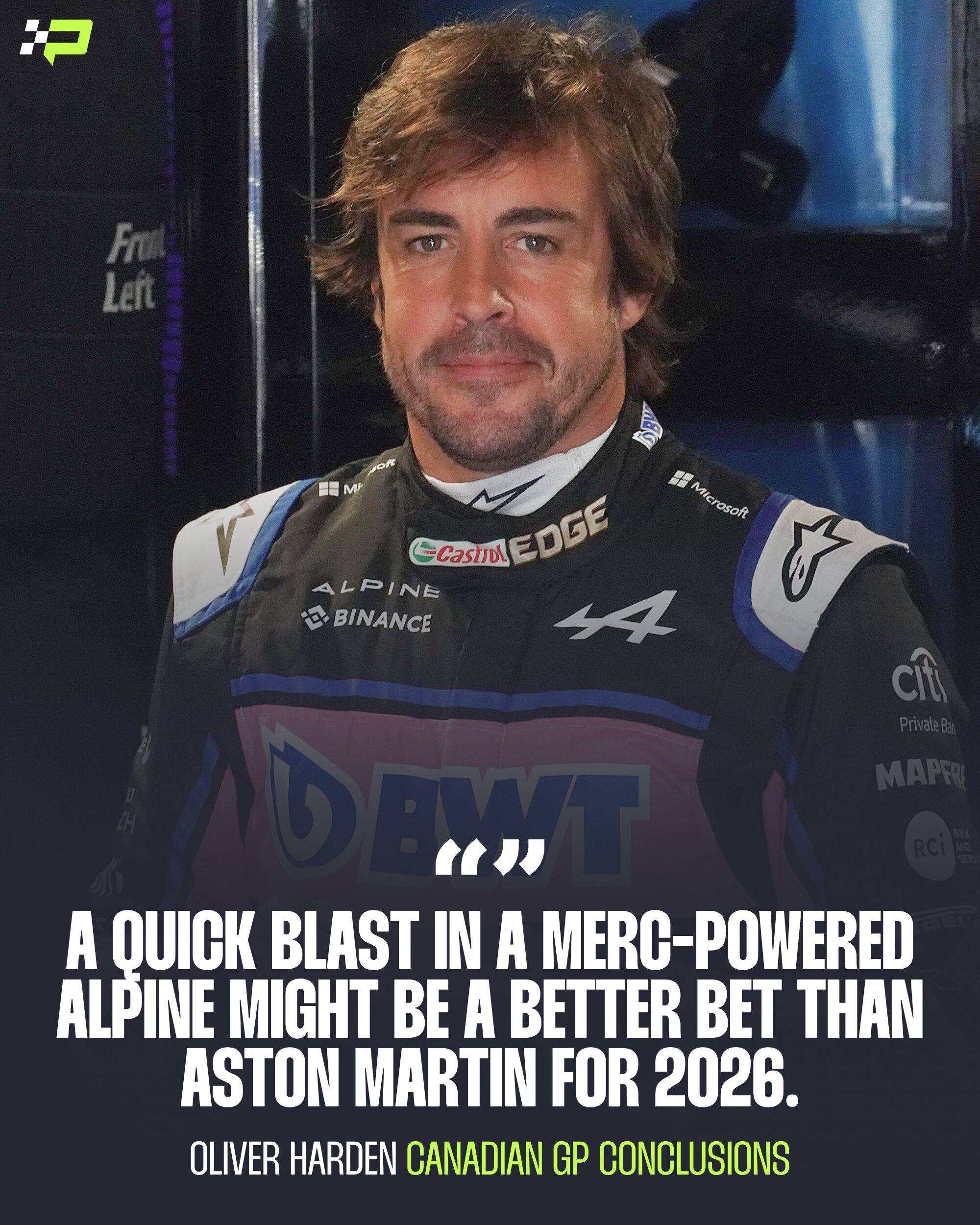
Even so, one last blast in an Alpine would still fall short of the fitting farewell he could have had three years ago.
When the subject of his F1 future came up last year, Alonso said something that appeared to be quite counterintuitive.
He remarked that he would probably retire in the event of a successful 2026, but would be more likely to continue if this season failed to meet expectations.
Not only did it reveal the extent of his determination to end his career on a positive note, it was perhaps also a tacit admission that, in hindsight, he missed the opportune moment to retire at the end of 2023.
After all those years in the wilderness, there was no better time for Alonso to walk away than at the conclusion of his first glorious, podium-littered year at Aston Martin.
Second only to Max Verstappen as the most impressive driver that season, there was nothing left for Fernando to prove.
But the natural instinct of an elite athlete is always to demand – to expect – more.
In a driver’s mind, the next year, the next car, the next rules cycle will always be even better than the current one.
Alonso had plenty of reasons to expect more at the end of 2023, with Honda already on board and Newey’s signing less than 12 months away.
Yet in his search for more, the happiest ending Fernando could have hoped for ended up passing him by.
Mercedes’ Monaco stance is in stark contrast to Abu Dhabi 2021
“Do we think that we realistically have a position, a chance of reverting the result? I don’t think so.
“But we definitely have to give it a go if we see that there is a millimetre of [a] chance to do so.”
Toto Wolff’s comments in Friday’s FIA press conference in Barcelona, 48 hours before Merc submitted a Right of Review over the result of the Monaco Grand Prix.
Very different situations, of course.
But compare and contrast Wolff’s words – his determination to fight tooth and nail for what he sees as the right result, regardless of there being a small chance of success – to the way Merc soon rolled over in the aftermath of Abu Dhabi 2021…
Want to be the first to know exclusive information from the F1 paddock? Join our broadcast channel on WhatsApp to get the scoop on the latest developments from our team of accredited journalists.
You can also subscribe to the PlanetF1 YouTube channel for exclusive features, hear from our paddock journalists with stories from the heart of Formula 1 and much more!
Read next: The data behind Lewis Hamilton’s first Ferrari win as VSC debate settled