
McLaren Miami pace collapse explained as qualifying strategy error costs Norris, Piastri


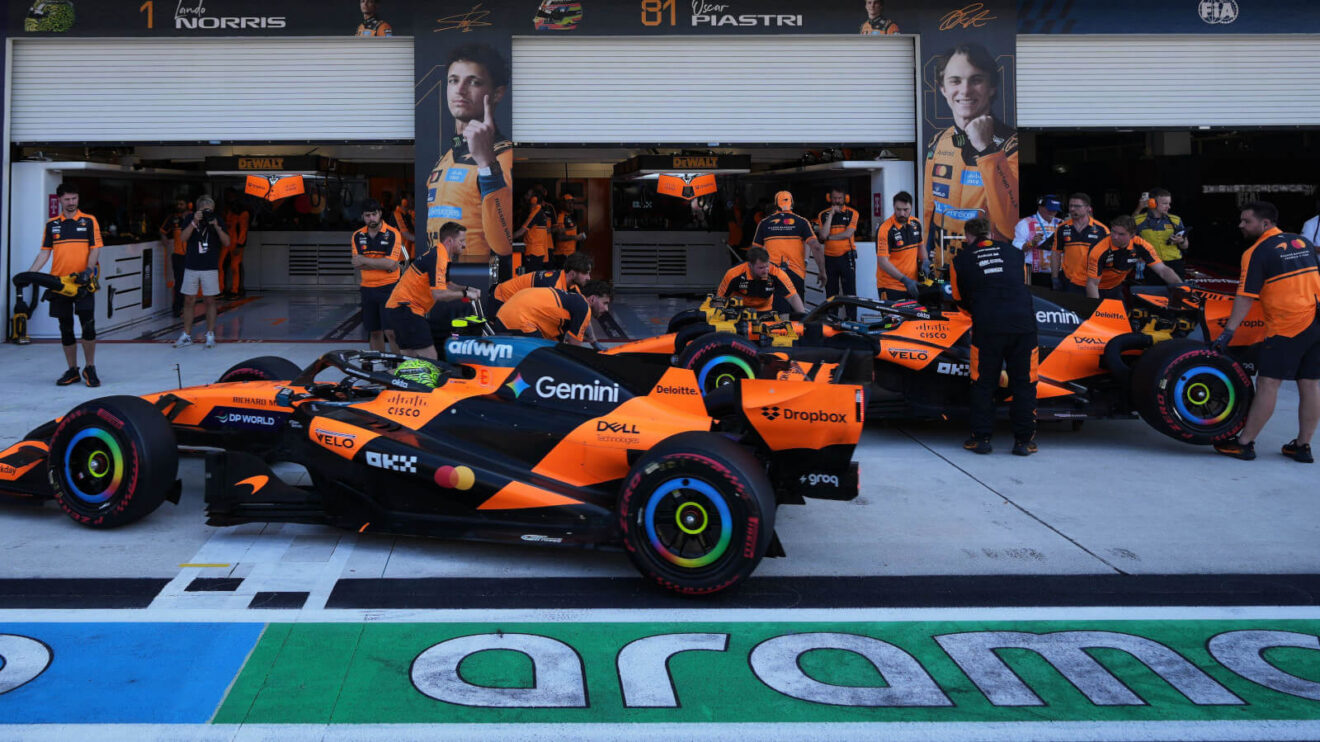
Lando Norris and Oscar Piastri in the pit lane
McLaren’s long-awaited breakthrough in Miami lasted just a few hours before unravelling when it mattered most.
By the time main qualifying came around, their pace dropped, resulting in significantly lower starting positions. So, what exactly happened?
McLaren qualifying strategy error explained after Miami pace drop
Want more PlanetF1.com coverage? Add us as a preferred source on Google to your favourites list for news you can trust
McLaren arrived in Miami with a major upgrade package, primarily consisting of new aerodynamic components across the car. Like the rest of the field, they used this unplanned break to extract the maximum performance from their car.
And they certainly succeeded in doing so, at least during the first half of the race weekend.
Alongside taking P1 and P3 in the sprint shootout, McLaren confirmed their speed during the sprint race itself, to finish P1 and P2. Their pace over the 19 laps on the medium tyres was the class of the field, while Mercedes were on average 0.280 seconds slower and Ferrari were 0.445 seconds adrift.
Max Verstappen was also on the pace of the Mercedes drivers, while his team-mate’s struggles dragged down the overall team average to a deficit of nearly a second per lap.
However, just a few hours after the sprint, the situation on track changed completely. In main qualifying, McLaren looked like the fourth-fastest team rather than the fastest. Lando Norris finished P4, while Oscar Piastri could manage no better than P7.
If we compare Norris’s lap in main qualifying against his sprint shootout lap, we can see some significant differences.
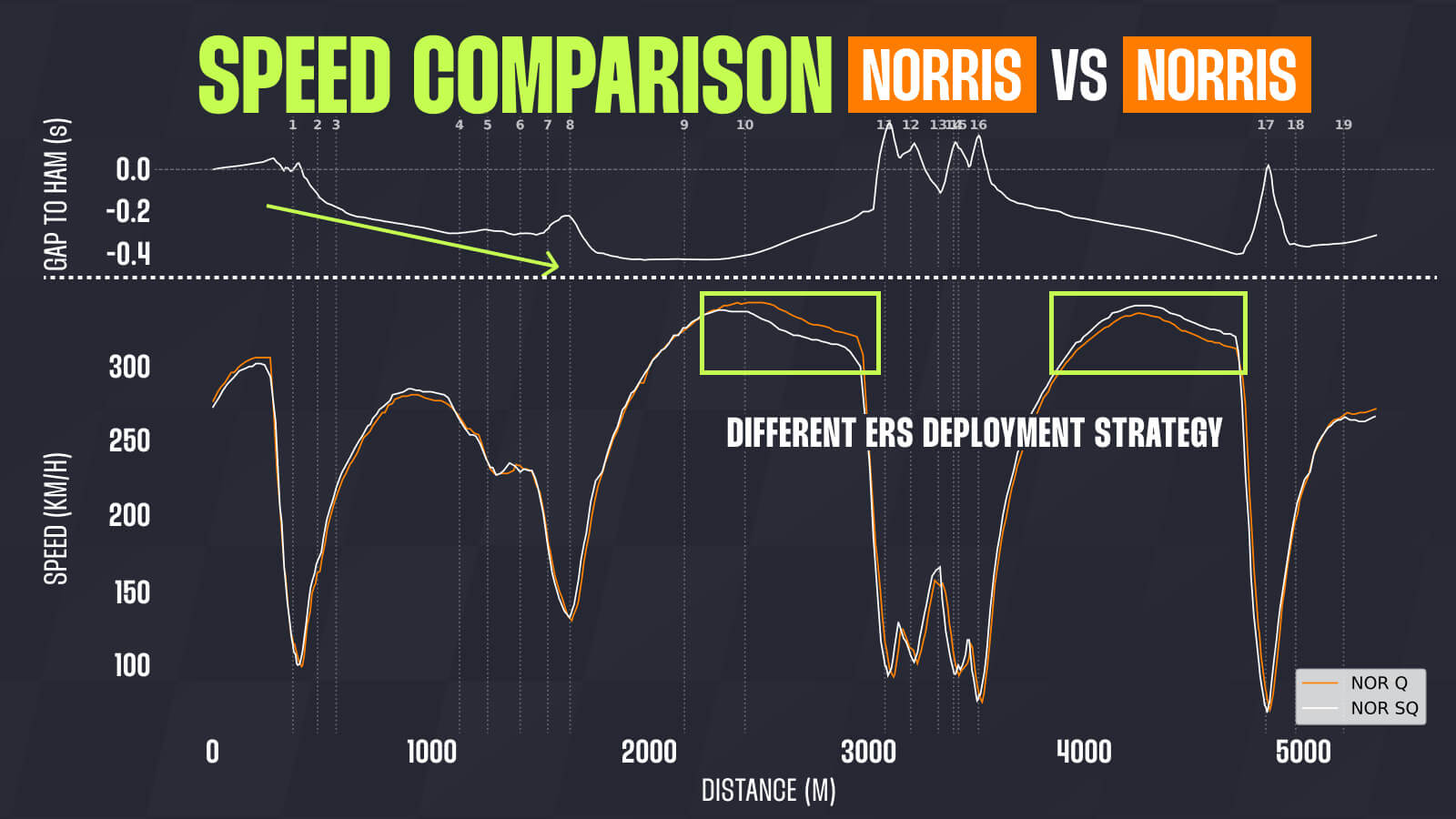
What becomes immediately apparent is that the deployment strategy was changed. During qualifying, Norris was faster on the Turn 8 to Turn 11 straight (during which he carried out significantly less harvesting), while he was slower on the Turn 16 to Turn 17 straight.
However, the biggest difference lies in the first sector, where Norris was 0.429 seconds slower in qualifying compared to his SQ3 lap. His speeds through the medium-to-fast corners are noticeably lower, and as a result, the delta time climbs rapidly here.
It appears that during qualifying, the McLaren team decided to use part of the power unit’s output in this section for battery harvesting, intending to deploy that energy later on the straight.
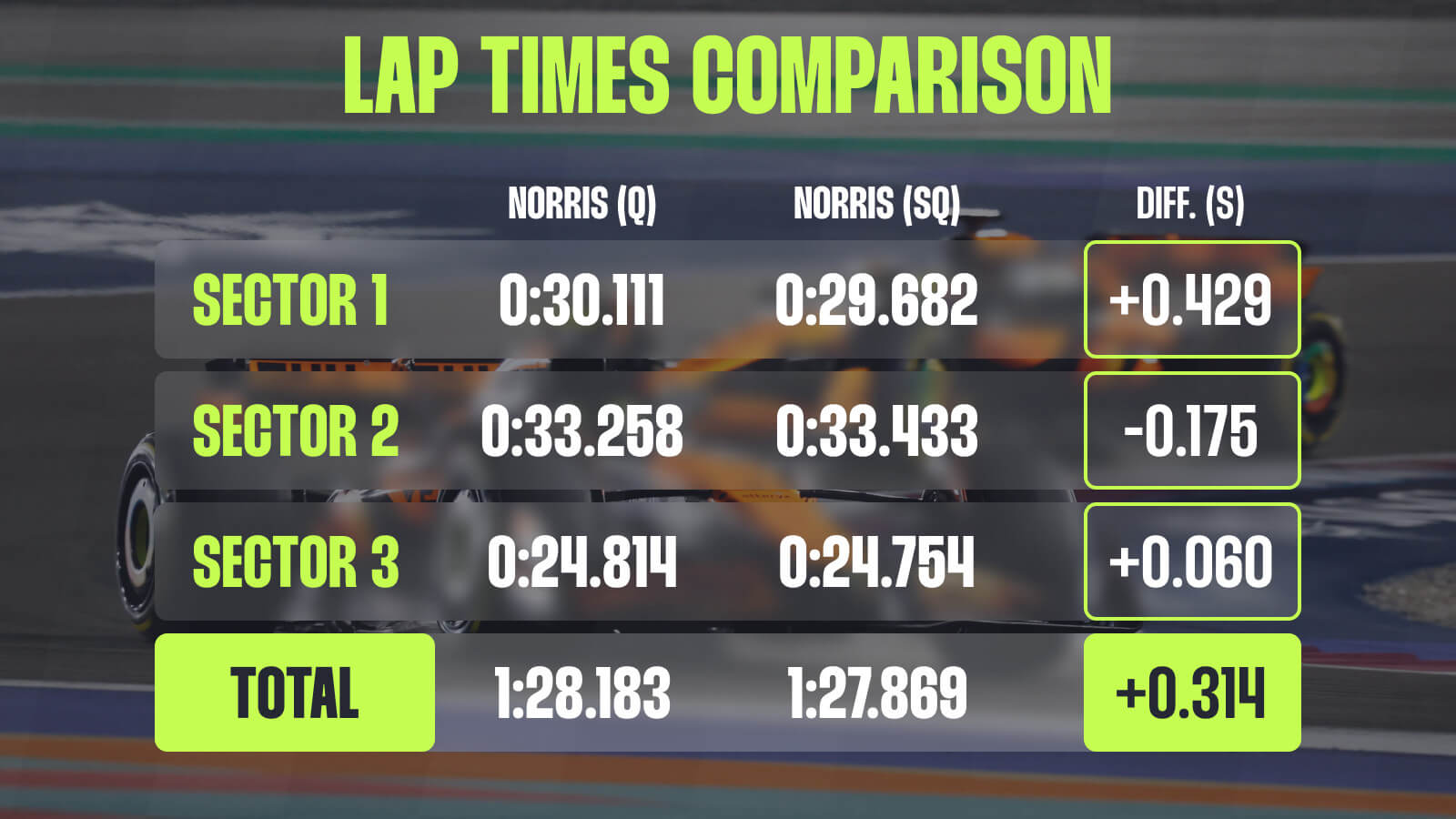
The times through the slow corners at the end of Sector 2 were identical, which leads us to the conclusion that no major setup changes were made to the car’s dynamics – a fact confirmed by Lando himself after qualifying.
Simply put, the different deployment strategy failed to pay off.
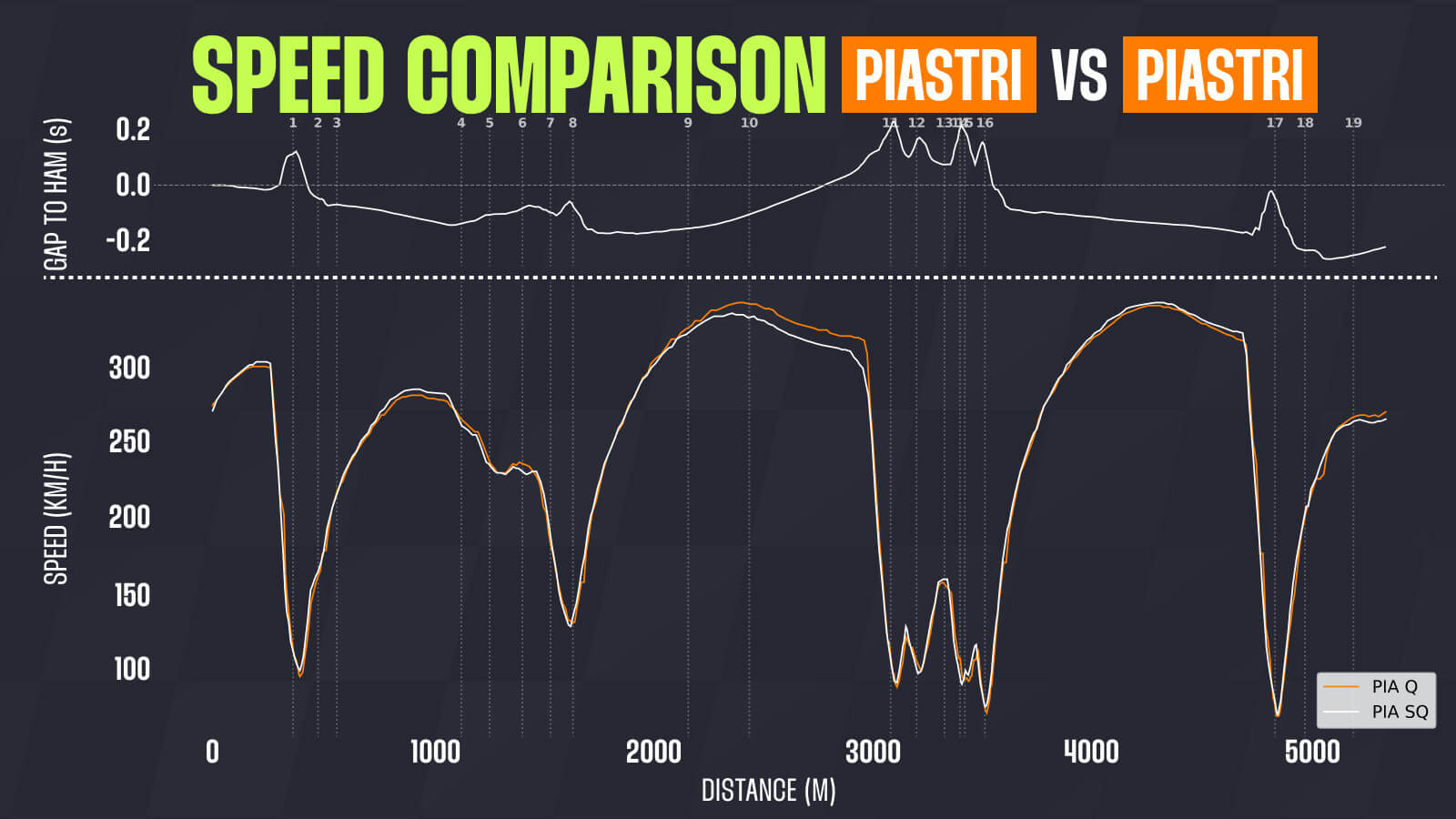
In fact, if we carry out the same analysis on Oscar Piastri’s laps, we see exactly the same pattern. Notice the white delta line in both graphs; they are completely identical, meaning McLaren made the same strategic error for both of their drivers.
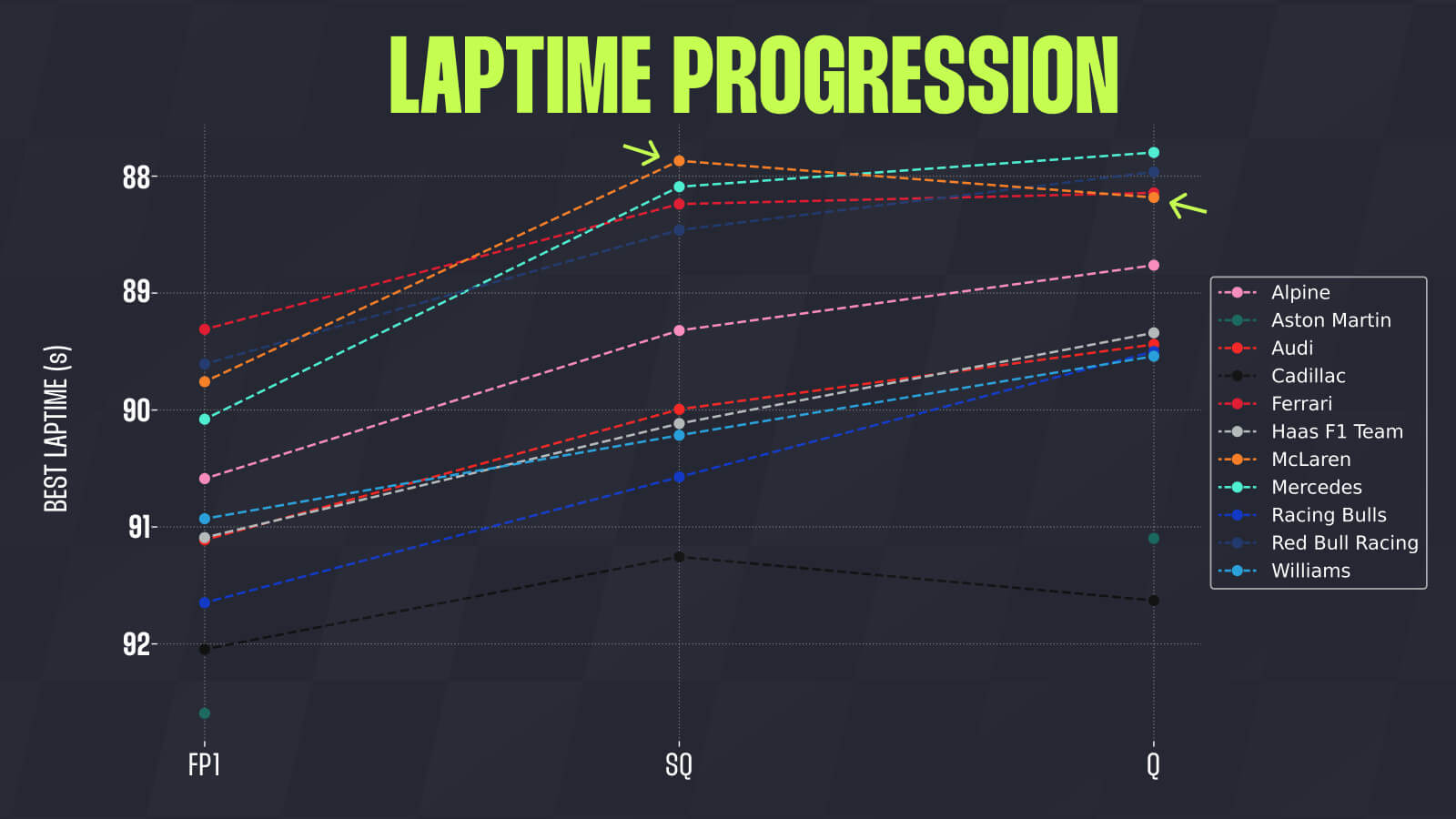
The graph below perfectly illustrates the mistake the British team madey. Alongside Cadillac, McLaren were the only team that failed to improve on their sprint shootout times. Had Norris repeated his SQ3 time, he would have finished qualifying in P2.
Why the Papaya team’s engineers made this error is something we cannot know for certain. The complexity of the software governing the deployment strategy is so immense and depends on so many parameters that it will be a challenge even for the team to find the exact answer.
What can we expect from McLaren in the race?
Given that no major vehicle dynamic setup changes were made, we can definitely expect very good pace during the main race. The only difference we must keep in mind is that, unlike the Sprint, Norris and Piastri will not be in clean air, which makes things more difficult.
On tracks like Miami where high ambient and track temperatures are expected, this factor becomes even more critical. Alongside the aerodynamic issues caused by dirty air, cooling the power unit and managing the tyres will be a major challenge.
In fact, during Free Practice 1, McLaren tested different engine cover versions specifically to monitor internal cooling.
This shouldn’t impact their pace too much and that both drivers will be right in the mix for the top positions.
Want to be the first to know exclusive information from the F1 paddock? Join our broadcast channel on WhatsApp to get the scoop on the latest developments from our team of accredited journalists.
You can also subscribe to the PlanetF1 YouTube channel for exclusive features, hear from our paddock journalists with stories from the heart of Formula 1 and much more!
Read next: Winners and losers from the 2026 Miami Grand Prix Qualifying